


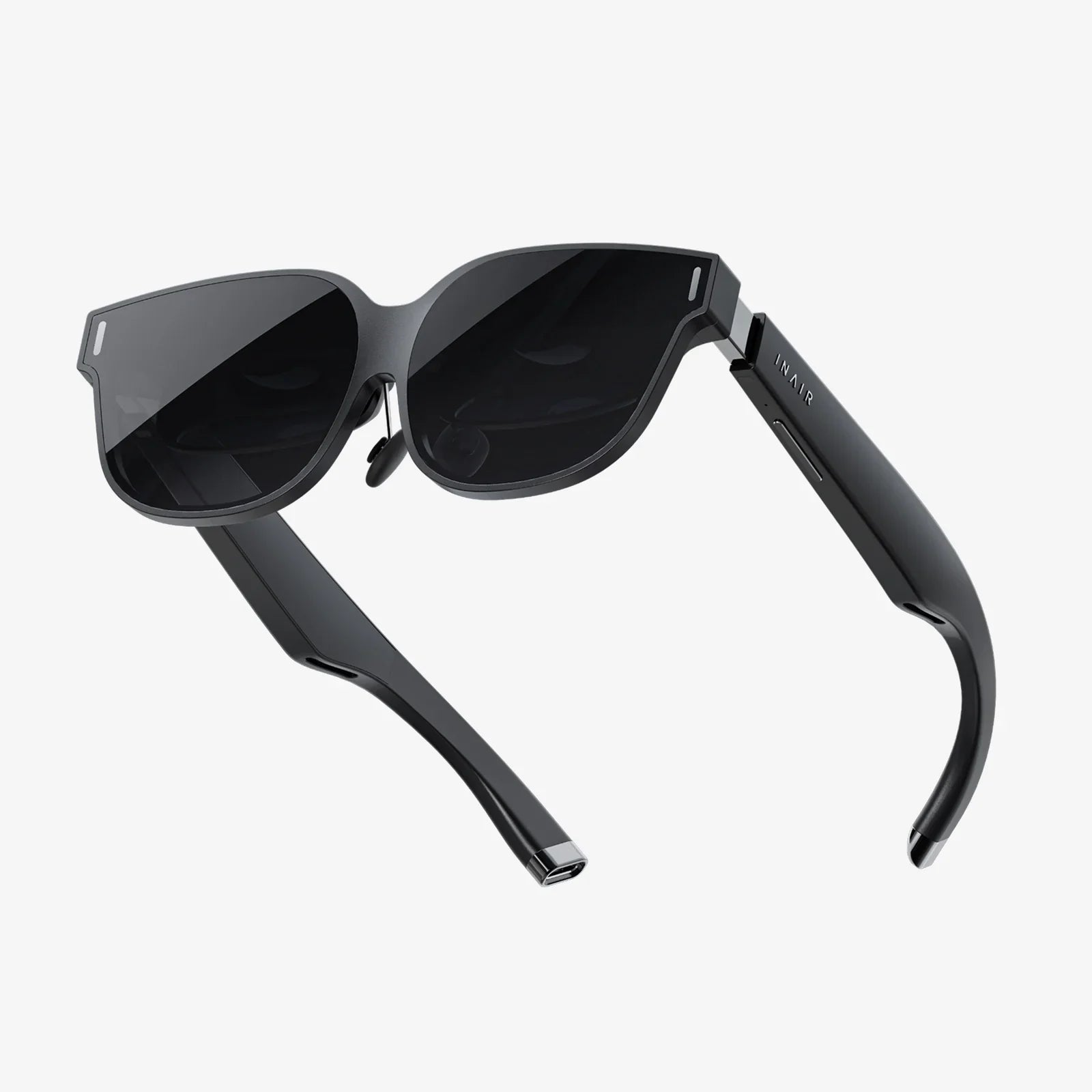
You’ve seen the headlines, watched the futuristic demos, and heard the buzzwords echoing through tech conferences: the digital and physical worlds are colliding. But navigating the alphabet soup of VR, AR, MR, and XR can feel like deciphering a secret code. Are they all just different names for the same thing, or do the distinctions between them hold the key to understanding our technological future? The conversation often narrows to a pivotal clash of concepts: MR vs XR. This isn't just semantic pedantry; it's a fundamental debate about how we will compute, communicate, and experience reality itself. Understanding this spectrum is your first step into the next computing revolution.
Beyond the Buzzwords: Defining the Reality-Virtuality Continuum
To truly grasp the MR vs XR discussion, we must first abandon the idea that these are separate, isolated technologies. Instead, they exist on a spectrum, famously conceptualized as the "Reality-Virtuality Continuum" by researchers Paul Milgram and Fumio Kishino in 1994. This model places the completely real environment at one end and a fully virtual environment at the other. The space between them is where the magic happens.
What is XR (Extended Reality)?
Think of XR not as a specific technology, but as an umbrella term. It is the super-category that encompasses all immersive technologies that blend the physical and virtual worlds. XR is the entire orchestra, while AR, VR, and MR are the individual instruments.
XR includes:
- Virtual Reality (VR): A completely digital, immersive experience that shuts out the physical world. Users typically wear a headset that transports them to a computer-generated environment, whether it's a game, a simulation, or a social space.
- Augmented Reality (AR): overlays digital information onto the real world. Using a device like a smartphone or transparent glasses, users see the physical environment around them, enhanced with digital graphics, text, or data. The key here is that the digital objects do not interact with or understand the physical space; they are simply superimposed upon it.
- Mixed Reality (MR): This is where the line begins to blur in the most fascinating way.
What is MR (Mixed Reality)?
If AR is like putting a sticky note on your wall, MR is like installing a digital shelving unit that knows it's on your wall. Mixed Reality is the most advanced point on the spectrum, where digital and physical objects co-exist and interact in real-time. It doesn't just overlay content; it anchors it to the real world, understanding and responding to the environment.
The hallmarks of true MR are:
- Spatial Mapping: The device scans and understands the geometry of the physical space—walls, floors, tables, and chairs—creating a 3D map.
- Persistent Digital Objects: Virtual objects can be placed in a room. Leave the room and come back, and the object will still be there, exactly where you left it.
- Seamless Interaction: You can manipulate digital objects as if they were real, using your hands or physical controllers. A virtual ball can bounce off your real sofa; a digital character can hide behind your actual desk.
In essence, MR is the pinnacle of immersive blending. It requires sophisticated sensors, cameras, and processing power to achieve this symbiosis between the real and the virtual.
The Great Convergence: Where MR and XR Intersect and Diverge
The core of the "MR vs XR" debate is one of taxonomy. Is MR a subset of XR, or is it something more? The answer is both simple and complex.
Technically, MR is a vital component of the broader XR landscape. You cannot have MR without it being a form of Extended Reality. However, the term XR is often used in two distinct ways:
- The Umbrella Term: The correct, all-encompassing descriptor for AR, VR, and MR.
- The aspirational Destination: In industry parlance, "XR" is sometimes used to describe the future state of computing—a world where the boundaries between realities are so fluid that we no longer need the distinctions. In this context, MR is the technological path we are taking to reach that ultimate XR destination.
This linguistic flexibility is the primary source of confusion. A company might market an "XR headset" that is capable of both VR and MR experiences. They are using XR as the umbrella term. Another might discuss their "XR strategy," referring to their long-term vision for a blended-reality future, with MR as the current focus of their development.
Under the Hood: The Technology Powering the Experience
The difference between a simple AR overlay and a complex MR experience is not just software-deep; it is rooted in hardware capabilities.
XR Technology (The Foundation)
At its core, XR relies on a set of foundational technologies:
- Display Systems: From smartphone screens for mobile AR to immersive head-mounted displays (HMDs) for VR.
- Tracking Systems: Using cameras, gyroscopes, and accelerometers to understand the user's head and hand position in space.
- Computing Power: Processing complex 3D graphics in real-time, increasingly handled by powerful mobile chipsets or connected PCs.
- Input Methods: Controllers, hand-tracking, and voice commands that allow users to interact with the digital world.
MR Technology (The Advanced Layer)
MR takes these foundations and adds a layer of advanced environmental intelligence. This is achieved through:
- Depth Sensing: Using technologies like structured light, time-of-flight cameras, or LiDAR to accurately measure distances and create a precise 3D map of the surroundings. This is the crucial step that allows a device to understand depth, not just see a 2D image.
- Advanced Computer Vision: Algorithms that can identify objects (e.g., a chair, a painting, a cup) and understand surfaces (e.g., this is a flat tabletop, this is a vertical wall).
- Precise Spatial Anchors: The software's ability to lock a digital object to a specific set of real-world coordinates and remember its location persistently.
- High-Fidelity Passthrough: For headset-based MR, the device uses outward-facing cameras to capture the real world and display it to the user in real-time with high enough fidelity and low enough latency to allow for comfortable blending and interaction.
This technological leap is what separates a device capable of basic AR from one capable of true MR. It's the difference between seeing a digital dinosaur through your phone screen and having a life-sized, roaring dinosaur stomp through your living room, knowing to walk around your furniture.
Transforming Industries: Practical Applications of MR and XR
The theoretical debate is interesting, but the real proof of value lies in practical application. Both MR and XR technologies are poised to revolutionize nearly every sector.
Healthcare and Medicine
XR (VR): Used for surgical training simulations, allowing surgeons to practice complex procedures in a risk-free environment. It's also used for exposure therapy to treat phobias and PTSD.
MR: During actual surgery, surgeons can wear transparent glasses that overlay critical patient data—like heart rate or a 3D model of a tumor—directly onto their field of view without looking away from the patient. Medical students can practice on a physical mannequin that displays virtual organs and physiological responses.
Manufacturing and Design
XR (AR): Factory workers can use smart glasses to see digital assembly instructions overlaid on the physical components they are working on, reducing errors and training time.
MR: Designers and engineers can collaborate on a full-scale, holographic prototype of a new car engine placed in the middle of a room. They can walk around it, take it apart virtually, and see how real-world tools interact with the digital model, long before a physical prototype is ever built.
Education and Training
XR (VR): Students can take a virtual field trip to ancient Rome or the bottom of the ocean, experiencing locations that are otherwise inaccessible.
MR: Anatomy classes become immersive as students can examine a holographic human body from every angle, peeling back layers of muscle and bone. Chemistry students can manipulate and combine virtual molecules that react as they would in the real world, without any of the safety risks.
Remote Collaboration and the Future of Work
This is perhaps the most transformative application. XR enables basic remote assistance, where an expert can see what a field technician sees and draw annotations into their view.
MR, however, enables true telepresence. Using avatars or holographic representations, colleagues from across the globe can appear in your room and interact with shared 3D models as if they were physically present. This creates a sense of shared space and presence that video calls cannot replicate, fundamentally changing the concept of the office and global teamwork.
The Road Ahead: Challenges and the Future of Blended Realities
Despite the exciting potential, the path to widespread adoption of MR and XR is not without significant hurdles.
Technical and Social Challenges
- Hardware Form Factor: For MR to become an all-day computing platform, devices need to become smaller, lighter, more comfortable, and socially acceptable—akin to a pair of everyday glasses rather than a bulky headset.
- Battery Life: The immense processing power required for spatial mapping and high-end graphics is a major drain on batteries, limiting usage time.
- User Interface (UI) and User Experience (UX): We are still in the early days of designing intuitive interfaces for spatial computing. How do we navigate, type, and interact in a 3D space without traditional keyboards and mice?
- The Social Contract and Privacy: Devices with always-on cameras and microphones that map our homes and workplaces raise profound questions about data ownership, surveillance, and privacy. Establishing a clear social and legal framework for this is paramount.
The Vision: From MR to the XR Future
The ultimate goal, often labeled as the XR future, is a state where the technology fades into the background. We won't put on a "VR headset" or an "MR headset"; we'll simply put on our glasses. These glasses will contextually provide the digital information we need, whether that's a full immersive environment, subtle notifications, or persistent digital artifacts coexisting with our physical space. The device and the operating system will seamlessly shift between AR, VR, and MR modes based on our task, effectively making the distinctions between them irrelevant to the user.
In this future, MR is the critical enabling technology that teaches computers to see and understand our world. This intelligence will form the foundation upon which the ultimate XR experience—a perfect, context-aware blend of real and virtual—is built.
The journey through the spectrum of digital reality is just beginning. The lines between what is real and what is virtual will continue to blur, reshaping everything from how we work and learn to how we connect with others. The conversation around MR vs XR is more than just a battle of acronyms; it is the roadmap to this next great technological frontier, and understanding it is your key to stepping into the world of tomorrow, today.
Share:
Extended Reality Development: Building the Immersive Future One Experience at a Time
Best VR Headset Accessories: Elevate Your Virtual Reality Experience to the Next Level