


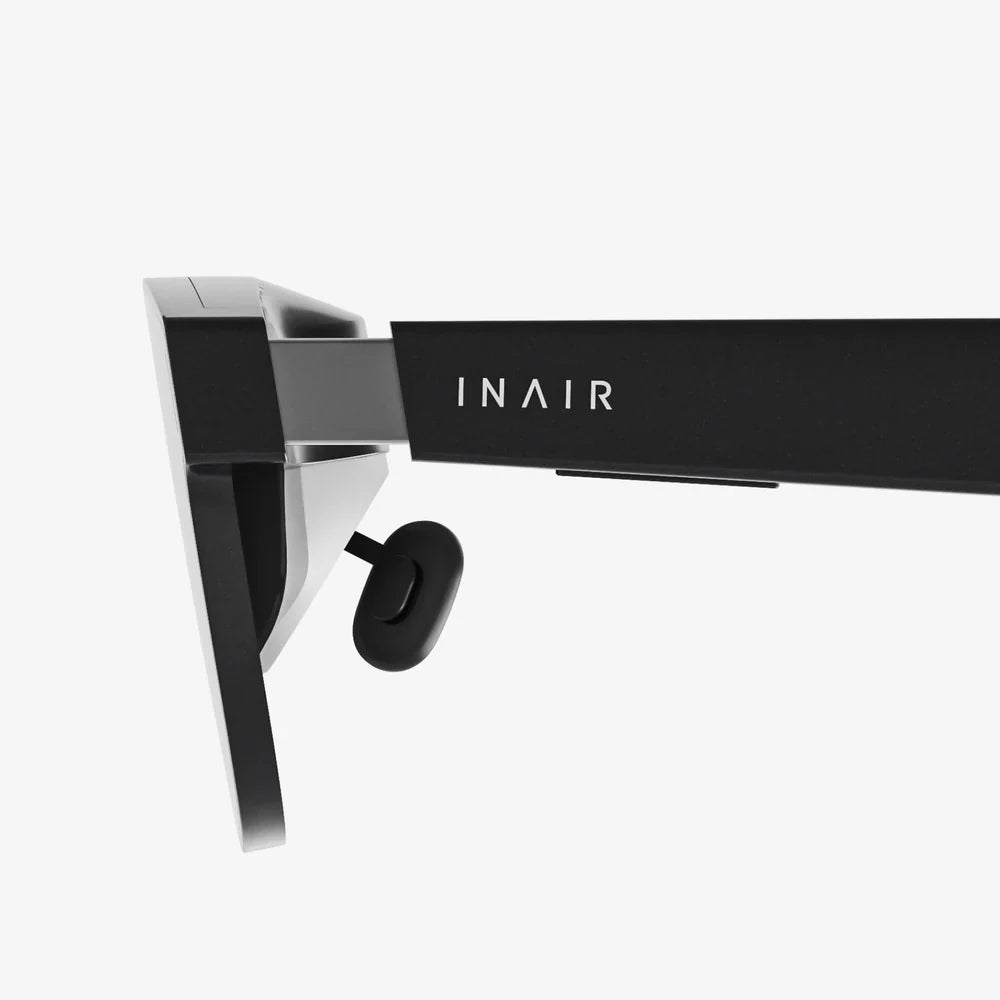
Imagine a world where your colleague, sitting thousands of miles away, can reach into your immediate physical space, grab a holographic engine model you’re both examining, and point out a flaw in real-time. This isn’t a scene from a science fiction film; it is the palpable, revolutionary promise of multi user collaboration AR, a technological leap poised to redefine the very fabric of teamwork, design, and communication. We are standing at the precipice of a new era where the digital and physical coalesce into a shared experiential plane, dissolving geographical constraints and unlocking unprecedented potential for collective human achievement.
The Foundation: What is Multi User Collaboration AR?
At its core, multi user collaboration augmented reality is a sophisticated technological framework that allows multiple individuals, often in different physical locations, to see, interact with, and manipulate the same persistent digital content simultaneously, all within the context of their own real-world environment. Unlike virtual reality, which creates a fully immersive digital world, AR overlays digital information onto the physical world. The "multi user" component adds a complex layer of networking, synchronization, and spatial awareness to ensure a seamless and coherent shared experience.
This goes far beyond a simple video call with a shared screen. It is a paradigm shift towards a shared spatial reality. Participants are not just observers; they are active occupants of a hybrid space. They can walk around a digital prototype, annotate the air with persistent notes, or assemble a virtual structure piece by piece, with each person's actions instantly visible to everyone else. This creates a powerful sense of co-presence—the feeling that you are truly together in the same room, collaborating on a tangible object.
The Technological Symphony: How It Works
Creating this illusion of a shared digital space is a feat of engineering that harmonizes several advanced technologies.
Spatial Mapping and Scene Understanding
For digital objects to behave realistically, the AR system must first understand the physical environment. Using a combination of cameras, sensors, and LiDAR, each user's device creates a detailed 3D map of the surrounding space—identifying floors, walls, tables, and other surfaces. This spatial map is the canvas upon which the collaborative experience is painted. It ensures that a virtual model placed on a conference table in one office appears on the exact same relative spot on a colleague's table across the globe.
Cloud Anchors and Persistent World Coordination
This is the secret sauce for shared persistence. Cloud services act as a central nervous system, creating unique digital coordinates (often called "cloud anchors") for every virtual object placed in the shared space. When one user positions a hologram, its precise location and orientation data are uploaded to the cloud. Other users' devices then download this data and use their own spatial map to render the object in the correct physical location for them. This continuous, low-latency synchronization ensures that if one person moves an object, the change is reflected for all participants in near real-time.
Avatar Representation and Spatial Audio
To complete the sense of co-presence, users are often represented by avatars. These can range from simple, abstract representations like a colored orb or a cartoonish figure to more realistic volumetric captures. Crucially, these avatars are spatially aware. If a teammate moves to your left, their avatar appears on your left, and their voice, transmitted through spatial audio, will sound like it's coming from that direction. This subtle cue is incredibly effective at making interactions feel natural and intuitive, mimicking the nuances of face-to-face conversation.
Networking and Low Latency
The entire experience hinges on a robust and high-speed network connection. Any significant delay (latency) in data transmission can cause a disruptive lag between one user's action and another user's perception of it, breaking the immersion and potentially causing confusion. 5G networks, with their high bandwidth and ultra-low latency, are set to be a critical enabler for widespread, smooth multi user AR collaboration.
Transforming Industries: The Practical Applications
The potential applications for this technology are as vast as the imagination, stretching across every sector that relies on teamwork and complex visual information.
Design and Engineering
This is perhaps the most obvious and impactful application. Engineering teams spread across different countries can congregate around a full-scale, holographic prototype of a new product. They can peel back layers to inspect internal components, simulate stress tests, and make design modifications on the fly. An architect in London can walk a client in Tokyo through a life-size model of their new home before a single brick is laid, making changes to the layout in real-time based on the client's feedback.
Healthcare and Medicine
Surgeons can use multi user AR for collaborative pre-operative planning. A team of specialists can gather around a detailed 3D model of a patient's anatomy derived from CT or MRI scans, discussing the best surgical approach and practicing complex procedures. During surgery, a remote expert could guide a less experienced surgeon by drawing annotations directly onto their field of view, pointing out critical structures without ever scrubbing in.
Remote Assistance and Field Service
A field technician repairing a complex piece of machinery can stream their point-of-view to an expert located centrally. The expert can then see exactly what the technician sees and provide guidance by drawing arrows, highlighting components, or placing animated instructions directly into the technician's AR view. This drastically reduces downtime, minimizes errors, and allows one expert to support countless field workers anywhere in the world.
Education and Training
Students from around the world can assemble inside a virtual ancient Roman forum, examining historical artifacts in 3D. Medical students can collaboratively dissect a holographic human body. Trainee mechanics can practice repairing a virtual engine together, with each person responsible for a different part of the process. This moves learning from passive observation to active, hands-on, social collaboration.
Overcoming the Hurdles: Challenges on the Horizon
Despite its immense promise, the path to ubiquitous multi user AR collaboration is not without significant obstacles.
Technical Barriers: Consumer-grade AR hardware is still evolving. Achieving a perfect blend of a wide field of view, high resolution, long battery life, and a comfortable form factor remains a challenge. Furthermore, creating truly photorealistic avatars and ensuring rock-solid, low-latency synchronization for complex interactions requires continued innovation in processing power and networking.
Privacy and Security: These systems require continuous scanning of our homes, offices, and workspaces. The data generated—detailed 3D maps of our environments—is incredibly sensitive. Robust security protocols and clear, transparent data policies are non-negotiable to ensure this information is not misused or breached.
Interoperability and Standards: For a truly open and connected metaverse of AR experiences, different platforms and devices need to be able to communicate seamlessly. The industry must develop and adopt common standards for spatial mapping, object persistence, and avatar systems to avoid walled gardens where users on one platform cannot collaborate with those on another.
User Experience and Social Dynamics: Designing intuitive interfaces for manipulating shared digital objects is crucial. Furthermore, we must understand the new social etiquette of these spaces. How do you avoid accidentally " talking over" someone when there are no physical body language cues? How are decisions made in a shared digital space? These are human challenges that need thoughtful design solutions.
The Future is a Shared Space
Looking ahead, the evolution of multi user collaboration AR is inextricably linked with the concept of the spatial web—an internet where digital information is mapped to and interacts with the physical world. We will move from isolated collaborative sessions to persistent digital layers over our reality. The conference room table could forever have interactive, collaborative tools embedded within it. A factory floor could have constantly updating performance data and instructions hovering over each machine, visible and editable by authorized personnel.
Advancements in AI will further supercharge this. AI assistants could participate as active collaborators, fetching relevant data, running simulations in the background, or even providing real-time translations for global teams, all within the shared AR space. The line between human and machine collaboration will blur, creating a powerful symbiotic relationship that enhances human creativity and problem-solving.
The journey towards this future is already underway. From global corporations to specialized startups, the race is on to build the platforms and tools that will form the bedrock of our next computing paradigm. It is a shift as significant as the move from command-line interfaces to the graphical user interface, or from desktop computing to mobile.
The walls of our digital and physical worlds are crumbling, and in their place, a new, shared spatial canvas is emerging. Multi user collaboration AR is not just a new way to conduct a meeting; it is the foundation for a more connected, efficient, and creatively unbound future. It promises to break down the final barriers of distance, allowing human intellect and imagination to converge and amplify in a shared space, forever changing the way we build, learn, and solve problems together. The door to this shared reality is now open, and the first steps inside reveal a universe of possibility waiting to be explored.
Share:
Best Wearable Devices in the Workplace: Boosting Productivity and Safety
What is AI Good For: Transforming Industries and Empowering Humanity