


- by wangfred
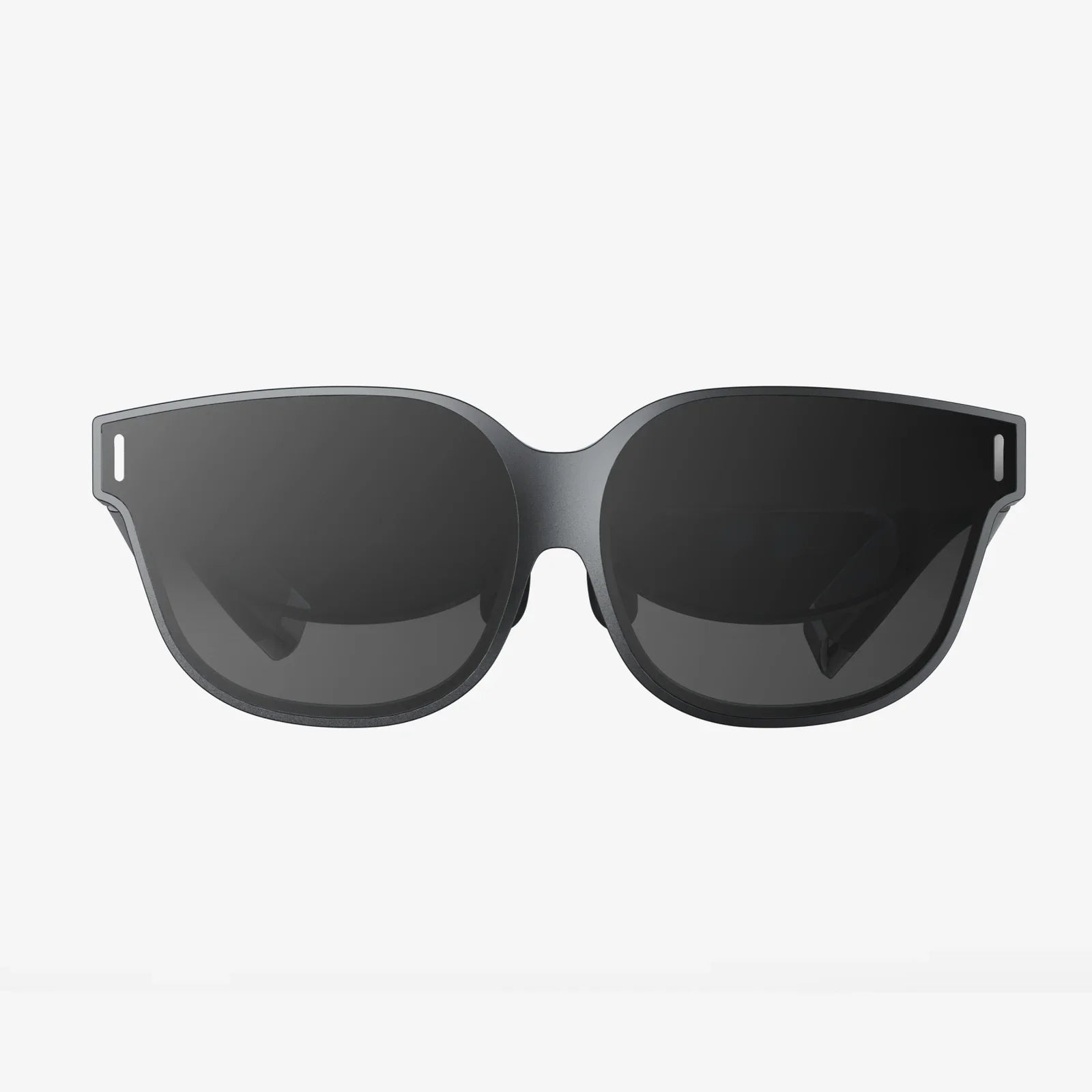
Multimodal Smart Glasses: The Invisible Revolution Reshaping Our Digital Lives
- by wangfred
Imagine a world where information flows as effortlessly as a glance, where digital assistance is woven into the very fabric of your perception, and the boundary between what you see and what you know becomes beautifully blurred. This is not a distant science fiction fantasy; it is the imminent reality being crafted by the rapid evolution of multimodal smart glasses. This technology promises to untether us from our screens, offering a more intuitive, context-aware, and hands-free way to navigate both our digital and physical existences.
At its core, the term "multimodal" signifies the fundamental breakthrough. Unlike earlier iterations of wearable displays, these devices do not rely on a single method of interaction, such as a touchpad or voice commands alone. Instead, they orchestrate a symphony of inputs, creating a rich, contextual understanding of the user's intent and environment.
The primary modalities typically include:
The true magic lies in the fusion of these data streams. A simple voice command like, "What is that building?" is made infinitely more powerful when the glasses simultaneously know where you are looking (via gaze tracking), what it sees (via computer vision identifying the building's architecture), and where you are (via GPS). This multimodal fusion creates a level of contextual awareness that feels less like using a tool and more like having a superpower.
The potential applications for this technology extend far beyond consumer convenience, poised to revolutionize professional fields and enhance human capability in profound ways.
In industrial settings, the hands-free nature of smart glasses is a game-changer. A field technician repairing complex machinery can have schematic diagrams, instruction manuals, or a live video feed from a remote expert overlaid directly onto their field of view. They can use voice commands to navigate documents or capture images of a faulty component for later analysis, all without putting down their tools. This drastically reduces error rates, improves safety, and accelerates complex procedures.
The healthcare sector stands to benefit enormously. Surgeons could access vital patient statistics, ultrasound images, or surgical plans without ever looking away from the operating table. Medical students could observe procedures with anatomical labels overlaid on the patient, enhancing their learning experience. For general practitioners, instant access to medical databases and the ability to hands-free document patient visits could streamline workflows and improve patient care.
Perhaps one of the most noble applications is in accessibility. For individuals with visual impairments, smart glasses could audibly describe their surroundings, read text from menus or signs, and identify faces. For those who are hard of hearing, real-time speech-to-text transcription could be displayed within the lenses, turning conversations into captioned experiences. This technology has the potential to break down barriers and provide a new layer of independence for millions.
Imagine walking through a foreign city where directions are painted onto the sidewalk, historical buildings are annotated with their stories, and restaurant menus are automatically translated and reviewed as you look at them. Multimodal glasses could transform tourism and daily navigation into an immersive, informative adventure, layering a rich tapestry of data onto the real world.
For all their potential, the path to mainstream adoption is fraught with significant hurdles. The first generation of smart glasses often suffered from a critical flaw: they looked like obvious, bulky pieces of technology. Social acceptance is paramount; people are highly conscious of how they are perceived in public. A successful device must be indistinguishable from conventional eyewear—lightweight, stylish, and socially unobtrusive. The challenge for engineers is to pack immense computational power, batteries, displays, and sensor arrays into a form factor that people would be proud to wear.
Battery life remains another formidable obstacle. Processing high-resolution video feeds, running complex AI models, and powering augmented reality displays are incredibly energy-intensive tasks. Current technology often requires trade-offs between performance, size, and battery longevity. Breakthroughs in low-power processors, display technology, and energy-dense batteries are essential for all-day, unplugged usability.
Finally, the user interface itself must be intuitive. Navigating complex menus with voice or gesture in a crowded room can be awkward and inefficient. The industry is exploring innovative solutions like projected touch interfaces onto the arm of the glasses, subtle ring controllers, or ultimately, neural interfaces that respond to intention. The goal is an interface that feels natural and disappears from the user's conscious thought.
No discussion about always-on, camera-and-microphone-equipped wearable technology can be complete without a deep and critical examination of privacy. The very features that make multimodal glasses powerful—constant environmental awareness and recording capabilities—also make them a potent surveillance tool. The concept of a "sousveillance" society, where citizens are constantly recording each other, raises profound ethical and legal questions.
How do we prevent these devices from being used for unauthorized recording in private spaces? What safeguards must be implemented to ensure that the vast amounts of personal and environmental data they collect are encrypted and secure from hackers? The industry must adopt a philosophy of "privacy by design," embedding features like physical camera shutters, clear recording indicators (e.g., a light that is impossible to disable when recording), and robust user controls over data collection and storage.
Furthermore, the potential for distraction and information overload is real. Constantly having notifications and data streams overlayed on your vision could be cognitively draining and even dangerous in situations that require full attention, such as driving. Responsible design will need to include context-aware systems that intelligently limit notifications based on the user's activity and environment.
The current state of multimodal smart glasses is merely the foundation. The future trajectory points toward even deeper integration between the digital and the physical. We are moving towards displays with photorealistic augmented reality, capable of blending digital objects so seamlessly into the real world that they become indistinguishable. Haptic feedback systems could provide a sense of touch for virtual interfaces. Most importantly, AI will evolve from a reactive assistant to a proactive partner.
Future devices will less often wait for a command and more often anticipate needs based on context, behavior, and preference. They will move from being a platform for apps to being an intelligent agent intimately aware of your work, your hobbies, and your world. The ultimate goal is a technology that amplifies human potential without demanding our constant attention—a silent, helpful partner enhancing our reality rather than replacing it.
The journey of multimodal smart glasses is just beginning, a quiet but relentless march toward a more integrated future. They represent not just a new product category, but a fundamental rethinking of our relationship with technology. By moving beyond the screen and into our field of view, they promise a world where technology understands us, assists us, and empowers us in ways we are only starting to imagine. The true measure of their success won't be their technical specifications, but their ability to become so useful, so intuitive, and so seamlessly integrated into our lives that they ultimately become invisible.