


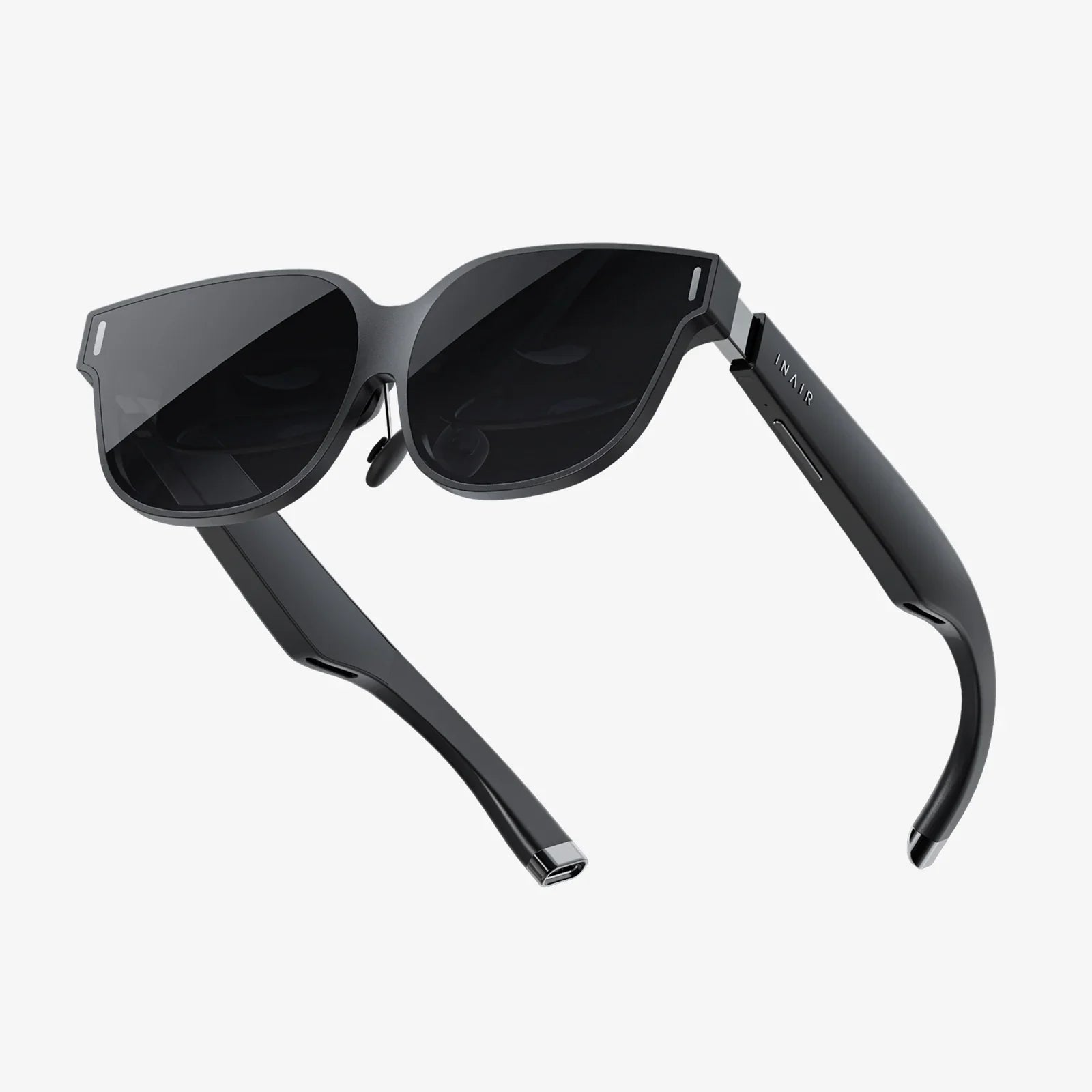
Imagine a world where information doesn't just live on your screen but is painted onto the very fabric of your reality. This is the promise of my AR, a technological evolution that is quietly, yet profoundly, shifting how we perceive, interact with, and understand the world around us. It’s not about escaping into a virtual world; it’s about enhancing the one we already inhabit, and it’s happening right before our eyes.
The Foundation: Understanding the Magic Behind the Curtain
At its core, Augmented Reality is a sophisticated dance between hardware and software, designed to superimpose digital information—images, sounds, text, and 3D models—onto our view of the physical environment. Unlike its cousin, Virtual Reality, which seeks to replace reality entirely, AR aims to augment and enrich it. The magic lies in its ability to understand context. Through a combination of cameras, sensors like accelerometers and gyroscopes, and increasingly powerful computer vision algorithms, my AR device can comprehend its position in space, recognize surfaces, and identify objects. This spatial awareness allows digital content to not only appear but to interact with the real world convincingly, sticking to a tabletop, occluding behind a couch, or scaling appropriately with a room.
Beyond Novelty: AR's Tangible Impact on Industry and Work
The most significant adoption of AR is happening not in consumer entertainment, but within industrial and enterprise sectors, where it solves critical problems and delivers measurable efficiency. Here, my AR becomes a powerful tool for productivity and precision.
In complex fields like manufacturing and engineering, technicians are using AR-assisted guidance for assembly, maintenance, and repair. Instead of constantly glancing between a physical engine and a static paper manual or a 2D screen, digital instructions and animated diagrams are projected directly onto the equipment itself. A mechanic might see the exact torque sequence for a bolt overlaid on the bolt head, or an engineer might visualize the internal wiring of a machine without ever disassembling it. This hands-free, contextual information reduces errors, slashes training time, and dramatically improves safety.
Similarly, in architecture and construction, professionals are walking through full-scale, holographic models of their designs long before a single foundation is poured. This allows for unparalleled collaboration and error detection at the planning stage, saving immense amounts of time and resources. For a surgeon, my AR can mean projecting a 3D model of a patient’s anatomy directly onto their body during a procedure, providing a kind of X-ray vision that enhances accuracy and improves outcomes.
Transforming the Classroom and the Living Room
The educational potential of AR is staggering. It can turn abstract concepts into tangible, interactive experiences. A student studying astronomy can hold the solar system in their hands, watching the planets orbit the sun from their desk. A history class can walk through a digitally reconstructed ancient Roman forum, seeing the ruins spring back to life around them. This shift from passive learning to active exploration fosters deeper engagement and understanding, making knowledge visceral and memorable.
At home, the revolution is more subtle but equally transformative. My AR is changing how we shop, allowing us to visualize a new piece of furniture in our living room at perfect scale and color before clicking "buy." It’s revolutionizing recipe guidance, with each cooking step floating above the mixing bowl. It’s creating new forms of interactive entertainment, from board games that come alive with animated characters to scavenger hunts that unfold in city parks, blending the digital and physical into a single playground.
The New Social Fabric: Connection Through a Shared Lens
One of the most human applications of AR is in social connection. The technology is forging new ways to interact and share experiences. Imagine watching a football game with a friend who lives across the country, but through your AR view, you both see the same real-time stats and animated replays hovering over your coffee table as if you were in the same room. Shared AR experiences can create a powerful sense of co-presence, breaking down geographical barriers. Social media filters were just the beginning; the future involves persistent digital art installations in public spaces, collaborative creative projects, and new languages of expression that exist only when viewed through this shared digital lens.
Navigating the Invisible Hurdles: Challenges and Considerations
For all its promise, the path to ubiquitous AR is not without significant obstacles. The current hardware, while impressive, often presents a choice between power and practicality. High-end headsets offer immersive experiences but can be bulky and socially isolating, while smartphone-based AR is accessible but limited in its field of view and interactivity. The next great challenge is creating a device that is both powerful and as socially acceptable as a pair of everyday glasses.
Beyond hardware, the software ecosystem needs to mature. Developers must create intuitive user interfaces that feel like a natural extension of our perception, not a distracting overlay. Furthermore, the immense data collection required for contextual AR—scanning our homes, offices, and cities—raises profound questions about privacy and security. Who owns the digital map of my living room? How is my visual data being used and protected? Establishing clear ethical guidelines and robust security frameworks is not optional; it is essential for building the trust required for mass adoption.
A Glimpse Into Tomorrow: The Future is Transparent
Looking ahead, the trajectory of my AR points toward a future where the technology becomes increasingly invisible and integrated. We are moving toward sleek, lightweight glasses that project high-fidelity images onto transparent lenses, allowing for seamless interaction with digital content while maintaining full engagement with the people and world around us. This will be powered by AI assistants that understand our context and intentions, proactively offering the right information at the right time without a spoken command.
We will see the rise of the AR cloud—a persistent, shared digital layer over the entire world. This will enable experiences where a note left digitally on a park bench remains for the next person to find, or where navigation arrows are painted onto the sidewalk itself. This interconnected spatial web will fundamentally change how we navigate, learn, work, and socialize, blending our physical and digital existences into a single, continuous reality.
The revolution won't be announced with a bang, but with a whisper. It won't be about putting on a headset to enter a new world, but about putting on a pair of glasses to finally see the full potential of our own. My AR is the next great platform, not as a separate device we use, but as an integral layer of human experience, waiting to be unlocked.
Share:
Prescription Lenses For VR: The Ultimate Guide to Perfect Vision in Virtual Worlds
Best Bluetooth Headphones: The Ultimate Guide to Wireless Audio Freedom