


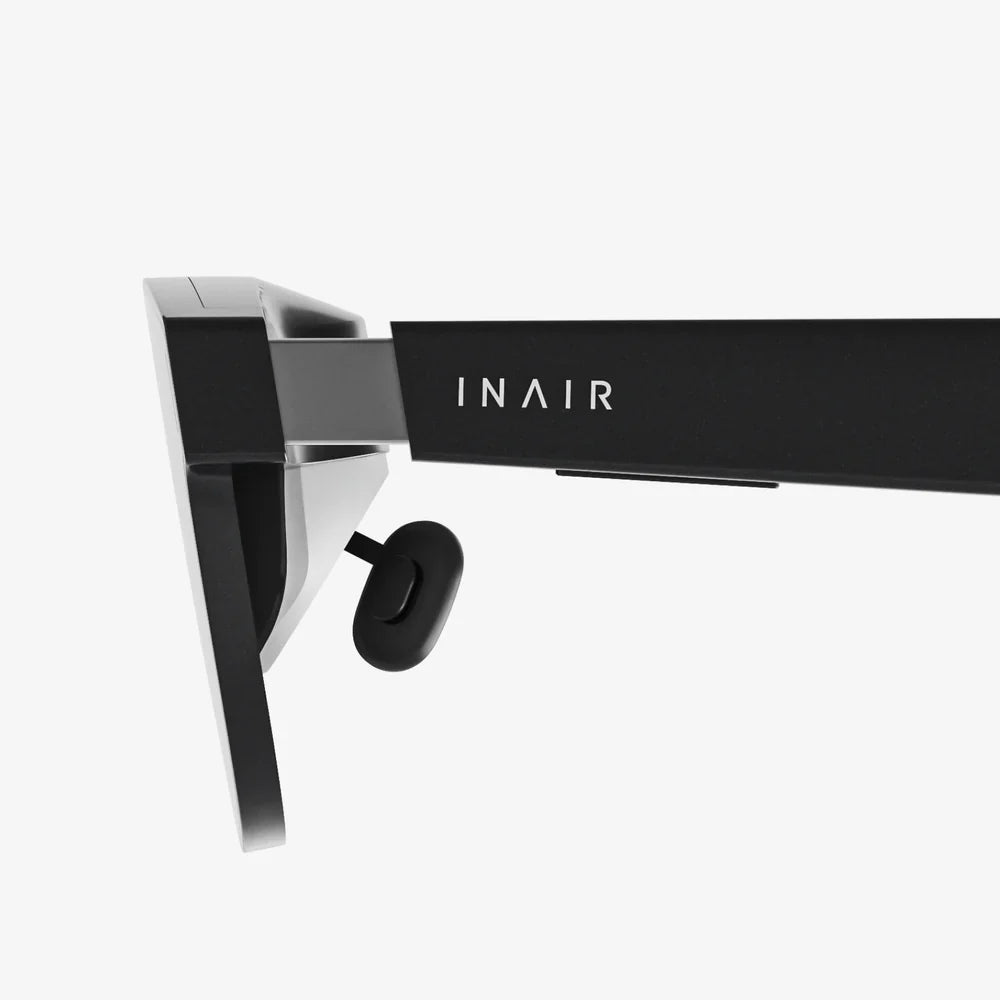
Natural interaction AR is quietly reshaping how we touch, see, and understand digital information, turning screens into something you can reach out and almost feel. Instead of tapping flat icons or swiping on glass, you can look, point, speak, or move your body and watch digital content respond as if it were part of the real world. This shift is not just a technical upgrade; it is a profound change in how humans communicate with technology, and those who understand it early will be better prepared for the next wave of immersive experiences.
At its core, natural interaction AR combines augmented reality with interaction methods that feel instinctive. Think of how you naturally reach for an object, glance toward something that interests you, or raise your voice when you need attention. Natural interaction AR takes these behaviors and uses them as inputs, reducing the gap between intention and action. Instead of learning complex menus, you interact the way you already know how, which makes digital experiences more intuitive, inclusive, and powerful.
What Natural Interaction AR Really Means
Natural interaction AR is an approach to augmented reality in which users control and experience digital content using human behaviors that feel effortless. Rather than relying on traditional inputs like keyboards, mice, or touchscreens, it uses:
- Gestures and body movements
- Eye gaze and head position
- Voice commands and natural language
- Spatial awareness and physical movement in real space
The goal is to make digital content feel like it belongs in the real world. Digital objects appear anchored to physical environments, and the way you interact with them mirrors how you interact with physical objects. When this works well, the technology fades into the background and the experience feels almost magical.
How Natural Interaction AR Differs From Traditional AR
Augmented reality has existed for years, often in the form of filters, overlays, or simple 3D objects placed in the camera view. Traditional AR tends to focus on what you see, while natural interaction AR focuses on how you act. The difference is subtle but important:
- Traditional AR: You see digital content, but interact mainly through taps and swipes on a screen.
- Natural interaction AR: You see digital content and interact using gaze, gestures, voice, and movement in space.
This shift turns AR from a visual effect into a full-bodied experience. Instead of treating AR as a layer on top of your phone display, natural interaction AR treats the environment, your body, and your senses as part of the interface.
The Core Technologies Behind Natural Interaction AR
Natural interaction AR depends on several layers of technology working together in real time. Understanding them helps explain why these experiences are now possible and where they are going next.
1. Computer Vision And Environment Understanding
Computer vision allows devices to interpret the physical world through cameras and sensors. In natural interaction AR, it is responsible for:
- Plane detection: Finding floors, tables, walls, and other surfaces where digital objects can be placed.
- Depth sensing: Estimating how far away objects are to correctly position and scale virtual content.
- Object recognition: Identifying physical items to attach information, labels, or instructions.
- Lighting estimation: Matching virtual object lighting to real-world conditions so they look believable.
Without accurate environment understanding, digital objects would float awkwardly or slide around instead of staying fixed in place. Natural interaction AR relies on this stability to make interactions feel trustworthy and realistic.
2. Spatial Mapping And Tracking
Spatial mapping creates a 3D model of the user’s surroundings. This allows AR systems to:
- Anchor virtual objects to precise locations in a room or outdoor space
- Remember where objects were placed, even if the user looks away
- Support multi-room or large-area AR experiences
Tracking, meanwhile, ensures the system always knows where the user is and which direction they are facing. This is what keeps digital objects aligned as you walk around them, bend down, or lean closer.
3. Hand, Body, And Gesture Tracking
Natural interaction AR depends heavily on understanding the user’s body movements. Advanced tracking systems can:
- Detect hand shapes and finger positions to interpret pointing, grabbing, or pinching motions
- Recognize full-body poses for navigation, selection, or expressive input
- Track subtle gestures like nods, head tilts, or shoulder movements
These capabilities allow AR systems to replace buttons and controllers with your own body. For example, you might pinch your fingers to grab a virtual object, or swipe the air to rotate a 3D model.
4. Eye Tracking And Gaze-Based Interaction
Eye tracking measures where you are looking. In natural interaction AR, gaze can be used to:
- Highlight objects you are focusing on
- Trigger contextual information when your eyes rest on something
- Provide hands-free selection when combined with a simple gesture or voice command
Gaze is powerful because it reveals intent before you even move your hands or speak. When systems respond to what you are looking at, interactions feel faster and more natural.
5. Voice Recognition And Natural Language Understanding
Voice is a key part of natural interaction AR because it frees your hands and lets you express complex commands quickly. Voice technology in AR includes:
- Speech recognition to convert spoken words into text
- Natural language understanding to interpret meaning and context
- Conversational responses that feel human-like and helpful
When combined with spatial awareness, voice becomes even more intuitive. You can say things like “Move that over there” while looking at an object and glancing toward a spot on the table, and the system can infer what you mean.
6. Haptics And Sensory Feedback
Without feedback, interactions feel vague. Natural interaction AR uses haptic feedback and subtle cues to confirm actions. This can include:
- Vibration or tactile signals when you touch or grab a virtual object
- Audio cues that match virtual impacts or movements
- Visual highlights or glows when an interaction is recognized
These signals help users build confidence. They learn what works and what does not, without needing long instructions or tutorials.
Key Principles Of Natural Interaction AR Design
Behind every compelling natural interaction AR experience lies careful design. It is not enough to add gestures or voice commands; they must feel intuitive and consistent. Several principles guide this design process.
Leverage Existing Human Behaviors
The most effective interactions are those people already use in everyday life. Designers look for natural behaviors and map them to digital actions, such as:
- Reaching out and grabbing to pick up virtual objects
- Turning your head to explore different parts of a scene
- Pointing to indicate selection or direction
- Speaking in everyday language instead of memorizing commands
When interactions match expectations, people feel comfortable faster and need less training.
Make Interactions Discoverable And Self-Explanatory
Natural interaction AR should not require thick manuals. Visual cues, subtle animations, and contextual hints can show users what is possible. For example:
- A virtual object might gently pulse when it can be grabbed.
- A ghosted hand icon might appear briefly to hint at a gesture.
- Tooltips may appear when a user gazes at an area for a few seconds.
This approach encourages exploration and learning by doing, rather than reading instructions.
Support Multiple Input Modes
People have different preferences and abilities. Natural interaction AR works best when it offers several ways to accomplish the same task, such as:
- Using voice or gesture to select an object
- Using gaze plus a small gesture instead of a large arm movement
- Allowing both physical controllers and hand tracking in demanding scenarios
This flexibility makes experiences more inclusive and resilient to noisy environments, limited mobility, or sensor limitations.
Prioritize Comfort And Ergonomics
Interactions that look impressive in a demo can become exhausting over time. Designers must consider:
- Avoiding long periods of arms raised in mid-air
- Minimizing repetitive motions or large gestures
- Reducing eye strain by limiting rapid focus changes
- Designing for seated, standing, and moving use cases
Comfort is essential for long-term adoption, especially in professional or educational environments.
Real-World Applications Of Natural Interaction AR
Natural interaction AR is no longer confined to experimental labs. It is quietly transforming how people learn, work, shop, and entertain themselves in ways that feel increasingly seamless.
Education And Training
In education, natural interaction AR turns abstract concepts into tangible experiences. Learners can:
- Walk around large-scale 3D models of molecules, historical artifacts, or planetary systems
- Use their hands to assemble virtual components and see how they work together
- Practice complex procedures in a safe, controlled mixed environment
Because interactions are physical and visual, information becomes easier to remember. Students are not just reading or listening; they are actively engaging with the material.
Workplace Collaboration And Remote Assistance
Natural interaction AR is changing how teams collaborate, especially when members are in different locations. Some emerging patterns include:
- Shared AR workspaces where participants can point, draw, and manipulate the same virtual objects from different places
- Remote guidance where an expert can see what a field worker sees and overlay instructions directly onto the environment
- Hands-free workflows where workers can access instructions or checklists using gaze and voice while keeping both hands on their tools
These approaches reduce errors, speed up training, and bridge the gap between office-based experts and on-site operators.
Healthcare And Therapy
In healthcare, natural interaction AR supports both professionals and patients. Examples include:
- Guided procedures where surgeons or clinicians see layered information aligned with the patient’s body
- Rehabilitation exercises gamified through body tracking, encouraging patients to move correctly and consistently
- Patient education experiences that visualize conditions or treatments in understandable ways
Because interactions can be tailored to individual abilities and tracked over time, natural interaction AR opens new possibilities for personalized care and long-term monitoring.
Retail, Commerce, And Consumer Experiences
Shopping is becoming more experiential through natural interaction AR. Consumers can:
- Place virtual items in their homes to see how they fit and look
- Interact with digital displays that respond to their presence and gestures
- Receive contextual information simply by looking at a product or shelf
These experiences reduce uncertainty and make decisions more confident. For businesses, they provide rich data about what customers look at, interact with, and ultimately choose.
Entertainment, Games, And Storytelling
Entertainment is one of the most visible areas where natural interaction AR shines. Experiences can:
- Turn living rooms, streets, or parks into interactive stages
- Let players use their bodies as controllers, dodging, throwing, and reaching
- Blend narratives with the real world, so characters and events seem to inhabit familiar spaces
When stories unfold around the user, and reacting to them feels as simple as moving or speaking, immersion reaches a new level. This is where natural interaction AR begins to feel less like technology and more like an extension of imagination.
Navigation And Spatial Guidance
Finding your way through complex environments is another area benefiting from natural interaction AR. Systems can:
- Overlay arrows or paths directly onto the floor in front of you
- Respond to gaze or voice when you ask for directions
- Highlight points of interest as you look around
This kind of spatial guidance is especially useful in large buildings, transportation hubs, campuses, or unfamiliar cities. By aligning instructions with the real world, it reduces cognitive load and confusion.
Benefits Of Natural Interaction AR For Users And Organizations
Natural interaction AR is not just exciting; it offers concrete benefits that drive adoption across industries.
Lower Learning Curves
Because interactions are based on familiar behaviors, users can pick up new experiences quickly. This reduces training time and encourages experimentation. People do not feel like they need to be “tech experts” to participate.
Higher Engagement And Retention
When users can see, touch, and move through information, they pay more attention and remember more. For educators, trainers, and marketers, this translates into better outcomes and stronger emotional connections.
Improved Efficiency And Accuracy
In professional environments, natural interaction AR can streamline workflows. Workers can access information without leaving their tasks, follow visual step-by-step instructions, and avoid mistakes through real-time guidance. This can lead to faster completion times and fewer errors.
Accessibility And Inclusion
Natural interaction AR has the potential to make digital experiences more accessible. People who have difficulty using traditional input devices may find voice, gaze, or gesture more comfortable. With thoughtful design, AR can adapt to different abilities, offering customized interaction modes.
Challenges And Ethical Considerations
Despite its promise, natural interaction AR raises important questions and challenges that must be addressed as adoption grows.
Privacy And Data Protection
To work effectively, natural interaction AR systems often collect sensitive data:
- Eye movements and gaze patterns
- Body movements and physical behavior
- Spoken words and surrounding audio
- Detailed maps of homes, workplaces, and public spaces
Without strong safeguards, this information could be misused for intrusive profiling, surveillance, or unauthorized tracking. Designers and organizations must prioritize:
- Transparent data policies
- Local processing where possible
- Clear consent mechanisms
- Strict limitations on data sharing and retention
Bias And Fairness In Interaction
Systems that interpret gestures, speech, and behavior may not work equally well for everyone. Differences in language, accent, physical ability, body type, or cultural norms can lead to unequal experiences. To avoid this, teams need diverse testing groups, continuous calibration, and explicit fairness goals when designing interaction models.
Physical Safety And Distraction
Natural interaction AR encourages movement and immersion, which can increase the risk of accidents if users are not aware of their surroundings. Safety considerations include:
- Clear boundaries between safe and unsafe zones
- Alerts when users approach obstacles or hazards
- Modes designed specifically for walking, sitting, or standing
Balancing immersion with situational awareness is essential, especially in public or shared spaces.
Digital Fatigue And Overload
As AR becomes more natural and pervasive, the risk of constant digital stimulation grows. If every surface becomes a canvas for information, users may feel overwhelmed. Designers must:
- Limit unnecessary notifications
- Respect personal space and attention
- Offer easy ways to pause, filter, or reduce content
Healthy interaction patterns will be just as important as technical innovation.
Designing For The Future Of Natural Interaction AR
Natural interaction AR is still evolving, and the most compelling experiences are likely yet to be imagined. However, several emerging trends suggest where the field is heading.
Blended Realities And Seamless Transitions
The boundary between AR, virtual reality, and traditional screens is becoming more fluid. In the future, users may move effortlessly between:
- Fully immersive virtual environments
- Partially augmented real-world views
- Standard displays on laptops or mobile devices
Natural interaction will act as the common thread, allowing consistent gestures, voice commands, and gaze interactions across contexts.
Context-Aware And Adaptive Experiences
As systems become better at understanding context, natural interaction AR can adapt dynamically to:
- Where you are and who is with you
- What you are trying to accomplish
- Your past behavior and preferences
This means experiences that adjust difficulty, interface complexity, and content density automatically. For example, a training application might simplify instructions for a novice and reveal deeper layers for an expert, all based on observed behavior.
Multi-User And Social AR
Natural interaction AR will increasingly be shared rather than solitary. Multi-user experiences enable:
- Collaborative design and planning in shared AR spaces
- Social games and activities anchored in physical locations
- Live events where digital content responds to group behavior
Designing interactions that feel fair, synchronized, and enjoyable for multiple participants adds complexity but also unlocks powerful new forms of engagement.
Greater Integration With Everyday Objects
As sensors and connectivity spread, natural interaction AR will connect more deeply with physical objects. Everyday items may:
- Reveal digital overlays when looked at through AR devices
- Respond to gestures or voice commands via embedded sensors
- Participate in interactive narratives or workflows
This convergence makes the distinction between “digital” and “physical” increasingly blurred, turning the environment itself into a responsive interface.
Preparing For A World Shaped By Natural Interaction AR
The rise of natural interaction AR is not a distant possibility; it is unfolding now, gradually weaving itself into everyday life. As this happens, individuals, educators, businesses, and creators face important choices. Will they treat it as a novelty, or will they embrace it as a new medium for communication, learning, and problem-solving?
Those who start experimenting early will gain a head start. Educators can explore interactive lessons that respond to student movements and questions. Professionals can test hands-free workflows that layer information directly onto their tasks. Creators can invent new forms of storytelling that live in the spaces people already inhabit. Each small experiment builds the skills and intuition needed to thrive in a world where digital and physical realities co-exist.
Natural interaction AR offers something rare in technology: the chance to make digital experiences feel more human instead of less. By grounding interaction in the way people naturally move, speak, and perceive, it promises tools that adapt to us rather than forcing us to adapt to them. The organizations and individuals who recognize this shift now will be the ones shaping the next generation of immersive, human-centered experiences instead of merely watching them happen.
Share:
virtual display management for seamless multi-monitor productivity and control
AR Screen Shaking: Causes, Fixes, and Future-Proofing Your Experience