


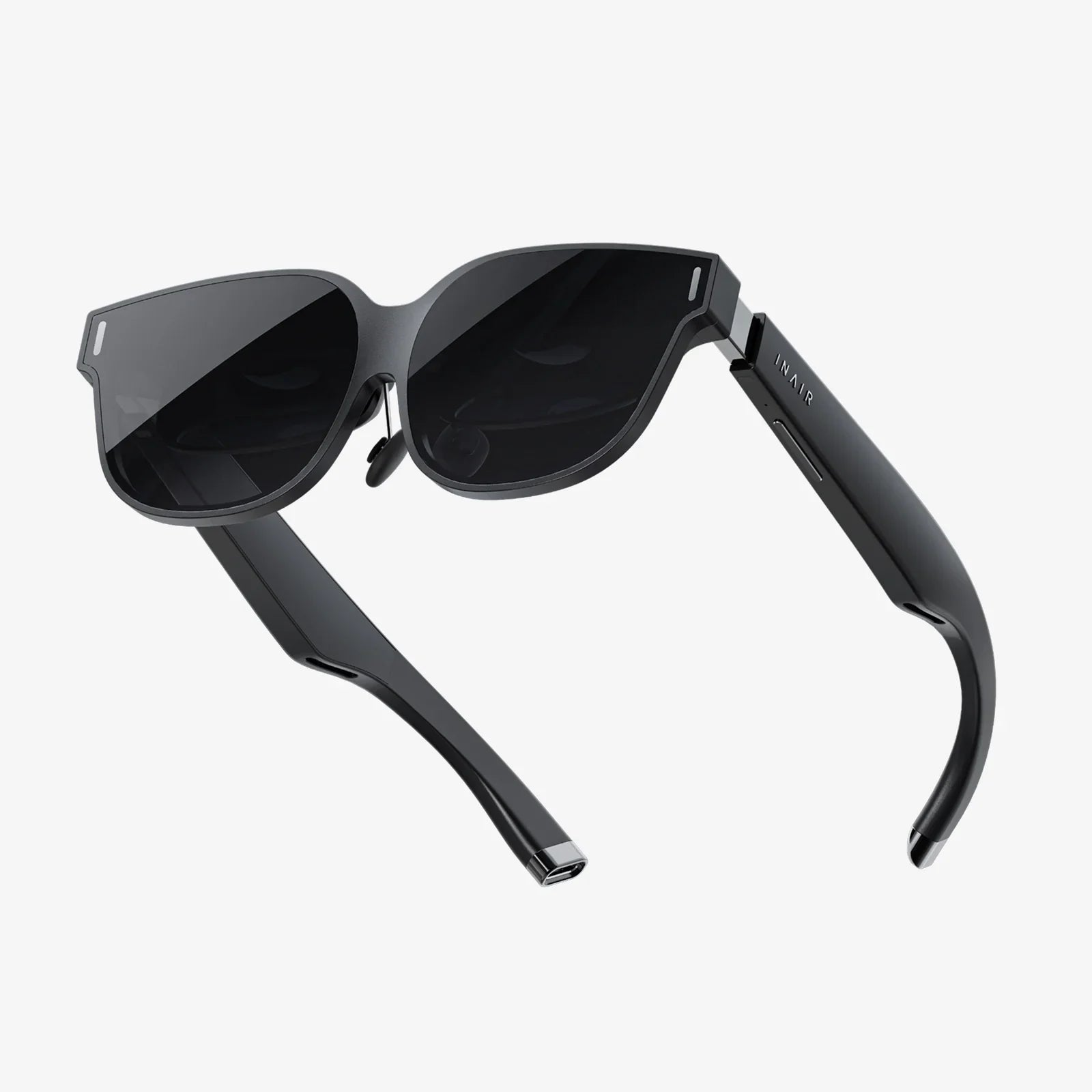
Imagine a world where your digital life isn't confined to a screen in your hand or on your desk, but is seamlessly woven into the very fabric of your reality. Information appears when you need it, virtual objects coexist with physical ones, and entire worlds can be conjured from the void. This is not a distant sci-fi fantasy; it is the imminent future being unlocked by the rapid, relentless advancement of near-eye display technology. This invisible revolution, perched on the bridge of your nose, is poised to fundamentally alter how we work, learn, play, and connect, dissolving the barrier between the digital and the physical in ways we are only beginning to comprehend.
The Core Principle: Painting Light onto the Retina
At its most fundamental level, a near-eye display is any technology that projects visual information directly into the user's field of view, extremely close to the eye. Unlike traditional screens that you look at, these displays are designed to be looked through. The core challenge and genius of this technology lie in its ability to create a convincing image that appears to be at a comfortable viewing distance, even though the physical display components are mere centimeters from the cornea.
This illusion is achieved through sophisticated optics. Tiny micro-displays, often leveraging LCD, OLED, or more emerging technologies, generate the initial image. This image is then passed through a series of lenses and waveguides—essentially clear, etched pieces of glass or plastic—that manipulate the light. These optical systems perform two critical functions: they magnify the tiny initial image to fill a wide field of view, and they collimate the light, making the rays parallel as they would be if they were coming from a distant object. This tricks the eye's lens into focusing on infinity, allowing for a comfortable and seemingly vast virtual image to be overlaid onto the real world.
A Spectrum of Reality: AR, VR, and the Blended Middle
The application of near-eye displays bifurcates, and sometimes converges, into two primary paradigms: Virtual Reality (VR) and Augmented Reality (AR), with Mixed Reality (MR) occupying the fluid space between them.
Virtual Reality: Total Immersion
VR headsets utilize near-eye displays to completely occlude the user's vision, replacing their entire field of view with a digital environment. Here, the primary goal is immersion. The displays demand high resolution, high refresh rates (90Hz and above), and an extremely wide field of view to prevent the user from perceiving the dreaded "screen door effect" and to sell the illusion of being elsewhere. This technology is the gateway to deeply immersive gaming, virtual training simulations for high-risk professions like surgery or piloting, and profound virtual social spaces.
Augmented Reality: Enhancing the Real World
AR devices, often in the form of smart glasses, are transparent. They allow the user to see their physical environment unimpeded while projecting digital information—text, graphics, 3D models—onto it. This poses a unique set of challenges for the near-eye display. The projected light must be bright enough to be visible against varying real-world backgrounds, from a dimly lit office to a sunny outdoor street. The alignment, or registration, of digital objects with the physical world must be perfect, requiring advanced sensors and tracking. This technology promises to be the successor to the smartphone, offering contextual information hands-free: navigation arrows painted onto the road, translated text overlaid on a foreign street sign, or a schematic hovering over a piece of machinery a technician is repairing.
The Hardware Tapestry: More Than Just a Screen
A functional near-eye display system is a symphony of miniaturized technologies working in perfect harmony. The display panels themselves are a marvel of engineering, pushing the limits of pixels-per-inch to achieve stunning clarity. But they are just one instrument in the orchestra.
- Optical Waveguides: These are the heart of transparent AR systems. They use principles of diffraction or reflection to "pipe" light from a micro-projector at the temple into the eye, all while remaining largely invisible to the user. The development of mass-producible, high-quality waveguides is one of the most significant hurdles in making consumer AR glasses a reality.
- Tracking Systems: For AR/MR to work, the system must understand its environment and the user's position within it. This is achieved through a suite of sensors including cameras, depth sensors (like LiDAR), and inertial measurement units (IMUs). These sensors constantly map the room and track the user's head and eye movements, allowing digital content to remain locked in place in the real world.
- Computational Power: Processing the immense amount of visual and spatial data in real-time requires significant computing power. This is being addressed through specialized chipsets designed for efficient spatial computing, balancing immense processing needs with the thermal and battery life constraints of a wearable device.
Transforming Industries: The Practical Revolution
While consumer entertainment grabs headlines, the most immediate and impactful applications of near-eye displays are occurring in enterprise and industrial sectors.
Revolutionizing Design and Manufacturing
Engineers and designers are using AR-enabled near-eye displays to visualize and interact with 3D prototypes at a 1:1 scale before a single physical part is manufactured. They can walk around a virtual car engine, inspect the internal layout of a building's plumbing, or assemble complex machinery with digital instructions overlaid directly onto their workspace, reducing errors and accelerating development cycles.
Empowering the Frontline Worker
The term "hands-free computing" is a game-changer for field technicians, warehouse operators, and surgeons. A technician repairing a complex piece of equipment can have the schematic, historical data, and a live video feed with a remote expert all visible within their line of sight. This eliminates the constant back-and-forth between a physical manual or a tablet and the task at hand, dramatically improving efficiency, safety, and accuracy.
Redefining Education and Training
Near-eye displays offer unparalleled experiential learning. Medical students can practice procedures on virtual anatomy, history students can walk through ancient Rome, and mechanics can learn to dismantle an engine through interactive, step-by-step guidance. This learning-by-doing in a risk-free virtual environment enhances retention and understanding.
Navigating the Challenges: The Path to Ubiquity
For all its promise, the path to making near-eye displays as ubiquitous as smartphones is fraught with technical and social obstacles.
- The Form Factor Dilemma: The classic problem is the trade-off between performance, size, and weight. High-performance systems have often been bulky, heavy, and tethered to a powerful computer. The holy grail is achieving the visual fidelity of a premium headset in a form factor that resembles ordinary eyeglasses. This requires breakthroughs in optics, battery technology, and thermal management.
- Visual Fidelity and Comfort: Issues like vergence-accommodation conflict (where the eye's focus conflicts with the depth cues of the 3D image) can cause eye strain and headaches. Achieving natural visual comfort for prolonged use remains a key area of research. Furthermore, resolution must approach the limit of human visual acuity to be truly convincing.
- The Social Contract: The proliferation of always-on cameras and sensors on people's faces raises profound questions about privacy, data security, and social etiquette. Establishing norms and robust security frameworks is as important as the hardware innovation itself.
The Future is Already in Focus
The trajectory of near-eye display technology points towards a future of even greater integration and capability. We are moving towards solutions that are lighter, more powerful, and socially acceptable. Research into technologies like holographic displays, which can more accurately replicate how light behaves in the real world, promises to solve many of the comfort issues plaguing current systems. The ultimate goal is a seamless interface—one that feels less like a device and more like a natural extension of our own cognitive abilities.
We stand at the precipice of a new computing paradigm, one where information is contextual, spatial, and instantly accessible. The near-eye display is the critical window into this new world, a lens through which we will not only consume digital content but also mix it with our physical reality to enhance human potential in ways we are only beginning to imagine. The screen is vanishing, and in its place, a new, augmented layer of existence is coming into view.
The bridge between the digital ether and our tangible world is being built not in a distant lab, but right before our eyes. This isn't just an upgrade to a device; it's a fundamental shift in the human experience, offering a glimpse into a future where the line between what is real and what is rendered becomes beautifully, and productively, blurred. The next time you reach for your phone, remember—the interface of tomorrow is being designed to look back at you.
Share:
Best Automation Smart Devices for a Seamless and Efficient Home
Top 5 Smart Devices Revolutionizing Modern Living and Home Automation