


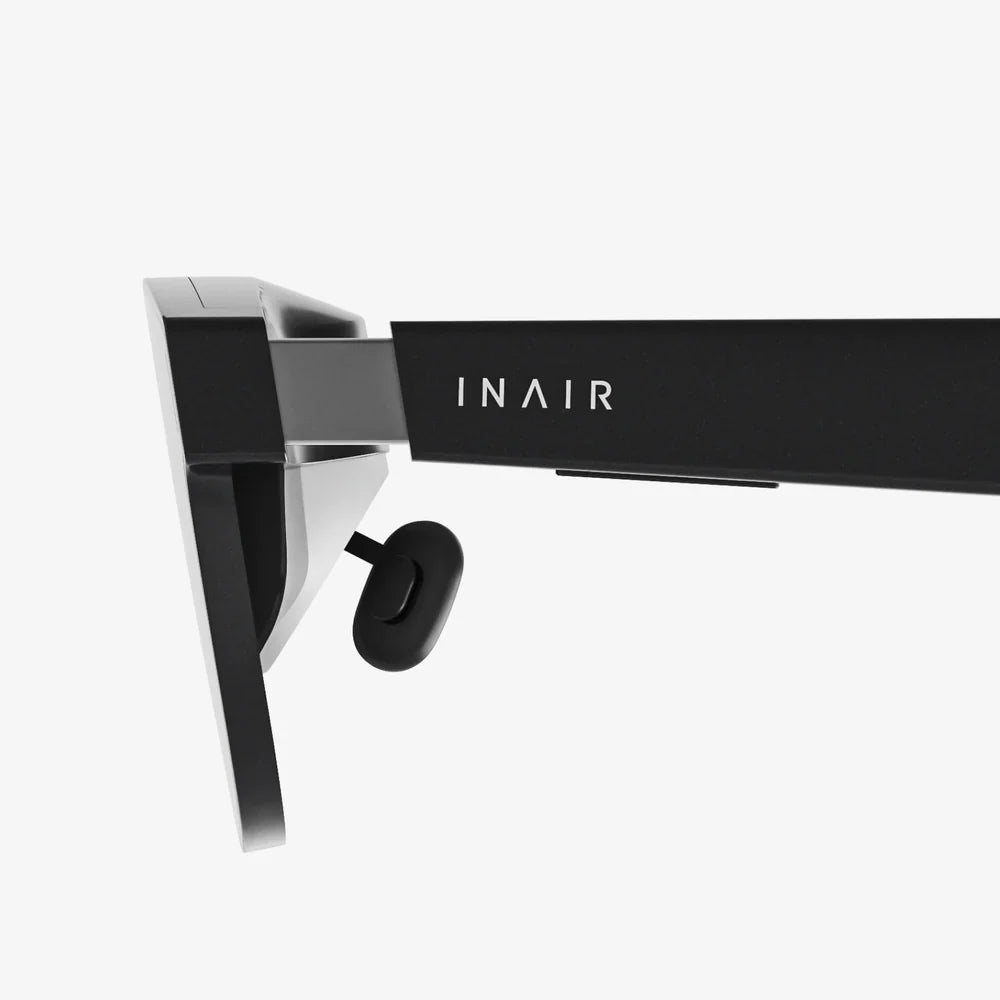
Imagine a screen that doesn’t sit on your desk or in your hand, but floats seamlessly in your field of vision, augmenting your world with digital information, breathtaking virtual landscapes, or a private cinema-sized display visible only to you. This is the promise, and increasingly the reality, of near eye display technology, a field of innovation that is quietly orchestrating a revolution in how we perceive and interact with digital information. It’s the core engine inside devices that promise to merge the physical and digital realms, and its evolution is a captivating story of physics, engineering, and human ambition.
The Fundamental Goal: Blending Light Worlds
At its heart, near eye display technology has a deceptively simple objective: to project a generated image directly into the user’s eye in such a way that it can be viewed comfortably, either as a self-contained virtual reality or as a layer superimposed onto the real world. Unlike traditional displays, which are observed from a distance, these systems are designed to be worn on the head, positioning miniature displays incredibly close to the eyes. The central challenge lies in making the eye focus on an image that is physically extremely close, which would normally cause strain, and in the case of augmented reality, convincingly blending synthetic light with natural light.
Optical Architectures: The Magic of Waveguides and Combiners
The true genius of these systems lies in their optical engines. Simply placing a small screen in front of the eye is ineffective; the image would be blurry, constrained, and disconnected from the real world. Instead, engineers employ sophisticated optical elements to manage the path of light.
Birdbath Optics
One of the earlier and more straightforward designs is known as the "birdbath" optic. Here, light from a micro-display is projected onto a beamsplitter, which reflects it toward a concave spherical mirror. This mirror then reflects and focuses the light through the beamsplitter again and into the eye. This folded path allows for a longer optical path in a compact design, creating a virtual image that appears much larger and farther away than the physical components would suggest. While effective, it can be bulkier than other solutions.
Waveguide Technology
Waveguides represent the cutting edge, particularly for sleek augmented reality glasses. These are transparent substrates, often made of glass or plastic, into which light is injected from a micro-projector. Once inside the waveguide, the light is "piped" along its length through a process called total internal reflection—the same principle that keeps light trapped inside a fiber-optic cable.
The magic happens with optical gratings, either geometric (prismatic) or diffractive (holographic). These gratings act as clever couplers, strategically disrupting the light's path to eject it out of the waveguide precisely and directly into the eye. The result is a bright, digital image that appears to be overlayed on the real world, all while the lens itself remains relatively thin and transparent. Diffractive waveguides, which use nanostructures to bend light, are particularly promising for mass production as they can be stamped onto lenses like a film.
Free-Space Combiners
For systems where bulk is less of a concern, such as some pilot helmets or certain VR headsets, free-space combiners are used. These are essentially complex arrangements of mirrors and lenses that fold the optical path. A well-known variant is the off-axis folded mirror, which uses a curved semi-transparent mirror placed directly in front of the eye. The user sees the real world through the mirror, while a projector from the side of the headset bounces the image off the mirror and into the eye. This allows for a wide field of view and high brightness but often creates a more prominent form factor.
The Building Blocks of the Image
Creating the light itself is another critical layer of the technology. The miniature displays, known as micro-displays, are marvels of miniaturization. Several competing technologies vie for dominance:
- LCD: A mature and cost-effective technology, but often suffers from lower contrast and slower pixel response times.
- OLED on Silicon: Offers exceptional contrast ratios (true blacks) and fast response times, making it a favorite for high-end VR. The pixels are built directly on a silicon wafer, allowing for incredible densities.
- Micro-LED: Widely considered the holy grail for future near eye displays. These emissive micro-displays promise the perfect contrast of OLED with vastly higher brightness levels and better power efficiency, which is crucial for all-day wearable devices.
- LCoS: A reflective technology that uses liquid crystals on a mirrored surface to modulate light from an external source. It can achieve very high resolutions and is often used in conjunction with laser illumination.
Illumination is equally important. LEDs are common, but lasers are increasingly used for their superior brightness, color gamut, and ability to be focused into incredibly small, efficient projection systems.
The Vergence-Accommodation Conflict: A Physiological Hurdle
Perhaps the most significant and fascinating challenge in near eye display design is a physiological issue known as the vergence-accommodation conflict. In the natural world, our eyes work in concert: when we look at a nearby object, our eyes cross (verge) and our lenses flex to focus at that short distance (accommodate). When we look far away, our eyes become parallel and our lenses relax.
Traditional stereoscopic displays, including most current VR/AR headsets, break this link. They present a 3D image by showing two distinct 2D images to each eye, tricking the brain into perceiving depth (vergence). However, regardless of the virtual object's perceived distance, the eyes are physically focused on the fixed focal plane of the physical display screen, which is only centimeters away. This mismatch between where the eyes point and where they focus is a primary source of visual fatigue, eyestrain, and even nausea for some users.
Solving this is a key frontier. Research is intense into varifocal and light field displays. Varifocal systems physically move displays or lenses to dynamically adjust the focal plane to match the virtual object's distance. Light field displays are even more advanced, projecting a field of light rays replicating the way light emerges from a real object, allowing the eye to focus naturally at different depths within the scene. These technologies are complex and power-hungry but are essential for achieving true visual comfort and photorealism.
A World of Applications Beyond Entertainment
While consumer gaming and entertainment are powerful drivers, the potential applications for near eye display technology are profoundly broader.
- Enterprise & Manufacturing: Technicians can have schematics, instructions, and sensor data overlaid directly on the machinery they are repairing. Warehouse workers can see optimal picking paths and item information hands-free.
- Healthcare: Surgeons can visualize critical patient data like heart rate or a 3D model of a tumor without looking away from the operating field. Medical students can learn anatomy through interactive, life-sized holograms.
- Remote Collaboration & Telepresence: A specialist across the globe could see what a local engineer sees and annotate the real world in real-time to guide them, as if they were standing side-by-side.
- Navigation: Turn-by-turn directions can be painted onto the street in front of you, revolutionizing everything from driving to hiking.
- Accessibility: Real-time captioning of conversations for the hearing impaired, or audio description of environments for the visually impaired, becomes a powerful reality.
The Road Ahead: Challenges to Overcome
For near eye displays to become an all-day, ubiquitous technology, several hurdles remain. The form factor must shrink from a headset to something indistinguishable from standard eyeglasses, requiring immense progress in miniaturizing optics and batteries. Achieving "retina" level resolution in a wide field of view demands micro-displays with pixel densities far exceeding today’s best smartphones. Battery life remains a constant battle, and generating enough brightness for outdoor AR use without draining power is a major engineering challenge. Finally, creating intuitive and socially acceptable user interfaces—moving beyond hand controllers to gestures, voice, and eventually thought—is critical for mass adoption.
The journey of near eye display technology is a testament to human ingenuity, a multi-decade quest to bend light to our will and redefine the very nature of a screen. It’s a field where breakthroughs in nanotechnology, semiconductor physics, and computational optics converge. We are moving beyond merely watching pixels on a glass rectangle and towards a future where those pixels are woven into the fabric of our perception, enhancing our abilities, expanding our knowledge, and unlocking new forms of human connection and creativity. The display of the future won’t be something you look at; it will be something you look through, and it will change everything.
Share:
Types of Artificial Intelligence: A Comprehensive Guide to AI's Present and Future
Connect with the Windows Desktop Client: A Comprehensive Guide to Seamless Remote Access and Productivity