Close your eyes. Now, try to navigate from your bed to your front door. Visualize the path, the turns, the number of steps, the feeling of the floor beneath your feet. The astonishing ease with which you can perform this mental simulation is not magic; it is the silent, continuous masterpiece of two profoundly interconnected neurological processes: neural mapping and spatial perception. This intricate internal cartography, a biological marvel honed over millions of years of evolution, is the very foundation of how we interact with, understand, and survive within the world around us. It is the hidden engine of our daily existence, and its secrets are only now being fully uncovered by modern neuroscience.
The Bedrock of Being: Defining the Core Concepts
Before delving into the mechanics, it is crucial to define our terms. Neural mapping refers to the brain's fundamental ability to represent external information and internal states through specific patterns of neural activity. It is the process by which sensory inputs are translated into a functional model within the neural circuitry. Think of it as the brain's method of drawing a map, where clusters of neurons fire in specific sequences to symbolize objects, concepts, or, most pertinently, locations.
Spatial perception, on the other hand, is the cognitive process that allows an organism to be aware of its relationships to the environment and to objects within it. It integrates sensory data—visual, auditory, vestibular (balance), and proprioceptive (body position)—to construct a coherent understanding of three-dimensional space. It answers questions like: Where am I? Where is that object relative to me? How do I get from here to there?
These two processes are inseparable. Neural mapping provides the biological substrate—the 'ink and paper'—for spatial perception, which is the ongoing 'act of reading and interpreting the map.' Together, they form the core of our navigational capabilities.
The Brain's Navigational Headquarters: A Tour of the Neural Circuitry
The discovery of the brain's specialized navigation system was so revolutionary it earned its discoverers the Nobel Prize in Physiology or Medicine in 2014. This system is not housed in one single region but is a distributed network, a symphony of specialized cells working in concert.
Place Cells: The "You Are Here" Marker
Residing primarily in the hippocampus, a region critical for memory, place cells are neurons that fire action potentials when an animal occupies a specific location in its environment, effectively acting as a neural representation of that spot. Each place cell has its own 'place field,' and the collective activity of thousands of these cells paints a comprehensive cognitive map of the entire explored space. When you recognize you are in your kitchen, it is because your ensemble of 'kitchen' place cells is actively firing.
Grid Cells: The Brain's Cartesian Coordinate System
If place cells are the points on the map, grid cells are the graph paper underneath it. Found in the entorhinal cortex, which is the major input and output hub for the hippocampus, these cells fire at multiple regular intervals, forming a hexagonal grid pattern that tessellates the entire environment. This grid provides a metric for space, allowing the brain to measure distances and calculate paths. It is our internal coordinate system, providing a constant measure of movement and displacement.
Head Direction Cells: The Internal Compass
Complementing the map and the grid is a neural compass. Head direction cells, located in several areas including the presubiculum and entorhinal cortex, fire maximally when the head is pointing in a specific direction. This system tells you whether you are facing north, towards the door, or towards the sofa, providing crucial orienting information independent of your location.
Border Cells: The Boundary Detectors
Completing the core quartet are border cells. These cells fire when an animal is near the boundaries of its environment, such as walls, edges, or drops. They help define the geometry and limits of the spatial map, anchoring the grid and place cells to the physical confines of the world.
The Symphony of Senses: Building a Perception of Space
The elegant firing of these specialized cells does not occur in a vacuum. They are constantly updated and calibrated by a flood of sensory information.
Vision is the dominant sense for human spatial perception. It provides rich, detailed information about the layout of the environment, the location of objects, and their relative distances (depth perception through cues like stereopsis, motion parallax, and occlusion). Visual flow—the pattern of motion perceived as we move—is a critical signal for updating our position on the internal map.
The Vestibular System, located in the inner ear, is our accelerometer and gyroscope. It detects linear and angular acceleration of the head, providing the brain with an idiothetic (self-motion) signal that is essential for path integration—the ability to track one's position based on internally sensed movement, even in the dark.
Proprioception is the sense of the relative position of one's own body parts and the effort being employed to move them. Feedback from muscles and joints tells the brain how far and in what direction the body has moved, further contributing to path integration.
Audition also plays a key role. Echo-location, used expertly by bats and dolphins, is an extreme example, but humans also use auditory cues for spatial tasks. Sound shadows, volume, and the interaural time difference (the minute delay between a sound reaching one ear versus the other) all provide clues about the location of objects and the nature of our surroundings.
The brain is a master integrator, weaving these disparate sensory threads into a single, unified, and stable perceptual tapestry of the space we inhabit.
Beyond Navigation: The Deep Links to Memory and Imagination
The story of neural mapping and spatial perception extends far beyond mere navigation. The hippocampus, the seat of the cognitive map, is also the core hub for forming episodic memories—memories of autobiographical events. This is not a coincidence.
The prevailing theory, the Cognitive Map Theory of Hippocampal Function, posits that the hippocampus evolved its mapping system to track relationships between objects, locations, and events. Remembering what happened, where it happened, and when it happened relative to other events is a profoundly spatial-temporal problem. Your memory of a conversation around a dinner table is intrinsically linked to your mental map of the dining room and your place within it. The neural patterns used to map a physical space are co-opted to map the 'space' of our experiences and memories.
This connection extends even further into the realm of imagination and future planning. Studies show that when people imagine future scenarios or plan possible routes, the same hippocampal and entorhinal circuitry activates as when they are navigating real spaces. We are effectively using our internal GPS to simulate and navigate potential futures, a process known as mental time travel. Our ability to think creatively and strategize is deeply rooted in the same neural mechanisms that guide us through a forest.
When the Map Falters: Disorders of Spatial Perception
The critical importance of this system becomes painfully apparent when it malfunctions. A range of neurological and neuropsychiatric conditions feature spatial disorientation as a core symptom.
Alzheimer's Disease offers a stark example. Some of the earliest and most devastating pathology occurs in the entorhinal cortex and hippocampus, the very homes of grid and place cells. This explains why getting lost in familiar surroundings is a common and often early sign of the disease. The brain's internal map is literally being erased.
Topographical disorientation is a condition where individuals, often following a stroke or brain injury, lose the ability to navigate their environment despite having intact memory and recognition. They can recognize landmarks but cannot piece them together into a coherent route or map.
Furthermore, impairments in spatial perception are also noted in conditions like schizophrenia and autism spectrum disorder, suggesting atypical integration of sensory information and a disruption in the construction of a stable, consensus reality of space.
The Future is Now: Technological Interfaces and Ethical Frontiers
Our understanding of neural mapping is no longer confined to biology. It is actively shaping technology and raising profound questions. The development of brain-machine interfaces aims to decode these spatial maps to control robotic limbs or avatars, offering new freedoms to those with paralysis.
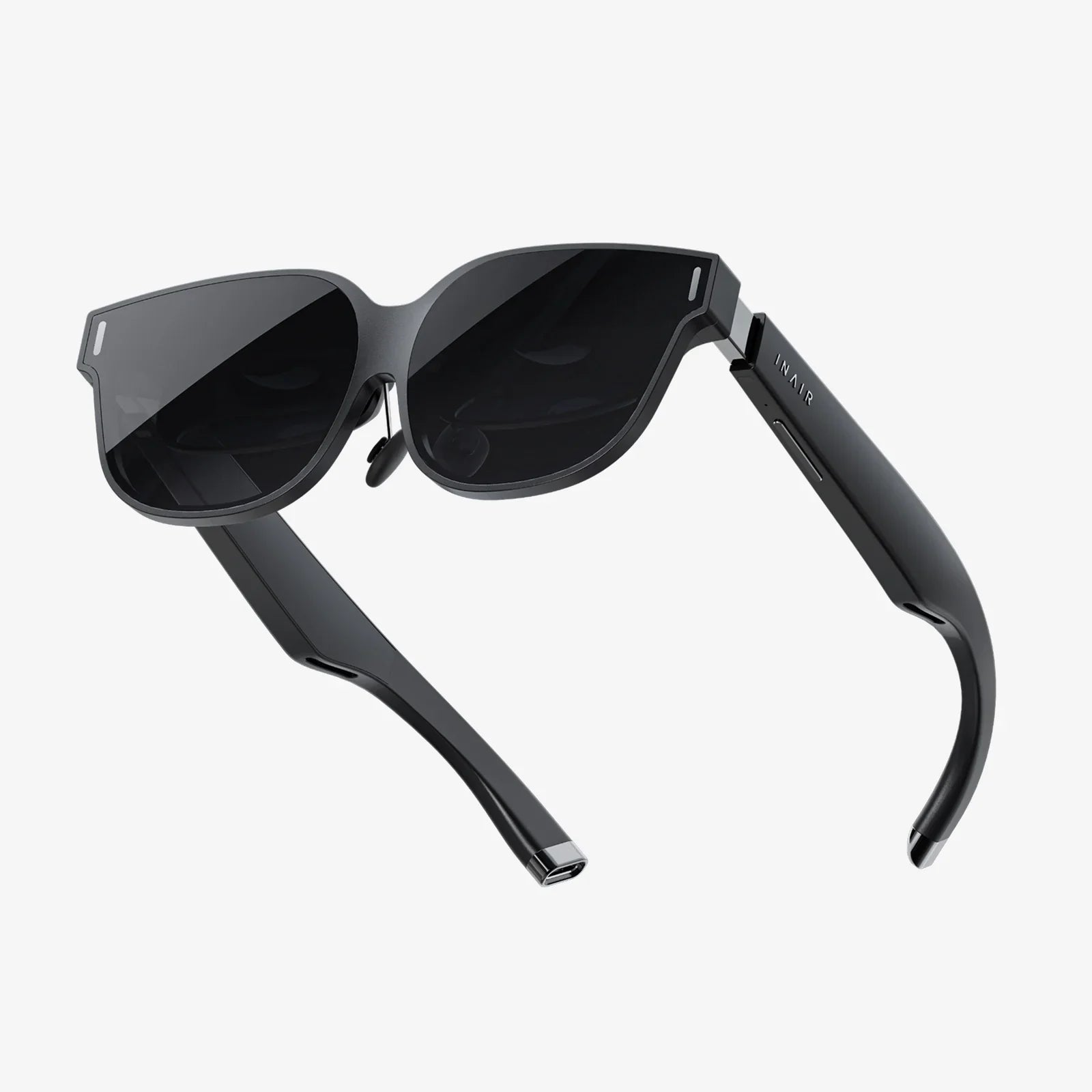
Conversely, augmented and virtual reality (AR/VR) technologies are engaged in a grand experiment: feeding artificially generated spatial and sensory signals to our neural mapping system. When you put on a VR headset, you are tricking your place cells, grid cells, and head direction cells into believing you are in a world that does not physically exist. This has incredible potential for therapy, training, and entertainment, but it also forces us to ask: how does the prolonged manipulation of our core spatial perception affect our brains? Could it lead to new forms of dissociation or a blurring of the lines between the mapped and the real?
The endeavor to create truly autonomous artificial intelligence and robotics is also a direct attempt to reverse-engineer this biological miracle. Creating a machine that can navigate the unpredictable, complex world of human environments requires endowing it with a functional equivalent of neural mapping and spatial perception—a challenge that continues to highlight the breathtaking sophistication of the human brain.
From the moment an ancient hominid first plotted a course across the savanna to the modern-day surgeon navigating the intricate landscape of the human body, the silent dialogue between neural mapping and spatial perception has been the unacknowledged architect of human progress. It is the scaffold for our memories, the canvas for our dreams, and the invisible guide that charts every step we take. As we continue to decode this magnificent internal language, we are not just learning how we find our way; we are uncovering the very coordinates of human experience itself, revealing that the maps we hold in our heads are, in fact, the most important territories we will ever know.


Share:
Spatial Computing Market 2025: A Comprehensive Forecast and Industry Analysis
Bigscreen Mixed Reality: The Ultimate Social Cinema Experience