


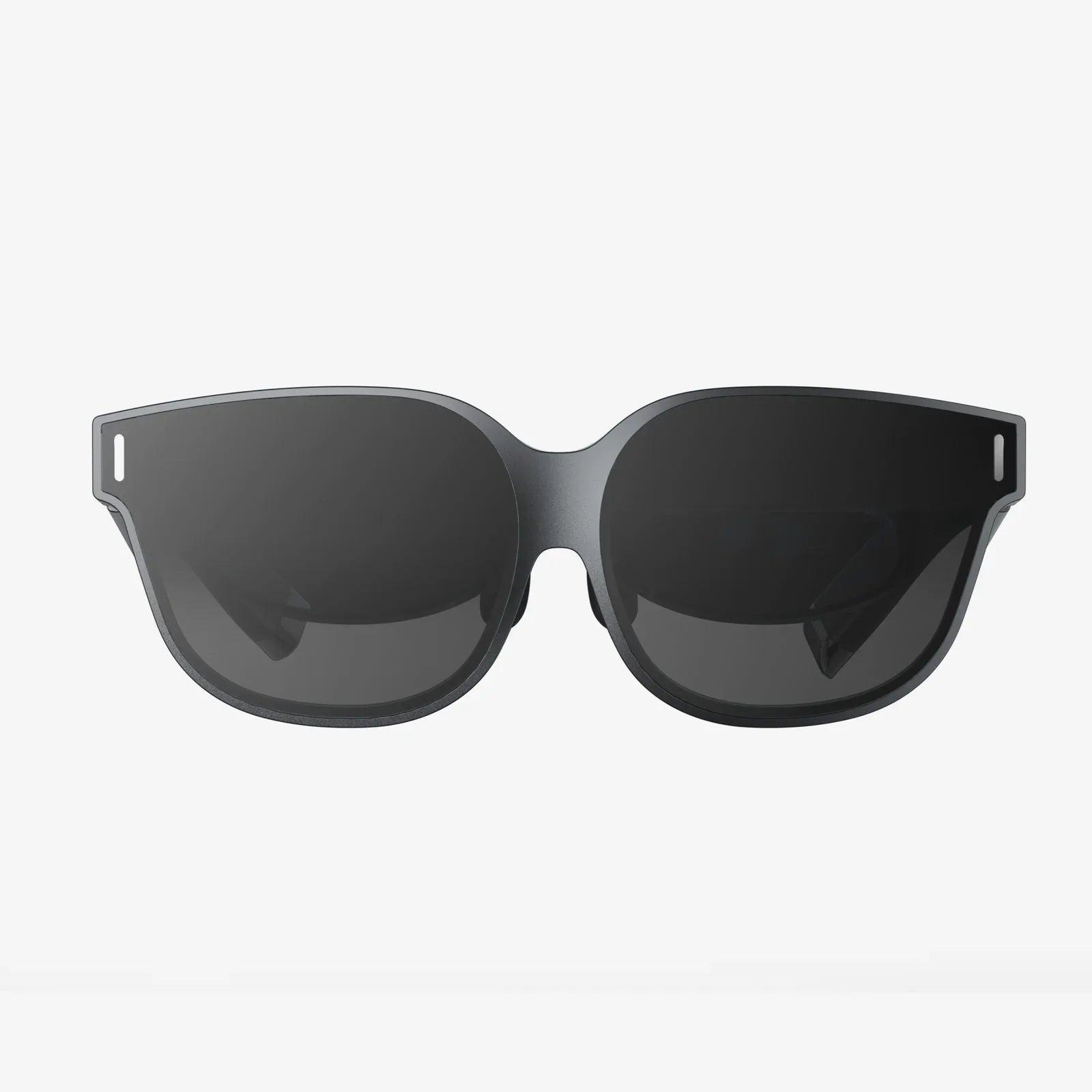
Imagine slipping on a device and being instantly transported to another world, a digital realm so crisp, so vivid, and so breathtakingly real that the line between the physical and the virtual begins to genuinely blur. This is no longer the stuff of science fiction; it is the immediate promise held by the latest generation of high-resolution virtual reality hardware. The arrival of a new 4K VR headset on the market isn't just another incremental update—it's a fundamental shift, a key that unlocks a door to experiences previously constrained by the limitations of our hardware. For years, enthusiasts and newcomers alike have wrestled with the screen door effect and a lack of visual clarity. Now, a new dawn is breaking, and it is rendered in stunning, lifelike 4K.
The Resolution Revolution: Beyond the Pixel Count
For the uninitiated, the term "4K" in the context of a new 4K VR headset can be somewhat misleading. It doesn't typically refer to a single 4K screen like a television, but rather to the combined resolution delivered to each eye. Where previous consumer headsets often offered resolutions hovering around 1.5K to 2K per eye, this new standard pushes the per-eye resolution significantly higher, often to or beyond 2160x2160 pixels per eye. This massive leap in pixel density is the single most important factor in eradicating the notorious "screen door effect"—that visible grid of lines between pixels that has long reminded users they are looking at a screen mere inches from their face.
The impact of this cannot be overstated. The screen door effect has been one of the most significant barriers to deep immersion. It was a constant, nagging reminder of the technology's artificiality. With a new 4K VR headset, that grid vanishes. The virtual world appears as a seamless, continuous image. Text, once a blurry challenge to read, becomes sharp and legible. Distant objects in games retain their detail instead of dissolving into a pixelated mess. This clarity is transformative, making productivity applications genuinely viable and allowing for the appreciation of fine environmental details in games and experiential content that were simply lost before.
A Symphony of Sight: The Visual Fidelity Ecosystem
However, a new 4K VR headset is not defined by resolution alone. The pursuit of perfect visuals is a multi-front war, and manufacturers are advancing on all fronts simultaneously. High resolution is the flagship feature, but it is supported by a suite of critical technologies that collectively create the illusion of reality.
Advanced Lens Technology
The best display in the world is worthless if the lenses distort and blur it. The latest headsets employ sophisticated lens designs, such as aspherical and Fresnel hybrid lenses, which drastically reduce god rays—those pesky visual artifacts and glare that appear around high-contrast objects. These new lenses also provide a significantly larger "sweet spot," the area where the image is in perfect focus. This makes the headset more comfortable to use for extended periods and easier to adjust for new users, removing a common point of frustration.
High Dynamic Range (HDR) and Expanded Color Gamuts
True-to-life imagery is about more than just sharpness; it's about light and color. The next wave of headsets is beginning to incorporate HDR capabilities, allowing for a much wider range between the darkest darks and the brightest brights. This means sunsets in virtual environments feel warm and radiant, deep space feels authentically black and infinite, and the flicker of a virtual candle is rich and dynamic. Coupled with wider color gamuts that can display more of the colors the human eye can see, the virtual world becomes more vibrant and emotionally resonant than ever before.
Refresh Rates: The Fluid Foundation of Comfort
A high-resolution image that stutters and lags will break immersion instantly and can induce motion sickness. This is why refresh rate remains paramount. While 90Hz has been the comfortable standard, the new generation of headsets often pushes to 120Hz or even higher. This ultra-smooth motion is crucial for fast-paced games and simulations, making movement feel natural and responsive. For many users, this higher refresh rate is the final piece of the comfort puzzle, allowing them to explore virtual worlds for hours without any adverse effects.
Beyond Entertainment: The Professional and Social Paradigm Shift
The implications of this visual leap extend far beyond the realm of gaming. A new 4K VR headset is a professional-grade tool, capable of transforming how we work, learn, and connect.
The Virtual Office, Realized
Remote work has become commonplace, but video calls are a poor substitute for physical presence. High-resolution VR changes the game. Imagine attending a meeting in a virtual boardroom where you can clearly see the body language of colleagues, read the fine print on a shared virtual document, and collaborate on 3D models as if they were physically in the room with you. The clarity offered by 4K makes reading text from virtual monitors not just possible, but pleasant, enabling the concept of the infinite virtual workspace—a personal computing environment with dozens of screens, limited only by your imagination.
Education and Training in Unprecedented Detail
From medical students performing virtual dissections on anatomically perfect models to mechanics training on the intricate systems of a jet engine, the fidelity of a new 4K VR headset enables training scenarios with incredible detail and accuracy. Trainees can identify minute components and read crucial gauges and labels without squinting, drastically improving the effectiveness and safety of virtual training programs. Historical recreations can be explored with museum-grade detail, and artistic masterpieces can be examined brushstroke by brushstroke.
The New Social Fabric
Social VR platforms are poised to become truly mainstream. With realistic avatars and expressive eye-tracking (a feature increasingly common in new headsets), social interactions gain a depth and nuance previously impossible. The subtle glance of a friend or the focused gaze of a presenter can be communicated effortlessly, fostering a sense of shared presence and empathy that Zoom calls can never replicate. We are moving towards a future where gathering in a virtual space is a genuine alternative to meeting in person, not just a pale imitation.
The Invisible Engine: Powering the 4K Dream
Driving two high-resolution displays at high frame rates is an incredibly demanding task. The hardware powering this experience is just as important as the headset itself. This requires a robust ecosystem, with powerful computing hardware capable of rendering complex scenes at these staggering resolutions. For standalone headsets, this means ultra-efficient, cutting-edge processors with advanced cooling solutions. For PC-connected headsets, it means a renewed emphasis on high-end graphics cards. This symbiotic relationship pushes the entire industry forward, demanding more power and smarter software optimization techniques like foveated rendering, which uses eye-tracking to render only the area you are directly looking at in full detail, drastically reducing the computational load.
The Horizon of Possibility: What This Leap Truly Means
The launch of a new 4K VR headset is more than a product release; it's a catalyst. It represents the closing of a major technological gap that has held VR back from mass adoption. By finally delivering on the visual promise of immersion, it shifts the conversation from the limitations of the hardware to the boundless potential of the software. Developers are now empowered to create experiences with finer detail, more complex interfaces, and more subtle storytelling. They can design for presence first, without having to make painful compromises on visual quality.
This technological leap also redefines the value proposition for the average consumer. It moves VR from a novel gaming peripheral to a legitimate platform for work, creativity, and social connection. The headset is no longer just for playing games; it's a window to virtual offices, concert halls, classrooms, and living rooms. It is a portal to other places and other people, rendered with a clarity that makes them feel tangible and real.
We are standing at the precipice of a new era in digital interaction. The foundational barriers of visual immersion are crumbling, and what emerges from the dust will be a new medium, finally equipped to fulfill its world-altering potential. The journey into the virtual realm is about to become the main event, and it will be a sight to behold.
This isn't just an upgrade; it's the moment VR grows up. The last remaining excuses for skepticism are fading into a pixel-perfect horizon. The question is no longer if you will spend significant time in virtual reality, but what you will choose to do first in a world of limitless, hyper-realistic possibility. The headset is on. The future is clear.
Share:
What Do You Plug a VR Headset Into - A Guide to Powering Your Virtual Reality
VR Headset Compatible with iPhone SE: Your Pocket-Sized Portal to Virtual Worlds