Imagine a world where your creative partner is an algorithm, your business analyst never sleeps, and the line between human and machine-generated work becomes beautifully, terrifyingly blurred. This is not a distant sci-fi fantasy; it is the reality being built today, one prompt at a time, by a breathtaking wave of new AI tools. The digital landscape is shifting under our feet, and these powerful technologies are the architects of a revolution that promises to redefine everything from how we compose a symphony to how we cure a disease. The future is arriving not with a single bang, but with a cascade of intelligent software, and it demands our immediate attention.
The Engine Room: Understanding the Leap in Capability
To grasp the significance of the current moment, one must look under the hood. The recent explosion isn't just about faster processors; it's a fundamental shift in approach. For decades, artificial intelligence was largely specialized, trained for a single, narrow task. A system could master chess but couldn't write a poem. Today's new AI tools are built on a different foundation: the transformer architecture and large language models (LLMs). These models are trained on a significant portion of the digitized world—text, code, images, and sound—allowing them to understand context, generate remarkably coherent and creative content, and perform a stunning variety of tasks from a simple instruction.
This shift from narrow to generalized intelligence is the key that has unlocked the floodgates. It means a single tool can now brainstorm marketing slogans, draft legal contracts, debug complex code, and then generate an image to accompany the finished product. This versatility is what makes them feel less like tools and more like collaborators, amplifying human potential in ways we are only beginning to comprehend.
Transforming the Creative Canvas
Perhaps the most visible and debated impact of these tools has been in the creative sphere. A new breed of AI tools is democratizing creation, but also challenging our very definitions of art and originality.
-
Visual Arts and Design: Generative models can now produce photorealistic images, intricate digital paintings, and unique logos from text descriptions. This is empowering small businesses and solo entrepreneurs to access high-quality visual assets and accelerating the workflow for professional designers, who use them for rapid prototyping and concept exploration.
-
Writing and Content Creation: From drafting blog posts and social media content to crafting full-length articles and scripts, AI writing assistants are becoming ubiquitous. They help overcome writer's block, refine tone and grammar, and generate ideas at an unprecedented scale, forcing a re-evaluation of the value of purely mechanical writing.
-
Music and Audio: Composers are using AI to generate novel melodies and harmonies, sound engineers are using them to master tracks automatically, and podcasters are employing AI voices for narration. The entire audio landscape is being re-synthesized, offering new tools for expression while raising complex questions about copyright and the soul of music.
The role of the human is evolving from pure creator to that of a curator, director, and editor—a conductor guiding an orchestra of algorithms to achieve a specific creative vision.
Supercharging Productivity and Business Intelligence
Beyond the art studio, the boardroom is being utterly transformed. The new AI tools are, at their core, incredible engines of productivity and analysis.
-
Data Analysis and Decision-Making: Advanced analytics platforms can now process vast datasets, identify hidden patterns, and generate plain-English summaries and forecasts. This allows executives to move from data-informed to data-driven decision-making, predicting market shifts and optimizing operations with a new level of precision.
-
Code Generation and Software Development: Perhaps one of the most profound shifts is in software engineering. AI pair programmers can suggest entire blocks of code, debug existing programs, and translate code between languages. This is dramatically accelerating development cycles, reducing bugs, and lowering the barrier to entry for new coders.
-
Customer Experience and Marketing: Hyper-personalized marketing emails, AI-powered chatbots that resolve complex queries, and dynamic pricing models are all powered by this new technology. Businesses can now engage with customers on a one-to-one scale at a million-person volume, creating experiences that were previously impossible.
The competitive advantage for companies now lies in their ability to effectively integrate and leverage these tools to automate routine tasks and augment strategic thinking.
The Human in the Loop: Augmentation, Not Replacement
The pervasive fear, of course, is mass obsolescence. Will these new AI tools render human workers redundant? The more nuanced and likely reality is one of augmentation. The greatest value is found not in fully autonomous AI, but in human-AI collaboration—the "human in the loop" model.
These tools excel at handling vast amounts of information, executing repetitive tasks with perfect accuracy, and generating possibilities. Humans excel at strategic thinking, emotional intelligence, ethical judgment, and creative direction. The most powerful outcomes emerge from this synergy: the data scientist who uses an AI to identify a strange correlation and then applies her domain expertise to understand its real-world meaning; the filmmaker who uses AI to generate a thousand unique visual concepts to inspire a single perfect shot.
The future of work will likely involve a significant shift in skillsets. Critical thinking, creativity, emotional intelligence, and the ability to manage and interrogate AI systems will become paramount. The job market won't vanish; it will transform, demanding a new kind of literacy—AI literacy.
Navigating the Ethical Minefield
This powerful technology does not arrive without significant risks and ethical dilemmas that we are woefully unprepared to address.
-
Bias and Fairness: Since these models are trained on human-generated data, they inevitably inherit human biases. This can lead to discriminatory outcomes in hiring, lending, and law enforcement if not carefully monitored and mitigated.
-
Misinformation and Deepfakes: The ability to generate convincing text, audio, and video makes it terrifyingly easy to create and spread targeted misinformation, fake news, and fraudulent content, posing a grave threat to trust and social cohesion.
-
Copyright and Intellectual Property: Who owns the output of an AI model trained on millions of copyrighted works? The legal and philosophical frameworks for answering this question are still in their infancy, creating a grey area for creators and corporations alike.
-
Job Displacement and Economic Inequality: While augmentation is the goal, rapid adoption will undoubtedly disrupt job markets. The potential for a new digital divide is real, where those with the skills to harness AI thrive and those without are left further behind.
Addressing these challenges requires proactive effort from developers, policymakers, and society at large. It demands transparent AI, robust ethical guidelines, and a commitment to building these tools responsibly.
The Future is Now: What Comes Next?
The pace of change is not slowing down. The next generation of new AI tools is already on the horizon, moving from passive tools awaiting prompts to proactive, agentic systems that can pursue multi-step goals. We are moving towards AI assistants that can manage complex projects, conduct research across the internet, and interact with other software and APIs autonomously.
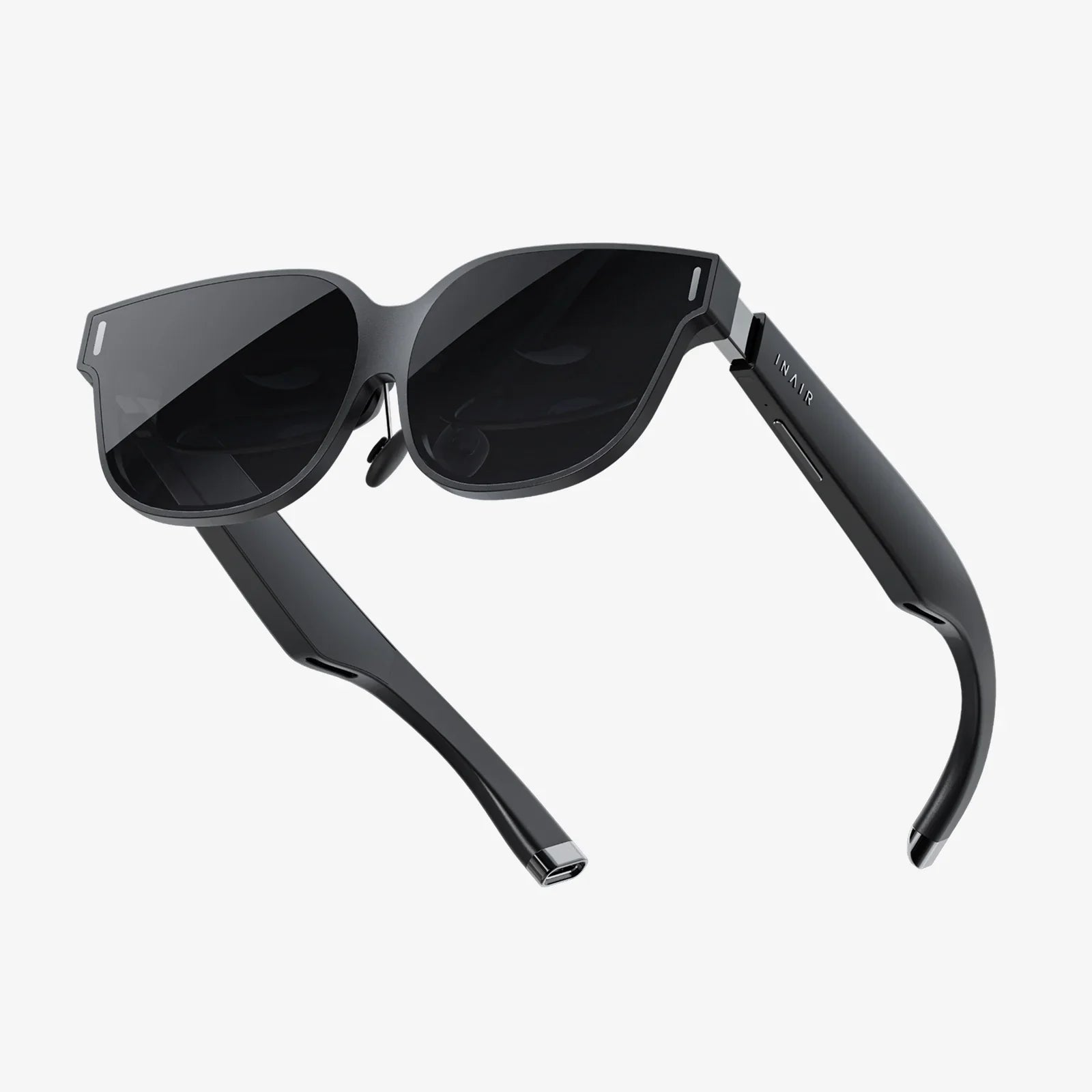
The integration of AI with other transformative technologies like augmented reality (AR) and robotics will further blur the lines between the digital and physical worlds. An engineer wearing AR glasses might see an AI-generated schematic overlaid on a broken machine, while a robotic arm guided by an AI performs the precise repair.
The trajectory is clear: AI will become the fundamental operating system for our personal and professional lives. The question is no longer if it will happen, but how we will choose to shape it.
We stand at a rare inflection point in history, holding a technology of immense power that is both a mirror reflecting our own intelligence and a canvas for our ambitions. The new AI tools offer a path to solve humanity's greatest challenges—from climate change to disease—and to unlock unprecedented heights of creativity and productivity. Yet, they also carry the seeds of peril, capable of entrenching inequality and eroding truth. The outcome depends not on the algorithms themselves, but on us. It hinges on the ethical choices we make today, the policies we enact, and our collective courage to guide this powerful technology toward a future that amplifies our humanity rather than diminishes it. The next chapter is ours to write.


Share:
Spatial Interaction APHuG Definition: The Invisible Forces Shaping Our World
Spatial Interaction APHuG Definition: The Invisible Forces Shaping Our World