


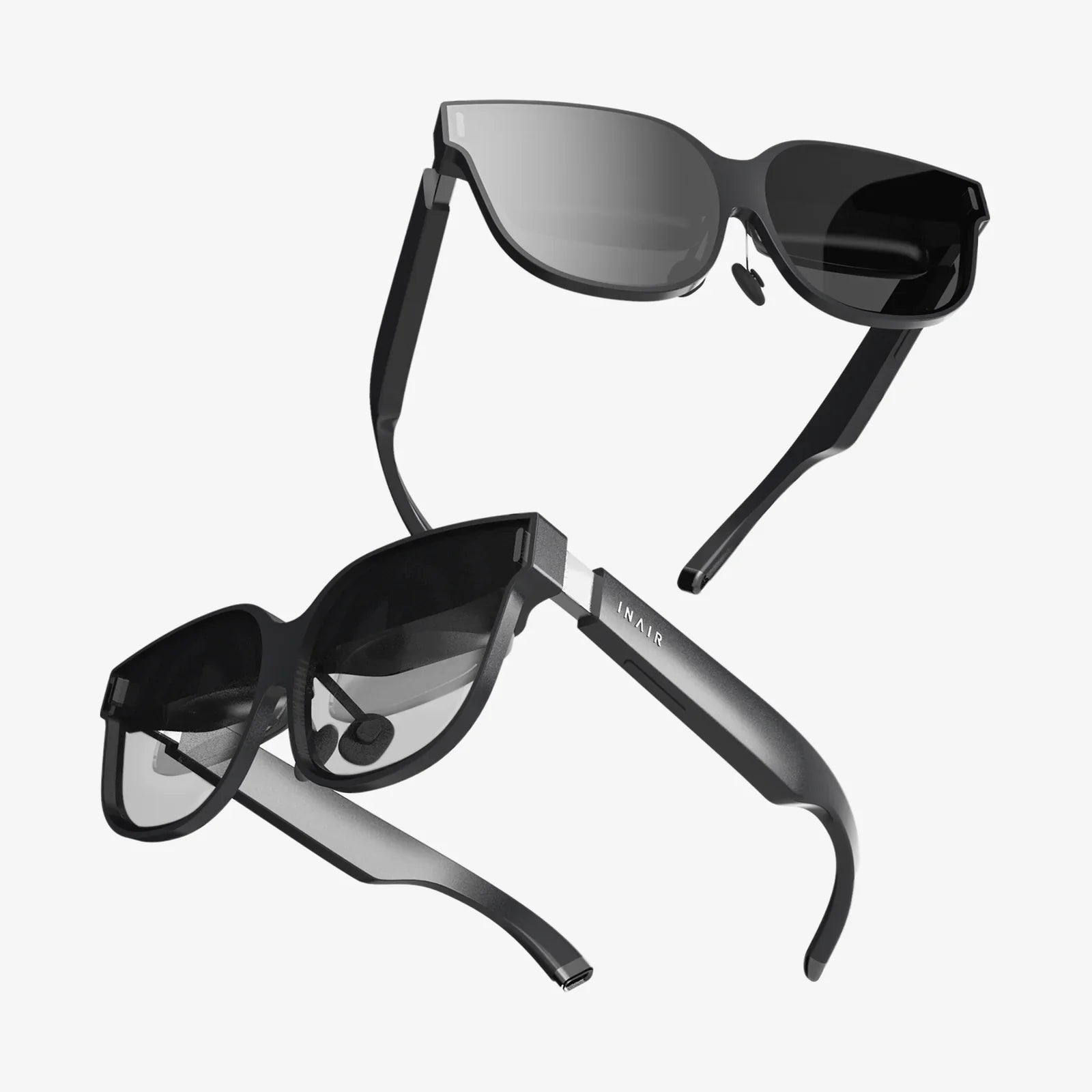
Imagine a world where the digital and physical seamlessly intertwine, where information floats effortlessly in your field of vision, and your environment becomes an interactive canvas limited only by your imagination. This is the promise that has hovered on the horizon for over a decade, but 2025 is poised to be the year it finally becomes a tangible, wearable reality. The next generation of augmented reality glasses is not just an incremental update; it represents a fundamental leap, a convergence of technologies that will finally deliver on the sci-fi dream we've been sold for so long. This isn't about chasing a futuristic fantasy; it's about understanding the profound shift about to occur in how we compute, connect, and perceive the world around us.
The Technological Leap: Beyond the Prototype Phase
For years, AR glasses have been hampered by a triad of compromises: they were too bulky, offered limited battery life, and suffered from a constrained field of view that felt more like peering through a keyhole than stepping into a new reality. The devices emerging in 2025 have squarely addressed these historical limitations through a series of breakthroughs.
A Revolution in Waveguide and Display Technology
The core challenge of any AR device is projecting bright, high-resolution images onto transparent lenses without obstructing the user's view of the real world. Early waveguides often resulted in dim images, color fringing, and a notorious "rainbow effect." The new waveguides, however, utilize advanced holographic and diffractive optical elements. These are not merely lenses; they are nanoscale-engineered surfaces that precisely control the path of light with incredible efficiency. This translates to a significantly larger, brighter, and more vibrant field of view, often described as "retina display" quality for AR. Text appears razor-sharp, and virtual objects integrate with physical spaces with a convincing solidity that was previously impossible.
The Invisible Powerhouse: On-Device AI and Processing
The computational demand of overlaying responsive, context-aware digital content onto the real world in real-time is immense. Sending data to the cloud for processing introduces latency, which breaks immersion and can be disorienting. The solution lies in dedicated, miniaturized AI co-processors integrated directly into the frames of these new glasses. These chips are designed for one primary task: spatial computing. They handle simultaneous localization and mapping (SLAM), object recognition, gesture tracking, and neural language processing instantly and privately on the device. This means the glasses understand the geometry of a room, recognize the objects on your desk, and respond to your glance or voice commands without a perceivable delay, all while preserving your privacy.
Form Meets Function: The All-Day Wearable
Perhaps the most noticeable change to the average consumer will be the design. The goal is no longer to create a piece of conspicuous tech demonstrator wear but to design a product that people would be comfortable wearing all day, akin to a premium pair of sunglasses or regular eyeglasses. Advanced lightweight alloys, flexible composites, and a deeper collaboration with optical lens manufacturers have resulted in frames that are stylish, comfortable, and, crucially, socially acceptable. Battery technology has also seen improvements, with energy-dense cells distributed intelligently throughout the frames and temples to balance weight, alongside incredibly power-efficient displays and processors. The aim is a device that can last a full waking day on a single charge, perhaps supplemented by a sleek, pocketable charging case.
Beyond Novelty: The Killer Applications
Hardware is nothing without software, and the ecosystem developing around these new platforms is where the true magic happens. The applications moving beyond gimmicky demos into indispensable tools.
Redefining Remote Collaboration and Productivity
The concept of the "virtual office" will be utterly transformed. Instead of staring at a grid of faces on a flat screen, colleagues from across the globe can appear as life-sized, volumetric avatars or holograms in your living room, all able to interact with the same 3D model, data visualization, or digital whiteboard. An architect could walk a client through a building design, with the 3D blueprint anchored to the conference table. A surgeon could receive real-time guidance from a specialist thousands of miles away, with annotations and vital stats overlaid directly onto their field of view. This is not a video call; it is a shared spatial experience that collapses distance and fosters a new level of understanding.
Contextual Computing and the Invisible Interface
The smartphone paradigm of opening apps and tapping icons will begin to recede. With AR glasses, the world itself becomes the interface. Look at a complex piece of machinery, and a schematic highlighting components and service history might appear next to it. Glance at a restaurant, and its menu and reviews materialize. Walk through a foreign city, and real-time translation appears over street signs, while directional arrows are painted onto the sidewalk. The device, powered by its on-board AI, anticipates your needs based on what you're looking at, where you are, and what you're doing, delivering information proactively and contextually.
A New Canvas for Creativity and Storytelling
Artists and developers are exploring entirely new mediums. Digital sculptures can be placed in physical parks for others to discover. Interactive stories can unfold in your own home, with characters hiding behind your furniture or speaking directly to you. Musicians can compose by manipulating virtual instruments in the air. This spatial medium blurs the lines between consumer and creator, empowering anyone to leave persistent digital art installations in locations or design their own interactive experiences.
The Societal and Ethical Landscape
Such a powerful technology does not arrive without its set of challenges and questions that society must grapple with.
The Privacy Paradox
A device that sees what you see and hears what you hear is inherently a powerful sensor. The potential for always-on recording and data collection raises enormous privacy concerns, both for the wearer and, more critically, for everyone around them. The industry is responding with a strong focus on on-device processing, clear user indicators (like a physical shutter or a prominent LED light when recording), and robust privacy controls that give users ownership of their data. The ethical design of these devices will be paramount to their widespread acceptance.
The Digital Divide and Accessibility
As with any transformative technology, there is a risk of creating a new digital divide between those who can afford these advanced tools and those who cannot. However, there is also immense potential for enhancing accessibility. Real-time captioning for the hearing impaired, detailed audio descriptions of environments for the visually impaired, and navigation aids for those with cognitive disabilities can be seamlessly integrated, offering a new layer of independence and access to the world.
Relearning Human Interaction
How will our social dynamics change when people can be partially immersed in a digital layer during a conversation? New etiquettes will need to be established. The challenge for manufacturers is to design interactions that feel intuitive and augment human connection rather than detract from it. Features like eye-contact simulation, which allows your conversation partner to see your eyes even if you're looking at a floating screen, will be critical in making interactions feel natural and respectful.
The Road Ahead: More Than Just Glasses
The new AR glasses of 2025 are not meant to be standalone products; they are the primary gateway to the nascent concept of the spatial web. They will work in tandem with your other devices, acting as your always-available, large-format display. Your phone becomes a processing companion and a touchpad, your smartwatch handles health biometrics, and your glasses provide the immersive visual layer that ties it all together into your physical space. This ecosystem approach is key to creating a seamless and powerful user experience that feels less like putting on a headset and more like unlocking a new layer of perception.
The horizon beyond 2025 is even more exciting. We are moving towards contact lenses with AR capabilities and eventually direct neural interfaces, but for the foreseeable future, glasses provide the perfect balance of capability, accessibility, and social feasibility. They represent the most significant step yet in our journey towards a truly integrated digital-physical existence.
We stand at the precipice of a new era of personal technology, one where the device itself fades into the background, and the focus shifts entirely to the experience. The advancements arriving in 2025 are the key that will unlock this door, moving augmented reality from a promising niche to a central pillar of how we live, work, and play. The future is not something we will look at on a screen; it is something we will step into and see all around us, and it's arriving sooner than anyone thought possible.
Share:
From Presence to Consciousness Through Virtual Reality: The Next Frontier of Human Experience
AR Glasses for Coding: The Future of Immersive Development is Here