


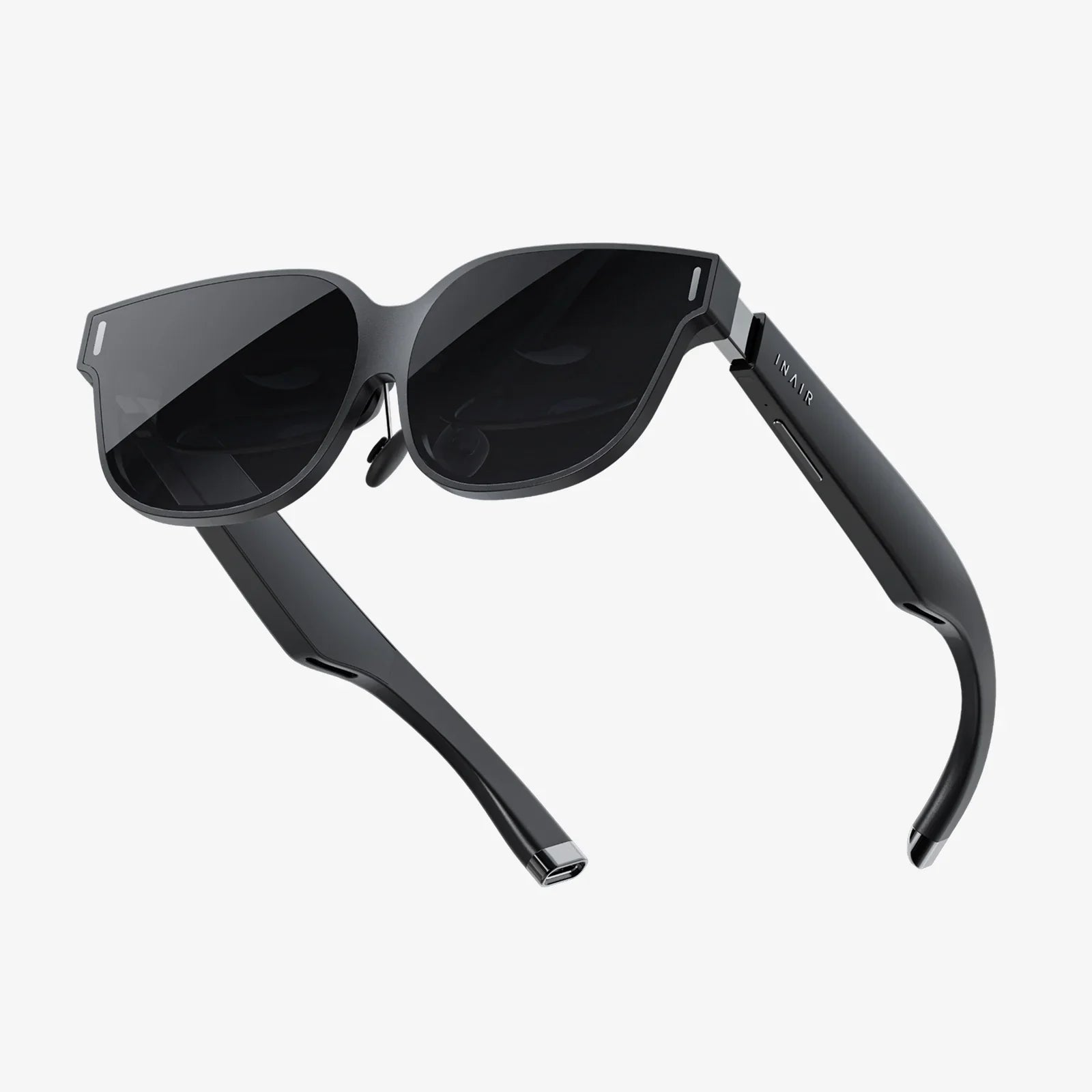
The digital horizon is shimmering with a promise we’ve seen in science fiction for decades: a world where information and imagination are seamlessly painted onto our physical reality. Whispers and confirmed reports alike are hinting at a significant leap forward, with a host of new AR glasses in the works from established tech giants and ambitious startups. This isn’t just another iteration; it’s a concerted push to finally bridge the gap between prototype and product, between niche curiosity and mainstream utility. The race to overlay our world with a digital skin is heating up, and the implications are nothing short of revolutionary.
The Architectural Leap: Core Technologies Powering the Next Generation
The fundamental challenge of augmented reality glasses has always been a torturous trade-off: how to create a device that is powerful enough to generate convincing digital imagery, yet small and light enough to be worn comfortably for more than a few minutes. The new AR glasses in the works are attacking this problem from multiple angles, leveraging breakthroughs that have finally matured.
At the heart of the visual experience are advancements in waveguide and holographic optics. Early models often used birdbath optics or other solutions that resulted in bulky designs and limited fields of view. The latest generation employs nanoscale gratings and complex optical coatings to pipe light from micro-displays to the eye. This allows for a much slimmer form factor, resembling traditional eyeglasses more closely than ever before. Furthermore, these new waveguides are enabling a significantly wider field of view, which is critical for immersion—after all, a postage stamp-sized digital overlay in the corner of your vision is more distracting than useful.
Equally important is the display technology itself. The pursuit is for micro-displays that are incredibly bright, high-resolution, and energy-efficient. Developments in MicroLED technology are particularly promising. These displays offer exceptional brightness (crucial for use in sunny outdoor environments), high pixel density to avoid screen-door effects, and lower power consumption compared to older LCD or OLED solutions. This directly addresses the twin demons of battery life and thermal management that have plagued previous designs.
Beyond Visuals: The Sensory and Computational Symphony
Seeing the digital world is only one part of the equation. The next generation of devices understands that true immersion is a multi-sensory experience. This means a massive investment in a suite of advanced sensors and on-board intelligence.
Spatial awareness is paramount. New AR glasses are packed with a sophisticated array of cameras, including depth sensors, LiDAR scanners, and high-resolution RGB cameras. This sensor fusion creates a real-time, millimeter-accurate 3D map of the user’s environment. This isn’t just for placing a virtual dinosaur on your coffee table; it’s for understanding the geometry of a room to allow digital objects to realistically occlude behind physical furniture, for mapping the geometry of a complex engine for a repair tutorial, or for enabling precise hand-tracking interaction without controllers.
This deluge of spatial data requires immense processing power, handled by a new class of specialized chipsets. These processors are designed from the ground up for simultaneous localization and mapping (SLAM), computer vision tasks, and neural processing for AI-driven interactions. They are marvels of efficiency, performing trillions of operations per second while sipping power to preserve battery life. This onboard AI is what will allow the glasses to not just see the world, but understand it—identifying objects, interpreting gestures, and predicting user intent.
The Interface of the Future: How We Will Interact
The mouse and keyboard are obsolete in this new paradigm. The new AR glasses in the works are pioneering intuitive and hands-free interaction models that feel like magic. Voice assistants will evolve from simple command-takers to contextual partners, able to understand and act upon what you’re looking at.
However, the most exciting development is in advanced hand and eye-tracking. Cameras mounted on the frames can track the precise movement of your fingers, allowing you to pinch, select, drag, and resize virtual elements as if they were physically present. Eye-tracking adds another layer of context, enabling interface elements to expand or menus to appear simply by looking at them. This creates a frictionless flow where your intent is translated into action with minimal effort. Imagine glancing at a street sign and having it instantly translate, or looking at a restaurant to see its reviews pop up—all without uttering a word or lifting a hand.
From Prototype to Purpose: Real-World Applications Await
The true test of any technology is its utility beyond the demo reel. The next wave of AR glasses is targeting specific vertical markets where the value proposition is immediate and undeniable.
- Enterprise and Industrial Design: Architects will walk through full-scale building plans before a single foundation is poured. Factory technicians will receive schematics and instruction manuals overlaid directly onto the machinery they are repairing, guided by remote experts who can see their view and annotate the real world.
- Healthcare and Medicine: Surgeons could have vital signs and 3D imaging data visualized in their line of sight during complex procedures. Medical students could practice surgeries on detailed holographic cadavers, and physical therapists could guide patients through exercises with perfect digital form overlays.
- Education and Training: History lessons could become immersive recreations of ancient Rome. Mechanics-in-training could learn to dismantle an engine with step-by-step digital instructions integrated with the physical tools in their hands.
- Social Connection and Remote Collaboration: The concept of a "holoportation" meeting, where remote participants appear as life-like holograms in your living room, discussing a 3D model together, moves from fantasy to tangible reality.
The Invisible Hurdles: Challenges on the Path to Adoption
For all the technological promise, significant obstacles remain. The most obvious is design and social acceptance. The goal is to create glasses that people actually want to wear—that are fashionable, lightweight, and unobtrusive. The "cyborg" aesthetic of early prototypes is a non-starter for mass adoption. Companies are investing heavily in partnerships with fashion designers and using advanced materials to create frames that look and feel normal.
Battery life is another perennial challenge. Processing high-fidelity graphics and sensor data is incredibly power-intensive. Innovations in battery chemistry and system-on-chip efficiency are helping, but the ideal solution—all-day battery life in a sleek form factor—remains a holy grail. Some concepts explore swappable battery packs or offloading intensive computations to a paired companion device, like a smartphone.
Perhaps the most complex challenges are privacy and safety. Glasses with always-on cameras raise legitimate concerns about surveillance and data collection. Clear and transparent policies on data usage, alongside hardware features like physical camera shutters or recording indicator lights, will be essential to build public trust. Furthermore, managing digital distraction in the real world—especially while driving or walking—is a safety imperative that must be solved through smart software boundaries and user awareness.
The Road Ahead: A Blended Reality Beckons
The development of these new devices is not happening in a vacuum. It is converging with other transformative technologies. The rise of 5G and edge computing will allow these glasses to offload heavy processing to the cloud, reducing their onboard compute requirements and enabling even more complex simulations and interactions in real-time. Furthermore, the entire ecosystem is being built alongside a new wave of spatial computing platforms—operating systems designed not for a rectangular screen, but for the three-dimensional world around us.
This suggests a future where AR glasses evolve from a standalone product into a central hub for our digital lives, replacing our smartphones, watches, and laptops as the primary portal to information and connection. They won’t just be a device we use; they will become a constant, contextual companion that enhances our perception and augments our abilities.
The whispers are growing louder, the patents are stacking up, and the technological pieces are finally falling into place. The next generation of augmented reality glasses is no longer a question of if, but when and how profoundly they will change everything. We are on the cusp of a fundamental shift in our relationship with technology, moving from devices we look down at to an intelligence we look through. The world is about to get a new layer, and it will change how we see everything.
Share:
3D Print AR Accessories To Transform Everyday Augmented Reality Experiences
Wirelessly Streaming HD Video: A Comprehensive Guide to Seamless, High-Definition Entertainment