


- by wangfred
New AR Technology: Bridging Realities for a Transformed Tomorrow
- by wangfred
Imagine a world where information doesn’t just live on your screen but is painted onto the very fabric of your reality. Where the line between the digital and the physical doesn’t just blur—it disappears. This isn't a distant sci-fi fantasy; it's the imminent future being built today, powered by a seismic leap in new AR technology. This next wave is moving beyond novelty gimmicks and cumbersome headsets, promising to fundamentally reshape how we work, learn, connect, and interact with the world around us. The revolution isn't coming; it's already layering itself over our present.
The journey of augmented reality is a story of exponential growth. Early iterations, while revolutionary in concept, were often hampered by technological limitations. Bulky hardware, limited field-of-view, poor tracking, and a lack of compelling content kept AR on the periphery of public consciousness. It was a technology in search of a problem to solve. However, the last few years have witnessed a perfect storm of innovation that has catapulted new AR technology into the mainstream.
This evolution is driven by advancements across multiple domains. The miniaturization of powerful processors has enabled real-time environmental mapping and complex rendering without a tethered connection. Breakthroughs in display technology, including waveguides and micro-LEDs, are creating transparent screens that are brighter, sharper, and more energy-efficient. Simultaneously, sophisticated computer vision algorithms, often powered by machine learning, can now understand and interact with the physical world with astonishing accuracy, recognizing objects, surfaces, and spatial geometry in milliseconds.
At the heart of new AR technology lies a sophisticated sensory apparatus that acts as the eyes and brain of the system. Unlike virtual reality, which creates a wholly synthetic environment, AR must first comprehend the real world to augment it effectively. This process begins with a suite of sensors, including high-resolution cameras, LiDAR (Light Detection and Ranging) scanners, depth sensors, and inertial measurement units (IMUs).
These sensors work in concert to perform a critical task known as Simultaneous Localization and Mapping (SLAM). SLAM algorithms process the sensor data in real-time to simultaneously construct a 3D map of the unknown environment while tracking the device's precise location within that map. This creates a digital twin of the space, a foundational understanding upon which digital content can be anchored. This is why a virtual dinosaur can convincingly hide behind your real sofa or a navigation arrow can appear to be painted on the road ahead; the technology knows exactly where everything is.
Perhaps the most immediate and impactful application of new AR technology is in industrial and enterprise settings. Here, AR is not a toy but a powerful tool driving efficiency, safety, and precision.
The consumer landscape is being reshaped by AR's ability to bridge the gap between online browsing and in-store purchasing. This technology is empowering customers with unprecedented levels of information and confidence.
Try-before-you-buy is being redefined. Shoppers can use their smartphone or AR mirror to see how a pair of glasses, a watch, or even a shade of lipstick looks on their own face. Furniture retailers allow customers to place true-to-scale 3D models of sofas, tables, and decor into their living rooms, ensuring the piece fits the space and matches the aesthetic before committing to a purchase. This drastically reduces product returns and increases customer satisfaction.
Beyond the point of sale, new AR technology is creating immersive brand experiences. Imagine pointing your phone at a product on a store shelf to see detailed specifications, customer reviews, or even the product's journey through the supply chain. Museums and art galleries are using AR to bring exhibits to life, allowing statues to tell their own stories or paintings to animate, adding a rich, contextual layer to cultural education.
The implications for learning and medicine are nothing short of profound. In education, AR transforms abstract concepts into tangible, interactive experiences. Instead of reading about the solar system, students can have it orbit around their classroom. Medical students can practice complex surgical procedures on detailed, interactive holograms of the human body, dissecting layers of anatomy without ever touching a cadaver. This hands-on, visual learning paradigm caters to diverse learning styles and makes education more engaging and effective.
In healthcare, the stakes are even higher. Surgeons are beginning to use AR headsets to overlay critical patient data—such as MRI scans or vital signs—directly into their line of sight during procedures, allowing them to maintain focus without looking away at a monitor. This technology can highlight blood vessels, tumors, or nerves, enhancing precision and improving surgical outcomes. Furthermore, AR is being used for physical therapy, guiding patients through exercises with correct form, and for patient education, helping individuals visualize and understand their medical conditions.
For all its promise, the widespread adoption of new AR technology is not without significant challenges and ethical considerations. The very sensors that allow AR to understand the world are also powerful data collection tools. The constant scanning and mapping of our homes, offices, and public spaces raise monumental questions about data ownership, privacy, and security. Who owns the digital map of your living room? How is that data stored, used, or potentially sold? Establishing clear ethical guidelines and robust legal frameworks will be crucial to building public trust.
Furthermore, the issue of the digital divide looms large. Will this technology become a great equalizer in education and opportunity, or will it create a new class of haves and have-nots? Ensuring equitable access and preventing AR from exacerbating existing social inequalities is a critical task for policymakers and developers alike.
There are also concerns about the societal impact of a permanently augmented world. Could constant digital notifications and overlays lead to increased distraction and a further erosion of our attention spans? How will persistent AR filters affect our perception of self and reality? Navigating these uncharted waters will require a thoughtful, multidisciplinary approach that involves technologists, ethicists, sociologists, and the public at large.
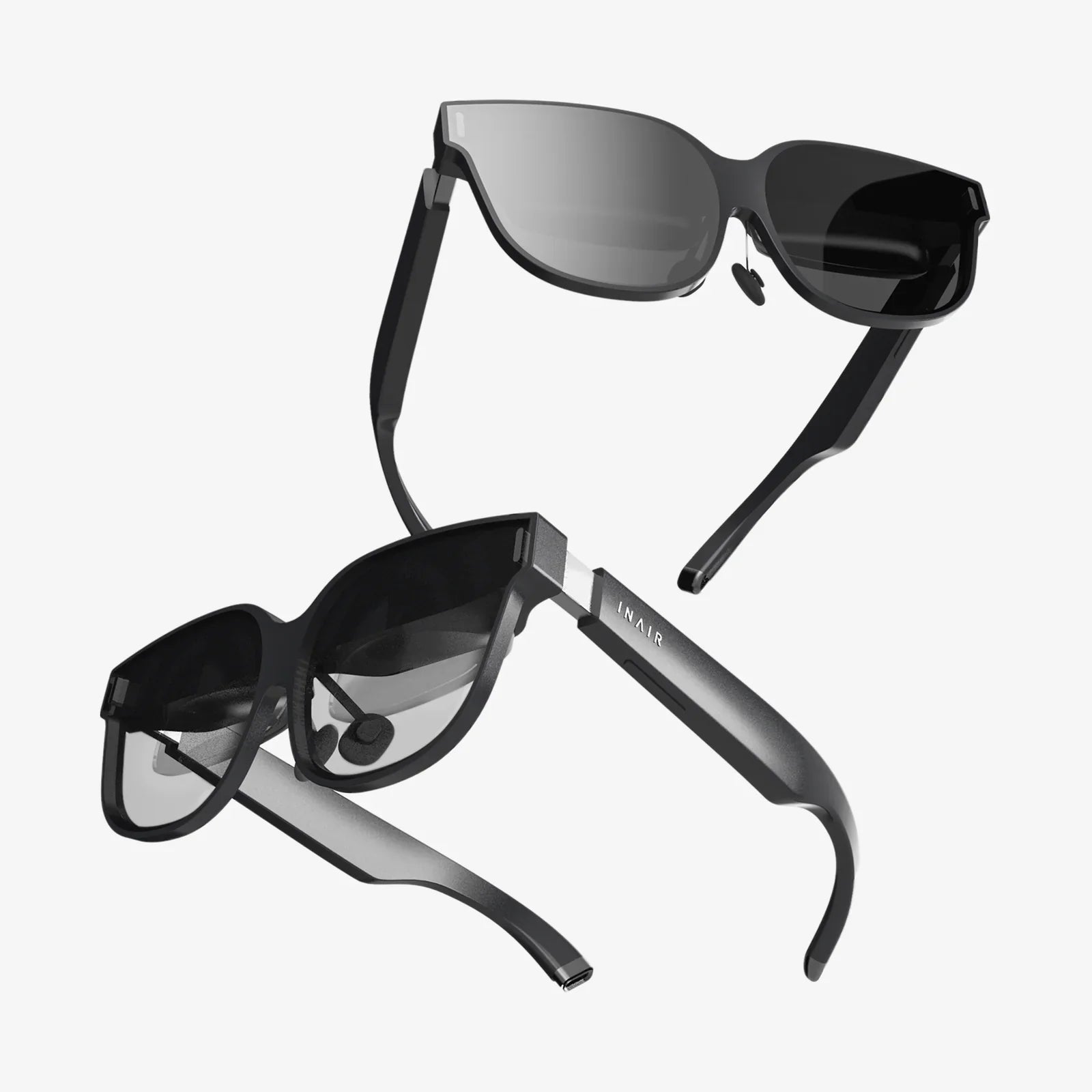
The trajectory of new AR technology points toward even more seamless integration into our daily lives. The ultimate goal is the development of comfortable, socially acceptable eyewear that can replace the smartphone as our primary gateway to digital information. Imagine lightweight glasses that look no different from standard prescription frames but can project a rich, persistent digital layer across your entire field of vision.
Future advancements will focus on context-aware computing, where the AR system anticipates your needs based on your environment, schedule, and behavior. It could automatically translate street signs in a foreign country, remind you of a colleague's name as you walk into a meeting, or guide you through a recipe while your hands are covered in flour. This shift from explicit commands to implicit, ambient assistance will make technology feel less like a tool and more like an intuitive extension of our own cognition.
The convergence of AR with other emerging technologies like 5G/6G connectivity, artificial intelligence, and the Internet of Things (IoT) will unlock even more powerful use cases. Our entire world could become a connected, intelligent interface, and new AR technology will be the lens through which we see and interact with it.
The potential is staggering, a future where the digital and physical coalesce into a single, enhanced reality. We are standing at the precipice of a new era of human-computer interaction, one that promises to augment not just our reality, but our very humanity. The tools to build this future are here; it's now up to us to wield them wisely, creatively, and responsibly, shaping a world where technology doesn't distract us from life, but helps us see it more clearly than ever before.
Share:
How to Create Virtual Office Hours: A Complete Guide for Engagement
Pros and Cons of Virtual Office: A Comprehensive Guide to the Future of Work