


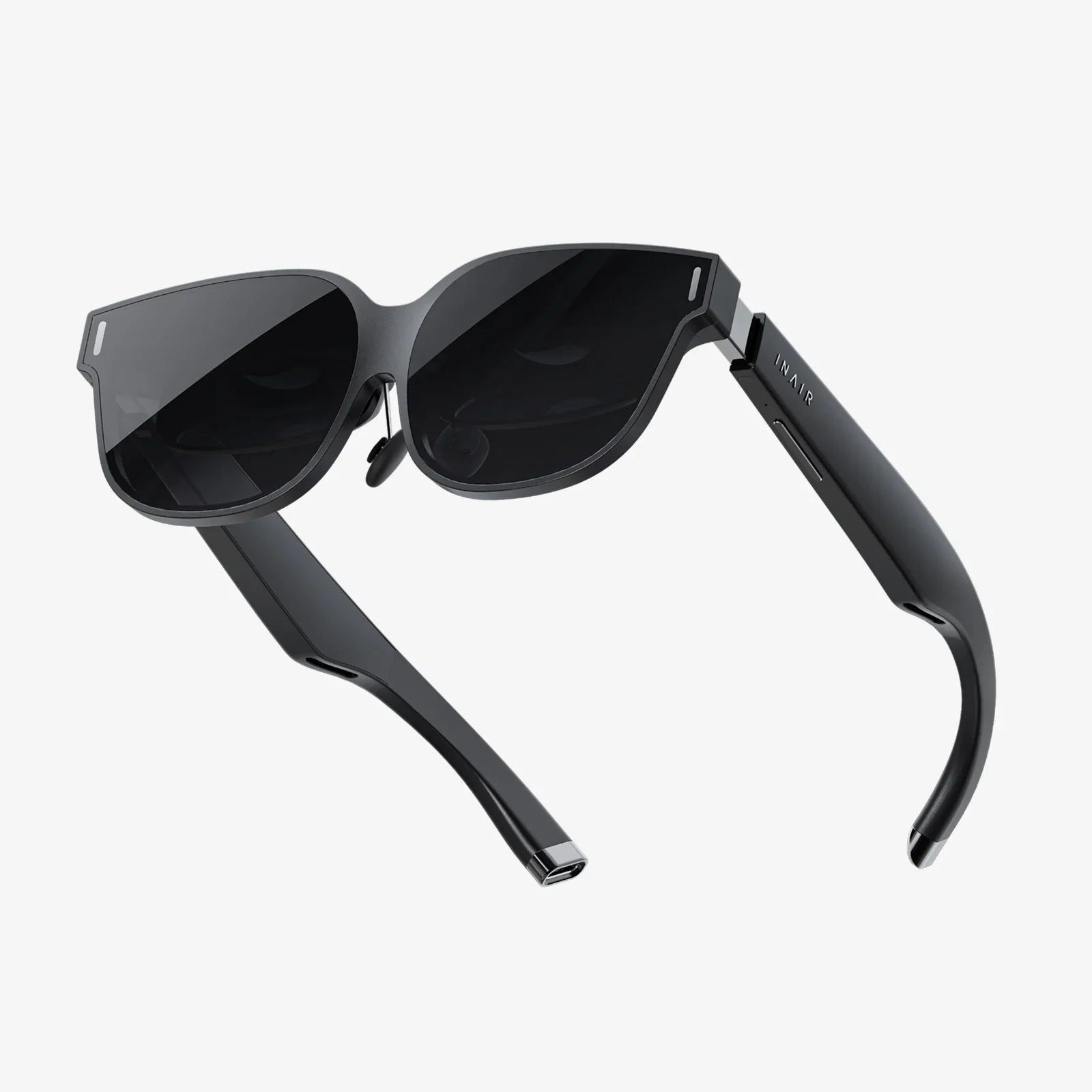
- by wangfred
New Augmented Reality Goggles Are Redefining Reality and Reshaping Our Digital Future
- by wangfred
Imagine a world where information doesn’t live on a screen in your hand but is painted onto the canvas of your reality. Where directions float on the pavement before you, historical figures reenact events on the very ground they occurred, and a virtual colleague can sit on the other side of your physical desk, present not as a flat image but as a dimensional, life-like hologram. This is the promise, and increasingly the reality, being delivered by the latest generation of new augmented reality goggles, a technological leap that is poised to fundamentally alter our relationship with the digital world, moving it from something we look at to something we live within.
To understand the significance of these new devices, one must first move past the science-fiction allure and appreciate the profound technological advancements that make them possible. Unlike their predecessors, which were often clunky, low-fidelity proofs-of-concept, the new augmented reality goggles represent a convergence of several cutting-edge technologies.
At their heart is a sophisticated array of sensors, including advanced LiDAR scanners, depth sensors, and high-resolution cameras. These act as the device's eyes,
constantly mapping the physical environment in real-time with astonishing accuracy. This spatial mapping creates a digital twin of your surroundings, allowing virtual objects to understand and interact with the geometry of the real world—a virtual cat can jump on your real sofa, and a digital screen can appear to be pinned to your actual wall.
Simultaneously, micro-OLED or Laser Beam Scanning displays project light directly into the user's eyes. These are not simple projections; they are precise, high-resolution overlays that can account for ambient lighting and occlude digital objects behind physical ones, creating a convincing illusion of solidity. The result is a seamless blend where the boundaries between what is real and what is computer-generated begin to meaningfully blur.
Finally, immense processing power, often aided by machine learning algorithms, ties it all together. This onboard computer vision interprets the sensor data, tracks the user's eye movements and gestures for intuitive control, and renders complex graphics instantaneously. This trinity of sensing, display, and processing is what separates these new goggles from anything that has come before, transforming a novel concept into a practical and powerful tool.
The implications for the professional world are nothing short of revolutionary. The traditional workspace, defined by physical monitors, keyboards, and geographic location, is being dismantled.
Beyond the office, these devices are set to become a pervasive part of our daily routines, acting as an intelligent layer over our reality.
Navigation will evolve from a voice telling you to turn left in 500 feet
to a glowing path illuminated on the street itself, with arrows seamlessly integrated into the environment. Finding your way in a complex airport or a new city will become intuitive and immersive.
The concept of learning and exploration will be reborn. Imagine standing in a historic city square and watching a pivotal event from centuries ago unfold around you, with historical figures and buildings superimposed onto the modern landscape. Museums could come alive, with exhibits breaking free of their glass cases to demonstrate their function and history in front of you. This contextual, spatial learning could create deeper and more memorable educational experiences.
Even social interaction stands to be transformed. Instead of sharing a flat photo, you could share a 3D memory—a volumetric capture of a birthday moment that friends and family can step into from across the globe. The very nature of shared experiences could shift from passive observation to active, shared presence within a memory.
With such transformative power comes a host of complex challenges that society must urgently address. The widespread adoption of new augmented reality goggles is not just a technical question; it is a deeply social and ethical one.
augmented intelligenceand those who cannot, exacerbating existing inequalities.
The current generation of goggles is merely the first step on a much longer path. The ultimate destination is a device that is as socially acceptable and comfortable as a pair of everyday eyeglasses. This will require breakthroughs in battery technology, processing miniaturization, and display systems, likely leveraging developments in photonics and neural interfaces.
We are moving towards a phygital
future—a seamless fusion of physical and digital existence. The internet will not be a place we visit but a layer we inhabit. This will give rise to new forms of art, storytelling, and social platforms that are inherently spatial and contextual. The very architecture of cities might be designed with both a physical and a digital layer in mind.
This evolution will force us to renegotiate social contracts, redefine privacy, and perhaps even reconsider what it means to be human in an age where our perception can be technologically mediated and enhanced. The choices we make today about the development and regulation of this technology will echo for generations, shaping the very fabric of our reality.
The screen that has dominated our attention for decades is beginning to fade, not into obsolescence, but into the world around us. These new augmented reality goggles are the key that unlocks this next dimension of human-computer interaction, offering a future of limitless potential intertwined with profound responsibility. The door to a blended reality is now open; stepping through it will change everything.
Share:
How to Explain Augmented Reality: A Comprehensive Guide for Everyone
Superb Augmented Reality: The Invisible Revolution Reshaping Our World