


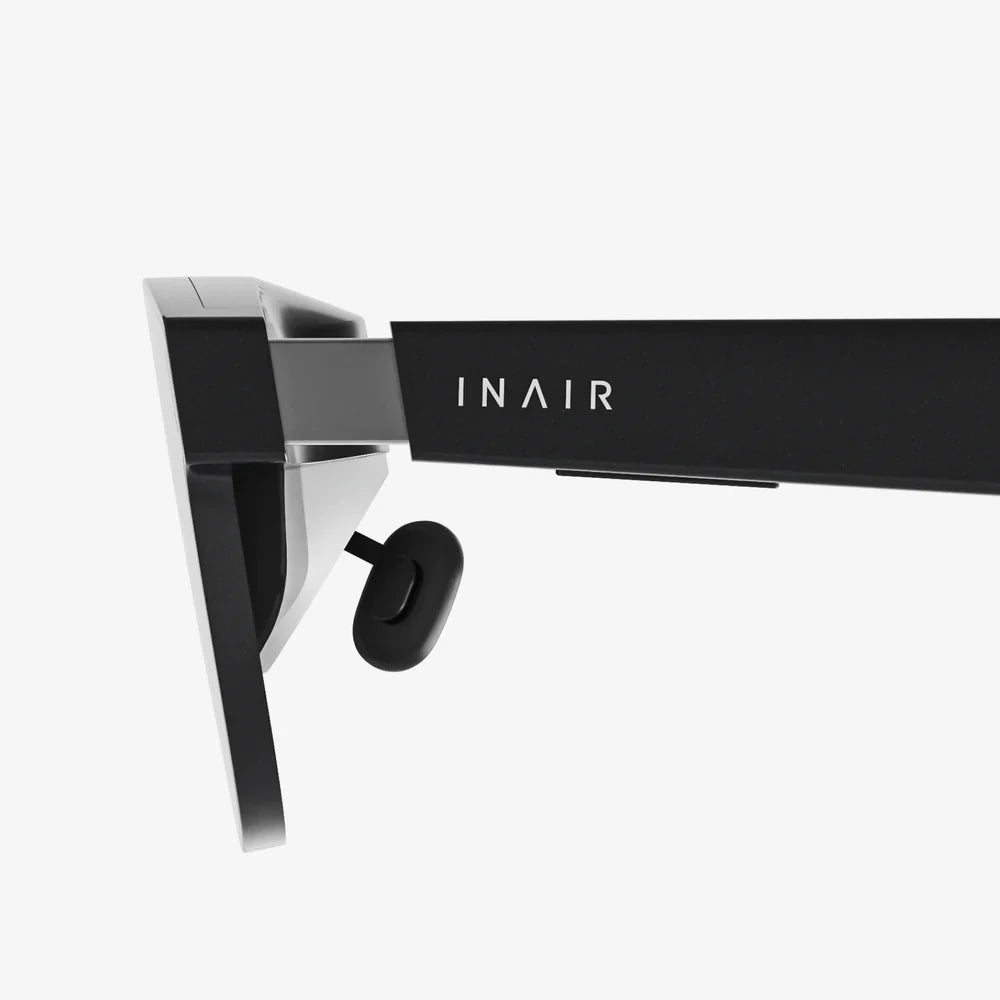
The whispers have been building for years, but 2025 is finally the year they materialize into a clear, high-resolution vision. The long-awaited, next-generation wave of new smart glasses is not just another incremental update; it represents a fundamental shift in how we perceive and interact with the digital world. Forget the clunky, socially awkward, and functionally limited prototypes of the past. The 2025 release cycle promises a leap toward a seamless, intuitive, and truly integrated augmented reality experience, moving this technology from the realm of niche enthusiasts to the mainstream consumer. This isn't just about having a screen in front of your eyes; it's about weaving information, connection, and creativity directly into the fabric of your daily life, fundamentally altering the boundaries between the physical and the digital.
The Technological Vanguard: What Makes 2025 Different?
The promise of a compelling smart glasses product has existed for over a decade, but it has consistently been hamstrung by a series of technological trade-offs. The 2025 generation is the first to convincingly overcome these historical hurdles through a convergence of advancements across multiple fields.
Breakthroughs in Waveguide and Photonics
At the heart of any pair of smart glasses is the optical system—the method by which digital images are projected onto the user's retina. Early systems were often bulky, had a narrow field of view, or suffered from dim, unconvincing imagery. The 2025 models are expected to leverage advanced diffractive and holographic waveguides. These nano-engineered pieces of glass are incredibly thin and transparent, allowing digital content to be superimposed onto the real world with unprecedented clarity, brightness, and a field of view that approaches natural human vision. This eliminates the "screen door effect" and creates a convincing illusion that digital objects truly exist in your environment.
The Invisible Power of On-Device AI
Processing the immense amount of visual and contextual data required for responsive AR cannot rely on cloud connectivity alone due to latency and privacy concerns. The 2025 devices will feature dedicated neural processing units (NPUs) built on advanced architectures. This on-device AI can perform real-time object recognition, spatial mapping, and gesture tracking instantaneously and privately. Imagine looking at a complex piece of machinery and seeing animated repair instructions overlaid onto the exact components, all processed without sending a single byte of data to a remote server. This local processing power is the key to responsive and contextually aware applications.
Revolutionary Battery Life and Thermal Management
Perhaps the most tangible improvement for users will be in battery performance. Through a combination of more efficient displays, low-power AI chips, and innovative distributed battery systems (often split between the frames and temples), the 2025 generation aims for all-day battery life. Some prototypes suggest a combination of minimal passive use with intensive active use, powered by new energy-dense cell chemistry. Furthermore, advanced passive cooling systems using materials like vapor chambers will dissipate heat effectively, ensuring the glasses remain comfortable to wear even during prolonged, processor-intensive tasks.
Seamless Biometric Integration
Moving beyond basic cameras and microphones, the new sensors will focus on nuanced human-computer interaction. Tiny, imperceptible sensors will be able to read pupillary response, gauge focus, and even understand emotional state through subtle physiological cues. This allows for incredibly intuitive control; a mere glance at a menu option could select it, or focusing on a notification could expand it, all without a voice command or a hand gesture. This biometric integration paves the way for a genuinely hands-free and responsive experience.
Redefining Human-Computer Interaction: Beyond the Touchscreen
The smartphone established a paradigm of interaction based on tapping and swiping a glass slab. Smart glasses shatter this model, offering a multi-modal interface that is far more natural and contextually appropriate.
The Voice-First, Always-Available Assistant
Voice control will evolve from a novelty to a primary input method. With advanced beamforming microphone arrays that can isolate a user's voice in a crowded room and natural language processing that understands context and nuance, interacting with your digital assistant will feel like a conversation with a knowledgeable companion. It will be there to provide directions superimposed on the street, translate a foreign menu in real time, or remind you of a key point during a meeting, all triggered by a quiet, natural voice command.
Subtle and Expressive Gesture Control
For moments when voice is impractical, gesture control will take center stage. Instead of large, sweeping arm movements, the focus will be on subtle, discreet finger and hand gestures tracked by ultra-widefield cameras. Tapping your thumb and index finger together could play music, a subtle swipe in the air could dismiss a notification, and pinching and dragging could manipulate a 3D model. This interaction model feels like magic because it is invisible to everyone else, preserving social norms while granting the user immense control.
Contextual and Proactive Information Delivery
The ultimate goal of this technology is to be proactive, not reactive. By understanding your location, schedule, and even what you're looking at, the glasses will deliver information before you even ask for it. Walk into a supermarket, and your shopping list could automatically appear, with arrows guiding you to each item. Look at a landmark, and a small, elegant placard of historical information could materialize beside it. This shifts the device from a tool you constantly manage to an ambient intelligence that effortlessly assists you.
A World Remixed: Applications Across Industries
The impact of mature smart glasses technology will ripple across every sector, transforming professional workflows and creative expression.
The Future of Work and Remote Collaboration
Imagine a field technician repairing a wind turbine with a remote expert seeing exactly what they see, able to draw annotations directly onto their field of view to guide them. Architects and engineers could walk through full-scale 3D models of their designs before a single foundation is poured. This "see-what-I-see" capability will collapse geographical barriers, making remote collaboration as rich and effective as being there in person, revolutionizing fields from manufacturing to healthcare.
Immersive Learning and Skill Development
Education will move from abstract to experiential. Medical students could practice procedures on virtual anatomy overlays. History students could witness historical events unfold around them on the school playground. Mechanics could learn to repair an engine by following interactive, step-by-step instructions overlaid on the actual components. This hands-on, visual learning paradigm has the potential to dramatically improve comprehension and retention.
The New Creative Canvas
For artists and designers, the world becomes their canvas. Sculptors could manipulate virtual clay in mid-air, painters could create murals on physical walls without any physical paint, and musicians could compose by arranging virtual sound sources in a room. This merges digital creativity with physical space, unlocking entirely new forms of art and expression that were previously impossible.
The Inevitable Challenges: Privacy, Security, and the Social Contract
With such transformative power comes profound responsibility. The widespread adoption of always-on, audio-visual recording devices worn on the face presents arguably the biggest societal challenge since the advent of social media.
The Privacy Paradox
The very features that make these glasses powerful—constant environmental awareness and recording capabilities—are also their greatest threat to privacy. The potential for surreptitious recording in private spaces, the unauthorized collection of biometric data from unsuspecting individuals, and the creation of persistent logs of one's entire life are dystopian possibilities that must be addressed. The industry will need to adopt a privacy-by-design approach, with clear physical indicators like LED lights when recording, robust user controls over data, and ethical guidelines that are enforced transparently.
Building a Digital Etiquette
A new social contract will need to be written. Is it polite to wear smart glasses during a conversation? How do we know if someone is recording us? Societies will need to develop new norms and potentially new laws to govern the use of this technology in public and private spaces. This will be an ongoing cultural negotiation as the technology becomes more prevalent.
The Security Imperative
Securing these devices is paramount. A hacked pair of smart glasses could provide a malicious actor with a live feed of everything a user sees and hears—their passwords, confidential work documents, and private conversations. Manufacturers must implement enterprise-grade security from the chip level up, including hardware-based encryption, secure boot processes, and regular, timely software updates to patch vulnerabilities.
Gazing into the Future: Beyond the 2025 Horizon
The 2025 release is not an end point, but a dramatic new beginning. It establishes a platform upon which even more revolutionary applications will be built. We can anticipate the eventual integration of this technology with other emerging fields like brain-computer interfaces for even more direct control, or with advanced haptic feedback to allow users to "feel" digital objects. The line between the user and the machine will continue to blur, moving towards a future where technology is not a device we carry, but an intelligent layer seamlessly integrated into our perception of reality.
The stage is set for a revolution that will unfold not on our desks or in our pockets, but directly before our eyes. The 2025 generation of smart glasses is poised to dissolve the final barrier between our digital and physical selves, offering a glimpse of a future where information is ambient, interaction is intuitive, and our reality is limited only by our imagination. The question is no longer if this future will arrive, but how quickly we will adapt to the profound possibilities and responsibilities it brings.
Share:
Glasses for Video Conferencing: The Ultimate Guide to Looking and Seeing Your Best
AI Smart Glasses Examples: The Future on Your Face is Here