


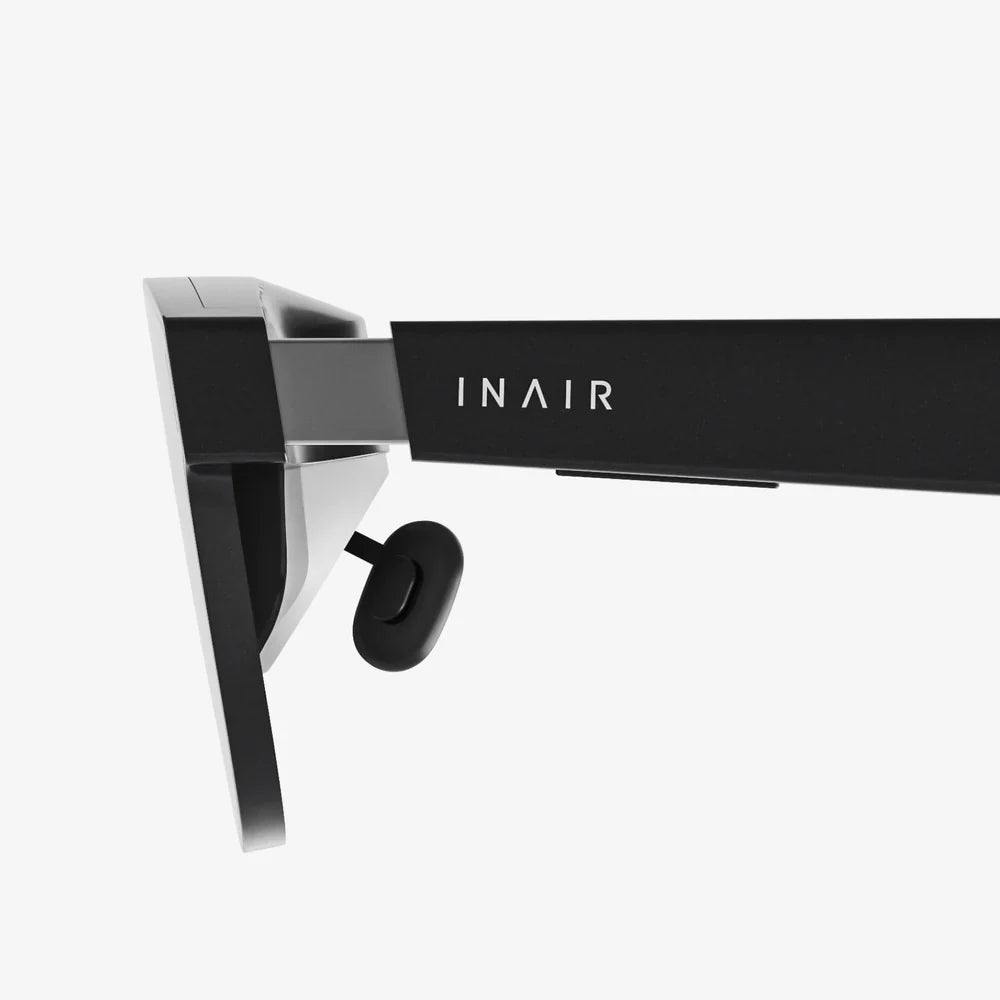
Imagine walking through a city where historical figures greet you on street corners, navigation lines are painted directly onto the pavement, and the details of every restaurant’s menu float enticingly beside its door. This is no longer the stuff of science fiction. A new generation of eyewear is quietly arriving, promising to make this augmented world our new normal. These aren’t the clunky, isolating headsets of the past; they are sophisticated new spectacles that let world augmented reality blend seamlessly into our daily lives, offering a glimpse into a future where the digital and physical are inextricably and usefully linked.
From Sci-Fi Dream to Mainstream Reality
The concept of augmenting our vision with digital information has captivated inventors and storytellers for decades. For years, the technology to achieve this was bulky, expensive, and required immense processing power, confining it to research labs and niche industrial applications. Early attempts at consumer-grade devices often felt more like a prototype than a product, with limited field of view, short battery life, and a social awkwardness that prevented widespread adoption. They asked users to choose between being present in the real world or immersed in a digital one.
The pivotal shift we are now witnessing is the move from virtual reality, which replaces the world, to augmented reality, which enhances it. This shift is powered by a convergence of several technological breakthroughs. Miniaturized sensors, incredibly powerful microprocessors, advanced waveguides for displaying information onto lenses, and sophisticated computer vision algorithms have all matured simultaneously. The result is a form factor that closely resembles the eyeglasses we’ve worn for centuries, but with the capability to overlay a universe of information onto our field of view without obstructing it.
The Technology Behind the Transparency
At the heart of these new spectacles is a symphony of miniaturized technology working in perfect harmony. Tiny, high-resolution micro-displays project images towards the lenses. These lenses are not simple pieces of glass or polycarbonate; they are complex optical systems known as waveguides or holographic optical elements. They act like invisible projectors, bouncing the light from the micro-displays into the user’s eye, all while allowing ambient light to pass through freely. The user perceives the digital content as a stable part of their environment, seemingly floating at a certain distance.
This illusion is maintained by a suite of sensors that constantly scan the surroundings. World-facing cameras map the room in 3D, understanding the geometry of surfaces, the location of objects, and the intensity of light. Inertial measurement units (IMUs) track the precise movement and orientation of the user’s head. Advanced simultaneous localization and mapping (SLAM) software processes this data in real-time, anchoring digital objects to physical spaces so they don’t drift or jitter. This allows a virtual pet to convincingly sit on your real coffee table or a digital weather forecast to appear fixed to your wall.
Redefining Social Connection and Communication
One of the most profound impacts of this technology will be on how we connect with one another. Traditional video calls, confined to a small rectangle on a phone or laptop screen, fracture our sense of shared presence. Augmented reality spectacles promise to change this fundamentally. Imagine a call where a photorealistic, volumetric avatar of a colleague or loved one appears sitting across from you at your kitchen table, making eye contact and using natural gestures. The sense of co-presence is unparalleled.
This extends to shared experiences. Friends separated by continents could watch a movie together on a virtual big screen, appearing to be in the same living room. Architects and engineers could collaborate on 3D models of a building, walking around and inside the design as if it were physically present. Language barriers could dissolve in real-time with subtitles seamlessly appearing beneath a speaking person, translating their words without a delay. This technology doesn’t aim to replace human interaction; it aims to enrich and expand it across any distance.
Transforming the Professional Landscape
Beyond social uses, the professional applications are staggering and are already beginning to transform industries. For the modern worker, these spectacles could eliminate the need for multiple monitors. Virtual screens of any size can be summoned and arranged in space, creating a limitless, personalized workspace that travels with you. A programmer could have reference documentation pinned to one wall while coding on another. A financial analyst could visualize complex data sets as interactive 3D graphs floating in mid-air.
In fields like manufacturing, maintenance, and medicine, the implications are even more direct. A technician repairing a complex engine could have schematic diagrams, torque specifications, and step-by-step instructions overlaid directly onto the components they are working on, with their hands remaining free. A surgeon could have a patient’s vital signs and MRI scans visually pinned to their field of view during a procedure, without ever looking away from the operating table. This constant, contextual flow of information reduces error, accelerates training, and dramatically improves efficiency.
The Invisible Guide to the World Around Us
On a personal, everyday level, these devices will act as an intelligent guide to the physical world. Navigation will evolve from looking down at a phone to following arrows and pathways painted onto the street itself. Traveling in a foreign country will be revolutionized; simply looking at a menu, a sign, or a historical monument will instantly provide a translation or a wealth of contextual information. Shopping could involve seeing user reviews and price comparisons materialize next to products on a shelf.
This layer of digital information will make the world more accessible and understandable. It can highlight the history embedded in our cities, reveal the hidden systems like Wi-Fi signals or plumbing, and provide real-time data about everything from air quality to the names of constellations in the night sky. The world itself becomes an interactive, queryable interface.
Navigating the Ethical and Social Maze
With such transformative power comes a host of serious questions that society must grapple with. The most immediate concern is privacy. Devices that see what you see and hear what you hear collect an unprecedented amount of personal and environmental data. Robust frameworks must be established to ensure this data is owned by the user, is encrypted, and is not used for pervasive surveillance or manipulative advertising. The concept of consent in public spaces becomes blurred; if someone is recording their perspective, are you, unknowingly in the background, part of that recording?
There are also profound social questions. Will this technology create a new digital divide, separating those who can afford this enhanced perception from those who cannot? Will we risk further retreating into personalized digital bubbles, filtering out the raw, un-augmented reality in favor of a curated feed? And perhaps most importantly, can we design these experiences to augment human ability and connection without replacing it, ensuring we remain grounded in the physical world and present with the people around us?
The Future is Through a New Lens
The journey is just beginning. The current generation of spectacles is the equivalent of the first mobile phones—revolutionary but primitive compared to what is to come. Future iterations will feature even more seamless integration, with advancements in battery technology, connectivity (like 6G), and artificial intelligence. They will become lighter, more powerful, and eventually, may even replace the smartphone entirely as our primary gateway to digital information.
The ultimate goal is what researchers call "invisible computing"—technology that fades into the background, anticipating our needs and providing information without ever requiring us to look down at a screen. It’s a world where technology serves us contextually and unobtrusively, enhancing our human experience rather than distracting from it. This is the true promise of this new visual paradigm.
We stand at the precipice of a fundamental shift in how we perceive and interact with reality itself. This new visual technology is not just another gadget; it’s a new layer of human experience, a canvas for creativity, and a tool for understanding. The spectacles on the horizon are more than a product—they are a portal, and the world on the other side is waiting to be explored, interacted with, and fundamentally reimagined.
Share:
VR Headset Deals: Your Ultimate Guide to Finding the Perfect Immersive Experience
How Do You Work a VR Headset? A Complete Beginner's Setup and Immersion Guide