


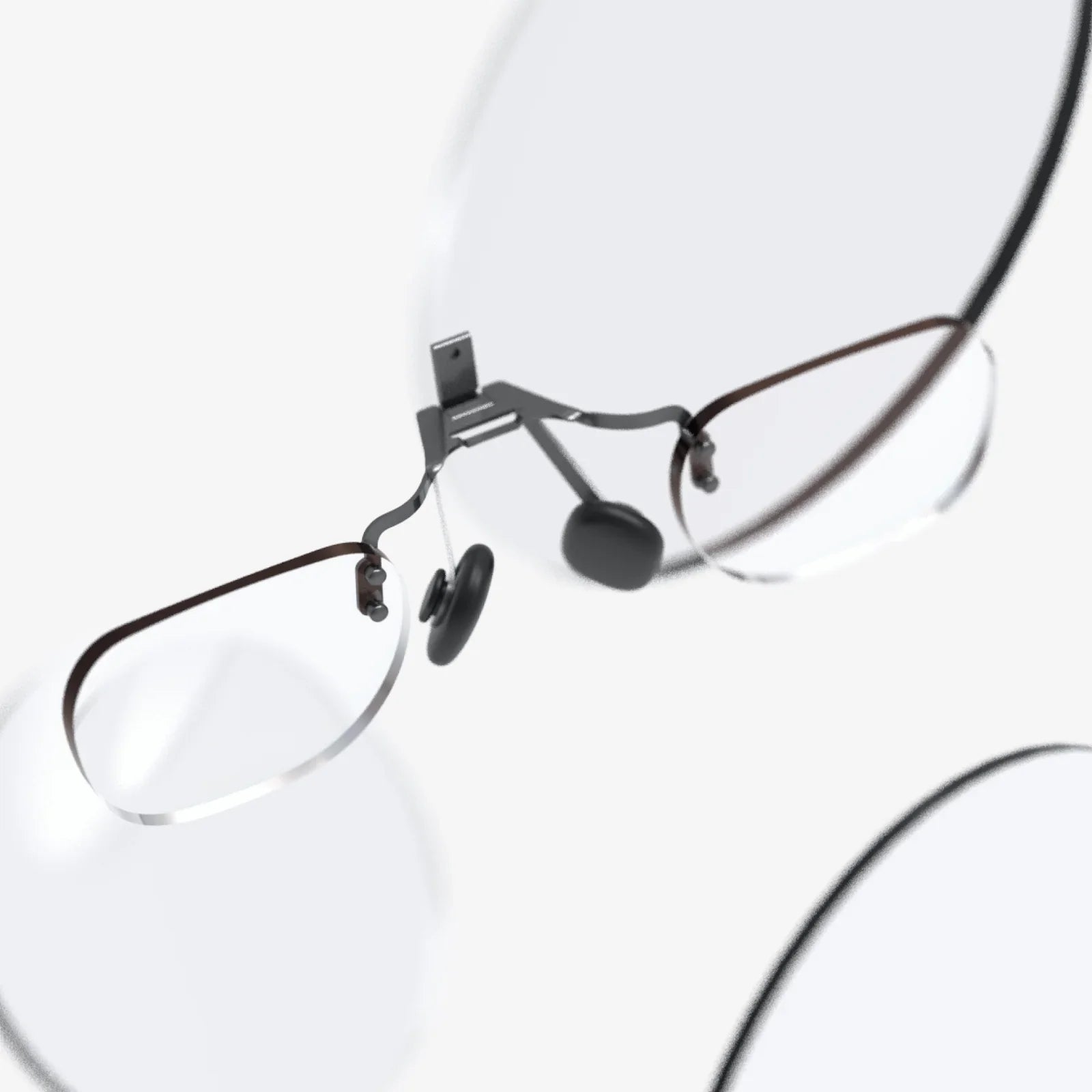
Imagine a world where your eyeglasses do more than just correct your vision—they connect you to a digital universe, protect your eyes from unseen harm, and even monitor your health in real-time. This is no longer the realm of science fiction; it is the exciting reality ushered in by the latest generation of new technology eyeglasses. This revolution is transforming a simple, centuries-old vision aid into a sophisticated hub of personal technology, fundamentally changing our relationship with the world and the data that flows through it.
The Digital Lens: A Window to Augmented Realities
At the forefront of this revolution are smart capabilities that seamlessly integrate digital information with the physical environment. Unlike cumbersome headsets, these advanced frames offer a discreet and socially acceptable way to experience augmented reality (AR).
Micro-projectors, smaller than a grain of rice, are ingeniously embedded within the frames. These project information directly onto the lenses, which themselves are marvels of optical engineering. Using transparent display technology, often based on waveguides or holographic film, these lenses reflect the projected light into the user's eyes while remaining entirely see-through. The result is a crisp overlay of digital content—text messages, navigation arrows, translated subtitles—superimposed onto the real world without obstructing your view.
This technology is powered by a miniaturized computer system housed within the temple arms. This system includes a processor, memory, wireless connectivity modules like Bluetooth and Wi-Fi, and a suite of sensors. A bone conduction speaker, which vibrates the skull to transmit sound without blocking the ear canal, provides a private audio experience. Voice assistants are always at the ready, activated by a touchpad on the frame or a simple voice command, allowing for hands-free control of smart devices, music, and calls.
Beyond Clarity: The Science of Advanced Vision Enhancement
While the digital features capture headlines, the core optical innovations are equally transformative. New technology eyeglasses are tackling age-old vision problems with space-age solutions.
One of the most significant breakthroughs is in autofocus technology. For individuals with presbyopia—the age-related loss of near focus—these lenses are a game-changer. Using a combination of micro-electromechanical systems (MEMS), liquid crystal layers, and eye-tracking sensors, the lenses can dynamically adjust their focal power. The system detects where the user is looking—whether at a phone, a computer screen, or a distant sign—and instantly changes the lens power to provide a clear image at that specific distance, effectively mimicking the natural flexibility of a young eye.
Light-adaptive lenses have also seen radical improvement. Traditional photochromic lenses that darken in sunlight are being replaced by electrochromic variants. With a subtle electric current applied to a thin film embedded in the lens, users can control the tint level electronically, shifting from clear to dark in milliseconds at the touch of a button, regardless of indoor or outdoor conditions. This allows for precise management of light transmission for optimal comfort.
Furthermore, high-definition optics, developed through wavefront technology, are becoming more accessible. This process, borrowed from astronomy to correct for atmospheric distortions, maps the unique imperfections of an individual's entire optical system. Lenses are then ground to a precision never before possible, correcting not just common refractive errors but also higher-order aberrations that cause glare, halos, and poor night vision. The result is vision that is often sharper and has more contrast than natural, unaided sight.
Guardians of Ocular Health: Proactive Protection and Monitoring
Perhaps the most profound application of new technology eyeglasses is in the domain of health. These devices are evolving into proactive guardians of our ocular and overall well-being.
Blue light filtration has moved beyond simple static filters. Smart lenses can now dynamically adjust their filtering properties based on the time of day and the ambient light source. In the evening, they can actively block the specific wavelengths of blue light that are known to disrupt circadian rhythms and melatonin production, promoting better sleep hygiene without distorting color perception during the day.
The most groundbreaking development, however, is the integration of health monitoring sensors. Miniaturized biosensors, positioned on the nose pads or the inner surface of the frames to make gentle contact with the skin, can continuously and unobtrusively collect a wealth of physiological data.
- Ultraviolet (UV) Exposure Monitoring: Built-in UV sensors provide real-time data on sun exposure, alerting the wearer via a subtle audio cue or a notification in their smart display when it's time to seek shade or put on sunglasses, helping to prevent long-term photodamage.
- Biometric Tracking: Photoplethysmography (PPG) sensors use light to measure blood flow. This allows the glasses to continuously monitor heart rate, heart rate variability, and even blood oxygen saturation levels throughout the day, providing a comprehensive picture of cardiovascular health and stress levels.
- Activity and Fall Detection: Advanced accelerometers and gyroscopes can track physical activity, count steps, and, crucially, detect hard falls. For elderly users, this feature can automatically alert emergency contacts or services if a fall is detected, providing a critical safety net.
This constant stream of health data creates a longitudinal dataset that is immensely valuable for preventative medicine. It can reveal trends, flag anomalies, and provide objective information to share with healthcare providers, moving from reactive treatment to proactive, data-driven health management.
The Engine Room: Power, Materials, and Connectivity
None of these features would be possible without parallel advancements in supporting technologies. The need for all-day power is addressed by high-density, flexible batteries that are elegantly integrated into the frame's design. Many models also employ sophisticated power management systems that draw minimal energy, prioritizing essential functions. Inductive charging is standard, allowing users to simply place their glasses on a charging pad overnight without fiddling with ports.
The materials themselves have undergone a revolution. Frames are now crafted from advanced aerospace-grade titanium, flexible memory metals, and bio-acetate derived from sustainable sources, making them incredibly lightweight, durable, and hypoallergenic. Lenses are made from ultra-lightweight, impact-resistant polymers coated with dozens of nano-thin layers. These coatings are hydrophobic (repelling water and oil), oleophobic (resisting smudges), and anti-static (preventing dust attraction), making them exceptionally easy to clean and maintain.
Underpinning everything is a robust connectivity framework. A seamless, low-energy connection to a companion smartphone application acts as the bridge. This app is the control center and dashboard, where users can customize display settings, review health metrics, update firmware, and manage notifications, ensuring the technology adapts to the user, not the other way around.
Navigating the Future: Challenges and Considerations
As with any transformative technology, this new era of eyewear comes with its own set of challenges and ethical considerations. The constant collection of biometric and location data raises significant questions about privacy and data security. Manufacturers must implement end-to-end encryption and transparent data policies, giving users complete control over their information.
There is also a social dimension to consider. As these devices become more widespread, new etiquette norms will need to emerge. Is it acceptable to view a notification during a conversation? How do we prevent the digital divide from widening due to the potentially high cost of this advanced technology? Furthermore, the industry must prioritize universal design, ensuring these powerful tools are accessible and beneficial to people with a wide range of abilities and disabilities, not just the tech-savvy and affluent.
Finally, the very nature of these devices—always on, always collecting—prompts us to ponder the long-term psychological effects. Will constant access to information enhance our lives or lead to further digital distraction? The goal must be to design technology that augments human experience without overwhelming it, promoting presence and connection rather than detracting from it.
The humble eyeglass has shed its passive role, emerging as a powerful, intelligent platform poised to become an indispensable part of our daily lives. From granting us superhuman vision to acting as a silent guardian of our health, new technology eyeglasses are not just changing how we see the world—they are fundamentally reshaping our interaction with technology and our own well-being, offering a glimpse into a future where our most personal devices work tirelessly in the background to enhance every moment.
Share:
Screen Projection Glasses: The Ultimate Guide to Your Personal Heads-Up Display
What AR and VR Look Like: A Journey Through the Digital Lens