


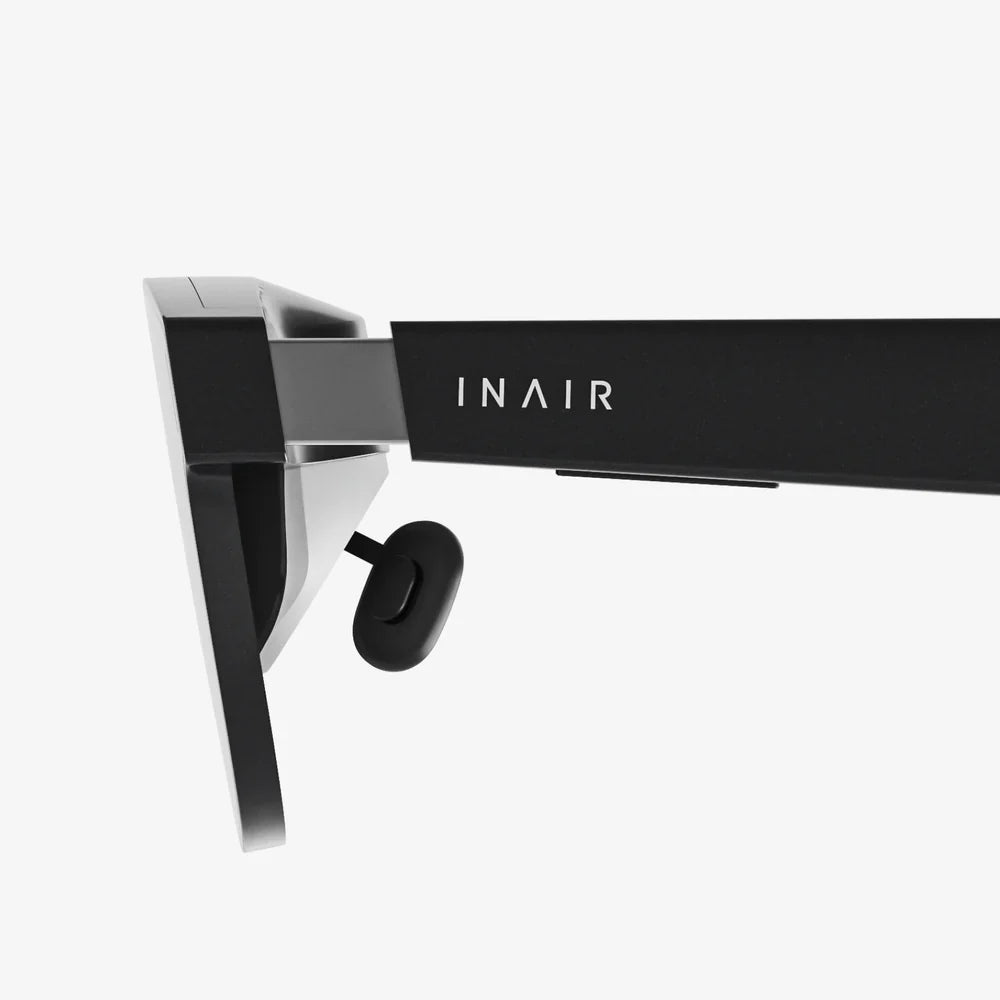
Imagine a world where the line between the digital and the physical doesn't just blur—it vanishes. Where you can reach out and feel the texture of a digital artifact, share a room with a holographic representation of a loved one light-years away, or step into a hyper-realistic simulation for work, therapy, or adventure. This isn't a distant sci-fi fantasy; it's the promise held within the sleek, sophisticated frames of the new VR glasses of 2025. This year marks a pivotal turning point, not merely an incremental upgrade, but a fundamental leap that will redefine our relationship with technology, each other, and reality itself. The revolution is here, and it's waiting for you to put it on.
The End of the Brick: A Form Factor Revolution
For years, the primary barrier to mass adoption of virtual reality has been the hardware itself. Bulky, heavy, tethered, and isolating headsets have confined experiences to dedicated, often solitary, sessions. The new VR glasses of 2025 shatter this paradigm completely. The most immediately striking feature is their form factor. Drawing from advancements in micro-OLED displays, pancake lenses, and ultra-compact compute modules, these devices finally resemble something you'd willingly wear all day—stylish glasses.
Gone are the intrusive front-heavy masks. In their place are lightweight frames, often weighing less than a standard pair of sunglasses. The use of novel composite materials and a distributed weight design eliminates neck strain and facial pressure, making multi-hour use not just possible but comfortable. This shift is monumental. It transitions VR from an activity you do to a platform you inhabit, seamlessly integrating digital layers into your daily flow without disconnecting you from your physical environment.
Seeing the Unseeable: Photorealism and Visual Fidelity
Underpinning the sleek design is a visual engine of breathtaking power. The quest for photorealism, the holy grail of VR, has taken a quantum leap forward. The new VR glasses feature dual 4K micro-OLED displays per eye, offering a combined resolution that pushes beyond human visual acuity, effectively eliminating the dreaded "screen door effect" once and for all. With pixel densities exceeding 3000 PPI, the virtual world is rendered with a crispness and clarity that rivals natural sight.
But resolution is only part of the story. These displays boast an unprecedented dynamic range and color gamut, capable of reproducing the deepest blacks and the most vibrant highlights simultaneously. This is coupled with a variable focus and vergence system, dynamically adjusting the focal plane based on where your eyes are looking. This solves the longstanding vergence-accommodation conflict that has caused eye strain and prevented true depth perception in previous generations. For the first time, your eyes can naturally focus on near and far objects within the virtual space, tricking your brain into accepting the digital world as completely real.
The Sound of Silence: Immersive and Personalized Audio
Immersion is an experience for all senses, and audio has undergone its own quiet revolution. The new VR glasses have abandoned bulky over-ear headphones in favor of sophisticated integrated bone conduction and surface audio technology. Tiny transducers built into the temples of the glasses create a rich, spatialized soundscape directly through the bones of your skull and by vibrating the glasses' frames to produce soundwaves that travel into your ear canal.
The result is a profoundly immersive audio experience that doesn't block out ambient noise. Instead, it uses advanced computational audio to blend hyper-realistic 3D sound with your real-world environment. You can hear the subtle rustle of leaves in a virtual forest while still being aware of a colleague approaching your physical desk. This technology also enables ultrasonic beamforming, allowing for private audio experiences; the person next to you hears only silence while you are fully immersed in a cinematic soundtrack or a private call.
Beyond Controllers: The Dawn of Intuitive Interaction
Interaction is where the 2025 generation truly separates itself from the past. While optional controllers remain for specific high-fidelity gaming applications, the primary mode of interaction is now your hands, your eyes, and your voice. An array of miniature, high-resolution cameras and LiDAR sensors embedded around the frames performs continuous inside-out tracking of your hands with sub-millimeter precision.
This enables natural, unencumbered manipulation of digital objects. You can pinch, grab, throw, and sculpt with your bare hands, with haptic feedback gloves being an optional accessory for adding tactile sensation. Furthermore, eye-tracking technology has evolved from a novelty to a core input mechanism. The system knows exactly where you are looking, enabling intuitive menu navigation (just look at an option to select it), dynamic foveated rendering (which alloc maximum processing power only to where your eye is focused, drastically improving performance), and unprecedented social presence in avatars whose digital eyes move and focus with lifelike authenticity.
The Neural Bridge: Subtle Bio-Sensing and Cognitive Load
Perhaps the most futuristic advancement is the integration of non-invasive neural and bio-sensing. Using electroencephalography (EEG) sensors and functional near-infrared spectroscopy (fNIRS) built into the nose pads and temple tips, the glasses can begin to infer cognitive state and emotional response.
This "neural bridge" allows the system to adapt in real-time. If it detects rising stress levels during a work presentation, it might subtly dim the virtual lights or prompt you with a breathing exercise. In a game, it could dynamically increase the difficulty if it senses you are bored or provide assistance if it detects frustration. This biofeedback loop creates a responsive, almost empathetic relationship between the user and the technology, moving from a passive tool to an active partner in optimizing your experience and well-being.
The Spatial Internet: Your World, Augmented
The hardware is merely the vessel; the true revolution is the software and the network it accesses. The new VR glasses are the primary client for the emerging spatial internet. Unlike the flat, page-based internet of today, the spatial internet is a persistent 3D layer of information, entertainment, and social connection mapped onto the real world.
With these glasses, you don't browse a website; you step into a virtual storefront. You don't read a news article; you watch a holographic report unfold on your coffee table. You don't video call; you share a virtual space with photorealistic avatars of your colleagues or family. This is powered by edge computing and lightning-fast low-latency networks, which offload the immense processing power required for these experiences from the device itself to distributed cloud servers, ensuring the glasses remain lightweight and cool.
Transforming Industries Beyond Gaming
While gaming will continue to be a driving force, the impact of these glasses will be felt across every sector. In medicine, surgeons will practice complex procedures on perfect digital replicas of patient anatomy. Therapists will use controlled virtual environments to treat phobias and PTSD with unparalleled efficacy. Architects and engineers will walk clients through full-scale, interactive models of unbuilt structures. Remote work will evolve into collaborative sessions in shared virtual offices, complete with whiteboards, 3D models, and a sense of presence that Zoom calls can never replicate. The potential for connection, education, and creation is literally boundless.
Navigating the New Frontier: Privacy and the Human Experience
Of course, such transformative power comes with profound questions. A device that sees what you see, hears what you hear, and even infers how you feel represents a potential privacy frontier. The ethical development and deployment of this technology are paramount. Robust data encryption, on-device processing for sensitive information, and clear, user-controlled permissions will be non-negotiable features. The industry must proactively address these concerns to build the trust required for widespread adoption. Furthermore, we must be mindful of the human experience—ensuring that this augmentation of reality enhances our physical lives rather than replaces them, fostering genuine connection rather than deeper isolation.
The new VR glasses of 2025 are more than a product; they are a portal. They represent the culmination of decades of research and development, converging into a device that is finally ready for the mainstream. This is the moment where the promise of virtual and augmented reality is fulfilled, moving from a niche hobby to a central platform for the next era of human-computer interaction. The future is not something we will watch on a screen; it is something we will step into, shape, and experience together, all through a simple pair of glasses. The only question that remains is: what will you create when the entire world becomes your canvas?
Share:
Augmented Reality Market Volume: A Deep Dive into the Numbers Fueling the Next Digital Revolution
Live Augmented Reality: The Unseen Layer Transforming Our World