


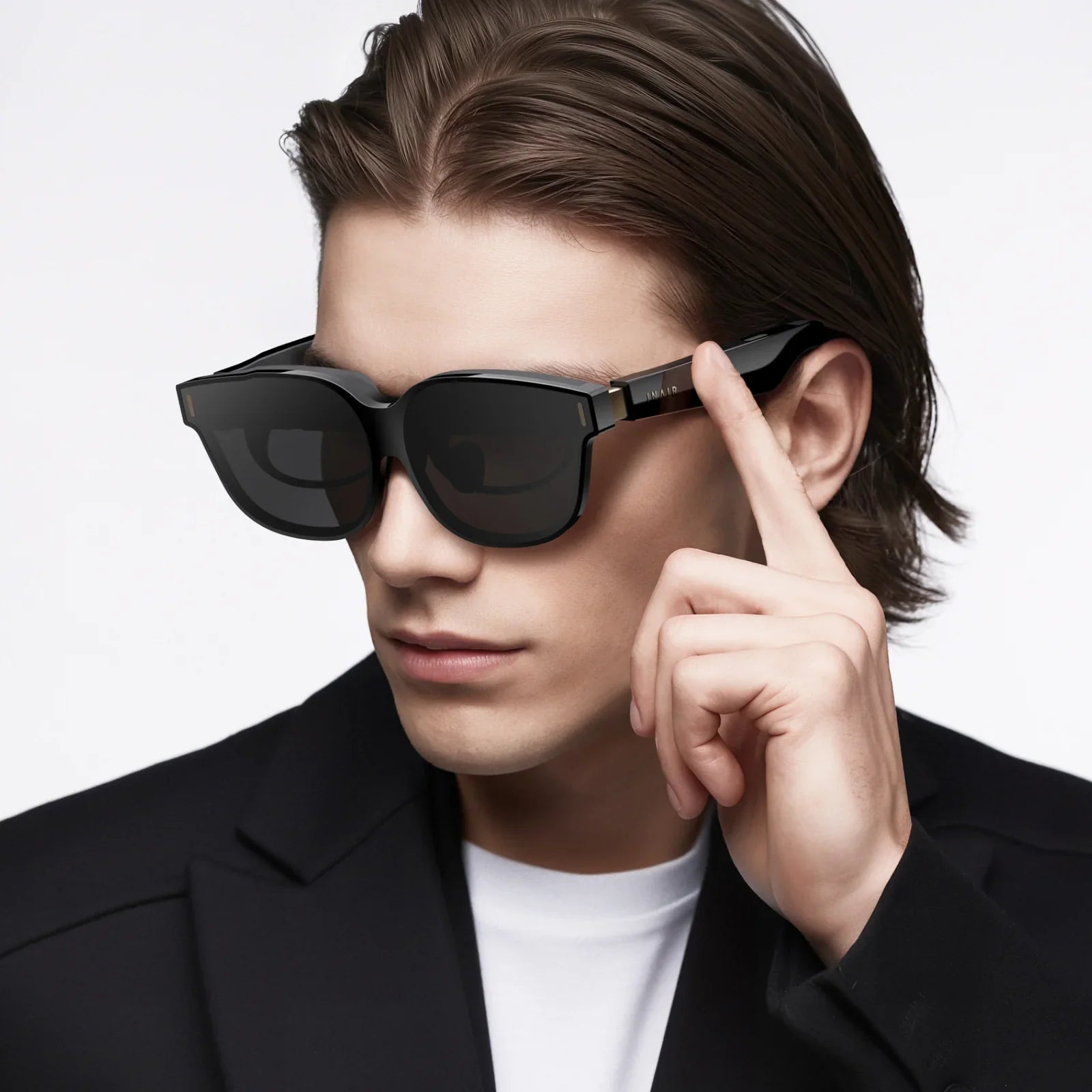
Imagine slipping on a pair of sleek, unassuming glasses and instantly stepping into a boardroom with colleagues from across the globe, feeling their presence as if they were sitting across the table. Or perhaps you’re touring a museum exhibit that ceased to exist centuries ago, examining artifacts with a detail impossible in the physical world. This is no longer the stuff of futuristic films. The arrival of a new generation of VR glasses is not merely an incremental update; it is a fundamental leap, a quiet revolution poised to dissolve the barriers between the digital and the physical, reshaping everything from how we work and learn to how we connect and create. The future is putting on a headset, and it’s inviting you to see everything differently.
Beyond the Hype: A Paradigm Shift in Design and Experience
For years, virtual reality has been synonymous with bulky, tethered headsets—powerful, yes, but also isolating, cumbersome, and confined to dedicated spaces. The most significant evolution embodied by new VR glasses is their radical departure from this form factor. The focus has shifted from raw, brute-force power to sophisticated, integrated design. The goal is no longer just to immerse the user but to do so with grace, comfort, and convenience.
The defining characteristic of this new wave is a dramatic reduction in size and weight. Engineers and designers have achieved miniaturization feats once thought impossible, packing high-resolution displays, advanced tracking sensors, and powerful processors into a form that increasingly resembles a pair of premium sunglasses. This is made possible through breakthroughs in pancake lens optics, which fold the light path to allow for a much slimmer profile, and the use of lighter, more advanced composite materials.
Perhaps the most liberating advancement is the widespread adoption of inside-out tracking. Early systems required external sensors or base stations placed around a room to track the user's movement. New VR glasses have these sensors built directly into the headset, creating a self-contained ecosystem. You can define your play space simply by looking around your room, and the glasses understand their position in the world without any external hardware. This eliminates a significant barrier to entry, making setup instantaneous and use possible in virtually any environment.
Furthermore, the move towards true untethered freedom is nearly complete. While some high-end models may still offer a tether for maximum graphical fidelity, the standard is now a standalone unit powered by a compact, yet remarkably capable, onboard processor. Combined with improved battery technology often distributed for better weight balance, users are no longer anchored to a powerful computer or worried about tripping over cables. This untethered experience is the key to moving VR out of the den and into the living room, the office, and the wider world.
The Technological Pillars Powering the Revolution
This sleek new design is not a compromise; it is enabled by a suite of cutting-edge technologies working in concert to deliver an experience that is more immersive and convincing than ever before.
Visual Fidelity: A Leap Towards the "Retina" of VR
The screen door effect—that faint grid-like pattern that reminded users they were looking at a screen—is now a relic of the past. New VR glasses feature high-resolution Micro-OLED or advanced LCD displays that offer pixel densities so high the individual pixels become indistinguishable to the human eye. This creates a crystal-clear image that is crucial for long-term comfort and believability. Coupled with a significantly expanded field of view that reduces the binocular-like "goggle effect," these displays are the first to truly trick the brain into accepting the digital world as real. Additionally, support for high refresh rates (90Hz and beyond) ensures buttery-smooth motion, eliminating lag and judder that were primary contributors to simulation sickness.
Blending Worlds: The Rise of High-Fidelity Passthrough AR
This is arguably the most transformative feature of new VR glasses. Early passthrough capabilities were often grainy, monochrome, and laggy, useful only for avoiding furniture. The latest generation utilizes high-resolution color cameras and powerful processing to create a real-time, video-based view of the physical world that is so clear and responsive it can be seamlessly overlayed with digital content. This technology, often referred to as Mixed Reality (MR) or Augmented Reality (AR), is the killer app for productivity and social interaction.
It allows users to place a massive virtual screen next to their physical monitor, use their real keyboard and mouse, and see their colleagues' avatars sitting on their actual couch. It enables developers to design virtual objects that interact with and occlude behind real-world geometry. This high-fidelity passthrough is the bridge that finally connects the isolated island of VR to the mainland of our daily lives.
Intuitive Interaction: Your Hands as the Controller
While traditional handheld controllers remain an option for intense gaming, new VR glasses are increasingly emphasizing hand-tracking as a primary input method. Using onboard cameras and sophisticated machine learning algorithms, these devices can track the user's fingers and hands with astonishing accuracy, allowing for natural gestures like pinching, grabbing, and pointing. This eliminates the learning curve of a controller and makes interactions feel instinctive—pointing to select a menu, pinching to grab a virtual file, or using a finger-pinch gesture to scroll. This shift towards more natural input is critical for non-gaming applications and for making the technology accessible to everyone.
Transforming Industries: More Than Just Games
The implications of these advancements extend far beyond the realm of entertainment. This new class of device is poised to become a fundamental tool across numerous sectors.
The Virtual Workspace: Redefining Remote Collaboration
The concept of the "metaverse office" is moving from theory to practice. New VR glasses enable a form of remote collaboration that video calls cannot match. Teams can gather in a persistent virtual workspace, interacting with 3D models, brainstorming on virtual whiteboards that feel tangible, and reading body language from expressive avatars. The high-fidelity passthrough allows a user to remain grounded in their physical environment while accessing powerful digital tools, making the idea of wearing a headset for an entire workday a plausible reality. This has the potential to revolutionize fields like architecture, engineering, and design, where spatial understanding is paramount.
Education and Training: Learning by Doing, Virtually
Imagine medical students practicing complex surgical procedures on hyper-realistic virtual patients, making mistakes without consequence. Envision history students walking through a meticulously reconstructed ancient Rome, or mechanics training on the virtual wiring harness of a new vehicle before it's even built. New VR glasses provide a safe, scalable, and deeply engaging platform for experiential learning. The improved comfort and clarity reduce cognitive load, allowing students to focus on the material, while the hand-tracking enables manipulation of virtual objects in a way that builds genuine muscle memory.
Social Connection: The Next Evolution of Telepresence
Social media connected us through text and images. Video calls added a layer of face-to-face interaction. The next step is telepresence—the feeling of actually being with someone. New VR glasses, with their advanced avatars and spatial audio, can create a powerful sense of shared space. Watching a movie with a friend who lives miles away, feeling as if you are sharing the same couch, or attending a live concert with the palpable energy of a crowd, becomes possible. This technology holds immense promise for combating loneliness and fostering connection in an increasingly digital world.
Navigating the New Frontier: Challenges and Considerations
Despite the breathtaking progress, the path forward is not without its obstacles. For this revolution to reach its full potential, several challenges must be addressed.
Content and Ecosystem: Hardware is nothing without software. The success of these devices hinges on the development of a robust ecosystem of applications that leverage their unique capabilities—especially high-fidelity MR. Developers need tools and incentives to create experiences that are more than just tech demos.
Privacy and Security: A device with always-on cameras and microphones that maps your living room raises legitimate privacy concerns. Transparent data policies, robust on-device processing, and user-controlled permissions are non-negotiable for gaining public trust.
The Digital Divide: As with any advanced technology, there is a risk that these powerful tools remain accessible only to a privileged few. Ensuring that the benefits of VR/AR can be experienced in education and enterprise at various price points will be crucial for widespread adoption.
Comfort and Accessibility: While vastly improved, comfort over extended periods is still a hurdle for some. Furthermore, the industry must continue to invest in making these experiences accessible to users with different physical abilities and addressing issues like simulator sickness for a broader audience.
The Horizon Beckons: A Glimpse into the Future
The current generation of VR glasses is laying the groundwork for an even more immersive future. Research into varifocal displays, which dynamically adjust focus to match the depth of a virtual object, promises to solve the vergence-accommodation conflict—a primary source of eye strain. Haptic feedback gloves and suits are in development to provide a sense of touch, allowing users to feel the texture of a virtual object. Breakthroughs in neural interfaces could one day allow for control through thought alone. The device we put on our head is merely the gateway; the ultimate destination is a seamless fusion of human intuition and digital creation.
The door to a new dimension of human experience is now open, and it’s wearing a surprisingly familiar pair of glasses. This isn’t just about better graphics or more comfortable hardware; it’s about fundamentally expanding the canvas of human interaction and imagination. The potential to enhance our reality, to connect across distances with profound presence, and to unlock new forms of creativity is now resting, quite literally, before our eyes. The question is no longer if this future will arrive, but how quickly we will choose to step through the looking glass and embrace the boundless possibilities waiting on the other side.
Share:
Augmented Reality Uses: Transforming Industries and Redefining Human Experience
Augmented Reality Methods: A Deep Dive into the Tech Reshaping Our World