


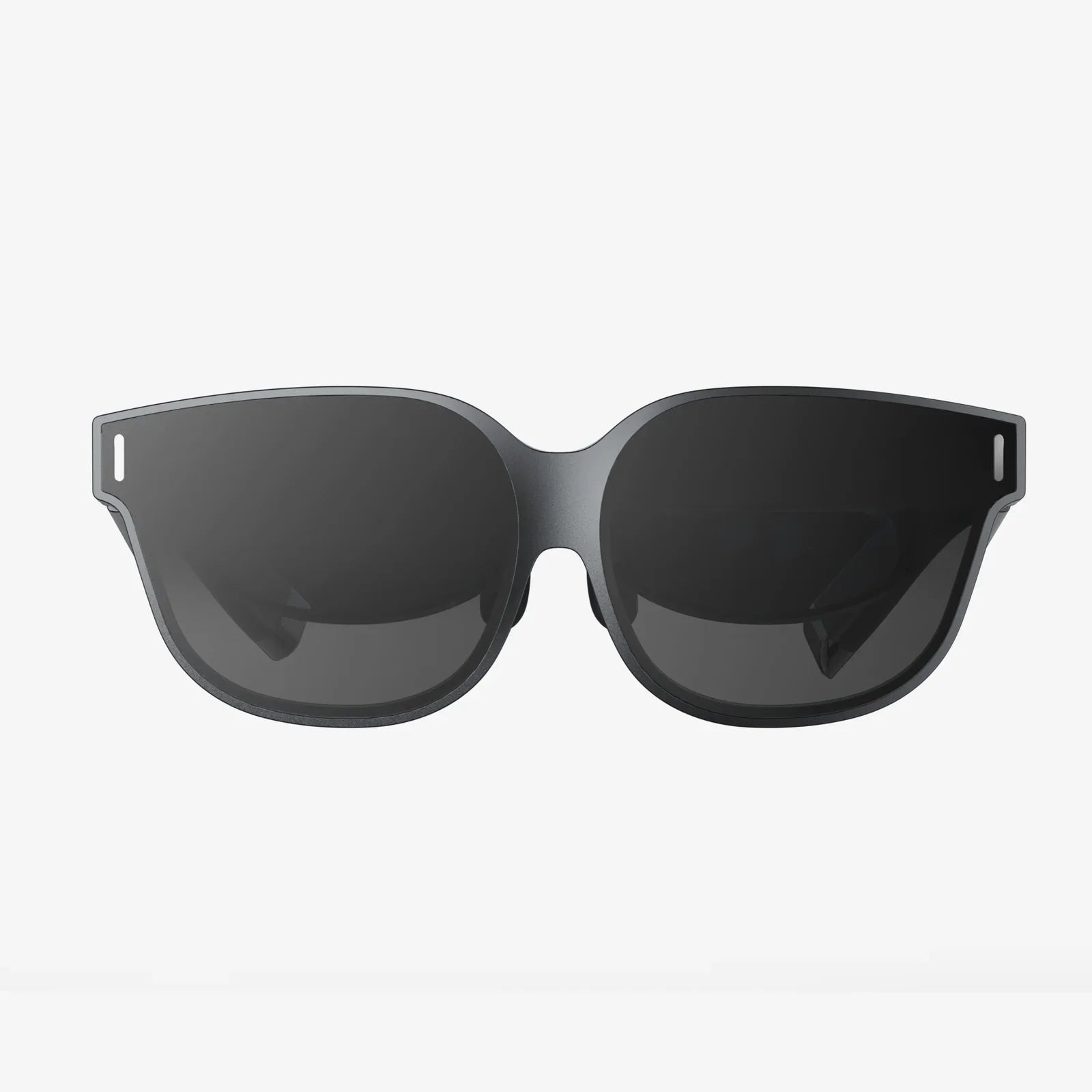
Imagine a device that doesn’t just display a new world but convinces every part of your being that you are truly there. This is no longer the realm of science fiction; it is the palpable reality offered by the latest generation of new VR goggles, a technological leap so profound it’s poised to dissolve the final barriers between the digital and the physical. We are standing at the precipice of a revolution, not just in how we play games or consume media, but in how we connect, work, learn, and fundamentally experience reality itself. The clunky, niche peripherals of yesterday have been replaced by sleek, powerful engines of immersion, and their impact is about to be felt everywhere.
Beyond the Hype: The Core Technological Leaps Forward
The journey from the pioneering, yet rudimentary, devices of the past to the sophisticated systems of today is a story of relentless innovation across multiple fronts. New VR goggles are not merely incremental upgrades; they represent a fundamental rethinking of what immersive technology can be.
A Feast for the Eyes: Resolution and Visual Fidelity
The most immediate and striking improvement in new VR goggles is the staggering clarity of the visual experience. Early adopters will remember the distinct "screen door effect"—the visible grid of pixels that shattered immersion. This artifact is now a relic of the past.
- High-Resolution Micro-OLED Displays: Modern headsets utilize ultra-high-resolution Micro-OLED panels that pack an extraordinary number of pixels per inch (PPI). This results in razor-sharp text, incredibly detailed environments, and the complete elimination of the screen door effect.
- Pancake Lenses: Replacing the bulky Fresnel lenses of old, compact Pancake optics use a folded light path to dramatically reduce the size and weight of the headset while simultaneously offering a larger, clearer sweet spot and significantly reduced god rays and glare.
- Wider Field of View (FoV): A greater FoV, often exceeding 110 degrees, means less of a binocular or scuba-mask feeling and more of a natural, peripheral-vision-encompassing experience that further deepens the sense of presence.
The End of the Tethered Beast: Wireless Freedom and Computational Power
Perhaps the most liberating advancement has been the severing of the physical tether to a high-powered computer. New VR goggles are embracing a spectrum of connectivity options that cater to every user.
- Standalone Autonomy: All-in-one headsets now contain processing power that rivals many gaming consoles. Powered by advanced mobile chipsets, they can deliver rich, compelling experiences completely untethered from any external device, with inside-out tracking cameras handling movement and positioning seamlessly.
- High-Bandwidth Wireless Streaming: For users who crave the absolute pinnacle of graphical fidelity from a powerful computer, new wireless protocols offer near-instantaneous, high-fidelity streaming without compression artifacts, providing a truly cable-free premium experience.
Blurring the Lines: Mixed Reality and Passthrough Technology
This is arguably the most transformative feature of new VR goggles. High-resolution, color-accurate video passthrough, powered by advanced depth sensors and cameras, allows the headset to function not just as a portal to virtual worlds, but as a window that seamlessly blends the digital with the physical.
This capability, often termed Mixed Reality (MR) or Augmented Reality (AR), means users can pin holographic screens onto their physical walls, interact with digital characters that appear to be sitting on their real sofa, or play games that see virtual enemies burst through their actual ceiling. It transforms the headset from a device of isolation into a platform for contextual computing, overlaying information and digital objects onto the user's authentic environment.
Intuitive Control: From Controllers to Hands and Eyes
Input has evolved dramatically. While sophisticated motion-tracked controllers remain the standard for high-fidelity gaming, new VR goggles are increasingly adopting more natural forms of interaction.
- Inside-Out Tracking: External sensors are obsolete. Cameras on the headset itself track the position of the controllers and the user's movement in the room with sub-millimeter accuracy, making setup instantaneous and use frictionless.
- Hand Tracking: Advanced computer vision algorithms allow the headset's cameras to see and understand the user's hands in real-time. This enables direct manipulation of the digital world—pressing buttons, grabbing objects, and gesturing—without needing to hold anything. It’s a quantum leap in intuitive usability.
- Eye and Face Tracking: Integrated eye-tracking sensors do more than just enable foveated rendering (dynamically rendering the center of your vision in high detail to save processing power). They allow avatars in social spaces to make natural eye contact and convey subtle emotional cues through eyebrow raises, winks, and lip movement, forging a deeper level of human connection in virtual settings.
The Ripple Effect: Applications Far Beyond Gaming
While gaming remains a powerhouse driver of VR adoption, the implications of these technological advances extend into nearly every facet of professional and personal life.
Revolutionizing the Remote Workspace
The concept of the "metaverse office" is moving from corporate buzzword to practical reality. New VR goggles enable a new paradigm of remote work where colleagues from across the globe can gather around a virtual whiteboard as if they were in the same room, examine 3D architectural models or medical scans at life-size scale, and benefit from the non-verbal cues and spatial presence that traditional video calls strip away. This fosters collaboration, creativity, and a sense of team cohesion that flat screens cannot replicate.
The Future of Education and Training
Imagine medical students performing intricate virtual dissections without cadavers, history students walking through a faithfully recreated ancient Rome, or mechanics practicing repairs on a holographic engine. New VR goggles provide safe, scalable, and immensely powerful experiential learning opportunities. Training for high-risk professions—from surgery to aviation to firefighting—can be conducted with real-world pressure and consequences but without any real-world danger, drastically reducing costs and improving outcomes.
Social Connection Reimagined
Social VR platforms are evolving into vibrant digital town squares. With advanced avatar expression powered by eye and face tracking, conversations in VR feel significantly more human and present. Families separated by oceans can feel like they are sharing a living room, friends can attend concerts together from their own homes, and people can find community based on shared interests rather than geographic proximity. For those facing physical or social isolation, this represents a profound tool for connection.
Navigating the Uncharted: Challenges and Ethical Considerations
With great power comes great responsibility, and the immersive power of new VR goggles raises critical questions that society must grapple with.
- Privacy in an Always-Watching World: Headsets with always-on cameras and microphones, mapping our homes and tracking our biometrics like eye movement, represent an unprecedented data collection opportunity. Robust, transparent data policies and user control are paramount.
- The Reality Gap: As experiences become hyper-realistic, the potential for psychological effects, simulator sickness, and the difficulty of disengaging from a perfected virtual world are real concerns that require further study.
- Digital Divide 2.0: This technology, while becoming more accessible, still carries a significant cost. There is a risk of creating a new socio-economic divide between those who can afford to experience and shape these new digital frontiers and those who cannot.
- Identity and Agency: The ability to be anyone or anything in VR is liberating but also complex. Issues of identity representation, harassment in virtual spaces, and the psychological impact of living through digital avatars are areas that need careful consideration and community-driven standards.
Gazing into the Crystal Ball: What Comes Next?
The current wave of new VR goggles is just the beginning. The trajectory points towards even more seamless integration into our lives. We can anticipate form factors evolving towards something resembling standard eyeglasses, further minimizing social friction. Haptic feedback suits and gloves will add the crucial sense of touch to complete the sensory immersion. Brain-computer interfaces, though far off, loom on the horizon as the ultimate input method, potentially allowing us to navigate virtual spaces with thought alone.
The destination is a future where the distinction between accessing the digital world and being in the physical world becomes meaningless. Computing will not be something we do on a device; it will be a contextual layer integrated into our perception of reality itself.
This isn't just about a new piece of hardware on a store shelf. It's about the dawn of a new medium, one with the potential to be as transformative as the personal computer or the smartphone. The new VR goggles are the key—the looking glass through which we will step into the next chapter of human experience, redefining connection, creativity, and reality itself in ways we are only beginning to imagine. The door is open; all you have to do is take the step through.
Share:
Best VR Platform - Navigating the Ultimate Virtual Realms
Augmented Reality Different From Virtual Reality: A Comprehensive Guide to AR