


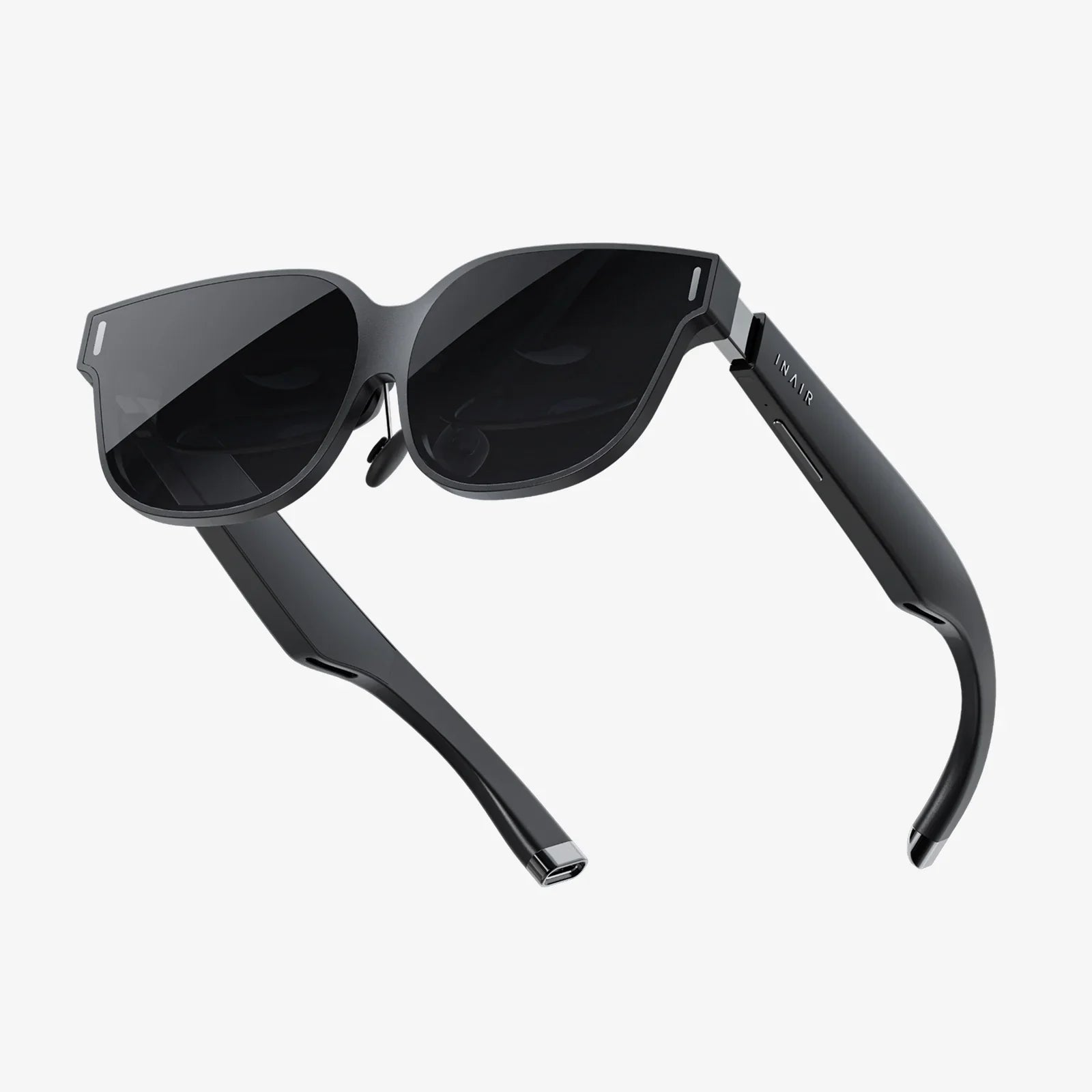
- by wangfred
New Windows Mixed Reality Headset: The Complete Guide to Immersive Computing
- by wangfred
Imagine stepping through a portal in your living room into a boundless digital universe, where productivity, creativity, and entertainment are limited only by your imagination. This is the promise held by a new Windows Mixed Reality headset, a gateway to experiences that were once the stuff of science fiction. The very term evokes a sense of wonder and potential, hinting at a future where the lines between our physical and digital lives are not just blurred but seamlessly woven together. This isn't just about playing games or watching videos; it's about fundamentally rethinking how we interact with technology and with each other. The journey into this immersive realm begins with a single device, and the possibilities are as vast as the virtual worlds it unlocks.
Before diving into the experience, it's crucial to understand what we're talking about. The term "Mixed Reality" (MR) can be confusing, often used interchangeably with Virtual Reality (VR) and Augmented Reality (AR). However, Microsoft's vision for its platform is distinctly holistic.
Think of it as a spectrum. On one end, you have the completely real environment, and on the other, a fully virtual one. Augmented Reality overlays digital information onto the real world (think navigation arrows on your car's windshield). Virtual Reality completely replaces your vision with a computer-generated one, transporting you elsewhere. Mixed Reality sits proudly in the middle, blending the real and the virtual. It allows digital objects to interact with and be anchored to your physical space. You could have a virtual television pinned to your real wall, or see a robot hide under your actual desk.
A new Windows Mixed Reality headset is designed to be a portal to this blended experience. Unlike some systems that require external sensors or cameras placed around the room, these headsets typically use what's called "inside-out tracking." This means the cameras and sensors are built directly into the headset itself. They look outward to map your room and track the controllers, all without any external hardware. This elegant solution drastically simplifies setup and makes the technology more accessible, allowing you to define your play space quickly and easily.
The magic of inside-out tracking cannot be overstated. It represents a significant philosophical and practical shift in immersive computing. By having the headset be entirely self-contained in its spatial understanding, it empowers the user with unprecedented freedom. You are no longer tethered to a specific "calibrated" zone defined by external sensors; your entire home can become your playground. The headset's cameras constantly scan the environment, creating a 3D map on the fly. This allows for two critical functions: precise positional tracking of the headset and the controllers, and the ability to define boundaries. When you approach a real-world wall, a virtual grid will appear, preventing you from bumping into it—a seamless integration of the real informing the virtual.
Upon putting on the headset, you are greeted by your home base: the Cliffhouse. This is more than just a menu; it's your personalized virtual home. It's a beautiful, airy environment perched on a cliffside where you can pin applications, web browsers, and videos to vast virtual screens or even the scenery around you. The Cliffhouse is the embodiment of the Mixed Reality philosophy. It's a social space where you can invite friends to hang out, a productivity hub where you can have multiple massive monitors for work, and a launch pad for all your applications and experiences. It is your own private, customizable dimension, a testament to the platform's ambition to be a new kind of operating system.
The prospect of setting up an immersive computing system might seem daunting, but the process for these devices is remarkably streamlined, especially compared to earlier generations of VR technology.
Within minutes, you're transported from the real world into the Cliffhouse, ready to explore. This frictionless setup is a major factor in making the technology appealing to a broader audience beyond hardcore enthusiasts.
A device is only as good as the experiences it enables. The library of content accessible through these headsets is vast and growing, spanning several key categories.
This is often the primary draw for many users. The Windows platform provides access to a huge catalog of titles through its own store and compatibility with other major digital storefronts. From heart-pounding rhythm games like Beat Saber to sprawling adventures like Skyrim VR, the depth is impressive. The immersion is total—ducking behind virtual cover, swinging a lightsaber, or painting in 3D space with applications like Google Tilt Brush creates a sense of presence that flat screens cannot match.
This is where the Mixed Reality aspect truly flexes its muscles. Applications like Microsoft Maquette allow for 3D prototyping and design in an intuitive, hands-on way. The ability to pin multiple application windows around you in the Cliffhouse or in a virtual void theater creates an unparalleled multi-tasking environment. Imagine coding on one virtual screen, having a reference guide pinned next to it, and a video tutorial playing on another—all without the physical constraints of monitor sizes and desk space.
Platforms like AltspaceVR and VRChat allow you to meet people from around the world in virtual spaces, attending events, concerts, or just chatting as customizable avatars. Furthermore, applications like Google Earth VR allow you to fly anywhere on the planet and stand in virtual recreation of city streets or natural wonders. It's a powerful tool for education and pure, awe-inspiring exploration.
In a crowded market of immersive devices, a new Windows Mixed Reality headset offers a distinct set of benefits that make it a compelling choice.
The technology is still in a relatively nascent stage, but the trajectory is clear. The current generation of headsets lays the groundwork for a future where such devices are as commonplace as smartphones. We can expect rapid advancements in several key areas. Resolution and field of view will continue to increase, moving past the "screen door effect" into near-photorealism. Wireless technology will become standard, cutting the final cord and granting complete freedom of movement. Haptic feedback in controllers and eventually gloves will provide a sense of touch, allowing you to feel the texture of a virtual object. Eye and face tracking will allow avatars to convey nuanced emotions, making social interactions profoundly more realistic.
Most importantly, the line between Mixed Reality and Augmented Reality will continue to dissolve. Future iterations of this technology will likely be sleek glasses that can transition between opaque VR and transparent AR, constantly blending our realities based on the task at hand. The concept of a "virtual monitor" will evolve into spatially-aware interfaces that are contextually relevant to our surroundings. The new Windows Mixed Reality headset of today is the proving ground for these concepts, the first step towards a paradigm shift in human-computer interaction.
The true power of this technology lies not in escaping reality, but in enhancing it. It's about breaking free from the confines of the rectangle that has defined computing for decades and interacting with information in a way that feels natural and human. It’s about collaborating with colleagues from across the globe as if they are standing in your workshop, learning about ancient Rome by walking through a reconstructed Forum, or simply enjoying a movie on a screen as large as your imagination allows. This is more than a peripheral; it's the beginning of a new chapter. The door to these experiences is now open, waiting for you to take that first step through and redefine what's possible.
Share:
How Is a VR Headset: A Deep Dive Into Modern Virtual Reality Technology
Can You Watch Regular Movies with a VR Headset? The Ultimate Guide to Cinematic Immersion