


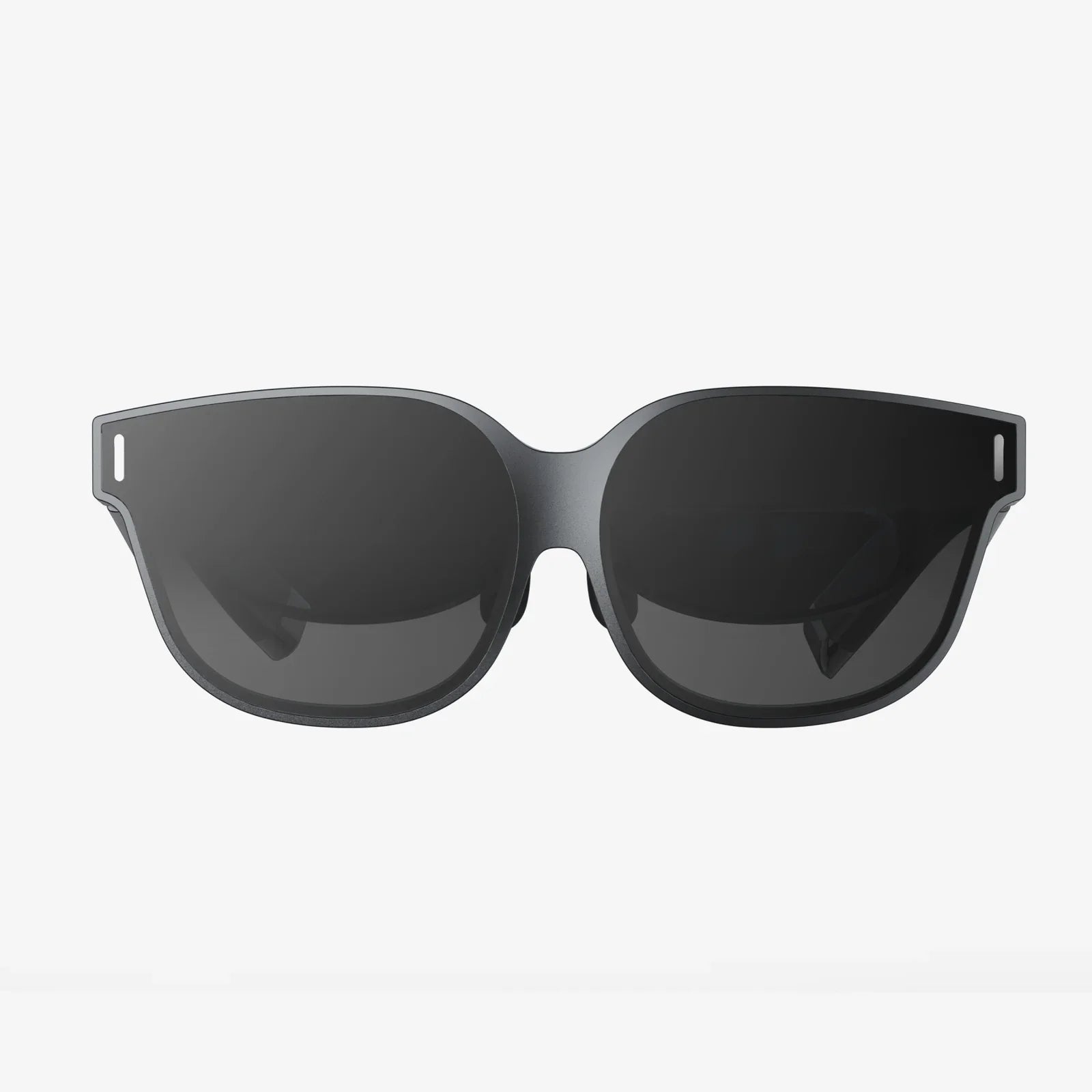
Imagine a world where information doesn’t live on a screen in your hand, but is woven seamlessly into the fabric of your reality. Where directions appear as a glowing path on the sidewalk, a recipe hovers beside your mixing bowl, and a colleague from across the globe stands in your living room as a photorealistic hologram. This isn’t a distant science fiction fantasy; it is the imminent future being built today, and it will be delivered through a pair of next gen AR glasses. This technological leap represents more than an incremental update; it is a fundamental shift in our relationship with computing, promising to unlock a new layer of human experience and permanently blur the lines between the digital and the physical.
The Architectural Leap: From Prototype to Product
The journey to this point has been long and fraught with technical hurdles. Early augmented reality was often synonymous with bulky headsets, limited field of view, poor battery life, and a distinct lack of compelling software. Next gen AR glasses are solving these problems through a symphony of engineering breakthroughs.
Optical Heart: Waveguides and MicroLEDs
At the core of any AR glasses is the display system—the mechanism that projects digital images onto the real world. Next gen devices are moving decisively towards advanced waveguide technology combined with incredibly bright and efficient MicroLED displays. Waveguides are essentially transparent pieces of glass or plastic etched with microscopic patterns that channel light from a tiny projector at the temple into the user’s eye. This allows for a significantly slimmer and lighter form factor, moving away from the cumbersome birdbath optics of the past. The result is a pair of glasses that look and feel like sophisticated eyewear, not a piece of laboratory equipment.
The Invisible Engine: AI and Spatial Computing
Hardware is only half the story. The true intelligence of next gen AR glasses lies in their software and processing capabilities. On-device artificial intelligence is the silent conductor of this orchestra. A suite of sensors—high-resolution cameras, depth sensors, LiDAR, microphones, and inertial measurement units—constantly scans the environment. The onboard AI processes this data in real-time to understand the world: mapping surfaces, identifying objects, tracking hand gestures, and processing natural language.
This capability, known as spatial computing, allows the glasses to anchor digital content persistently and accurately. Place a virtual sculpture on your desk, and it will remain there, from every angle, even if you leave the room and return. This creates a profound sense of digital objects having real-world presence, a critical factor for immersion and utility.
Power and Connectivity: The Always-On Companion
To be an all-day companion, these devices must solve the power problem. Next gen AR glasses employ a combination of strategies: ultra-low-power displays and processors, efficient distributed computing where some tasks are handled by a paired device like a phone or a dedicated processing puck, and advanced battery technologies. Furthermore, the integration of 5G and Wi-Fi 6E enables high-bandwidth, low-latency cloud connectivity, allowing for complex rendering tasks to be offloaded and for seamless multi-user experiences in shared AR spaces.
Transforming the World of Work
While consumer applications are thrilling, the most immediate and profound impact of next gen AR glasses will be felt in the enterprise and industrial sectors. They are poised to become the ultimate tool for enhancing human capability, safety, and efficiency.
The Industrial Metaverse at Your Fingertips
On a factory floor, a technician wearing AR glasses can see a digital overlay of the machine they are repairing. Animated arrows point to specific components, torque values and schematics appear next to bolts, and a remote expert can see their view and draw annotations directly into their field of vision to guide them. This reduces errors, slashes training time, and minimizes downtime.
In architecture and construction, teams can walk through a full-scale, holographic model of a building before a single foundation is poured, identifying design clashes and making changes in real-time. Surgeons could have vital signs, MRI data, and procedural guidance superimposed on their view of the patient during an operation. The potential to provide "superpowers" to professionals is immense.
Redefining the Remote and Hybrid Office
The concept of remote work will be utterly transformed. Instead of a grid of faces on a flat screen, meetings could take place in a shared virtual workspace. Colleagues appear as expressive avatars or even volumetric video captures, able to interact with 3D models, whiteboards, and data visualizations as if they were in the same room. This fosters a level of collaboration and presence that video conferencing can never achieve, making geographical distance irrelevant.
The New Social and Consumer Frontier
Beyond the workplace, next gen AR glasses will redefine everyday life, creating new forms of entertainment, social connection, and personal assistance.
Contextual Computing and the Demise of the Smartphone
The long-predicted post-smartphone era may finally dawn. Your AR glasses, powered by AI, will become a contextual and anticipatory interface. Walk into a grocery store, and your shopping list organizes itself based on the store’s layout. Look at a restaurant, and see reviews and your friends’ photos overlay the entrance. A notification for an upcoming meeting doesn’t just buzz in your pocket; it gently appears with a reminder of the location and how long it will take to walk there. This shifts computing from being pull-based (you searching for information) to push-based (the right information finding you at the right time).
The Future of Entertainment and Storytelling
Entertainment will become an immersive, spatial experience. Imagine watching a basketball game with live stats floating above the court, or having a film director’s commentary play out with holographic actors demonstrating scenes in your living room. Gaming will explode into the physical world, transforming your local park into an alien landscape or your home into a puzzle-filled dungeon. This merges the narrative depth of digital worlds with the tactile reality of our own.
Augmented Memory and Personal AI
One of the most personal applications will be as a memory aid. The glasses could record moments (with consent), allowing you to "replay" a conversation to remember a name or a recipe you were shown. A personal AI agent, seeing and hearing what you do, could become an incredibly powerful life-logging and assistance tool, helping you find your lost keys or reminding you of a task as you look at a specific object.
Navigating the Inevitable Challenges
This powerful technology does not arrive without significant challenges and concerns that society must address head-on.
The Privacy Paradigm Shift
Devices with always-on cameras and microphones present an unprecedented privacy challenge. The industry must adopt a privacy-first design philosophy. This includes clear, physical indicators when recording, robust on-device data processing (so raw video never leaves the glasses), and transparent user control over what data is collected and how it is used. Without strong ethical guidelines and potentially new regulations, the always-aware nature of AR could lead to a dystopian surveillance nightmare.
The Digital Divide and Accessibility
As with any transformative technology, there is a risk of creating a new digital divide. The high cost of early devices could exacerbate inequality, granting augmented capabilities only to those who can afford them. Conversely, they also hold immense promise for accessibility, offering real-time captioning for the hearing impaired, navigation for the visually impaired, and translation for non-native speakers. Ensuring these tools are developed inclusively is paramount.
The Reality of Reality
There are profound psychological and sociological questions. Will constant augmentation lead to a depreciation of un-augmented reality? How will we manage digital litter—virtual ads and objects left behind by others? What are the effects of long-term use on human cognition and social interaction? These are not questions with easy answers, but they must be part of the conversation as the technology evolves.
The Path to Ubiquity
The rollout of next gen AR glasses will not be an overnight event. It will be a gradual process of refinement, cultural adoption, and ecosystem development. Early devices will likely target developers and enterprise users, who will build the killer apps that define the platform. As the technology becomes more affordable, powerful, and socially accepted, it will follow a path similar to the smartphone, moving from a luxury item to an essential everyday tool.
The development of a robust app ecosystem and open standards for the "AR cloud"—a shared, persistent digital map of the world—will be critical to its success. This will allow digital content to exist consistently for everyone, creating a true layer of shared reality over our world.
The horizon is no longer a line we look toward, but a layer waiting to be unlocked. Next gen AR glasses are the key, a portal to a world where our digital and physical selves finally converge. They promise to amplify our intelligence, reshape our workflows, and re-enchant the world around us with a magic born of data and light. The devices themselves will eventually fade into the background, becoming as unnoticeable as a pair of everyday glasses, but the enhanced reality they reveal will forever change how we live, work, and connect. The future is not something we will watch on a screen; it is something we will step into and see all around us.
Share:
What Is Portable Computer System: The Complete Guide to Mobile Computing
Best AI for Productivity: Your Ultimate Guide to Working Smarter, Not Harder