


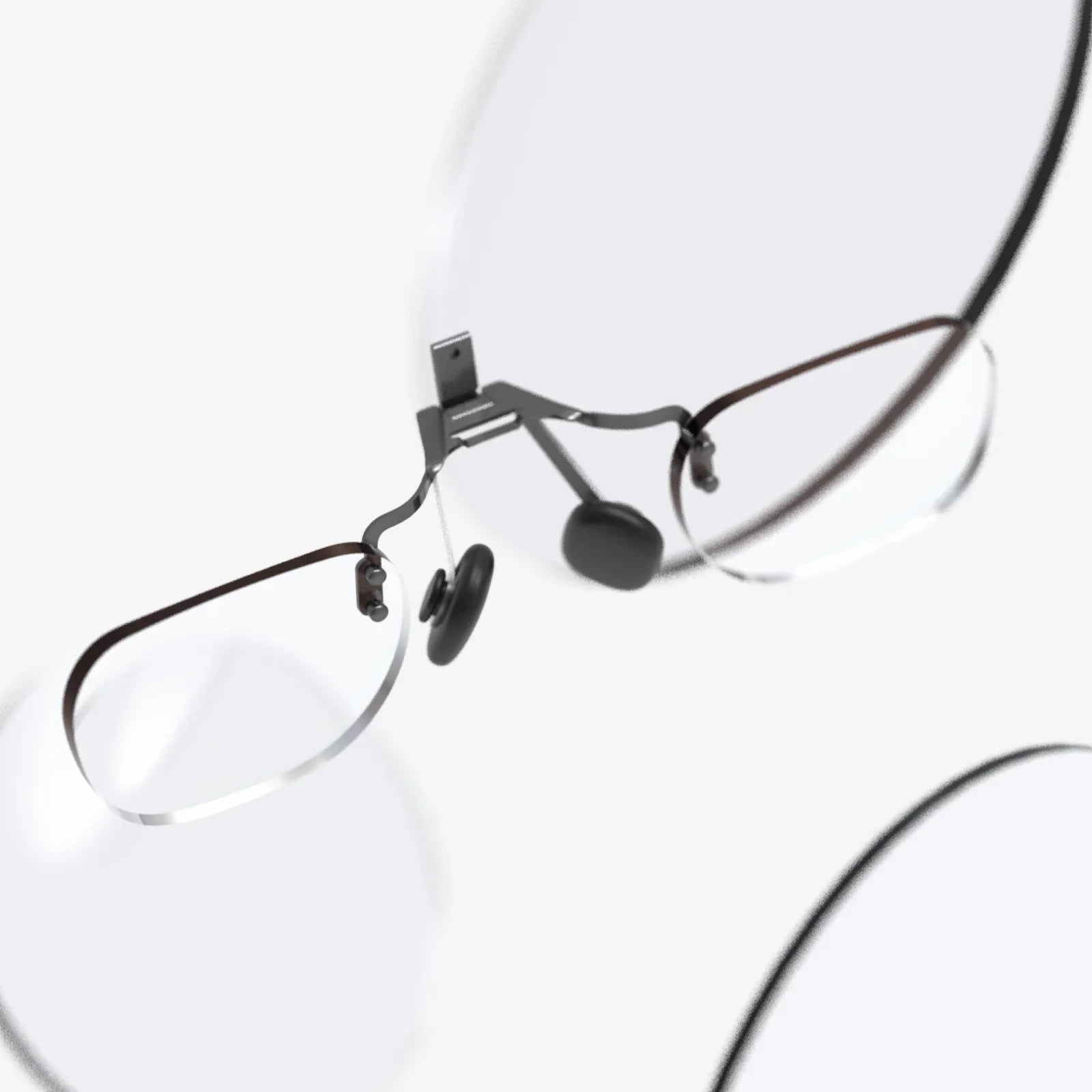
Imagine slipping on a pair of sleek, unassuming glasses and instantly stepping into a hyper-realistic digital world, a collaborative workspace with colleagues across the globe, or a private cinema with a screen as vast as your imagination. This is no longer the stuff of science fiction; it is the imminent promise of next gen VR goggles, a technological leap so profound it will fundamentally recalibrate our relationship with reality itself. The clunky, isolating headsets of yesterday are giving way to a new breed of wearable computers designed not just to show you a new world, but to understand and enhance your place within it. We stand on the precipice of a revolution, not merely in gaming, but in human connection, creativity, and computation.
Beyond the Screen: The Dawn of True Immersion
The core ambition of next gen VR goggles is to achieve a state of presence so convincing that the brain accepts the digital environment as real. This requires a symphony of advanced technologies working in perfect harmony to eliminate the flaws that have historically reminded users they were wearing a device.
Visual Fidelity: A Leap into the Photorealistic
The most immediate and striking advancement is in display technology. Early adopters grew accustomed to the "screen door effect"—the visible grid of pixels that shattered immersion. Next gen VR goggles eradicate this entirely.
- Micro-OLED and Pancake Lenses: These displays offer pixel densities so high the human eye cannot discern individual pixels, creating a crystal-clear, razor-sharp image. Coupled with pancake lenses that fold light, they enable a drastic reduction in the size and weight of the hardware while providing a wider field of view that fills your peripheral vision.
- High Dynamic Range (HDR): For the first time, VR is embracing HDR, capable of producing incredibly deep blacks and dazzlingly bright whites. This massive contrast ratio is crucial for simulating the real world, from the subtle glow of a lamp in a dark room to the blinding glare of the sun on water.
- Variable Focus and Eye-Tracking: This is a true game-changer. Built-in eye-tracking sensors monitor precisely where you are looking. This data allows for two critical features: Foveated Rendering and Dynamic Focus. Foveated rendering intelligently allocates processing power, rendering the center of your gaze in ultra-high detail while subtly reducing the quality in your periphery, a massive efficiency gain. Dynamic focus, or varifocal displays, physically adjust the lens focus based on whether you're looking at an object close up or far away. This solves the Vergence-Accommodation Conflict (VAC), a major source of eye strain and discomfort in current headsets, where your eyes struggle to reconcile depth cues.
Auditory Realism: Hearing the World in 3D
Immersion is not solely a visual experience. Next gen audio is equally sophisticated, employing advanced spatial audio algorithms. This technology mimics how sound waves interact with the human head and ears, allowing sounds to be placed precisely in 3D space. You will hear the faint whisper of another avatar from behind your left shoulder or the echo of footsteps accurately bouncing off a virtual corridor wall, adding a profound layer of situational awareness and believability.
The Invisible Interface: Intuitive Interaction Reimagined
How we interact with these new worlds is undergoing its own revolution. The goal is to move beyond handheld controllers to a more natural, intuitive form of input.
Inside-Out Tracking and Full Body Avatars
External sensors are becoming obsolete. Next gen VR goggles use a constellation of outward-facing cameras for inside-out tracking, mapping the physical room and tracking the position of your head and controllers with sub-millimeter accuracy without any external hardware. Furthermore, these cameras, combined with sophisticated AI, are beginning to enable controller-less hand tracking. You can now use your bare hands to push virtual buttons, grab objects, and gesture naturally. The next step is the pursuit of full-body avatar tracking using the same onboard sensors, creating a digital representation of yourself that moves exactly as you do.
The Neural Frontier: From Controllers to Cortex
The most futuristic, and perhaps most impactful, development lies in neural interfaces. Some next gen devices are beginning to incorporate rudimentary forms of this technology, often through haptic feedback systems. Imagine feeling the texture of a virtual stone wall or the recoil of a virtual tool. The ultimate goal, however, is a direct brain-computer interface (BCI). While still in early stages, research is focused on non-invasive sensors that can read neural signals to interpret intent. The dream is to control your virtual environment simply by thinking about it—selecting a menu option by looking at it and forming the intent to select, for example. This would represent the final step in dissolving the interface, making the digital world a direct extension of your mind.
Spatial Computing: VR's Evolution into an indispensable platform
Next gen VR goggles are shedding their identity as a niche gaming peripheral. They are morphing into powerful spatial computers, a new class of device that overlays and interacts with the real world.
Blurring the Lines: The Rise of Mixed Reality (MR)
Passthrough technology is critical. High-resolution, color-accurate cameras on the outside of the goggles feed a live video feed of your physical surroundings to the internal displays. This allows for powerful Mixed Reality (MR) experiences. Digital objects can be placed and persist in your real-world space. You could have multiple large, virtual monitors for productivity suspended in your living room, a virtual pet that runs around your actual floor, or a life-sized holographic instructor demonstrating a repair on your real-world coffee maker. This seamless blend of physical and digital is where the technology finds its most practical, revolutionary applications.
Transforming Work, Education, and Social Connection
The implications are staggering. Remote work could be transformed through virtual offices where colleagues interact as if they were in the same room, brainstorming on a virtual whiteboard that feels tangible. Medical students could practice complex surgeries on detailed holographic patients. Architects could walk clients through full-scale, interactive models of unbuilt homes. Social platforms will evolve into persistent virtual spaces where connecting with friends and family feels like a physical gathering, complete with realistic body language and shared activities, erasing geographical barriers with unprecedented intimacy.
Navigating the New Frontier: Challenges and Considerations
For all its potential, the path forward is not without significant hurdles that developers and society must address.
- Computational Power and Battery Life: Rendering two photorealistic, high-frame-rate displays is incredibly computationally intensive. While some headsets will be tethered to powerful external computers, the true dream of untethered freedom requires massive leaps in mobile processing efficiency and battery technology to support all-day use.
- The Comfort Conundrum: Even with lighter materials, wearing a computer on your face for extended periods presents a comfort challenge. Achieving a universal fit that is comfortable for a diverse population, doesn't cause overheating, and accommodates prescription glasses remains a key design focus.
- The Ethical Dimension: This level of immersion raises profound questions. Data privacy becomes paramount—these devices could, in theory, track your eye movements, biometric responses, and even your physical environment. Establishing robust ethical frameworks and data protection standards is non-negotiable. Furthermore, the potential for addiction and the psychological impact of preferring a curated virtual reality to an imperfect physical one are societal challenges we must proactively engage with.
The distant dream of seamless virtual worlds is crashing into our present at breathtaking speed. Next gen VR goggles are not an incremental update; they are the key that unlocks the door to spatial computing, forever altering the landscape of human experience and offering a glimpse into a future where our digital and physical lives are no longer separate, but beautifully, powerfully intertwined.
Share:
Most Advanced Wearable Technology: Beyond the Wrist, Into the Future
Best iPhone Wearables: The Ultimate Guide to Elevating Your Apple Ecosystem