


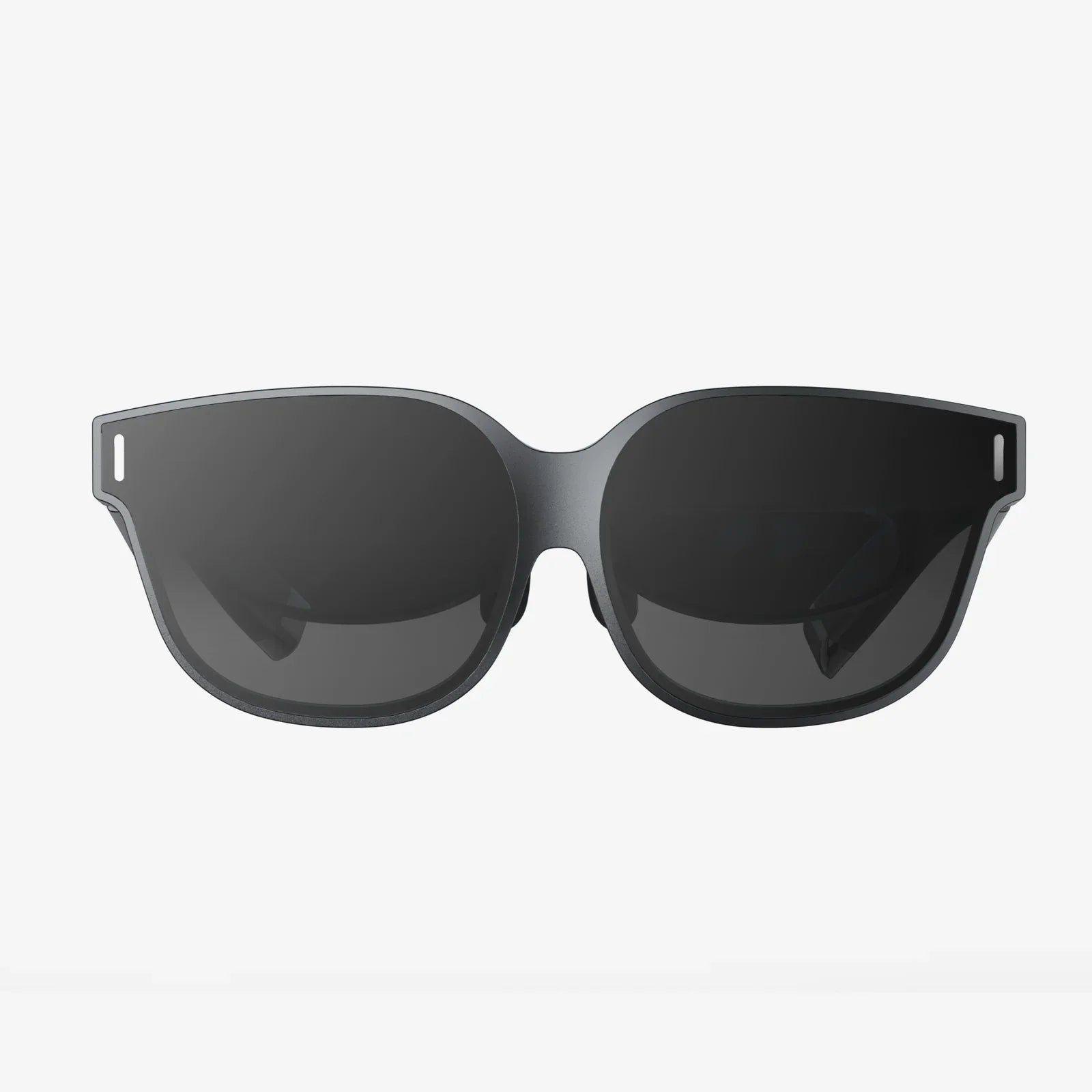
Imagine a world where digital information doesn't just live on a screen in your hand but is seamlessly woven into the fabric of your reality, accessible with a simple glance through a pair of stylish, lightweight glasses. This is the promise of augmented reality (AR), a future that has felt perpetually five years away. The primary roadblock has never been the vision but the execution—specifically, the immense computational power required to understand and interact with the real world in real-time. For decades, the assumption was that this processing had to be self-contained within the glasses themselves, leading to clunky, expensive, and thermally challenged devices. But a revolutionary shift is underway, a paradigm that promises to finally unlock the true potential of consumer AR: the strategic decision to offload processing to the phone that already resides in your pocket, transforming it into the engine for a new class of sleek, accessible AR glasses.
The Computational Chasm: Why Standalone AR Glasses Stumble
To appreciate the brilliance of the phone-offload model, one must first understand the Herculean computational tasks AR demands. It's far more than just projecting a hologram. For AR to feel truly immersive and responsive, the glasses must perform a continuous, complex ballet of data processing.
The Pillars of AR Processing
- Simultaneous Localization and Mapping (SLAM): This is the foundational technology. The device must use its cameras and sensors to map the unknown environment around it while simultaneously tracking its own precise location within that newly created map. This happens dozens of times per second, requiring immense mathematical computation.
- Object Recognition and Scene Understanding: It's not enough to know where a surface is; the system needs to understand what it is. Is that a table, a chair, a person, or a dog? This involves running complex machine learning models for computer vision, a notoriously power-intensive task.
- Gesture and Hand Tracking: For intuitive interaction, the glasses must track the user's hands and fingers with sub-millimeter accuracy to interpret pinches, swipes, and grabs, all in real-time.
- Rendering and Compositing: Finally, high-fidelity graphics must be rendered and perfectly aligned (registered) onto the real world, accounting for perspective, lighting, and occlusion.
Packing the hardware required for all this—a powerful multi-core processor, a dedicated GPU, advanced cooling, and a large battery—into a form factor that fits comfortably on a human face has been the industry's grand challenge. The result has been devices often described as "face computers"—bulky, heavy, expensive, and with limited battery life. They are impressive feats of engineering but non-starters for the mass consumer market.
The Symbiotic Solution: Your Phone as a Computational Powerhouse
The offload processing model elegantly sidesteps this entire problem by leveraging a device consumers already own, trust, and upgrade regularly: their smartphone. Modern smartphones are technological marvels, equipped with system-on-chips (SoCs) that rival the processing power of recent laptops, sophisticated GPUs, dedicated AI accelerators (NPUs), and robust thermal management systems. They are, in essence, perfect pocket computers.
How the Symbiosis Works
In this architecture, the AR glasses are not dumb displays but smart sensors. They contain the essential components to perceive the world:
- High-resolution cameras for stereo vision and depth sensing.
- Inertial Measurement Units (IMUs) for precise head tracking.
- Microphones for voice input.
- Advanced waveguide displays for projecting images onto the lenses.
- A minimal, low-power processor to handle basic sensor fusion and data streaming.
The raw sensor data is streamed via a high-speed, low-latency connection (like a robust USB-C cable or a future ultra-wideband wireless standard) to the phone. The phone's powerful processor then acts as the brain:
- It receives the camera feeds and IMU data.
- Its CPU/GPU/NPU performs the heavy lifting: SLAM, object recognition, hand tracking, and application logic.
- It renders the final AR frame.
- It sends the rendered frame back to the glasses for display.
This entire loop—capture, process, render, display—must be completed in under 20 milliseconds to avoid nausea-inducing lag. This low-latency requirement is why a physical tether is currently the most reliable method, though the industry is racing toward a wireless future.
The Unbeatable Advantages of Offloading Processing
This division of labor unlocks a cascade of benefits that directly address the flaws of standalone devices.
Form Factor and Comfort
By stripping the glasses of their heavy computational core and large battery, designers are freed to prioritize what matters most: how they look and feel. We can move toward glasses that resemble fashionable eyewear—lighter, thinner, and more comfortable for all-day wear. This is not a minor point; it is the single biggest factor in mainstream adoption. People will not wear bulky tech on their faces in public.
Cost and Accessibility
The most expensive components in a computing device are the processor, memory, and battery. By leveraging the user's existing phone, the cost of the AR glasses plummets. Instead of a $2,000+ face computer, we can envision glasses in the $300-$600 range, a price point that enters the realm of impulse buys for tech enthusiasts and eventually the general public. This democratizes access to high-end AR experiences.
Sustainable Performance and Upgradeability
The relentless pace of smartphone innovation works in favor of AR glasses. Consumers upgrade their phones every 2-3 years, granting their AR glasses a regular, voluntary performance boost. Your glasses from 2025 could feel new again in 2028 simply by pairing them with a new phone featuring a faster chip, better AI engine, and improved connectivity. This creates a sustainable ecosystem where the visual interface (glasses) can have a longer lifespan, decoupled from the quickly obsolete processing unit.
Thermal and Battery Efficiency
Intensive computation generates heat. Managing heat in a device pressed against your skin is incredibly difficult. By moving this heat generation to the phone, which has sophisticated cooling systems and is not in direct contact with the face, the glasses remain cool and comfortable. Furthermore, the phone's large battery bears the brunt of the power drain. The glasses' battery need only power the sensors and displays, allowing it to be small and last all day.
Navigating the Challenges and Trade-offs
Of course, the offload model is not without its own set of challenges that engineers must overcome.
The Tethering Dilemma
A physical cable provides the ultimate low-latency, high-bandwidth, and reliable connection. It also ensures the phone's battery is being used. However, a cable running from your glasses to your pocket can feel restrictive and is prone to being snagged. It compromises the feeling of true freedom and immersion. The industry's goal is to cut the cord. Technologies like WiGig (60 GHz wireless) promise the necessary bandwidth and latency, but they require significant power and have limited range and obstacle penetration. Achieving a robust, low-power wireless solution is the key to making this form factor truly untethered.
Latency: The Ghost in the Machine
Every millisecond counts. The delay between moving your head and the image adjusting accordingly must be imperceptible. Any lag disrupts immersion and can cause motion sickness. Encoding video data on the phone, transmitting it wirelessly, decoding it on the glasses, and displaying it adds precious milliseconds. This requires incredibly efficient codecs and dedicated hardware on both ends to minimize this delay. It's a monumental engineering task that is central to the wireless dream.
Contextual Awareness and App Ecosystem
For the experience to feel seamless, the phone must intelligently manage when to use its power. It shouldn't be performing complex SLAM in your pocket while you're just listening to music. The operating system needs a deep understanding of AR context states to optimize battery life. Furthermore, developers need a unified platform to build for this split architecture, ensuring apps run smoothly across different phone and glasses combinations.
The Future is a Partnership, Not a Monolith
The path forward is not a winner-take-all battle between standalone and offload AR glasses. Instead, we will see a spectrum of devices tailored for different use cases.
- Phone-Centric Glasses: The focus of this article—lightweight, affordable glasses for consumers, focused on information display, communication, and light navigation. They will be the gateway drug to AR.
- Hybrid Models: Glasses with some onboard processing for basic tasks and sensor management, still offloading the most intensive workloads to a phone or a small companion device. This offers a balance between autonomy and form factor.
- Standalone Glasses: will continue to exist for specialized enterprise and industrial applications where hands-free operation in a controlled environment is paramount, and form factor is a secondary concern to functionality and durability.
However, for the billions of consumers worldwide, the model of offloading processing to the phone is not just a clever workaround; it is the most pragmatic and viable strategy to bring AR into the mainstream. It respects the existing technology investment users have made, aligns with upgrade cycles, and finally allows design to triumph over brute-force engineering.
We stand on the brink of a new computing paradigm, one where the boundary between the digital and physical dissolves. The key to crossing this threshold isn't waiting for a magical, all-in-one chip to arrive. It's already in our pockets. By embracing the symbiotic relationship between the phone and the glasses, we are not making a compromise; we are building a bridge. A bridge that leads away from clunky prototypes and directly into a future where powerful, immersive, and beautiful augmented reality is simply a part of how we see the world.
Share:
Artificial Intelligence AI Technology: Reshaping Our World and Redefining the Future
Compare Leading AI Virtual Assistant Services: A Comprehensive Guide to Choosing Your Digital Ally