


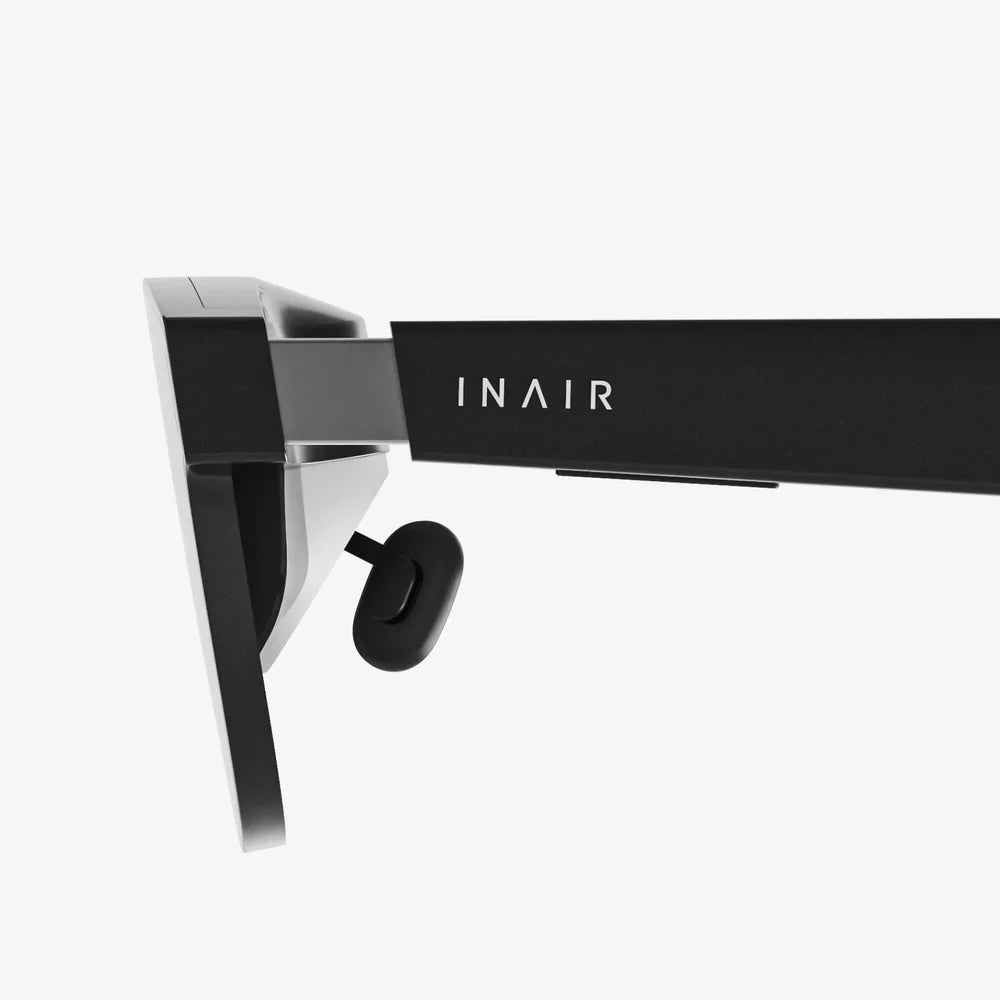
Imagine a digital layer of information, vibrant and seamless, painted directly onto the fabric of your reality. The world remains your canvas, but now it’s interactive, responsive, and infinitely more informative. This is the promise of Augmented Reality, a promise finally coming into sharp, breathtaking focus thanks to a critical technological marvel: the OLED microdisplay. This isn't just an incremental upgrade; it's the key that unlocks the true potential of AR, transforming clunky prototypes into elegant, all-day companions that will fundamentally change how we work, learn, and play.
The Unforgiving Canvas: Why Near-Eye Demands Perfection
Designing a display that sits mere millimeters from the human eye is one of the most formidable challenges in modern engineering. Unlike a television on a wall or a smartphone in your hand, a near-eye display must essentially trick one of the most sophisticated optical systems in existence—the human visual cortex. The metrics for success are ruthlessly stringent. It requires unprecedented pixel density to avoid the dreaded "screen-door effect," where users perceive the gaps between pixels, shattering the illusion of immersion. It demands an immense dynamic range to render pitch blacks alongside dazzling highlights, even in brightly lit environments. It needs lightning-fast response times to eliminate motion blur as the user's head turns. Most critically, it must achieve all this while consuming minuscule amounts of power to ensure the device is lightweight, cool, and capable of lasting all day on a single charge. For decades, display technologies struggled to meet this confluence of demands, holding AR back from its destined ubiquity.
The OLED Advantage: A Symphony of Light and Darkness
Enter OLED—Organic Light-Emitting Diode technology. Unlike traditional displays that require a separate backlight, each individual sub-pixel in an OLED panel is a microscopic, self-emissive light source. This fundamental architectural difference is what makes it so uniquely suited for the near-eye environment. It is a symphony of light orchestrated at the pixel level, and for AR, this changes everything.
True Black and Infinite Contrast: The Foundation of Reality
In an OLED display, when a pixel needs to be black, it is simply turned off. This results in a true, absolute black—the absence of light. This capability is paramount for AR because our perception of the digital world being "augmented" onto the real one relies on the transparency and believability of the virtual objects. With OLED, a virtual text document can appear to float in a sunlit room without a hazy gray background, and a simulated starry night can feature pinpricks of light against a perfect void. This infinite contrast ratio ensures that digital elements feel solid and real, not like translucent ghosts superimposed on the world. It preserves the natural shadows and depth cues of the physical environment, allowing for a seamless and convincing blend between the real and the virtual.
Pixels at the Speed of Thought
OLED technology boasts exceptionally fast response times, measured in microseconds. This is orders of magnitude faster than conventional liquid crystal displays. In the context of a rapidly moving near-eye display, this speed is non-negotiable. It eliminates motion blur and ghosting artifacts that can cause latency-induced nausea or simulator sickness, a common problem with earlier AR and VR headsets. When a user turns their head, the virtual imagery must remain locked in place and crystal clear. OLED’s instantaneous pixel response ensures that the augmented world is stable and responsive, matching the user's movements with flawless precision and providing a comfortable, nausea-free experience even during prolonged use.
A Brighter, More Efficient Future
Because each pixel generates its own light, OLED displays are inherently more efficient than transmissive LCDs, which block light from a constant, power-hungry backlight. This direct emission means light isn't wasted by passing through (and being filtered by) polarizers and color filters. For microdisplays, where power budgets are incredibly tight, this efficiency translates directly into longer battery life or allows for smaller, lighter battery packs. Furthermore, OLED materials are capable of achieving very high peak brightness levels, which is crucial for AR devices that must compete with ambient light from the sun. A bright virtual image is essential for readability and vibrancy outdoors, and OLED’s architecture provides a clear path toward ever-higher luminance without a catastrophic drain on power.
The Form Factor Revolution: Thin, Flexible, and Revolutionary
The structure of an OLED panel is remarkably simple and thin, as it lacks a backlight unit. This inherent thinness is a gift to optical engineers designing AR glasses. It allows for more compact and elegant optical combiner systems (like waveguides and holographic optical elements) that can be packaged into a form factor resembling everyday eyewear. The pursuit of socially acceptable, lightweight AR glasses hinges on the miniaturization of every component, and the display is often the most significant bottleneck. OLED’s slim profile is a critical enabler for this miniaturization. Moreover, the organic nature of the materials opens the door to flexible and even transparent displays in the future, pointing toward even more revolutionary AR form factors.
Conquering the Challenges: The Path to Mass Adoption
Despite its profound advantages, implementing OLED technology for microdisplays is not without its hurdles. The journey from the smartphone screen to a microdisplay measured in fractions of an inch involves overcoming significant obstacles.
The Lifespan Equation: Taming the Blue Pixel
A well-known characteristic of OLED materials is their operational lifespan, which varies by color. Red and green organic compounds are highly stable and can operate for tens of thousands of hours with minimal degradation. The blue sub-pixel, however, has historically been less stable and degrades faster at high brightness levels. For a near-eye display that may need to show a static user interface element for hours on end, this differential aging could lead to permanent image retention or color shift over time—a phenomenon known as burn-in. Manufacturers have made tremendous strides in mitigating this through advanced material science, developing more stable blue emitters, and implementing sophisticated pixel-level compensation algorithms within the display driver circuitry. These systems can monitor the usage of each individual pixel and subtly adjust its drive current to ensure uniform aging across the entire display, effectively extending its functional life to meet consumer electronics standards.
Pushing the Limits of Pixel Density
The race for higher resolution in a smaller area is relentless. The goal is to achieve a "retina" level of density where the human eye can no longer distinguish individual pixels. For microdisplays, this means achieving pixel densities exceeding 3,000 pixels per inch (PPI) and beyond. Fabricating the intricate, microscopic circuitry required to drive millions of these tiny OLED pixels is a feat of semiconductor manufacturing. It often involves adapting techniques from the silicon chip industry, building the display directly onto a silicon wafer to create what is known as an OLED-on-silicon microdisplay. This marriage of display technology and advanced semiconductor processes is what allows for these incredible densities, ensuring the virtual image is smooth, sharp, and completely free of distracting pixelation.
Beyond the Technical Specs: Redefining Human Experience
The impact of OLED in AR extends far beyond spec sheets and laboratory benchmarks. It is the catalyst for a new paradigm of human-computer interaction.
The Professional's New Reality
In fields like surgery, engineering, and complex machinery repair, OLED-based AR displays can overlay precise, high-contrast 3D instructions, anatomical diagrams, or sensor data directly onto the user's field of view. A surgeon could see a critical patient's vital signs and a 3D model of a tumor's location without ever looking away from the operating field. An engineer could see the internal wiring and components of a system they are repairing, with arrows and text guiding each step. The high fidelity and clarity provided by OLED are not just a convenience here; they are a matter of precision, safety, and ultimately, success.
Transforming Social and Consumer Interaction
Imagine walking through a foreign city and having navigation arrows and historical information about buildings appear seamlessly integrated into your surroundings. Or attending a conference where real-time translations and speaker notes are displayed discreetly in your glasses. In social settings, you could recognize faces and see shared interests floating near people you meet. OLED makes these experiences possible by ensuring the information is beautiful, unobtrusive, and, most importantly, doesn't occlude the real-world social cues that are essential for human connection.
A New Medium for Storytelling and Art
Artists and creators will harness this technology to tell stories in entirely new ways. Instead of watching a story on a rectangle, you could be standing within it. Historical events could be reenacted around you in your living room. Sculptures and paintings could be experienced as dynamic, interactive art installations that blend with your physical space. The perfect blacks and rich colors of OLED will be the painter's brush, allowing for digital creations that are as emotionally resonant and visually stunning as any physical masterpiece.
The future is not something we merely look at on a screen; it is something we will see through a lens that enhances our perception of everything. OLED technology for near-eye displays is the critical component turning this vision into a vivid, efficient, and wearable reality. It is the bridge between the digital and the physical, and it is poised to redefine our relationship with technology itself, placing a universe of information right before our eyes, in the most literal sense.
Share:
State of Digital Product: Navigating the Post-Download Era
State of Digital Product: Navigating the Post-Download Era