


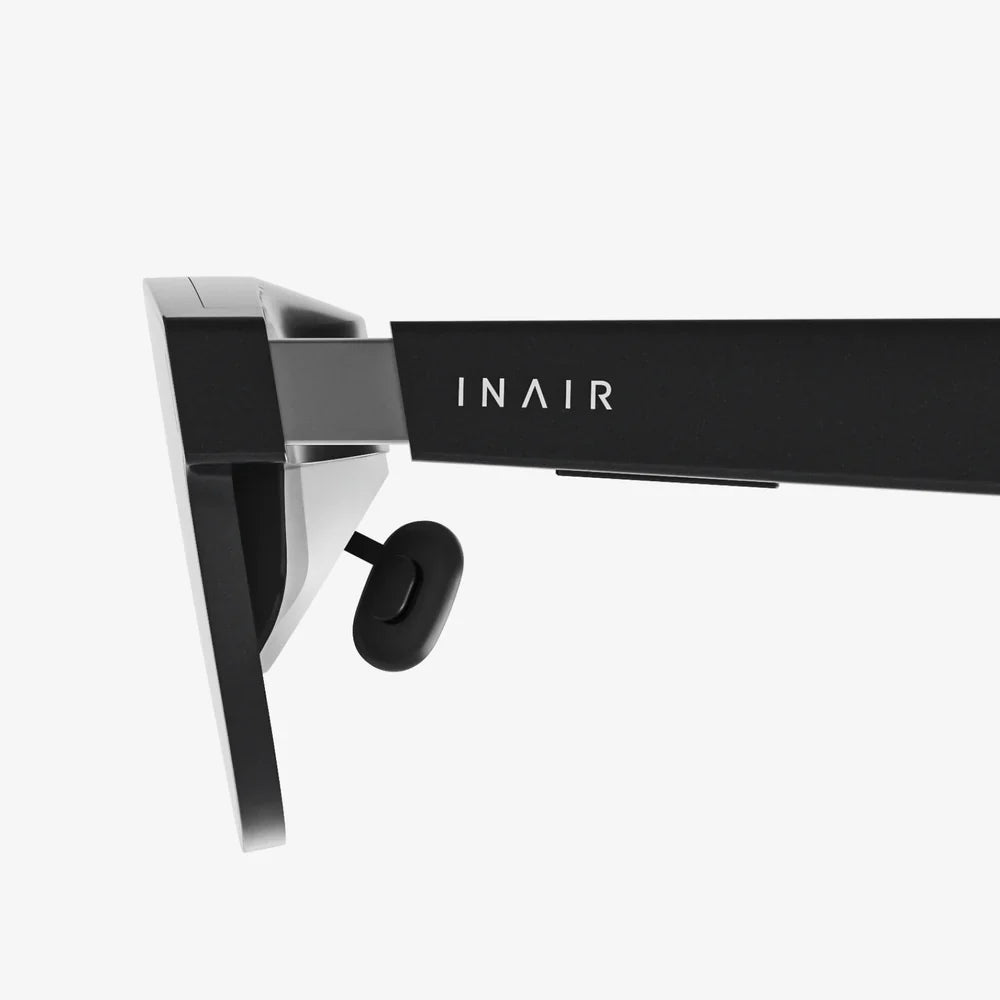
Imagine slipping on a pair of sleek, lightweight glasses and instantly being transported to a hyper-realistic digital world, where the boundaries between the physical and virtual blur into insignificance. This isn't a scene from a distant sci-fi future; it's the imminent reality being unlocked by a technological marvel: the OLED microdisplay. These minuscule powerhouses are quietly revolutionizing how we interact with information and digital environments, promising a visual experience so profound it will redefine our expectations of clarity, efficiency, and immersion. The journey into their benefits is a glimpse into the next epoch of personal computing.
The Essence of Miniaturization: What is an OLED Microdisplay?
To truly appreciate the benefits, one must first understand the component itself. A microdisplay is, as the name implies, an extremely small display, typically measuring less than one inch diagonally. They are not designed for direct viewing like a television or smartphone screen. Instead, their purpose is to project an image that is then magnified through an optical system, such as the lenses in a virtual reality (VR) headset or an augmented reality (AR) smart glass.
When this miniaturized canvas is built using Organic Light-Emitting Diode (OLED) technology, something extraordinary happens. OLED technology is fundamentally different from the common LCD (Liquid Crystal Display). In an LCD, a backlight shines through a layer of liquid crystals that act as shutters, blocking or allowing light to pass through to create an image. This process is inherently inefficient and leads to compromised image quality.
An OLED microdisplay, however, is an emissive technology. Each individual pixel is a microscopic organic compound that emits its own light when an electric current is applied. There is no need for a separate backlight. This core architectural difference is the genesis of its most celebrated advantages.
The Crown Jewel: Perfect Blacks and Infinite Contrast Ratio
The most immediately noticeable benefit of an OLED microdisplay is its ability to produce true, absolute black. Since each pixel is self-emissive, it can be turned off completely and independently. When a pixel is off, it emits no light whatsoever. This means that black areas of an image are not a dimly lit gray, as they are on an LCD with a constantly illuminated backlight, but are instead the utter absence of light.
This capability directly translates to an infinite contrast ratio. Contrast ratio is the difference between the brightest white and the darkest black a display can produce. Because the darkest black on an OLED is zero light, the ratio is, in theory, infinite. In practice, the result is an image with incredible depth, dimension, and realism. Shadows contain detail instead of murky gray blobs, starfields in space simulations are breathtakingly crisp, and the overall image possesses a vibrancy and pop that LCD-based microdisplays simply cannot match. This is paramount for immersion in VR and for overlaying digital information clearly onto the real world in AR.
A Symphony of Speed: Unmatched Response Time and Motion Clarity
In the realm of dynamic visuals, especially in fast-paced VR gaming or when tracking rapid real-world movement with AR overlays, speed is everything. Motion blur and latency are the enemies of presence and comfort. OLED microdisplays excel here, boasting response times that are orders of magnitude faster than even the best LCDs.
A traditional LCD pixel must physically twist and untwist to allow light to pass through, a process that takes time (typically several milliseconds). An OLED pixel, being an emissive diode, has a nearly instantaneous response time—often measured in microseconds (µs). This eliminates the motion blur and smearing associated with slower technologies. Fast-moving objects remain sharp and clear, drastically reducing the potential for simulator sickness in VR and ensuring that digital objects in AR remain locked and stable in their position without lag or ghosting. This lightning-fast performance is critical for creating a convincing and comfortable experience.
The Form Factor Revolution: Thinness, Flexibility, and Efficiency
The absence of a backlight unit and color filters, which are essential components of an LCD, allows OLED microdisplays to be incredibly thin and lightweight. This is a non-negotiable advantage for head-mounted devices (HMDs), where every gram and every millimeter of bulk matters for user comfort and adoption. Manufacturers can design significantly more compact and elegant form factors, moving away from the bulky, front-heavy designs of the past.
Furthermore, the organic materials used in OLEDs can be deposited on flexible substrates, opening the door to curved and even foldable microdisplays that could conform to unconventional optical paths, enabling even more innovative and human-centric product designs in the future.
This architectural simplicity also translates to superior power efficiency. In an LCD, the backlight is the single biggest power drain, and it remains on constantly, wasting energy to illuminate pixels that are being blocked to create black. Since an OLED pixel only consumes power when it is actively emitting light, displaying a predominantly dark image—a common scenario in AR interfaces and many VR environments—can lead to massive energy savings. This extends the battery life of untethered, portable devices, a critical factor for their usability and success.
A Viewing Angle Without Compromise
While viewing angle might seem less critical for a display that is viewed through optics, it remains an important engineering factor. LCDs suffer from color shift and contrast loss when viewed from angles other than dead center. OLED microdisplays, however, maintain their color fidelity, brightness, and contrast ratio across extreme viewing angles—nearly up to 180 degrees. This ensures that the image quality remains consistent across the entire field of view provided by the eyepiece lenses, guaranteeing a uniform experience whether the user is looking straight ahead or towards the edges of the virtual scene.
Challenges and the Road Ahead
No technology is without its challenges, and OLED microdisplays are no exception. Historically, concerns have been raised about their operational lifetime, particularly the potential for burn-in of static user interface elements and differential aging of the organic materials that make up the red, green, and blue sub-pixels, which could lead to color shift over time. However, significant advancements in material science, pixel driving algorithms, and compensation circuitry have mitigated these issues to a large degree, making them viable for consumer product lifecycles.
The future of OLED microdisplays is inextricably linked to the metaverse and spatial computing. As the demand for higher resolutions (4K per eye and beyond), higher brightness for outdoor AR use, and even more efficient designs grows, the technology will continue to evolve. We are already seeing the emergence of advanced variations like Micro-OLED (or OLEDoS – OLED on Silicon), where the display is built directly on a silicon wafer, enabling incredibly high pixel densities that push the limits of human visual acuity.
Transforming Industries Beyond Consumer Entertainment
The benefits of OLED microdisplays extend far beyond gaming and media consumption. Their unique combination of high resolution, compact size, and low power consumption makes them ideal for a multitude of professional and medical applications.
- Medical Surgery and Diagnostics: Surgeons use head-mounted displays with OLED microdisplays to overlay critical patient data, ultrasound images, or surgical guides directly into their field of view during procedures, allowing them to maintain focus without looking away. Medical training simulations also benefit from the high realism.
- Industrial Maintenance and Repair: Field technicians can access schematics, instruction manuals, and remote expert guidance hands-free, projected onto the equipment they are repairing, increasing accuracy and efficiency.
- Military and Aviation: Pilots and soldiers utilize helmet-mounted displays for night vision, targeting information, and navigational data, all requiring the high contrast and reliability that OLED technology offers.
From the profound depth of its perfect blacks to the liberating efficiency of its pixel-level illumination, the OLED microdisplay is more than just an incremental improvement; it is a foundational shift. It is the key that unlocks a future where digital content is not confined to a rectangle in our hand but is seamlessly woven into the fabric of our perception. The next time you witness a breathtaking virtual sunset or interact with a holographic menu that feels part of your world, you'll know the tiny technological titan responsible for the magic.
The age of staring at screens is rapidly fading, making way for an era of living within them. This paradigm shift in human-computer interaction is being powered by the unparalleled visual fidelity and elegant efficiency of OLED microdisplays, positioning them not merely as a component, but as the very lens through which we will experience the next dimension of digital life. The view through that lens is astonishingly bright, deeply black, and infinitely promising.
Share:
Advanced Wearable Device Technology: The Invisible Revolution Reshaping Human Potential
Artificial Intelligence Techno The Algorithmic Beat Reshaping Music