


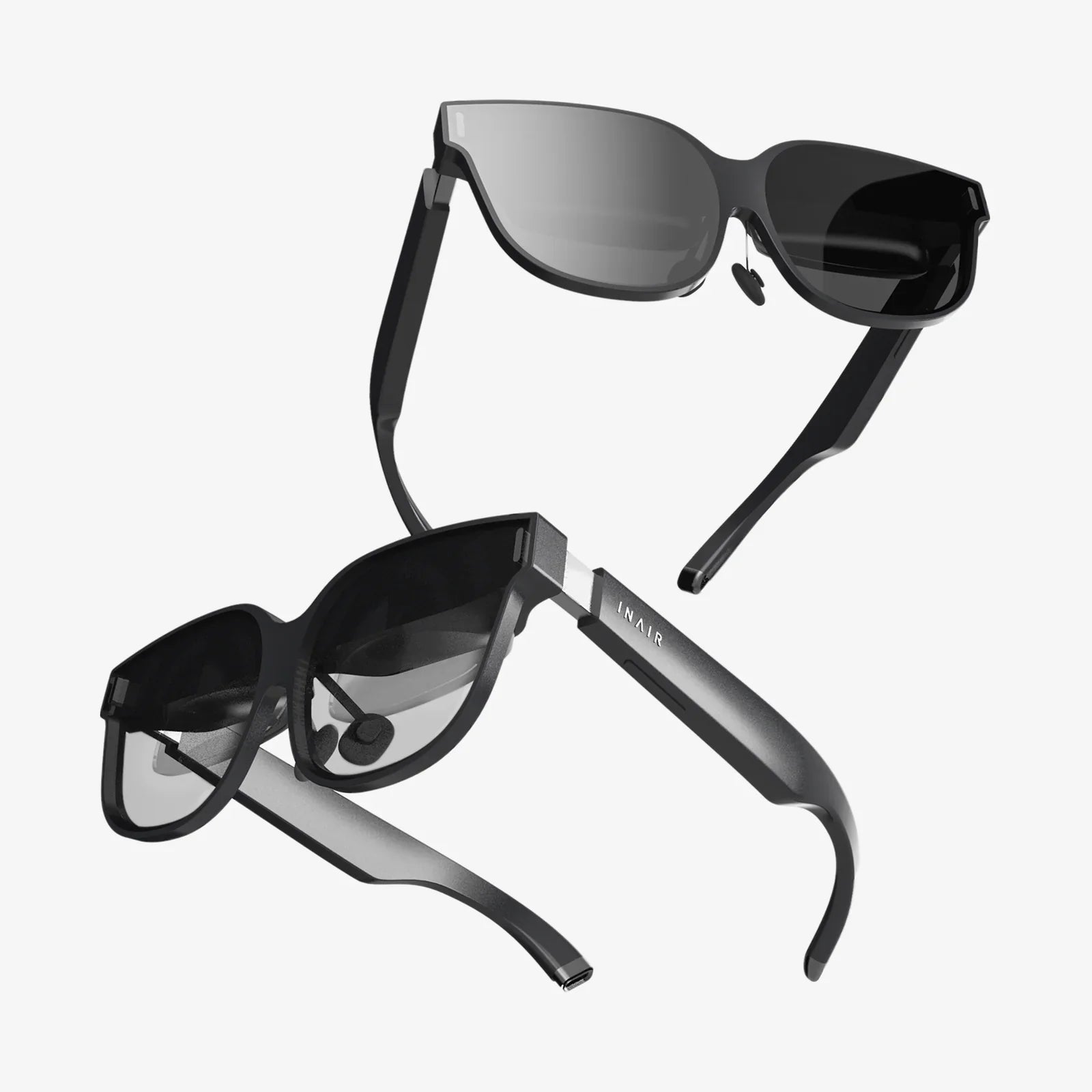
The race to dominate the human visual field is on. Beyond the screens in our pockets and living rooms lies a far more intimate and immersive frontier: the space directly in front of our eyes. Here, in the burgeoning realm of augmented and virtual reality, military heads-up displays, and advanced medical imaging, a silent but fierce battle is being waged. At the heart of this conflict is a tiny, powerful technology—the OLED microdisplay—and the relentless pursuit of its market share is defining the next generation of visual experiences. The distribution of this market share is not merely a corporate scorecard; it is a crystal ball into the future of how we will work, play, and perceive reality itself.
The Technological Bedrock: Why OLED Microdisplays?
To understand the fight for market share, one must first appreciate the weapon itself. An OLED microdisplay is, in essence, a miniature screen often smaller than one inch diagonally, but packed with millions of self-emissive pixels. Unlike traditional LCDs that require a separate backlight, each pixel in an OLED microdisplay generates its own light. This fundamental characteristic unlocks a suite of advantages critical for near-eye applications.
The most significant is the achievement of true, infinite contrast ratios and perfect blacks. By simply turning off individual pixels, the display can achieve absolute blackness, which is paramount for creating convincing virtual environments and ensuring sharp, legible information overlay in bright ambient conditions. Furthermore, OLED technology offers exceptionally fast response times, eliminating motion blur—a critical feature for maintaining immersion and preventing simulator sickness in VR. Their solid-state nature also lends them to being remarkably thin, lightweight, and power-efficient, all essential traits for devices meant to be worn on the head for extended periods.
Deconstructing the Market Share Puzzle: Key Application Segments
The overall OLED microdisplay market share is not a monolithic entity; it is an aggregate of several fiercely competitive and rapidly evolving application segments. The dynamics and growth rates within each segment directly influence the strategic moves of key players and the subsequent shifts in overall share.
Augmented and Virtual Reality (AR/VR)
This is the crown jewel, the application segment with the highest growth potential and the most intense competition. Capturing market share here is considered a strategic imperative for long-term dominance. In VR, OLED microdisplays are prized for their deep blacks and high refresh rates, which are crucial for full immersion. However, the segment is also seeing stiff competition from other emerging microdisplay technologies.
AR, particularly optical see-through AR for consumer and enterprise applications, represents an even more complex and lucrative battleground. Here, the requirements are even more stringent: ultra-high brightness to compete with sunlight, incredibly high pixel densities (exceeding 3000 PPI) to render sharp text and graphics, and minimal power consumption. The company that can mass-produce a microdisplay that meets these demanding specs at a viable cost will capture a monumental portion of the market share. Currently, the race is split between those refining traditional OLED-on-silicon and those developing newer approaches like MicroLED and laser beam scanning, keeping the market share in this segment highly fluid.
Military and Aerospace
This is a historically significant and high-value segment. OLED microdisplays are integral to helmet-mounted displays (HMDs), head-up displays (HUDs), and thermal weapon sights for soldiers, pilots, and vehicle operators. The requirements are extreme: ruggedness to withstand shock, vibration, and extreme temperatures; reliability that borders on absolute; and often the ability to function in night-vision compatible modes. While the volume of units may be lower than consumer AR/VR, the value per unit is extremely high. Market share in this segment is often won through long, rigorous qualification processes and deep, trusted relationships with defense contractors, creating higher barriers to entry and more stable, but hard-won, share for the incumbents.
Industrial and Medical
This segment encompasses a diverse range of applications, from electronic viewfinders (EVFs) in high-end cameras to wearable displays for logistics and repair technicians. In the medical field, OLED microdisplays are revolutionizing surgical visualization. They are embedded in surgical headlamps and endoscopes, providing surgeons with a bright, high-contrast, and color-accurate view inside the human body, directly in their line of sight. This improves precision and outcomes. Market share here is gained through demonstrating superior reliability, color fidelity, and forming partnerships with established medical and industrial equipment manufacturers.
The Titans and The Challengers: A Shifting Competitive Landscape
The landscape of the OLED microdisplay market is a fascinating mix of established giants, specialized innovators, and deep-pocketed new entrants, all vying for a larger slice of the pie.
A handful of companies have historically commanded a significant portion of the market share, leveraging years of experience and patented fabrication processes. These players have strong footholds in the military and industrial segments and are aggressively investing to transition their technology to meet the volume and performance demands of consumer AR/VR.
However, their dominance is being challenged. The immense potential of the AR/VR market has attracted major technology conglomerates. These companies, with virtually limitless resources, are pursuing both external partnerships and internal development of next-generation microdisplays. Their goal is often vertical integration—developing the displays for their own hardware ecosystems—which could dramatically reshape market share allocations in the future, moving it in-house and away from merchant suppliers.
Furthermore, the very definition of a "microdisplay" is being challenged technologically. The emergence of MicroLED technology poses a significant threat to OLED's market share. MicroLEDs promise even higher brightness, greater efficiency, and potentially longer lifetimes. While manufacturing challenges remain, massive investments are being poured into solving them. The market share battle is therefore not just between OLED manufacturers, but between competing technological paradigms. A similar, though less direct, threat comes from developments in holographic and light field technologies, which could eventually bypass the need for a traditional microdisplay altogether.
Key Factors Dictating the Flow of Market Share
The future distribution of OLED microdisplay market share will not be random. It will be dictated by a clear set of technical and commercial factors.
- Pixel Density and Resolution: The drive towards "retina" quality in AR glasses, where the human eye can no longer discern individual pixels, is relentless. The players who can consistently achieve higher PPIs will win the designs for the next generation of premium devices.
- Luminance and Efficiency: For outdoor AR, brightness is non-negotiable. The company that can deliver a microdisplay with 5,000 nits or more while maintaining low power consumption will have a monumental advantage. This is a key technical hurdle where market share will be won or lost.
- Manufacturing Yield and Cost: Ultimately, for consumer markets, cost is king. Superior technology that cannot be manufactured at scale and at a reasonable cost is irrelevant. Perfecting fabrication processes on silicon wafers to drive down costs is just as important as R&D. High-volume manufacturing capability will be a primary determinant of market share.
- Strategic Partnerships and Vertical Integration: As large device makers seek to control their supply chains and core technologies, we are seeing a wave of acquisitions, exclusive partnerships, and internal development. A microdisplay maker's market share will be increasingly tied to its strategic alliances.
Gazing into the Crystal Ball: The Future of Market Allocation
The trajectory of the OLED microdisplay market share points towards a period of intense fragmentation before eventual consolidation. In the near term, as new applications emerge and the technology continues to evolve, we can expect a proliferation of suppliers, each carving out niche shares in specific segments—one might lead in medical, another in military EVFs, a third in consumer VR.
However, as the AR/VR market matures and begins to resemble the smartphone market in its scale and competitive dynamics, the need for standardized, high-volume, cost-effective components will force a shakeout. The winners will be those who have not only the best technology but also the manufacturing muscle and the strategic partnerships to ship tens of millions of units per year. They will be the ones that successfully transition from being component suppliers to being indispensable ecosystem partners.
The long-term battle may not even be won by a pure-play OLED company. The future could belong to a hybrid approach or a completely new technology. The company that ultimately captures the lion's share of the microdisplay value may be the one that perfects a manufacturing process for MicroLED or successfully integrates multiple technologies into a single, revolutionary product. The only certainty is that the map of market share will be redrawn multiple times in the coming decade.
Who will ultimately control the window to our digital futures? The answer is being written now in clean rooms and R&D labs across the globe, measured in microns, nits, and nanometers. The outcome of this high-stakes battle for OLED microdisplay market share will determine not just which corporations profit, but the very quality, accessibility, and capability of the next great computing platform that will sit right before our eyes. The company that masters the blend of breathtaking visual performance, ruthless efficiency, and scalable economics will not just lead a market—it will illuminate the path forward for an entire industry.
Share:
AR Technology iPhone X: The Unseen Revolution in Your Pocket
AR Technology iPhone X: The Unseen Revolution in Your Pocket