


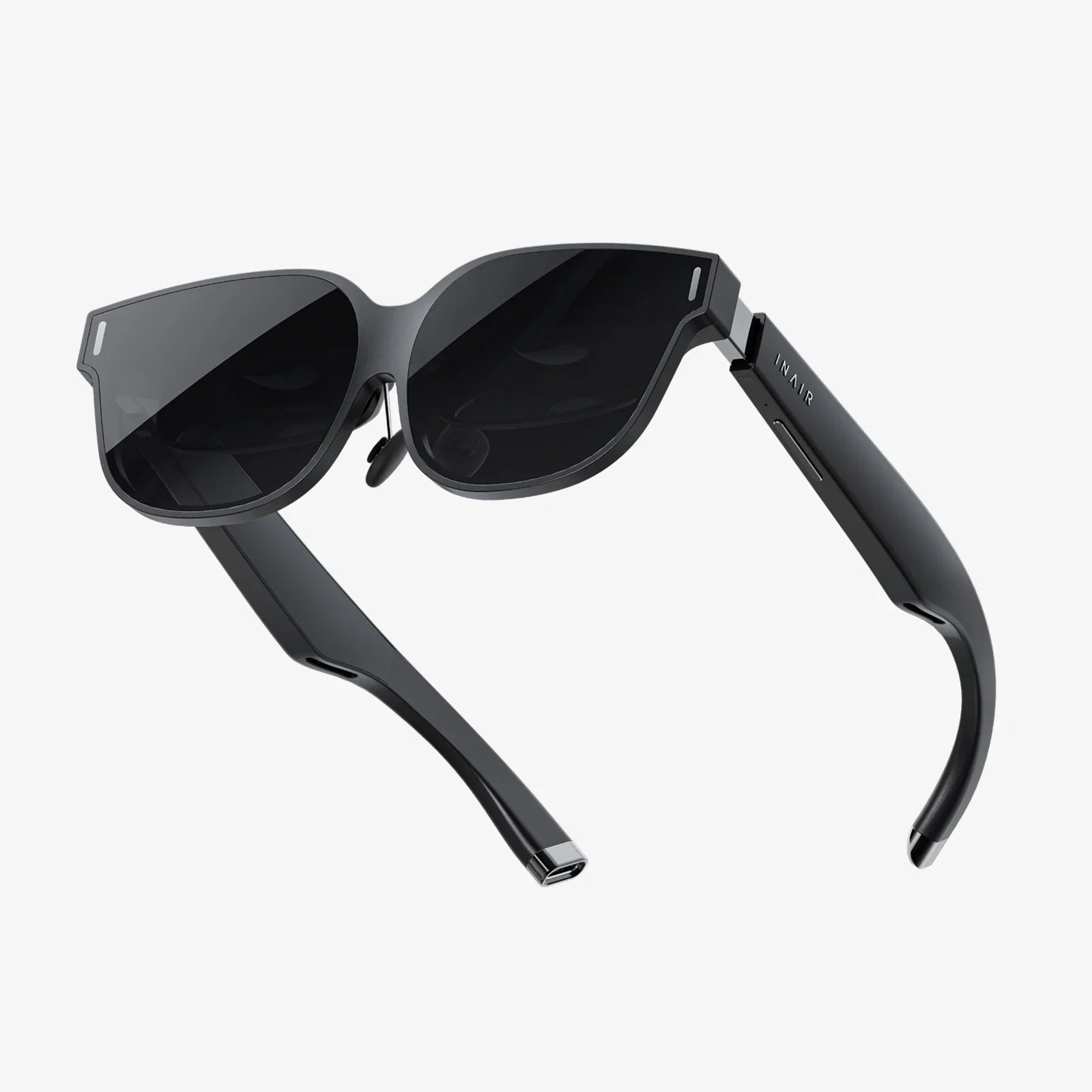
If you think the screen on your phone is impressive, wait until you see the world through the lens of the latest OLED microdisplays. The news today isn't just about incremental updates; it's about a fundamental shift in how we will interact with digital information, seamlessly woven into the fabric of our reality. The race to perfect these tiny, powerful panels is heating up, and the breakthroughs announced this year are poised to catapult augmented reality, virtual reality, and a host of professional applications from science fiction into mainstream reality. This isn't just an evolution of display technology; it's a revolution happening right before our eyes, even if we can't see it yet.
The Engine of Innovation: What's Driving Today's Headlines?
The flurry of activity and news in the OLED microdisplay sector is not happening in a vacuum. It is being propelled by several powerful, converging technological and market forces. The most significant driver is the insatiable demand for more sophisticated augmented and virtual reality hardware. Consumers and enterprises alike are waiting for the "killer app" or the "perfect device" that will make AR glasses as ubiquitous as smartphones. A critical bottleneck in achieving this vision has always been the display technology itself. It needs to be bright enough to be visible in broad daylight, sharp enough to eliminate the dreaded "screen door effect," power-efficient enough to last all day on a small battery, and small enough to fit into a sleek, socially acceptable form factor. OLED microdisplays, which are typically less than an inch in diagonal size but pack a stunning number of pixels, are the leading candidate to meet all these challenges simultaneously.
Furthermore, advancements in semiconductor manufacturing and materials science are finally catching up to the ambitious goals of display engineers. New deposition techniques, innovative pixel architectures, and novel organic material compounds are allowing for higher yields, better performance, and lower costs. This virtuous cycle of innovation is creating a fertile ground for the news we see today, where each announcement seems to top the last.
Breaking Down the Breakthroughs: Key Areas of Progress
The most exciting OLED microdisplay news today can be categorized into a few critical areas of performance: luminance, resolution and pixel density, and power efficiency. Let's dissect each one.
1. The Battle for Brightness: Conquering Ambient Light
For AR glasses to be useful outdoors or in brightly lit environments, the microdisplay must be incredibly luminous. A dim image will simply be washed out by ambient light, rendering it useless. Historically, this has been a major hurdle. However, recent news highlights significant progress. Manufacturers are now announcing microdisplays capable of achieving peak brightness levels that were unthinkable just a few years ago. This is being achieved through a multi-pronged approach:
- Improved OLED Materials: The development of new phosphorescent and TADF (Thermally Activated Delayed Fluorescence) emitters is drastically improving the efficiency of light output from each pixel, meaning more light is generated from the same amount of electrical current.
- Advanced Optical Architectures: Innovations in the underlying silicon backplane and the microdisplay's optical stack are minimizing light loss and directing more of the generated light toward the viewer's eye.
- Novical Driving Schemes: New ways of controlling the pixels allow for higher peak drive currents without damaging the delicate OLED structures, enabling short bursts of extreme brightness for HDR-like effects in critical content.
This leap in brightness is perhaps the single most important development, as it directly enables all-weather, all-lighting AR usability.
2. The Pursuit of Perfect Pixels: Eliminating the Screen Door
When a display is magnified by an AR or VR optic and placed centimeters from your eye, any space between pixels becomes glaringly obvious, creating a mesh-like "screen door" that shatters immersion. The goal is to achieve a pixel density so high that the human eye cannot distinguish individual pixels, a point known as "retinal resolution."
Today's news is filled with announcements of microdisplays shattering resolution records. We are seeing panels with 4K resolution (or higher) compressed into a size smaller than a postage stamp, resulting in pixel densities measured in thousands of pixels per inch (PPI). This is a monumental achievement in microfabrication. To put this in perspective, a premium smartphone might have a pixel density of around 500-600 PPI. The latest OLED microdisplays are boasting densities exceeding 3,500 PPI and even 5,000 PPI. This incredible density ensures that text appears razor-sharp, virtual objects blend seamlessly with the real world, and the immersive quality of VR experiences is taken to an entirely new level of realism.
3. The Efficiency Equation: Powering All-Day Wearables
A brilliant, high-resolution display is worthless if it drains a battery in 30 minutes. Power efficiency is the silent hero in today's OLED microdisplay news. Innovations here are focused on reducing the power draw at the system level:
- Low-Power Driving Modes: New microdisplay controllers incorporate sophisticated algorithms that can intelligently power down unused portions of the screen or switch to ultra-low refresh rates when displaying static content, dramatically extending battery life.
- Integrated Functionality: Some of the most exciting news involves the move towards more highly integrated systems-on-chip (SoCs) behind the display. By embedding more processing power directly onto the silicon backplane, the distance data must travel is minimized, reducing latency and power consumption associated with data transmission.
- Material Efficiency: As with brightness, the new OLED materials are not just brighter, but also more efficient, converting a higher percentage of electrical energy into light rather than heat.
These advancements are crucial for moving beyond bulky, tethered headsets to lightweight, untethered glasses that can be worn all day.
Beyond Consumer AR/VR: The Expansive World of Applications
While AR glasses for consumers grab the headlines, the impact of these microdisplay advancements is being felt across a wide spectrum of industries. The news today often highlights these professional and industrial applications, which are frequently the first to adopt and benefit from cutting-edge technology.
- Medical Surgery and Diagnostics: Surgeons are using AR headsets equipped with high-brightness OLED microdisplays to overlay critical patient data, ultrasound imagery, or surgical guides directly onto their field of view during operations. This allows for precision surgery without ever needing to look away from the patient.
- Industrial Maintenance and Repair: Field technicians can see schematic diagrams, instruction manuals, and animated repair guides superimposed onto the complex machinery they are fixing. This hands-free access to information drastically reduces errors and improves repair times.
- Military and Defense: Heads-up displays (HUDs) in fighter jet helmets have used microdisplays for years, but the new wave of technology provides unprecedented situational awareness with night vision, targeting data, and navigational cues all presented with stunning clarity and contrast.
- Professional Training and Simulation: From training astronauts to simulating complex procedures for emergency responders, high-fidelity VR powered by these microdisplays creates safe, controllable, and highly realistic training environments.
The Road Ahead: Challenges and Future Visions
Despite the exhilarating news, challenges remain. Manufacturing these incredibly dense displays at high volume and acceptable cost is still difficult. Long-term reliability and mitigating issues like burn-in are ongoing areas of research. Furthermore, the ecosystem around these displays—including the waveguides that project the image into the eye and the batteries that power them—must advance in lockstep.
Looking forward, the next wave of news will likely focus on even more integration, perhaps embedding sensors for eye-tracking directly into the microdisplay itself. We can also expect a push towards full-color displays with wider color gamuts and true HDR capabilities, making virtual objects indistinguishable from real ones. The concept of "dynamic dimming" for AR—where the microdisplay can black out parts of the real world to create deeper virtual contrasts—is another frontier being explored.
The pace of innovation is relentless. The OLED microdisplay news we see today is laying the groundwork for a future where digital and physical realities are not just viewed side-by-side, but are intrinsically fused. The tiny screen is becoming the window to a vastly expanded world.
Imagine a world where your field of vision becomes a canvas for digital creation, where information floats effortlessly in space exactly when you need it, and where virtual worlds are rendered with a fidelity that tricks your brain into believing they are real. This is the promise being built, pixel by microscopic pixel, in labs and factories right now. The next time you check the news on OLED microdisplays, you might just be reading about the component that will change how we see everything.
Share:
AI Trends in Digital Content: The Future of Creation, Distribution, and Consumption
3D AR HUD: The Next Revolution in How We See the Road