


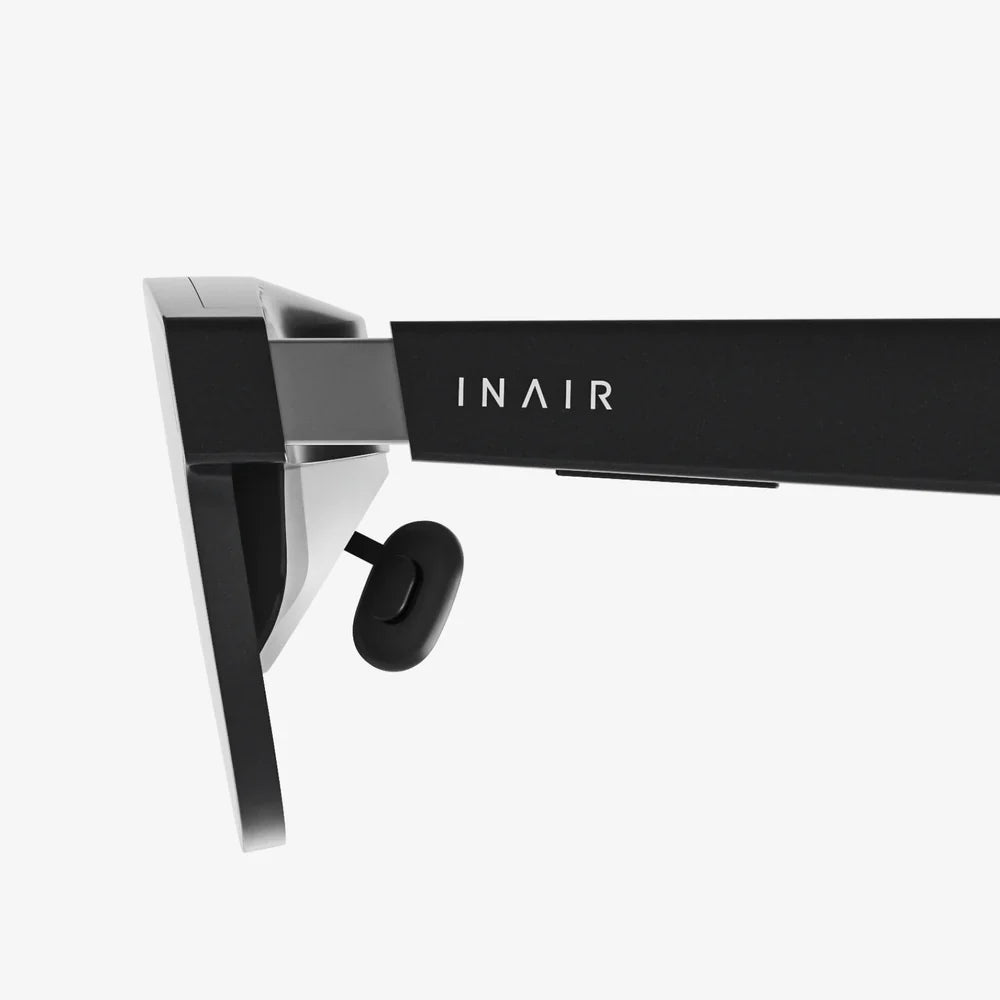
- by wangfred
One XR Glasses: The Dawn of a Seamless Reality
- by wangfred
Imagine a world where the digital and the physical are no longer separate realms, viewed through the clunky window of a screen, but a single, seamless layer of existence. This is the future being unlocked by the advent of one XR glasses device, a piece of technology poised to become as ubiquitous and transformative as the smartphone. This isn't about escaping reality into a virtual world or merely overlaying information; it's about fundamentally enhancing our perception of and interaction with the world around us. We stand on the precipice of a new computing paradigm, and it’s all being viewed through a single, sleek lens.
The true genius of a sophisticated XR glasses design lies in its ability to perform technological miracles while seemingly disappearing from the user's consciousness. This feat of engineering is a symphony of miniaturized components working in perfect harmony.
At its heart are the advanced micro-OLED or Laser Beam Scanning displays. These are not mere screens; they are sophisticated light engines that project images directly onto the user's retinas. This technique allows for digital content to be perceived at various depths, from floating right before your eyes to appearing anchored on the distant horizon, all while maintaining a startling degree of clarity and brightness, even in well-lit environments. The challenge of blending vibrant digital light with the unpredictable light of the real world is solved through a combination of variable electrochromic lenses that can dynamically tint and advanced spatial compositing algorithms that adjust color and luminosity in real-time.
Perceiving the world is just as important as projecting onto it. This is handled by a suite of outward-facing sensors. High-resolution RGB cameras continuously map the environment, while depth sensors (like time-of-flight sensors) precisely measure the distance to every surface, creating a real-time 3D mesh of your surroundings. SLAM technology (Simultaneous Localization and Mapping) uses this data to understand exactly where the device is within that space, allowing digital objects to stay locked in place on a table or hide realistically behind a sofa.
All of this immense data processing cannot be offloaded to a nearby processing unit without sacrificing latency, which is the enemy of immersion. Therefore, the core intelligence is often an on-board dedicated processor, a system-on-a-chip designed specifically for the monumental tasks of spatial computing, computer vision, and AI inference. This ensures that interactions feel instantaneous and the blend between realities remains convincing.
The potential to dismantle the traditional office and redefine productivity is one of the most immediate and powerful applications for this technology. The concept of a physical monitor becomes obsolete when you can conjure as many high-definition virtual screens as you need, arranged perfectly to your ergonomic preference in your physical space.
Imagine an architect walking through a construction site, viewing the finalized building plans overlaid perfectly onto the unfinished steel girders, identifying potential clashes before they become costly errors. Envision a surgeon receiving vital patient statistics and 3D anatomical guides directly in their field of view during a complex procedure, without ever turning their head away from the operating table. This is the promise of contextual, hands-free information delivery.
Collaboration transcends video calls. With one XR glasses device, remote colleagues can be represented as photorealistic avatars or even full-motion holograms, appearing to sit around your physical desk. You can collectively interact with 3D models of a new product design, manipulating them with gestures, making annotations that hang in the air, and feeling a sense of shared presence that Zoom grids simply cannot provide. This creates a true hybrid work environment where physical location is no longer a barrier to effective teamwork.
Beyond work, this technology is set to revolutionize how we connect and play. Social media will evolve from a feed on a phone to a shared layer of experience. Walking through a city, you could leave digital notes and artwork for friends to discover when they pass the same location. Historical tours could be transformed, with ancient Romans going about their business in the ruins of the Forum, visible only to you and your companions.
Entertainment becomes an active, immersive experience. Instead of watching a movie on a television, you could be standing inside it, with the action unfolding around you. Gaming evolves from playing in a world to physically inhabiting it. Your living room could become a level from your favorite puzzle game, or a virtual tennis court where you see a life-sized opponent and ball reacting to your real-world swings. This fusion of physical movement and digital gameplay promotes a healthier, more engaging form of entertainment.
The educational implications are profound. Learning shifts from a passive, theoretical exercise to an active, experiential one. Medical students can practice intricate surgical procedures on hyper-realistic virtual patients, making mistakes without consequence. Mechanics-in-training can see interactive step-by-step guides overlaid on the actual engine they are repairing, with arrows pointing to specific bolts and warnings highlighting potential pitfalls.
History lessons become time machines. Students can witness historical events unfold around them, walking through ancient marketplaces or standing on the battlefield. Astronomy classes can project the solar system into the classroom, allowing students to walk between the planets and observe their orbits from any angle. This experiential learning fosters a deeper, more intuitive understanding of complex subjects by engaging multiple senses and spatial memory.
For artists, designers, and engineers, one XR glasses device acts as the ultimate creative suite. Sculptors can work with virtual clay, using hand gestures to mold and shape forms that have weight and volume, visible from all angles before a single piece of physical material is used. Interior designers can place virtual furniture into a client's empty room, allowing them to walk through and experience the proposed design at full scale, making changes in real-time.
This technology democratizes creation. It lowers the barrier to entry for working in 3D, as the intuitive, spatial interface is often easier to grasp than complex mouse-and-keyboard driven software. It enables rapid prototyping and iteration, saving significant time and resources while unlocking new forms of artistic expression that exist only in the blended space of extended reality.
For all its promise, the path to mainstream adoption is fraught with significant challenges that extend far beyond the technical hurdles.
Privacy and Data Security: A device that has a constant, first-person view of your life raises monumental privacy concerns. The data collected—continuous video of your home, your workplace, the people you meet—is incredibly sensitive. Robust, transparent data policies, on-device processing for sensitive information, and clear user controls over what is recorded and stored are not just features; they are absolute necessities. The specter of unauthorized access or data breaches is a serious threat that must be addressed head-on.
Social Acceptance and Etiquette: Wearing technology on your face in social situations presents a new frontier of etiquette. Is it rude to wear glasses during a conversation? How do others know if they are being recorded? Navigating these social norms will take time and cultural adjustment. The design of the device itself is crucial; it must be lightweight, comfortable for all-day wear, and aesthetically acceptable, moving away from the bulky, geeky prototypes of the past.
Digital Division and Accessibility: There is a risk that such advanced technology could exacerbate existing social and economic divides. Ensuring it is accessible and valuable to a wide range of users, not just a privileged few, will be critical for its healthy integration into society.
The ultimate goal for this technology is not to be noticed. Unlike a smartphone that demands your attention and pulls you out of the moment, the perfect XR glasses device works in the background, enhancing your perception only when needed. It should feel like a natural extension of your own cognition, providing information, context, and connection without ever becoming a distraction. The interface will evolve from recognizable icons and menus to contextual cues that appear only when relevant, controlled by subtle gestures, voice commands, and eventually, even neural inputs.
This represents a fundamental shift in our relationship with technology. We are moving from a world where we go to a device to access a digital world, to a world where the digital comes to us, seamlessly interwoven with our physical reality. It’s a future of ambient computing, where technology fades into the infrastructure of our lives, empowering us to be more connected, more knowledgeable, and more creative than ever before.
The true measure of success for one XR glasses device won't be its processing power or its field of view, but its ability to become so intuitively woven into the fabric of our daily lives that we forget it's there at all, only noticing its profound absence when we take it off. The screen that changed a generation is about to be replaced by a new lens through which we will see—and shape—the world itself.
Share:
Scientific Augmented Reality: The Invisible Revolution Reshaping Discovery
Latest AI Glasses 2025: The Dawn of Invisible Computing