


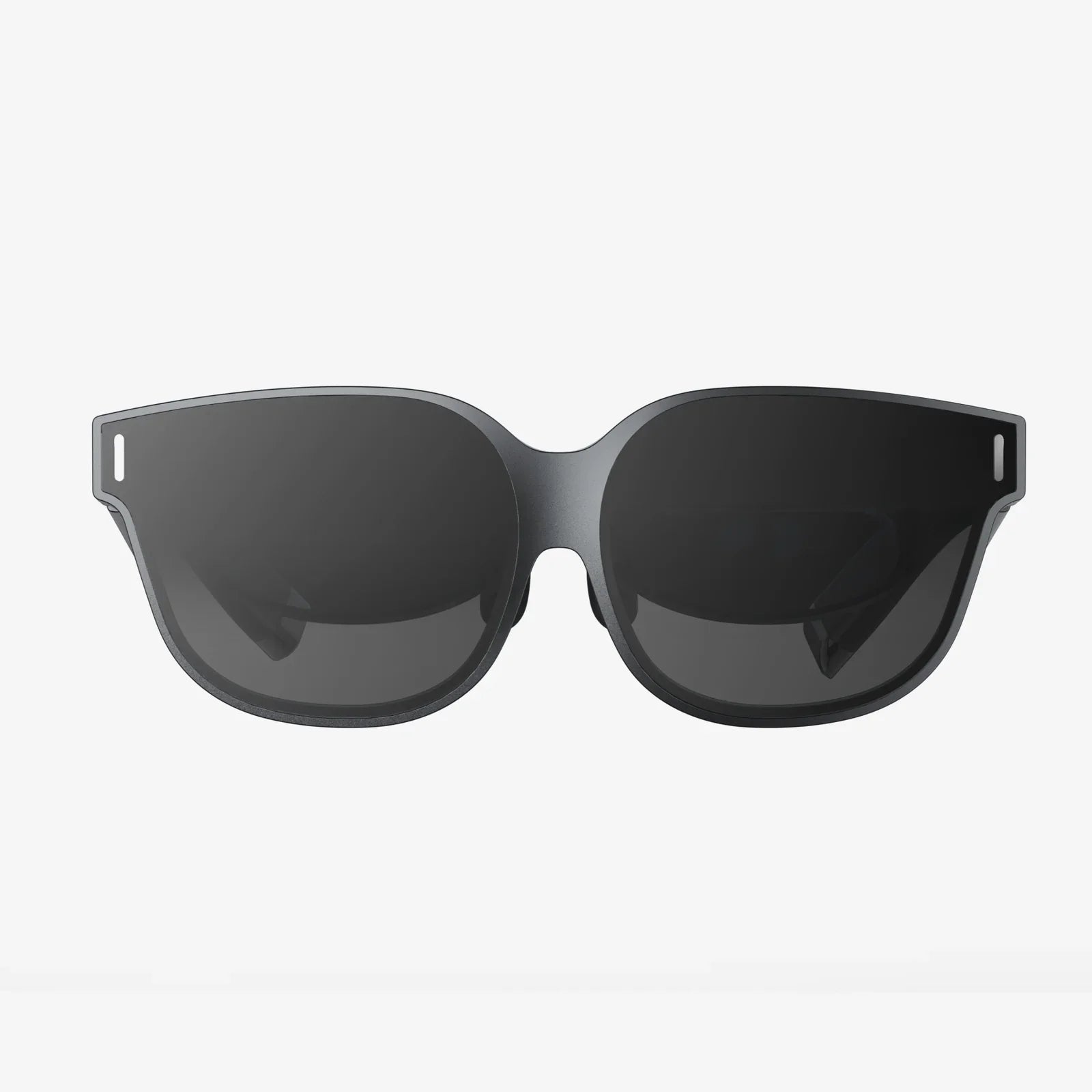
Imagine a world where information doesn’t confine itself to the palm of your hand but flows freely into your field of vision, enhancing reality without isolating you from it. This isn't a distant sci-fi fantasy; it's the imminent future being built today, not by walled-garden corporate giants, but by a burgeoning movement centered on a revolutionary concept: open smart glasses. This shift from proprietary, locked-down devices to transparent, community-driven platforms is poised to fundamentally alter our relationship with technology, each other, and the world around us.
Beyond the Hype: Defining the "Open" Paradigm
The term "smart glasses" itself is now familiar, often conjuring images of face-worn computers offering navigation prompts, call notifications, or simple video recording. However, the critical differentiator lies in the prefix: open. This single word signifies a profound philosophical and technical departure from first-generation devices.
So, what exactly does "open" mean in this context? It is a multi-faceted principle encompassing:
- Open Source Software: The core operating system, firmware, and key software development kits (SDKs) are publicly accessible. Developers and enthusiasts can inspect, modify, and distribute the code. This fosters innovation, allows for deep customization, and builds trust through transparency, as users can see exactly what their device is doing.
- Open Hardware: The physical design, schematics, and component specifications are made available. This enables third-party manufacturers to create compatible accessories, replacement parts, or even entirely new form factors. It democratizes hardware innovation and reduces electronic waste by extending the device's lifespan.
- Open Ecosystem: Unlike platforms that force users into a specific app store or service, an open ecosystem allows users to sideload applications from any source. It promotes interoperability between different devices and services, preventing vendor lock-in and giving users true choice over their digital experience.
In essence, open smart glasses are not merely a product you buy; they are a platform you can build upon, a canvas for collective imagination. They shift the power dynamic from the corporation to the community and the individual user.
The Architectural Blueprint: How Open Smart Glasses Work
To appreciate the potential of open platforms, one must understand the core technology stack that makes them function. While designs vary, most devices share a common architecture that open principles make accessible.
The Hardware Layer: Seeing the World Anew
At its foundation, the hardware consists of sophisticated components designed for minimal intrusion and maximum utility.
- Optical Systems (Waveguides): This is the magic window. Tiny projectors, often Laser Beam Scanning (LBS) or MicroLED-based, shoot light into transparent waveguides—essentially etched glass or plastic—that pipe the image directly to the user's retina. This creates the illusion of digital content floating in the real world. Open hardware means these optical designs can be improved upon by research institutions and other companies.
- Sensor Suite: A constellation of sensors acts as the eyes and ears of the device. High-resolution cameras capture the environment, inertial measurement units (IMUs) track head movement and orientation, microphones listen for voice commands, and depth sensors or LiDAR may map the 3D space for precise object placement.
- Processing Unit: A compact but powerful System-on-a-Chip (SoC) serves as the brain, handling everything from computer vision algorithms to running applications. Open platforms often use common, well-documented processors, making driver development far easier for the community.
- Connectivity: Wi-Fi and Bluetooth are standard, tethering the glasses to a smartphone for internet access or functioning as a standalone device with a cellular connection.
The Software Layer: The Mind Behind the Eyes
The hardware is inert without the software that gives it purpose. This is where the open philosophy truly comes to life.
- Operating System: Many projects are built on modified versions of open-source giants like Android Open Source Project (AOSP) or Linux. This provides a stable, familiar foundation for developers and ensures long-term support even if the original manufacturer moves on.
- Computer Vision & AI: Proprietary devices often process data on remote servers. Open systems, prioritizing privacy, can perform more on-device processing using open-source machine learning frameworks like TensorFlow Lite or PyTorch Mobile. This allows for real-time object recognition, text translation, and spatial mapping without sending your visual data to the cloud.
- Application Framework: An open SDK allows anyone to create applications. A student could develop an app to help identify rare birds, a mechanic could create an overlay for repairing specific engine models, or an artist could design immersive AR sculptures—all without needing permission from a central app store gatekeeper.
A World Transformed: The Practical Applications of Open AR
The theoretical benefits of openness are compelling, but they are grounded in immensely practical and transformative use cases that stretch across every facet of modern life.
Revolutionizing Professions and Skilled Trades
This is perhaps the most immediate and impactful arena. Open smart glasses can become the ultimate hands-free assistant.
- Field Service & Repair: A technician fixing a complex piece of machinery can see schematic diagrams overlaid directly onto the equipment, receive real-time guidance from a remote expert who can draw annotations into their field of view, and pull up manuals with a voice command, all while keeping their hands on the tools.
- Healthcare: Surgeons could have vital patient statistics and imaging data visible during procedures. Medical students could learn anatomy through interactive 3D models superimposed on a training mannequin. Paramedics could receive instructions for emergency care while attending to a victim.
- Manufacturing & Logistics: Warehouse workers can see optimal picking routes and inventory information, streamlining fulfillment. Assembly line workers can be guided through complex wiring harnesses or quality control checklists, reducing errors and training time.
Redefining Social Connection and Accessibility
Open smart glasses have the potential to make communication more natural and the world more accessible.
- Real-Time Translation: Imagine conversing with someone in a foreign language and seeing their words translated as subtitles in real-time, seamlessly integrated into your natural line of sight. Open-source communities could develop this for thousands of language pairs.
- Enhanced Accessibility: For the hearing impaired, speech could be converted to text captions. For the visually impaired, object recognition and navigation cues could describe the environment, identify products on a shelf, or warn of obstacles.
- Contextual Social Networking: Instead of scrolling through a feed, you could opt into seeing digital notes, reviews, or historical facts left by others about a restaurant, landmark, or public space, creating a shared layer of collective knowledge over the physical world.
Unleashing Creativity and Education
The open nature of the platform makes it a perfect tool for creators and learners.
- Interactive Learning: Students studying astronomy could point their glasses at the night sky to see constellations labeled and myths narrated. Chemistry students could manipulate virtual molecules on their desk. History classes could walk through ancient ruins digitally reconstructed to their former glory.
- Art and Design: Sculptors could work within a digital clay overlay. Interior designers could place virtual furniture in a client's empty room to scale. Graffiti artists could plan massive murals on a blank wall before making a single mark.
Navigating the Challenges: Privacy, Social Norms, and Design
The path to this augmented future is not without significant hurdles. The very power of open smart glasses creates profound questions we must address as a society.
The Privacy Imperative
A device that sees what you see is a powerful sensor. The potential for misuse, from unauthorized recording to pervasive surveillance, is a legitimate concern. The open-source model is actually a key part of the solution. With transparent code, users and auditors can verify privacy controls, ensure data is encrypted, and confirm that features like camera LED indicators cannot be remotely disabled. The ethos of openness builds accountability directly into the technology, unlike closed systems where data practices are often a black box.
The Social Contract
The adoption of any face-worn technology requires a new social contract. Clear social and visual cues—like a prominent light indicating recording—are essential for bystander awareness. Norms will need to develop around appropriate use in conversations, meetings, and public spaces. Open dialogue and ethical design principles, perhaps even encoded into open standards, will be crucial for societal acceptance.
The Form Factor Hurdle
For mass adoption, the technology must become indistinguishable from regular eyewear—lightweight, stylish, with all-day battery life. Open hardware accelerates this by fostering competition and innovation in component miniaturization, battery technology, and aesthetic design from a wider pool of creators, not just a single company's R&D department.
The Future is a Shared Canvas
The journey of open smart glasses is just beginning. We are moving toward a future where your digital life is not a destination on a screen but a contextual layer integrated into your perception. This future will be built on open standards, ensuring no single entity controls this new layer of reality. It will be shaped by developers, artists, engineers, and everyday users who are empowered to build the tools and experiences they truly need. This collaborative, transparent approach is our best guarantee that the augmented future will be equitable, innovative, and human-centric.
The next great application hasn't been dreamed up in a corporate lab; it's waiting in the mind of a developer who will finally have the keys to an open platform. The next evolution in design won't come from a single brand's seasonal collection; it will emerge from a global community of creators. The door to a seamlessly augmented world is now open; the power to decide what we build there rests with all of us.
Share:
Intelligent Video Glasses: The Next Paradigm Shift in Personal Computing
Smart Glasses Features and Benefits: A New Vision for the Digital Age