


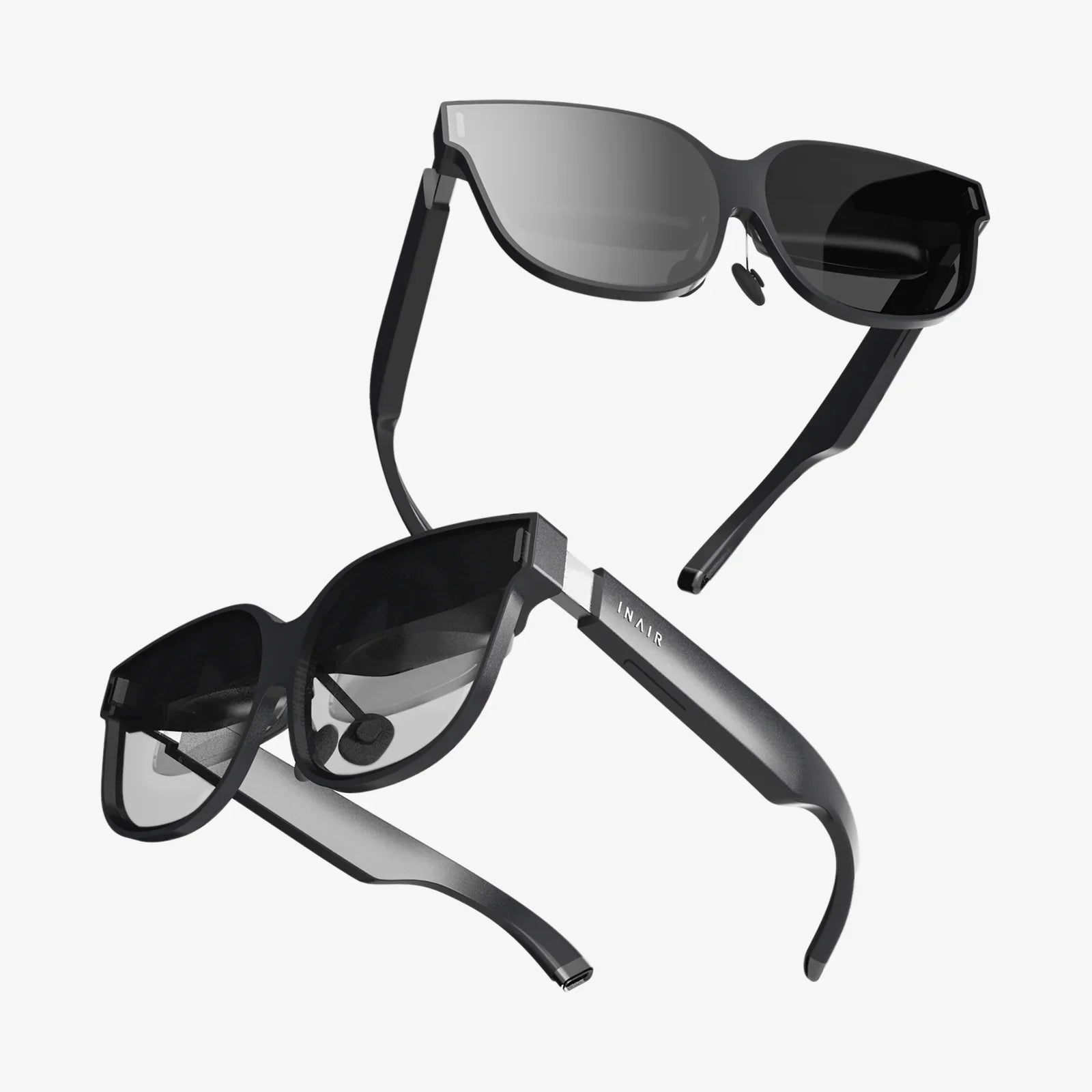
Imagine a world where digital information doesn't confine you to a screen in your hand but instead floats seamlessly in your field of vision, augmenting your reality without isolating you from it. This is the transformative promise of open source smart glasses with display, a technology poised to shatter the wall between our physical and digital lives and redefine how we interact with computing itself. Forget the closed ecosystems and proprietary limitations of mainstream tech; this movement is about community, transparency, and putting the power of augmentation directly into your hands.
The Building Blocks: Deconstructing the Technology
At their core, open source smart glasses are a symphony of miniaturized components working in concert. Understanding these parts is key to appreciating the engineering marvel they represent.
The Optical Engine: Painting Light Onto Reality
The most critical and complex component is the display system, often called the optical engine. This isn't a simple screen; it's a device that projects images directly onto the user's retina or a combiner lens. Several technologies are employed in open source projects, primarily for their compact size and efficiency.
- Micro-OLED Displays: These are incredibly small, high-resolution OLED screens that are then viewed through a series of lenses that magnify the virtual image, making it appear as a large, floating screen in the distance.
- LCoS (Liquid Crystal on Silicon): This technology uses a liquid crystal layer applied to a reflective silicon backplane. It's known for its high resolution and good color saturation, making it a popular choice for many developer kits and hobbyist projects.
- Waveguide Optics: This is the holy grail for sleek, consumer-ready smart glasses. Light from a micro-display is coupled into a thin, transparent piece of glass or plastic (the waveguide). It then travels through the material, bouncing internally until it's directed out towards the eye. This allows for a very thin form factor, much like regular eyeglasses, but the manufacturing complexity is significantly higher.
The Computational Heart: More Than a Simple Microcontroller
Driving the display, processing sensor data, and running applications requires substantial computing power. Many open source glasses utilize powerful Single-Board Computers (SBCs) like those from the Raspberry Pi or similar families. These provide a full Linux environment, ample processing capabilities, and a rich set of GPIO (General-Purpose Input/Output) pins for connecting sensors and peripherals. Some more advanced designs might incorporate specialized FPGAs (Field-Programmable Gate Arrays) for ultra-low-latency video processing or pair with a powerful smartphone to handle the heavy computational lifting.
Sensing the World: The Bridge to Context
For glasses to be "smart," they must understand their environment and the user. This is achieved through a suite of sensors:
- Inertial Measurement Units (IMUs): Combining accelerometers, gyroscopes, and magnetometers, these track head movement and orientation with precision, crucial for stabilizing the displayed image.
- Cameras: One or more cameras enable computer vision applications—from reading QR codes and translating text in real-time to more advanced object recognition and spatial mapping.
- Ambient Light Sensors: These adjust display brightness automatically for comfort and readability in different lighting conditions.
- Microphones and Speakers: Enable voice control and private audio feedback, creating a truly hands-free and immersive experience.
The Power of Open: Why Source Code Freedom Matters
Choosing an open source platform over a closed, commercial product is a conscious decision with profound implications. It’s a choice for a different kind of future.
- Unprecedented Customization and Control: You are not limited to the apps and features a corporation decides to provide. The entire software stack, from the low-level display drivers to the user interface, can be modified, optimized, and completely reinvented. Want a specific gesture to trigger a custom macro? You can build it. Need the display to show data from a proprietary scientific instrument? You can integrate it.
- Transparency, Privacy, and Security: In an era of increasing data surveillance, open source software is inherently auditable. You can see exactly what data is being collected, where it is being sent, and how it is being processed. This allows developers and users to build a trusted platform where privacy isn't just a promise in a terms-of-service agreement but a verifiable fact.
- Collaborative Innovation and Knowledge Sharing: The open source model creates a global community of developers, researchers, and hobbyists. A breakthrough in power management by a developer in Berlin can be implemented by a student in Tokyo the same day. Bugs are found and fixed faster, and the pace of innovation is accelerated by orders of magnitude compared to a closed R&D lab.
- Longevity and Repairability: Closed commercial products often face planned obsolescence. When a company decides to stop supporting a device, it becomes a useless brick. Open source hardware and software ensure that the community can continue to maintain, update, and improve the device indefinitely. Furthermore, having open design files allows for the 3D printing of replacement parts and easier repairs, fighting the tide of electronic waste.
A Universe of Possibilities: Applications Shaped by Users
Freed from corporate roadmaps, the application landscape for open source smart glasses is limited only by the imagination of the community. They are a blank canvas for augmentation.
- Accessibility and Empowerment: Imagine real-time closed captioning for the deaf and hard-of-hearing displayed during conversations or while watching television. Imagine navigation cues for the visually impaired that describe obstacles and provide directional audio or haptic feedback through a connected device. Open source glasses can be tailored to specific needs in ways mass-market products never will.
- Industrial and Professional Use: technicians can have schematics and repair manuals overlaid on the machinery they are fixing. Surgeons can receive vital patient statistics and imaging data without looking away from the operating field. Warehouse workers can see optimal picking routes and inventory information hands-free, drastically improving efficiency and safety.
- Education and Research: Students on a field trip could look at a historical site and see a reconstruction of its ancient past. Chemistry students could visualize complex molecules floating in front of them. Researchers in the field could record notes, tag specimens with virtual markers, and call up relevant data instantly, all while keeping their hands dirty.
- Creative and Artistic Expression: Artists could use the world itself as a canvas, designing AR sculptures and installations viewable only through the glasses. Musicians could have a virtual mixer or sheet music displayed, controllable through gesture or voice.
Navigating the Challenges: The Path Forward
The journey is not without its hurdles. The open source smart glasses community faces significant challenges that must be overcome for wider adoption.
- The Form Factor Conundrum: Balancing performance, battery life, and a socially acceptable, comfortable design is the ultimate challenge. Current DIY projects often resemble safety goggles with exposed wires, a far cry from the sleek aesthetics of everyday eyewear. Miniaturizing the optics and compute components while maintaining thermal performance is a massive engineering feat.
- Power Consumption: Driving a display, multiple sensors, and a powerful computer is incredibly power-intensive. Bulky external battery packs are currently a necessity, limiting usage time and convenience. Breakthroughs in battery technology and ultra-low-power display designs are critically needed.
- Defining the Social Contract: The potential for always-on cameras and facial recognition raises serious questions about privacy and social etiquette. The community must proactively develop and socialize clear norms—like a prominent "recording" light and strict user controls—to ensure this technology is welcomed rather than feared. This is a conversation about consent that extends beyond the user.
- Software and UI Standardization: While diversity is a strength, some level of standardization is needed for mainstream application development. Projects are working on open protocols and APIs to allow apps to run across different open source hardware platforms, creating a larger, more attractive ecosystem for developers.
The true magic of open source smart glasses with display isn't found in any single feature or spec sheet; it's found in the collective imagination of a global community refusing to wait for the future to be delivered to them. They are building it, line of code by line of code, 3D print by 3D print, in workshops, labs, and homes around the world. This is a rebellion against passive consumption, an invitation to not just use technology but to shape it, to mold it to our human needs, and to ensure that the augmented world of tomorrow is built on a foundation of openness, transparency, and boundless possibility. The next time you look at a pair of ordinary glasses, see them not for what they are, but for the universe of information and interaction they could hold—a universe you are empowered to create.
Share:
What's a Digital Interaction? The Unseen Language of the Modern World
AR Glasses 4K Resolution: The Final Frontier for Seamless Digital Overlays