


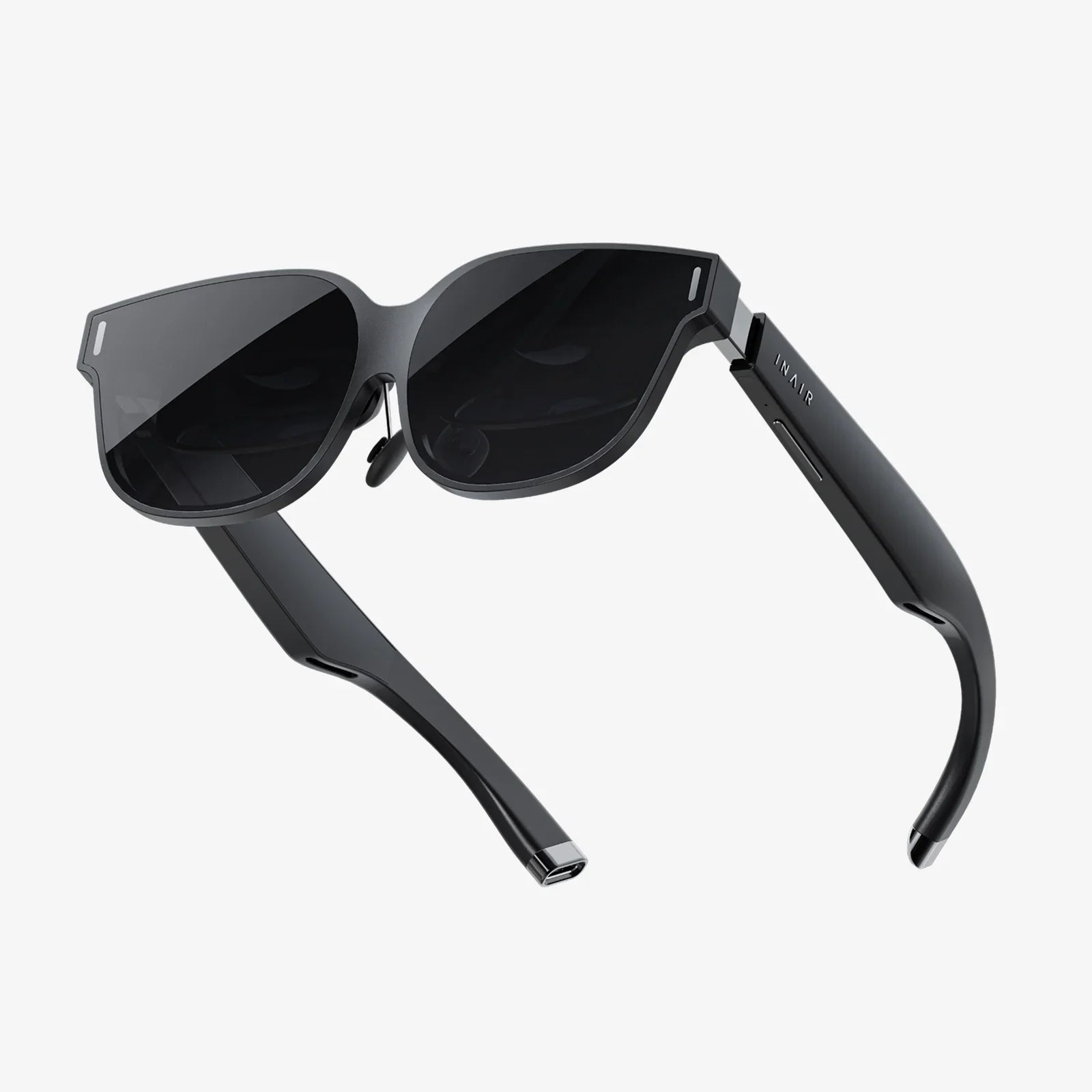
Imagine stepping into a virtual world where your digital identity, your meticulously curated avatar, and your prized virtual possessions aren't locked away in a single corporation's server farm, but are yours to take anywhere across a boundless, interconnected metaverse. This isn't a distant sci-fi fantasy; it's the imminent future being built today through the powerful, paradigm-shifting movement of Open Virtual Reality. This philosophy is breaking the chains of closed ecosystems, promising a revolution in how we create, share, and experience digital reality itself, and it’s a future that belongs to everyone.
Deconstructing the Paradigm: What is Open Virtual Reality?
To understand Open Virtual Reality, one must first recognize what it stands against: the closed, proprietary model. For years, the VR landscape has been dominated by walled gardens. These are ecosystems where hardware, software, and content are tightly controlled by a single entity. Your experiences, your friends list, and your digital purchases are often siloed within that specific platform. What you buy for one headset does not transfer to another; your avatar from one social app cannot visit a world built for a different system.
Open Virtual Reality is the antithesis of this. It is not a single product or a specific piece of hardware. Rather, it is a set of principles, standards, and technologies aimed at creating an interoperable, collaborative, and decentralized landscape for immersive computing. At its core, Open VR champions:
- Interoperability: The ability for different systems, applications, and assets to work together seamlessly. An avatar created in one application should be able to function in another. A virtual item purchased in one world should be displayable in your personal virtual space.
- Standardization: The development of open, royalty-free standards that allow developers to build experiences that are not tied to a single platform. This includes standards for everything from 3D asset formats and networking protocols to input methods and identity management.
- User Agency and Data Portability: Ensuring that users own their data, their identities, and their digital assets. You should be free to move your social graph and your virtual belongings between services without losing them.
- Collaborative Development: Fostering a community-driven approach to innovation, where advancements are shared openly to benefit the entire ecosystem rather than being hoarded as competitive secrets.
This movement is being driven by a coalition of forward-thinking developers, academic institutions, standards bodies, and even some hardware manufacturers who recognize that the true potential of VR will only be unlocked through openness.
The Architects of Openness: Key Technologies and Standards
The vision of an open metaverse is being made tangible through a suite of evolving technologies and protocols. These are the foundational layers upon which a connected virtual reality is being built.
OpenXR: The Universal API
Perhaps the most critical piece of the puzzle is OpenXR, an open, royalty-free standard developed by the Khronos Group. Think of it as a universal translator for VR and AR. Before OpenXR, developers had to write different code for different VR platforms—a time-consuming and expensive process that fragmented the market.
OpenXR provides a common language between VR/AR applications and the myriad of hardware devices, from headsets to motion controllers. An application written to the OpenXR standard can run on any OpenXR-compliant hardware without needing custom porting. This dramatically lowers the barrier for development, encourages software innovation, and ensures users are not limited to a narrow selection of software based on their headset choice. It is the bedrock of hardware-agnostic software development.
WebXR: Democratizing Access through the Browser
If OpenXR is for native applications, WebXR is its web-based counterpart. WebXR is a set of web standards that allows users to experience VR and AR directly through a web browser, without the need to download and install dedicated applications. This is a monumental leap for accessibility and openness.
By leveraging the inherent openness of the web, WebXR allows anyone with a compatible device and browser to instantly access immersive experiences via a simple URL. It eliminates friction, reduces barriers to entry, and empowers creators to distribute their work as easily as sharing a link. It promises a future where experiencing VR is as simple as visiting a website, making immersive content a first-class citizen of the open web.
Decentralized Protocols and the Blockchain
While often associated with cryptocurrency, the underlying technology of blockchain offers powerful tools for Open VR. At its heart, blockchain is a decentralized and immutable ledger—a perfect system for establishing true digital ownership and facilitating trustless transactions.
In an open VR context, blockchain can be used to create non-fungible tokens (NFTs) that represent unique digital assets, from avatars and wearables to virtual land parcels. The key difference from proprietary systems is verifiable ownership. If you own a digital item on a blockchain, you can cryptographically prove you own it, and that ownership is independent of any single company or platform. This enables a robust creator economy where artists can sell their work directly to users, who then own it truly and can use or trade it across compatible virtual worlds. Decentralized identity protocols also allow users to control their single, portable identity across the entire metaverse.
The Ripple Effects: Why Open VR Matters for Everyone
The shift towards Open Virtual Reality is not just a technical footnote; it has profound implications for users, creators, enterprises, and society as a whole.
For Users: Freedom, Choice, and True Ownership
The most direct impact is on the end-user. Open VR means liberation from vendor lock-in. You are no longer making a lifelong commitment to a single ecosystem when you choose a headset. Your investments in software and digital goods are protected and portable. It fosters a competitive market where hardware manufacturers must compete on the quality of their devices and their services, not on the size of their exclusive software library.
It also leads to richer, more diverse experiences. When developers can target the entire market with one application, they can take bigger creative risks and cater to niche audiences. Users benefit from a vast, interconnected web of experiences rather than isolated islands of content.
For Developers and Creators: A Larger Playground
For developers, open standards like OpenXR drastically reduce development time and cost. Instead of building and maintaining multiple versions of an app, they can build once and reach the entire spectrum of VR users. This is particularly empowering for indie developers and small studios who lack the resources to negotiate deals with every major hardware platform.
Furthermore, an open economy built on principles of true digital ownership allows creators to monetize their work in novel ways. A 3D artist can design a garment and sell it directly to users, who can then wear it across multiple social platforms. This creates a vibrant, sustainable, and direct economic loop between creators and their audience.
For Enterprise and Education: Scalability and Collaboration
In enterprise and education, interoperability is not a luxury; it's a necessity. A company training its employees in VR needs solutions that work across different types of hardware and can integrate with existing enterprise software systems. An open VR framework allows for the creation of scalable training simulations, collaborative design environments, and virtual meeting spaces that are accessible to all employees, regardless of their device.
Imagine architects from different firms using different software tools coming together in an open virtual space to collaborate on a single model, or medical students from universities around the world participating in the same virtual anatomy lesson. Open VR tears down the technical barriers to this kind of seamless collaboration.
Navigating the Uncharted: Challenges on the Horizon
The path to a fully open virtual reality is not without significant obstacles. Technical challenges include ensuring low-latency, high-fidelity interactions across diverse networks and devices—a monumental task for networking protocols. Establishing and agreeing upon a vast set of interoperability standards for everything from physics simulation to avatar expression is a slow, complex process requiring unprecedented industry cooperation.
Perhaps the greatest challenges are economic and philosophical. Large corporations with established closed ecosystems have little short-term incentive to cede control and revenue streams. The business models of an open metaverse, based on interoperability and user ownership, are still being explored and proven. Furthermore, issues of privacy, security, and digital governance in a decentralized space are vast and largely unanswered. How do you moderate content across a borderless, interconnected network of worlds? How do you prevent fraud and ensure user safety without a central authority?
The Road Ahead: Building a Connected Future
Despite the challenges, the momentum behind Open Virtual Reality is undeniable. The community is actively building the tools and standards needed. The demand from users and creators for more agency is growing louder. We are moving away from a model of isolated VR arcades and towards a vision of an open metaverse—a constellation of interconnected virtual spaces, much like the websites of the internet, that users can freely traverse.
This future won't be built by a single company but will be assembled by a global community. It will be messy, iterative, and collaborative. It will require a rethinking of old business models and a commitment to putting user agency and creativity at the forefront.
The journey towards Open Virtual Reality is nothing less than a fight for the soul of the next computing platform. It’s a choice between a future of corporate-controlled domains and a vibrant, user-owned digital frontier. The tools are being forged, the standards are being written, and the door is swinging open on a world of limitless possibility—are you ready to step through and claim your place in it?
Share:
Workplace Digital Learning and Training: The Future of Corporate Upskilling
What Do Virtual Reality Headsets Do: A Deep Dive Into Digital Worlds