


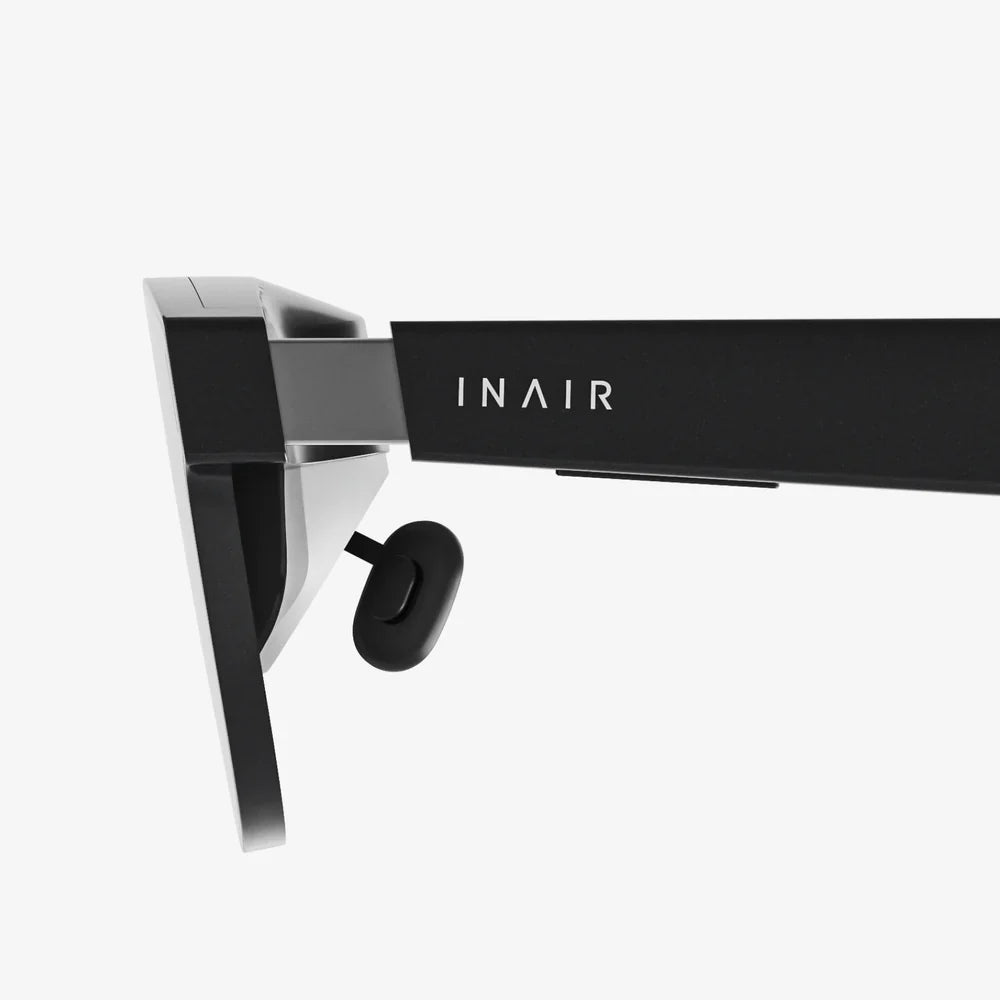
Optical waveguide combiners for AR headsets features and limitations are shaping the next decade of immersive computing, quietly determining whether augmented reality becomes a daily tool or remains a niche curiosity. If you have ever wondered why some AR glasses look sleek while others are bulky, why image quality varies so dramatically, or why truly lightweight all-day AR is still rare, the answer usually comes down to the design tradeoffs inside their waveguide combiners. Understanding these hidden components is the key to understanding the future of AR itself.
At the heart of most see-through augmented reality glasses is an optical system that must do something deceptively simple but technically demanding: inject bright digital imagery into your eyes while still letting you see the real world with as little distortion and discomfort as possible. Optical waveguide combiners are one of the most promising ways to do this, offering a thin, flat, and relatively lightweight method of delivering virtual content directly into the wearer’s field of view. Yet these same devices carry fundamental limitations in brightness, field of view, color, efficiency, and manufacturability that engineers must battle with every product generation.
What Are Optical Waveguide Combiners in AR Headsets?
Optical waveguide combiners are transparent optical elements that guide light from a micro-display into the user’s eye while allowing real-world light to pass through. They act as both a light transport medium and a combiner, overlaying digital images on the real scene. Unlike traditional optical systems based on bulky lenses and mirrors, waveguides are typically thin plates or layers integrated into the lens area of AR glasses.
In an AR headset using waveguide combiners, the basic idea is:
- A micro-display (such as a micro-OLED, micro-LED, or LCoS) generates the digital image.
- Coupling optics inject this light into the edge or surface of the waveguide.
- The light propagates inside the waveguide by total internal reflection.
- Exit structures, such as gratings or holographic elements, redirect the light out toward the user’s eye, forming the virtual image.
The waveguide therefore performs two roles: transporting light across a relatively thin surface and extracting it in a controlled manner to create a wide, stable field of view. This architecture is what enables AR glasses to look more like regular eyewear rather than like miniature VR headsets strapped to your face.
Core Types of Optical Waveguide Combiners
While there are many design variations, most optical waveguide combiners in AR headsets fall into a few main categories, each with its own features and limitations.
Geometric (Bulk) Waveguides
Geometric waveguides rely on total internal reflection in a high-quality glass or plastic substrate. Light is injected at the edge and bounces inside until it encounters extraction features.
Key characteristics:
- Simple concept: Essentially a polished plate with coupling and extraction optics.
- Good optical quality: Can offer relatively low distortion and good transparency.
- Moderate thickness: Typically thicker than some diffractive approaches but still much thinner than traditional optics.
Limitations include challenges in expanding the field of view while keeping the form factor thin and maintaining uniform brightness across the whole image.
Diffractive Waveguides
Diffractive waveguides use surface-relief gratings or similar structures to couple light in and out of the waveguide. These gratings are engineered patterns that bend light by diffraction.
Key characteristics:
- Thin form factor: Can be extremely thin, enabling sleek AR glasses.
- Compact optical path: Allows folding of optical paths, reducing the distance between display and eye.
- Customizable extraction: Gratings can be tailored to control where and how light exits the waveguide.
However, diffractive waveguides also introduce chromatic dispersion (different colors diffract differently), efficiency loss, and potential artifacts such as color fringes or rainbow effects.
Holographic Waveguides
Holographic waveguides use volume holograms or holographic optical elements to manage light. These rely on interference patterns recorded in a photosensitive material, which then diffract light in specific ways.
Key characteristics:
- High design flexibility: Holograms can be engineered to perform complex optical functions in a thin layer.
- Potential for improved efficiency: Carefully optimized holograms can direct more light toward the eye.
- Good integration potential: Can be laminated into lenses or other optical substrates.
The limitations here often involve manufacturing complexity, sensitivity to wavelength and angle, and long-term stability of the holographic materials.
Reflective and Polarization-Based Waveguides
Some designs use partially reflective surfaces, polarization-selective coatings, or combinations of reflective and diffractive elements to guide and extract light.
Key characteristics:
- Can manage polarization: Useful when the display output is polarized.
- Potentially good brightness control: Reflective elements can be tuned for specific angles or polarizations.
- Hybrid architectures: Often combined with other techniques (e.g., reflective plus diffractive).
Limitations include complex optical design, sensitivity to the user’s viewing angle, and potential reduction in see-through quality due to reflective layers.
Key Features of Optical Waveguide Combiners for AR Headsets
The appeal of optical waveguide combiners stems from a set of features that align well with what both consumers and enterprise users expect from AR devices. These features drive their adoption in many modern AR headset designs.
1. Slim, Glasses-Like Form Factor
One of the most attractive features is the ability to integrate the optical system into something that looks and feels like eyewear. Waveguides allow the display light to be routed through thin, flat elements, rather than requiring deep lens stacks.
Benefits include:
- Comfort: Reduced weight and bulk allow longer wear times without fatigue.
- Aesthetics: Devices can be designed to look closer to everyday glasses, important for social acceptability.
- Ergonomics: Better weight distribution across the face and ears, especially when combined with careful mechanical design.
2. See-Through Transparency
Waveguide combiners are designed to be transparent to ambient light, allowing users to see the real world while digital imagery is overlaid. This is essential for true augmented reality, as opposed to fully occlusive virtual reality.
Key aspects:
- High transmission: Good designs maintain a high percentage of real-world light reaching the eyes.
- Low distortion: Minimal warping or aberrations of the real-world view is critical for comfort and task accuracy.
- Neutral color: Ideally, the waveguide does not significantly tint or color-shift the outside world.
When executed well, this transparency makes AR headsets usable for work, navigation, and social interaction without feeling like you are looking through a camera feed.
3. Wide Field of View (FOV) Potential
Field of view is one of the most important perceptual metrics in AR. It defines how large the virtual image appears and how much of your visual field can be augmented at once. Optical waveguide combiners can be engineered to support relatively wide FOVs, though this is one of the hardest challenges they face.
Features related to FOV include:
- Angular expansion: Waveguide gratings or holograms can expand the angular range of the injected light, enabling larger virtual images.
- Binocular coverage: Dual waveguides (one per eye) can create overlapping FOVs for stereoscopic 3D.
- Potential for future growth: As designs improve, FOV can increase without drastically increasing device size.
Although current products typically offer narrower FOV than human vision, waveguides provide a path to gradual improvement while maintaining wearable form factors.
4. Lightweight Optical Architecture
Waveguides replace bulkier lens assemblies with thin substrates, significantly reducing the optical volume and often the weight. This is crucial because AR headsets must be worn on the face for extended periods.
Key benefits:
- Lower mass near the eyes: Reduces pressure on the nose bridge and ears.
- Better balance: Allows designers to distribute remaining components (battery, compute) more evenly.
- Compatibility with prescription lenses: Some designs can integrate or overlay prescription elements.
This lightweight architecture is one of the main reasons waveguides are favored over more traditional optical systems for AR.
5. Design Flexibility and Scalability
Because waveguides are essentially flat optical elements, they offer significant design flexibility:
- Custom shapes: The waveguide can be shaped to fit various frame designs or specialized use cases.
- Multiple eye boxes: Extraction patterns can be engineered to support larger eye boxes, accommodating variations in eye position.
- Integration of additional functions: Waveguides can be combined with coatings for UV protection, anti-reflection, or even embedded sensors and electronics in some advanced concepts.
From a manufacturing perspective, waveguides also lend themselves to batch processing and replication techniques, which can be attractive for scaling production once the designs are mature.
6. Support for 3D and Depth Cues
Although the waveguide itself is primarily a light transport medium, its design influences how depth cues are presented.
Features include:
- Stereoscopic support: Separate waveguides for each eye enable 3D depth perception via parallax.
- Multi-layer or multi-focal designs: Some waveguide systems use multiple layers or focal planes to reduce vergence-accommodation conflict.
- High resolution: When paired with fine-pixel micro-displays, waveguides can deliver detailed imagery that supports realistic depth rendering.
These capabilities make waveguide-based AR suitable for applications like industrial maintenance, medical visualization, and training, where accurate depth perception matters.
Practical Limitations of Optical Waveguide Combiners
Despite their advantages, optical waveguide combiners come with a set of constraints that heavily influence AR headset design. These limitations are not just minor details; they often dictate what is possible in a product generation and where compromises must be made.
1. Limited Field of View
Although waveguides can theoretically support wide FOVs, achieving this in a practical, manufacturable device is difficult. The field of view is constrained by the waveguide geometry, grating design, and the ability to maintain good image quality across the entire area.
Challenges include:
- Edge distortions: As FOV increases, maintaining uniform brightness and sharpness becomes harder.
- Eye box size: A wide FOV combined with a large eye box is especially challenging, as the system must deliver good imagery for many possible eye positions.
- Physical constraints: Very wide FOVs may require larger or thicker waveguides, reducing the sleek form factor.
The result is that many current AR headsets offer relatively modest FOVs compared to human vision or VR headsets, which can limit immersion and the feeling of presence.
2. Light Efficiency and Brightness
Light efficiency is one of the most critical limitations of waveguide combiners. Each step in the optical path—coupling into the waveguide, propagation, and extraction—incurs losses. Diffractive and holographic elements, in particular, can be inefficient, especially when handling multiple colors.
Key impacts:
- High display brightness required: To achieve adequate image brightness at the eye, the micro-display must often be very bright, increasing power consumption and heat.
- Battery life constraints: Higher power draw for the display means shorter usage time or larger batteries.
- Outdoor usability: In bright sunlight, the limited efficiency can make virtual content appear washed out or barely visible.
Improving efficiency is a major focus of waveguide research, but fundamental tradeoffs remain between efficiency, FOV, color performance, and form factor.
3. Color and Chromatic Aberrations
Many waveguide designs, especially diffractive and holographic ones, are inherently wavelength-dependent. This means they treat different colors of light differently, leading to chromatic aberrations and color non-uniformities.
Common issues:
- Color fringing: Edges of objects may show colored halos or rainbow-like artifacts.
- Non-uniform color balance: Colors can shift across the field of view or with eye position.
- Complex multi-color design: Separate gratings or holograms may be needed for red, green, and blue, complicating fabrication.
These color-related limitations can degrade image quality and reduce the sense of realism, especially for applications requiring precise color rendering.
4. Eye Box and Eye Relief Constraints
The eye box is the region in space where the user’s pupil can be located while still seeing the full image. Eye relief is the distance from the last optical surface to the eye. Waveguide combiners often have constrained eye boxes and specific eye relief requirements.
Limitations include:
- Sensitivity to fit: If the headset shifts on the wearer’s face, parts of the image may disappear or appear clipped.
- Compatibility with glasses: Users who wear prescription glasses may have difficulty aligning their eyes with the optimal region.
- Comfort tradeoffs: Increasing eye relief can make the optics more complex or reduce FOV.
Designers must carefully balance these factors to accommodate a wide range of users while preserving image quality and comfort.
5. Visual Artifacts and Image Quality Limits
Optical waveguide combiners can introduce a variety of visual artifacts that affect user experience:
- Ghost images: Unwanted reflections or multiple paths inside the waveguide may create faint duplicate images.
- Non-uniform brightness: Some regions of the field of view may appear brighter or dimmer than others.
- Grain or speckle: Coherent light sources or surface structures can cause grainy or speckled appearance.
- Glare and reflections: External light can reflect off the waveguide surfaces, reducing contrast.
Mitigating these artifacts requires careful optical design, precise manufacturing, and sometimes software compensation. Even then, some residual artifacts are often visible, especially to trained eyes.
6. Manufacturing Complexity and Yield
Producing high-quality optical waveguide combiners at scale is technically demanding. It involves precise control of substrate quality, grating or hologram fabrication, alignment, and lamination, often with tight tolerances.
Key challenges:
- Complex fabrication processes: Techniques such as nano-imprinting, lithography, or holographic recording must be executed with high precision.
- Yield issues: Small defects can ruin optical performance, leading to lower yields and higher costs.
- Environmental stability: Some materials may be sensitive to temperature, humidity, or UV exposure, affecting long-term reliability.
These manufacturing constraints directly influence the price and availability of AR headsets using waveguide combiners, and they slow down the pace at which new designs can reach the market.
7. Prescription and Customization Constraints
Integrating prescription correction into waveguide-based AR glasses is non-trivial. The waveguide itself must maintain precise optical characteristics, so simply shaping it like a traditional corrective lens is not always possible.
Limitations include:
- Separate prescription inserts: Users may need additional inserts placed behind or in front of the waveguide, adding bulk and complexity.
- Restricted lens shapes: The waveguide area may need to remain relatively flat or only mildly curved.
- Customization cost: Individualized optical solutions can be expensive and logistically complex.
For AR to become truly mainstream, solving prescription integration in a cost-effective and user-friendly way remains an important challenge.
Design Tradeoffs: Balancing Features and Limitations
Every AR headset using optical waveguide combiners is a study in tradeoffs. Improving one aspect often worsens another, and the final product reflects the priorities of its target use case.
FOV vs. Efficiency vs. Form Factor
Designers frequently face a three-way tradeoff between field of view, light efficiency, and physical thickness:
- Increasing FOV can require more complex gratings and longer propagation paths, reducing efficiency.
- Improving efficiency may involve limiting the angular range, effectively reducing FOV.
- Maintaining a very thin form factor can constrain both FOV and efficiency.
Different products choose different points in this trade space depending on whether they prioritize immersive visuals, all-day wearability, or battery life.
Image Quality vs. Manufacturing Cost
High-end waveguide designs with sophisticated gratings or holograms can deliver better image quality and fewer artifacts, but they are often harder and more expensive to manufacture.
Tradeoffs include:
- Premium vs. mass-market: Enterprise devices may justify higher costs, while consumer products must hit tight price points.
- Yield optimization: Simplifying designs can improve yields but may reduce performance.
- Material choices: Advanced materials can improve performance but add cost and supply chain complexity.
These economic realities shape which waveguide technologies are viable in different market segments.
Color Performance vs. System Complexity
Achieving vivid, accurate color with waveguide combiners often requires complex multi-layer or multi-grating approaches. This increases design and manufacturing complexity.
Design decisions include:
- Using separate optical paths or gratings for each primary color.
- Accepting some color artifacts in exchange for simpler, cheaper designs.
- Leveraging advanced display technologies and color correction algorithms to compensate for optical limitations.
The resulting color performance has a direct impact on user satisfaction, especially for applications like media consumption or design visualization.
Use Cases Shaped by Waveguide Features and Limitations
The features and limitations of optical waveguide combiners for AR headsets strongly influence which applications are practical today and which remain aspirational.
Enterprise and Industrial AR
In industrial, medical, and field-service scenarios, waveguide-based AR headsets are often used for task guidance, remote assistance, and data visualization.
Why waveguides work well here:
- The slim form factor allows use in constrained or safety-critical environments.
- Modest FOV is acceptable when the primary need is to display text, icons, or simple diagrams.
- Brightness and color limitations are less critical than reliability and comfort.
However, outdoor brightness and ruggedness requirements can push waveguides to their limits, requiring careful system-level design.
Consumer AR and All-Day Wear
For consumer AR glasses aimed at all-day wear, style and comfort are paramount, making waveguides highly attractive. Users want devices that resemble ordinary eyewear, which waveguides can support.
Key influences:
- Limited FOV can be acceptable for notifications, navigation, and light productivity.
- Battery life constraints driven by waveguide efficiency must be carefully managed.
- Prescription integration becomes a major factor for broad adoption.
As waveguide technology improves, consumer AR use cases will expand, but today’s limitations still shape what is feasible in a stylish form factor.
Immersive Entertainment and Gaming
For deeply immersive gaming and entertainment, users expect wide FOV, vivid colors, and high brightness. These expectations are more easily met by bulkier optical systems used in VR headsets than by current waveguide-based AR.
Implications:
- Waveguide AR can support lighter gaming and interactive experiences but may feel constrained compared to VR.
- Hybrid devices that combine AR and VR modes may need to use different optical paths for each mode.
- Future waveguide advances could close this gap, but today’s limitations are significant.
This is why many highly immersive experiences still favor VR, while AR focuses more on utility and contextual information.
Emerging Directions to Overcome Current Limitations
Research and development in optical waveguide combiners is intense, with multiple avenues being explored to push past today’s constraints.
Advanced Gratings and Meta-Optics
New types of gratings, including metasurfaces and sub-wavelength structures, promise better control over light with higher efficiency and reduced chromatic aberrations.
Potential benefits:
- Improved efficiency without sacrificing FOV.
- Better color performance and reduced artifacts.
- Thinner, lighter waveguides with more complex functionality.
These technologies are still maturing, but they represent a promising path forward.
Multi-Layer and Multi-Focal Waveguides
Stacking multiple waveguide layers or creating multi-focal designs can address depth cues and expand FOV, though at the cost of complexity.
Possible advantages:
- More natural depth perception through multiple focal planes.
- Wider FOV by distributing optical tasks across layers.
- Improved eye box by tailoring each layer for different viewing conditions.
The main challenge is integrating these multi-layer systems into a form factor that remains comfortable and manufacturable.
Improved Materials and Coatings
Advances in optical materials and coatings can enhance transparency, reduce reflections, and improve environmental stability.
Key developments include:
- High-index materials that allow more compact designs.
- Durable anti-reflective and anti-smudge coatings for real-world use.
- Materials optimized for specific wavelength ranges or polarization states.
These incremental improvements collectively help waveguides perform better in demanding conditions, including outdoor environments.
System-Level Optimization
Many of the limitations of waveguide combiners can be mitigated at the system level through clever integration of displays, sensors, and software.
Examples include:
- Using high-brightness, high-efficiency micro-displays to compensate for optical losses.
- Employing eye tracking to optimize rendering and brightness only where the user is looking.
- Applying real-time image processing to correct color, distortion, and non-uniformity.
By treating the waveguide as one part of a tightly integrated system, designers can achieve better overall performance than optics alone would suggest.
What These Features and Limitations Mean for the Future of AR
Optical waveguide combiners for AR headsets features and limitations are not just technical details buried in engineering documents; they are the invisible forces shaping how, where, and why augmented reality will be used in the coming years. The slim, transparent, and lightweight nature of waveguides makes them ideal for turning AR from a bulky novelty into something you could realistically wear for hours at a time. At the same time, constraints on field of view, brightness, efficiency, and image quality explain why truly immersive, all-day AR glasses have not yet replaced smartphones or laptops.
As waveguide technologies evolve—through better gratings, smarter materials, multi-layer architectures, and tighter integration with displays and software—the balance between features and limitations will keep shifting. Fields like industrial maintenance, healthcare, logistics, education, and navigation will benefit first, where even today’s constrained FOV and brightness can deliver real value. Consumer AR will follow, as devices become more stylish, more comfortable, and more capable of delivering compelling experiences in varied lighting conditions.
If you are evaluating AR headsets, designing AR applications, or simply trying to understand where spatial computing is headed, paying attention to the details of optical waveguide combiners is one of the most reliable ways to see the future coming. The next breakthrough AR device you put on your face will likely succeed or fail not because of its apps or its processor, but because of the tiny, intricate waveguide hidden inside its lenses—and how well its designers have navigated the powerful features and stubborn limitations that define this pivotal technology.
Share:
latest ar glasses reviews 2025: What Matters Before You Buy
Most Exciting AR Glasses Applications Transforming Daily Life and Work