


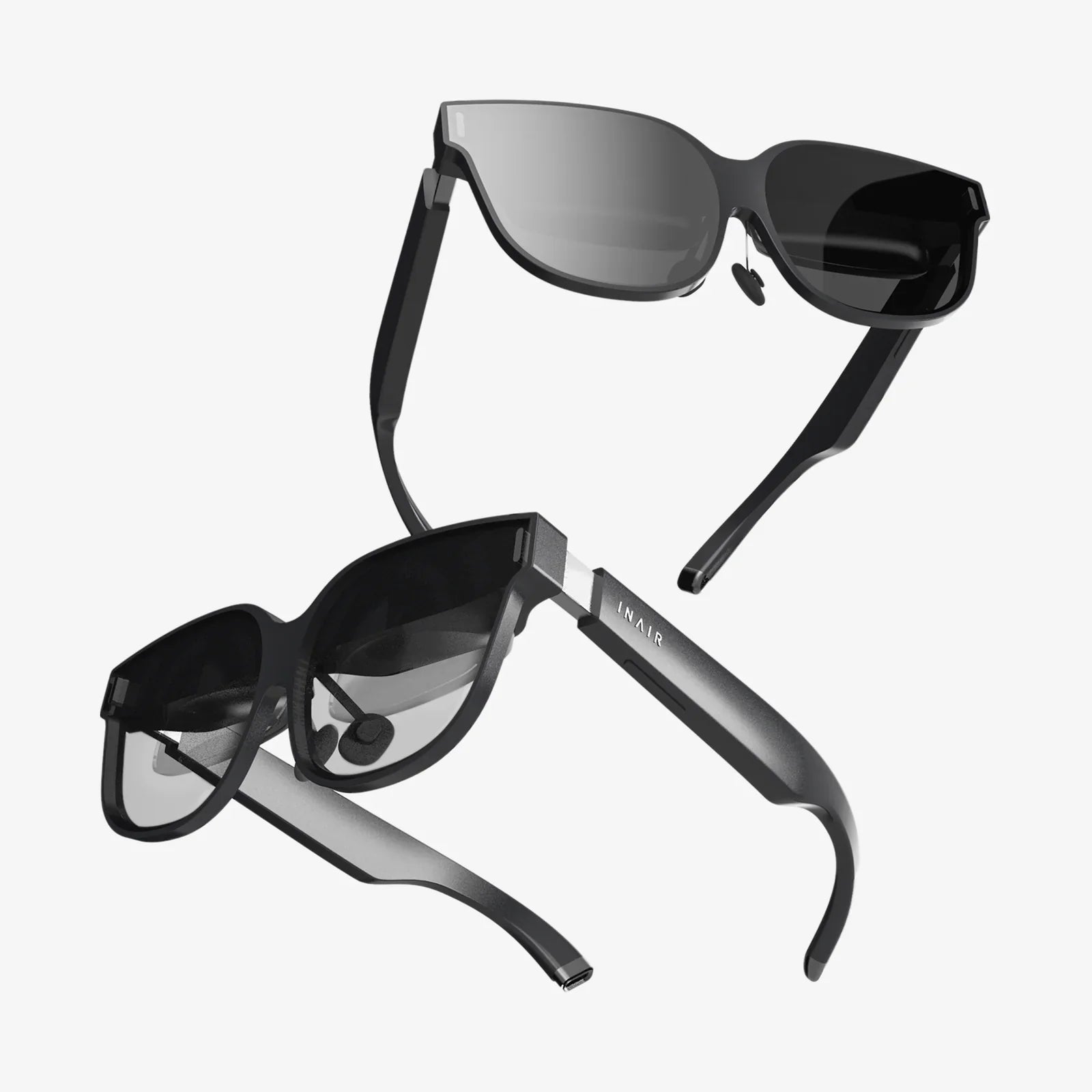
Imagine a world where digital information doesn't just live on a screen but is seamlessly painted onto the fabric of your reality, where holographic instructions float over a complex machine you're repairing, and navigational arrows are laid directly onto the street ahead. This is the promise of augmented reality, a promise made possible by one of the most critical and sophisticated components inside any high-tech AR headset: the optical waveguide combiner. This tiny, often transparent, piece of glass or polymer is the gateway between the digital and the physical, and understanding its features and limitations is key to understanding the future of AR itself.
The Gateway to Mixed Reality: What is an Optical Waveguide Combiner?
At its most fundamental level, an optical waveguide combiner is a flat, planar optical element designed to do two things: transport light from a micro-display source (like a miniature LCD or OLED screen) to the user's eye, and combine that digital image light with the light from the real world. Unlike traditional optics that use bulky lenses and prisms to reflect an image into your eye, waveguides are sleek and can be manufactured to be nearly invisible when not in use, making them ideal for the sleek, glasses-like form factor that is the holy grail of AR design.
The core principle behind a waveguide is total internal reflection (TIR). Light entering the waveguide at a specific angle travels through the substrate, bouncing off its inner surfaces like a high-speed fiber optic cable. To break this contained light path and direct the image toward the eye, waveguide combiners employ intricate optical structures, most commonly diffractive optical elements (DOEs) like surface relief gratings or holographic optical elements (HOEs). These nanoscale structures act like cleverly designed prisms or lenses etched directly into the material, manipulating the light at precisely the right points to create a bright, virtual image that appears to coexist with the real world.
A Deep Dive into the Defining Features of Waveguide Technology
The adoption of waveguide combiners is driven by a suite of compelling features that directly address the challenges of building practical and appealing AR wearables.
Unmatched Form Factor and Aesthetics
This is arguably the most significant advantage. By moving the complex projection optics from a bulky assembly in front of the eye to a thin, flat substrate that can be positioned to the side or above the eye-line, waveguides enable headsets to closely resemble ordinary eyeglasses. This is a critical step toward social acceptance and all-day wearability, moving beyond the niche of dedicated tech enthusiasts and into the mainstream consumer market.
See-Through Clarity and Optical Transparency
A high-quality waveguide offers exceptional transparency, allowing users to see the real world with minimal distortion, color shift, or dimming. This is paramount for safety in applications like navigation or industrial maintenance and for ensuring the digital overlay feels genuinely integrated rather than superimposed on a dimmed view of reality. The combiner itself can be made with very high transmission efficiencies, often above 80%, preserving the natural brightness of the environment.
A Large, Consistent Eyebox
The eyebox is the three-dimensional volume within which a user's eye must be positioned to see the full virtual image. One of the waveguide's key feats is its ability to project a large, stable eyebox from a small input source. This is achieved through the pupil replication property of the in-coupler and out-coupler gratings. A large eyebox is a major usability benefit, as it means users do not need to precisely align the headset on their face or maintain a perfectly rigid head position. It allows for a more comfortable and forgiving experience, accommodating different facial structures and allowing the image to remain visible even during slight movements.
Robustness and Mass Manufacturing Potential
Because they are essentially flat planes of glass or plastic, waveguides are inherently more robust than complex assemblies of delicate lenses and mirrors. They are less susceptible to misalignment from shocks or drops. Furthermore, the manufacturing process, particularly for certain types of diffractive waveguides, is highly compatible with well-established semiconductor fabrication techniques like nanoimprint lithography. This scalability is essential for driving down costs and producing the millions of units required for widespread consumer adoption.
The Inescapable Hurdles: Limitations and Trade-offs
Despite their revolutionary potential, optical waveguide combiners are not a perfect technology. They are governed by the unyielding laws of physics, which impose several significant limitations that engineers continually strive to overcome.
The Eternal Battle: Limited Field of View (FoV)
This is the most frequently cited and perceptually obvious limitation. The field of view defines how large the virtual image appears in your vision. Current waveguide-based AR glasses often have an FoV in the range of 30 to 50 degrees diagonally, which is akin to looking at a large television screen from a few feet away. For context, the human visual system has a horizontal FoV of nearly 180 degrees. A restricted FoV means large virtual objects, like a life-sized person or a wide dashboard, get clipped at the edges, breaking immersion.
The FoV is fundamentally constrained by the physics of diffraction. The equation is simple yet brutal: a larger FoV requires a higher diffraction angle from the grating, which in turn demands a finer grating pitch. There are hard physical limits to how fine these nanostructures can be manufactured and how efficiently they can work at these extreme angles. While techniques like stacking multiple waveguides for different color channels or using polarization-based approaches are being explored, increasing the FoV without compromising other factors like size, weight, or efficiency remains the field's primary challenge.
The Efficiency and Brightness Conundrum
An astonishing amount of light is lost as it travels through a waveguide system. Losses occur at every stage: when light is coupled into the waveguide, as it travels via TIR (especially if the substrate material isn't perfectly clear), and most significantly, when it is coupled out toward the eye. These systems can have total optical efficiencies of just a few percent. This has a direct knock-on effect: it requires the micro-display to be extremely bright to begin with, which consumes more battery power and generates more heat. For use in bright outdoor environments, overcoming these losses to achieve a sufficiently bright image that can compete with the sun is a major engineering hurdle.
The Rainbow Effect: Chromatic Aberration and Color Uniformity
Diffractive optical elements are inherently highly wavelength-dependent. They bend different colors of light (red, green, blue) at slightly different angles. This can lead to a phenomenon often called the "rainbow effect," where a user might see faint color fringes at the edges of white text or objects, especially when looking away from the center of the FoV. Correcting this requires complex designs, such as using multiple layers of gratings—one for each primary color—precisely aligned on top of each other. This multilayer stacking adds immense complexity to the manufacturing process and can exacerbate other issues like weight and cost.
Manufacturing Complexity and High Cost
While the materials themselves (glass, polymer) might be inexpensive, the process of creating the nanoscale features with the required precision, uniformity, and yield is extraordinarily complex and expensive. A single speck of dust or a nanometer-scale defect in the master mold can ruin an entire batch of waveguides. Achieving high manufacturing yield is perhaps the single biggest obstacle to making high-performance waveguide-based AR glasses affordable for the average consumer. The capital investment for the required fabrication equipment is immense, creating a high barrier to entry.
Stray Light and Ghost Images
The intricate grating structures are not perfect. They can cause unintended diffraction orders, leading to artifacts like stray light or faint "ghost" images superimposed on the primary image. These artifacts can reduce contrast and overall image quality, making the virtual content look hazy or less solid. Mitigating these effects requires sophisticated optical design and simulation, further adding to the development complexity.
Beyond the Basics: Advanced Variations and the Road Ahead
The term "waveguide" encompasses a family of technologies, each with its own nuances. Surface Relief Grating (SRG) waveguides, etched using lithography, are known for their robustness and wide FoV potential. Holographic Waveguides use photosensitive materials to record interference patterns and can offer excellent color uniformity and potentially higher efficiency, though they can be more sensitive to environmental factors like heat and humidity. Reflective Waveguides or polarized light approaches use miniature mirrors instead of diffraction, which can avoid some chromatic issues but often result in a thicker form factor.
The future of waveguide combiners lies in innovation at the materials, design, and manufacturing levels. Researchers are exploring new polymer substrates with higher refractive indices and better clarity. Computational design using inverse design software is allowing engineers to create complex, multi-functional grating structures that were previously impossible to conceive. Advances in metasurfaces—flat surfaces covered with nanoscale antennas that can manipulate light in unprecedented ways—hold the promise of overcoming the traditional trade-offs between FoV, size, and efficiency, potentially heralding a new generation of optical combiners altogether.
The journey of the optical waveguide combiner is a testament to the painstaking, incremental progress that defines hardware innovation. It is a technology of elegant compromises, a delicate dance between the desired immersive experience and the immutable constraints of physics. Its evolution will not be marked by a single breakthrough but by a relentless grinding away of its limitations, millimeter by millimeter of FoV gained, percentage point by percentage point of efficiency improved. The companies and research teams that master this balance will be the ones who finally deliver on the decades-old dream of AR glasses for everyone, seamlessly blending our two worlds into one coherent and magnificent whole.
Share:
AI for Anyone: Demystifying and Democratizing the Future of Intelligence
ai automated intelligence And The New Era Of Human Potential