


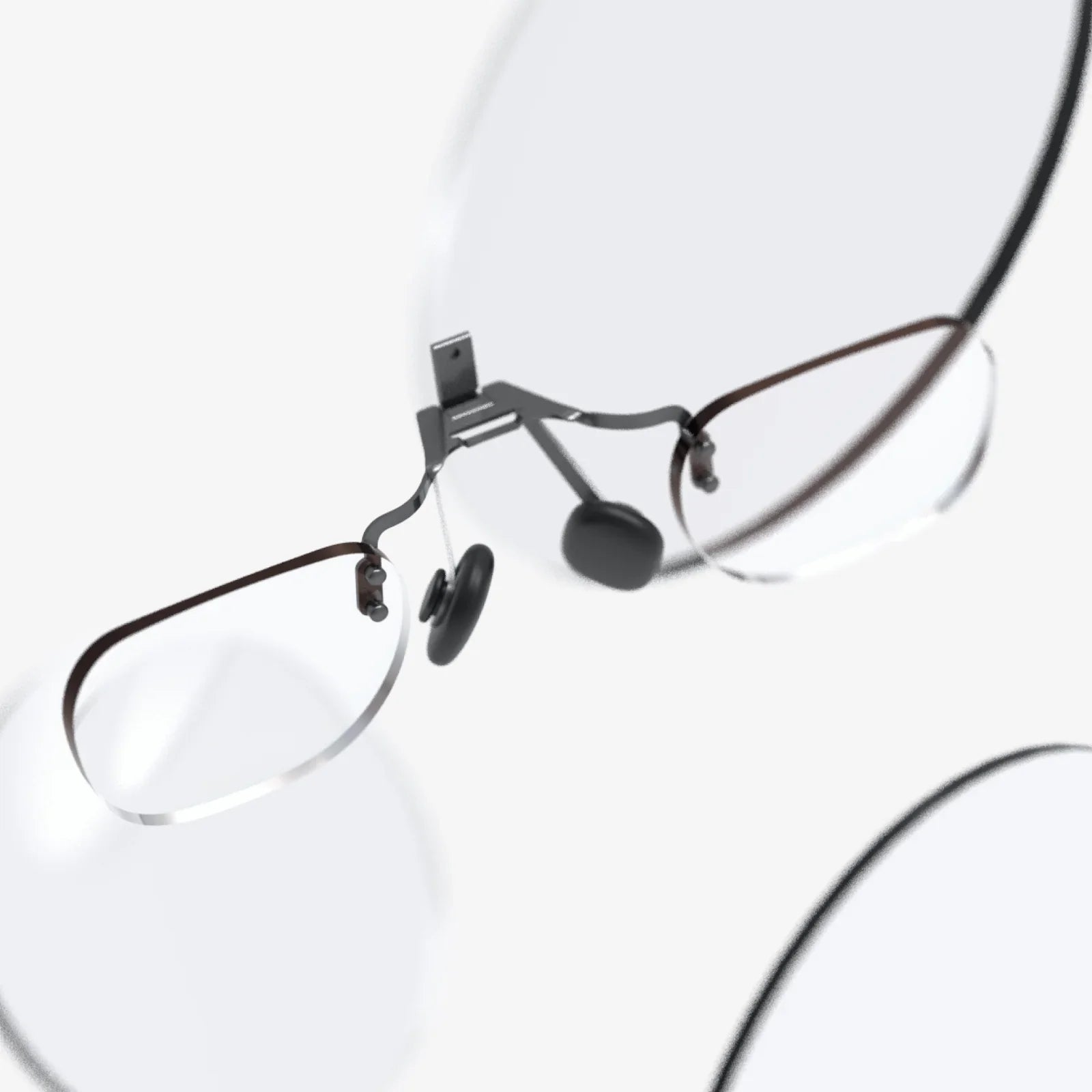
Imagine a world where information flows seamlessly into your field of vision, where language barriers dissolve in real-time, and where your surroundings become an interactive canvas for digital augmentation. This is no longer the stuff of science fiction; it is the burgeoning reality being built by a host of innovative companies developing other AI-powered glasses available on the market today. While one high-profile product has captured the lion's share of media attention, a quiet revolution is happening just outside the spotlight, offering a diverse and fascinating array of alternatives that cater to specific needs, from professional applications to accessibility and discreet personal use. The future of wearable AI is not a monolith, but a spectrum of possibilities, and understanding the landscape of other AI-powered glasses available is key to grasping the true potential of this transformative technology.
Beyond the Hype: Defining the Modern AI-Powered Spectacle
Before delving into the specifics, it's crucial to define what separates this new generation of eyewear from earlier attempts like simple camera glasses or displays that merely projected a basic heads-up display (HUD). The other AI-powered glasses available now are characterized by a sophisticated fusion of hardware and intelligent software. At their core, they are defined by several key components:
- Advanced On-Device AI Processors: Unlike earlier models that relied on a constant, high-bandwidth connection to the cloud, many modern glasses feature dedicated neural processing units (NPUs) or powerful mobile chipsets. This allows for low-latency processing of data directly on the device, enabling real-time translation, object recognition, and audio processing without debilitating lag or the absolute need for a cellular signal.
- Contextual Awareness through Multi-Modal Sensors: These are not just cameras. They are suites of sensors that may include depth sensors, inertial measurement units (IMUs) for tracking head movement, ambient light sensors, and microphones. This multi-modal input allows the AI to understand not just what it is seeing, but the context in which it is being seen, creating a rich, situational understanding of the user's environment.
- Natural Language and Voice Interaction: The primary interface for many of these devices is voice, powered by sophisticated natural language processing (NLP) models. This allows for hands-free operation, enabling users to query information, command actions, or engage in translation through simple, conversational speech.
- Discreet, Purpose-Built Display Technology: The quest for a socially acceptable form factor has led to innovations in waveguide optics, micro-LED projectors, and retinal displays. The goal is to provide clear, contextual information without completely occluding the user's vision or creating a bulky, obtrusive device. Some prioritize a full augmented reality (AR) overlay, while others offer a more subtle notification system or a teleprompter-like monocular display.
This combination of powerful, on-device intelligence and sophisticated sensing is what truly sets the current wave of other AI-powered glasses available apart from their predecessors.
A Spectrum of Form and Function: Categories of AI Glasses
The market for other AI-powered glasses available is not a single category but can be broken down into several distinct segments, each with its own design philosophy and primary use case.
1. The Professional and Enterprise Focus
Perhaps the most mature segment, enterprise-focused glasses are designed to augment the capabilities of workers in fields like manufacturing, logistics, field service, and healthcare. These devices are often ruggedized, with a focus on durability and long battery life. Their AI capabilities are tailored to specific tasks:
- Remote Expert Guidance: A field technician repairing a complex piece of machinery can wear glasses that allow a senior engineer located elsewhere to see their field of view, annotate it with digital arrows and instructions, and guide them through the repair process in real-time.
- Hands-Free Inventory and Inspection: Warehouse workers can use computer vision to instantly identify and locate items, check them against shipping manifests, and update inventory databases using voice commands, all without putting down a box or scanning a barcode.
- Procedural Assistance: In healthcare settings, surgeons or nurses can access patient vitals, procedural checklists, or imaging data without breaking sterility by looking away from the operating field.
For these users, the AI glasses are a productivity tool that reduces errors, speeds up complex tasks, and connects them to a wealth of digital information without compromising their physical workflow.
2. The Translation and Communication Specialists
This category of other AI-powered glasses available is perhaps the most directly impactful for a globalized world. Their primary function is to break down language barriers. Using powerful NLP and speech-to-text/text-to-speech engines, they can provide near real-time transcription and translation of conversations.
Imagine sitting across from someone speaking a language you don't understand. As they speak, subtitles appear in your field of view, translating their words into your native tongue. You respond, and the glasses speak your translated words aloud to the other person, or display them on an external screen. This technology has profound implications for travel, international business, diplomacy, and for communities with hearing impairments, providing a live captioning system for the world.
3. The Lifestyle and Assistive Technology Companions
This is a broad category aimed at consumers, focusing on enhancing daily life, accessibility, and discreet connectivity. The form factors here tend to be the most glasses-like, often designed in collaboration with established eyewear brands to ensure style and comfort.
- Contextual Information and Navigation: Subtle cues about directions, the name of a restaurant you're walking past, or reminders for your next meeting can be displayed without requiring you to pull out a phone.
- Accessibility Features: For individuals with visual impairments, AI glasses can describe scenes, identify currency, read text from menus or documents aloud, and detect obstacles, acting as a powerful assistive tool.
- Content Creation and Memory Capturing: With high-quality cameras and microphones, these glasses offer a first-person perspective for capturing photos and videos, ideal for vloggers, travelers, or anyone who wants to document moments hands-free. The AI can help curate and edit these captures automatically.
These devices prioritize blending into everyday life, offering useful AI-powered features without making the user feel like a cyborg.
The Engine Room: Core AI Capabilities Powering the Experience
The magic of these devices lies in the sophisticated AI models working behind the scenes. The other AI-powered glasses available leverage a combination of cloud-based and on-device AI to deliver their functionalities.
- Computer Vision: This is the foundational capability. AI models are trained on vast datasets to recognize objects, people, text, and environments. This allows for features like real-time translation of street signs, identifying products on a shelf, or describing a painting in a museum.
- Natural Language Processing (NLP) & Automatic Speech Recognition (ASR): This suite of technologies enables the glasses to understand spoken commands, transcribe conversations, and generate spoken responses. Advanced models can understand context, nuance, and different accents, making the interaction feel more natural.
- Augmented Reality Rendering Engines: For glasses with AR displays, this software is responsible for accurately anchoring digital content—whether it's text, 3D models, or arrows—to the physical world, ensuring it doesn't jitter or drift as the user moves their head.
- On-Device Learning and Personalization: The most advanced glasses can learn from user behavior. They might learn your frequent contacts, your preferred routes, or your daily schedule to proactively offer more relevant and contextual information, all while keeping this personal data secure on the device.
Navigating the Minefield: Privacy, Ethics, and Social Acceptance
No discussion about other AI-powered glasses available is complete without addressing the elephant in the room: privacy. The very features that make these devices powerful—always-on cameras and microphones—also make them potentially intrusive.
- The Consent Paradox: Unlike a smartphone camera, which is raised deliberately to take a picture, glasses-mounted cameras can record passively. This raises critical questions about the consent of people who are recorded without their knowledge. Different jurisdictions are grappling with laws regarding one-party versus two-party consent for audio recording, adding a layer of legal complexity.
- Data Security and Ownership: The data collected by these glasses—video, audio, location, and biometric data—is incredibly sensitive. Manufacturers must implement robust encryption, both for data at rest on the device and in transit to the cloud. Clear policies on data ownership, retention, and usage are paramount to building user trust.
- Social Acceptance and "Glasshole" Stigma: Early attempts at smart glasses faced significant social pushback, earning wearers a derogatory nickname. Success for the current generation hinges on discretion, clear social cues (like LED indicators showing when recording is active), and demonstrably useful applications that benefit not just the wearer but those around them, such as real-time translation.
Addressing these concerns transparently is not optional for manufacturers; it is a prerequisite for the widespread adoption of this technology.
The Road Ahead: The Future of Augmented Vision
The current landscape of other AI-powered glasses available is just the beginning. The trajectory of this technology points toward several exciting developments:
- Seamless Biometric Integration: Future iterations could incorporate health sensors to track pulse, blood oxygen levels, or even glucose monitoring non-invasively, turning them into powerful health companions.
- Advanced AR and Spatial Computing: As display technology improves, the line between the digital and physical world will blur further. We will interact with 3D models, holograms, and digital interfaces pinned to our environment as if they were truly there.
- Hyper-Personalized AI Agents: The AI in your glasses will evolve from a reactive tool to a proactive assistant. It will anticipate your needs based on context, schedule, and past behavior, surfacing the right information at the right time without being asked.
- Convergence with the Metaverse: These glasses are the most likely candidate to be the primary interface for a future spatial internet or metaverse, overlaying persistent digital layers onto our physical reality.
The development cycle is accelerating, driven by advancements in semiconductor miniaturization, battery technology, and AI model efficiency. The glasses of tomorrow will be lighter, more powerful, and last longer than anything we see today.
The conversation around wearable AI is often narrowly focused, but the true story is far richer and more diverse. The ecosystem of other AI-powered glasses available represents a fundamental shift in human-computer interaction, moving us away from screens we stare into and towards a world where computing is ambient, contextual, and integrated into our perception. From empowering workers and breaking down language barriers to assisting those with disabilities and capturing life's moments, these devices hold the promise of augmenting human potential in ways we are only beginning to imagine. The eyes may be the window to the soul, but with intelligent augmentation, they are becoming the most powerful portal to the world's information we have ever possessed.
Share:
AI Glasses Online: The Future of Wearable Technology is Here
AI Glasses Online: The Future of Wearable Technology is Here