


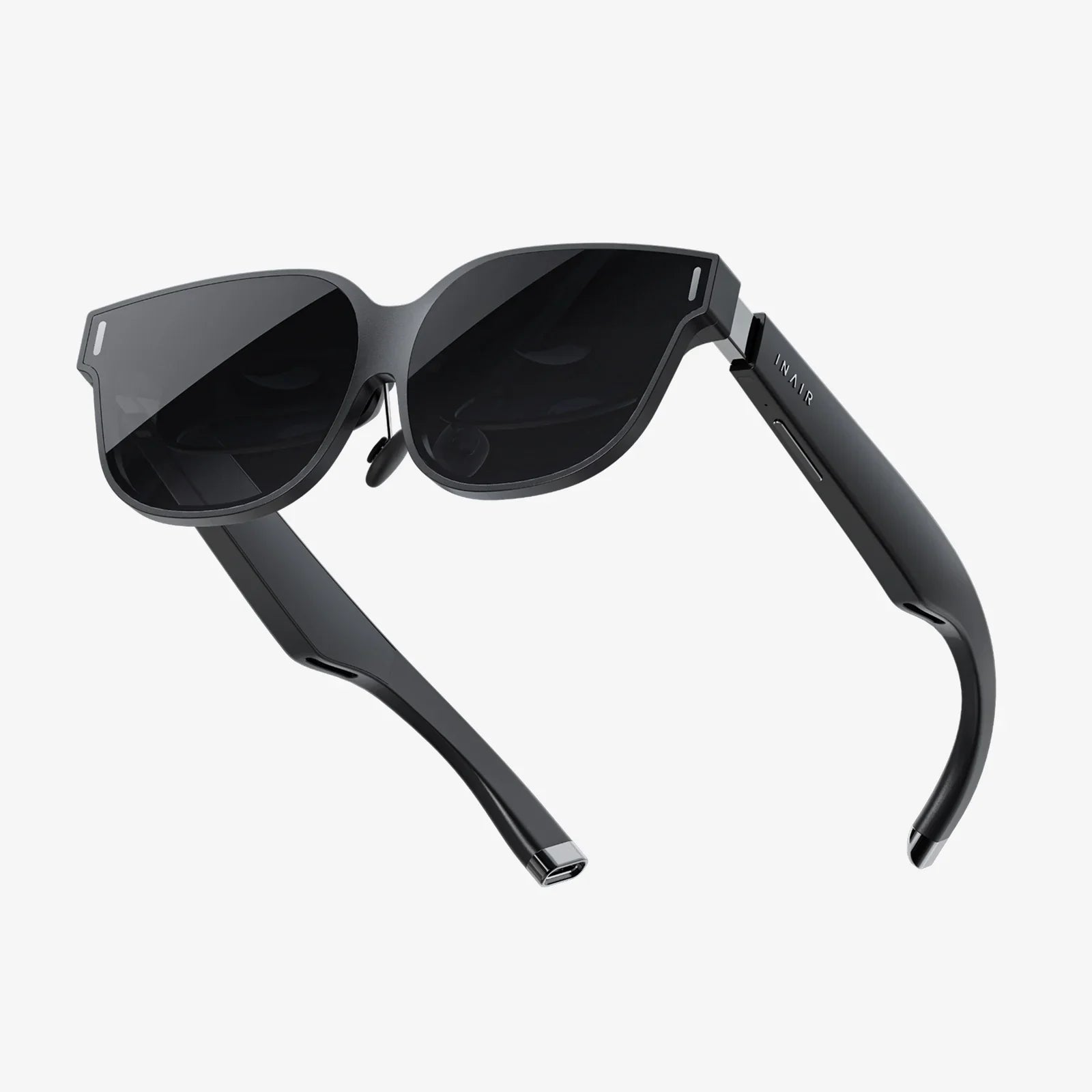
- by wangfred
Overly Augmented Reality: When Digital Enhancement Eclipses Human Experience
- by wangfred
Imagine a world where your every glance is annotated, your every interaction is mediated by a digital layer, and the quiet moments of life are constantly interrupted by a cacophony of notifications and virtual objects. This is not a distant dystopian future; it is the imminent destination on our current trajectory with augmented reality technology. The promise of AR is intoxicating—a seamless blend of the physical and digital that enhances our capabilities and enriches our understanding. But as we race headlong toward this future, a critical question emerges: what happens when augmentation becomes over-augmentation? When the digital layer ceases to be a helpful tool and instead becomes a domineering filter, altering our reality to the point of alienation? This is the frontier of Overly Augmented Reality, a technological paradigm so saturated with data and stimulation that it risks eclipsing the very human experience it seeks to enhance.
The core appeal of augmented reality has always been its potential for seamless integration. The ideal is a technology that feels like a natural extension of our senses, providing information and functionality without obtrusion. Early conceptualizations painted a picture of digital elegance—a subtle arrow guiding your path, a floating name tag above a new acquaintance, a recipe hovering beside mixing bowls. This vision is powerful because it speaks to a desire for effortless efficiency and expanded knowledge.
However, the commercial and technological imperatives driving AR development often push beyond this ideal of subtlety. The drive for engagement, monetization, and feature differentiation creates a powerful incentive to add more: more notifications, more animations, more gamified elements, more sponsored content. The digital layer, intended to be a pristine window, becomes cluttered with the digital equivalent of sticky notes and pop-up ads. This shift from augmented to overly augmented is rarely a conscious design choice but rather a gradual creep, where the value of simplicity is drowned out by the noise of possibility.
The human brain is a magnificent but finite processing machine. Its attentional resources are limited, and its capacity for filtering relevant information from noise is easily overwhelmed. Overly Augmented Reality presents a direct assault on these cognitive limits. Unlike virtual reality, which replaces the world, AR superimposes itself upon it, creating a constant battle for your attention between the physical and the digital.
This leads to a state of continuous partial attention, where we are never fully present in either realm. A walk in the park becomes a hunt for virtual creatures, obscuring the beauty of the actual trees and birds. A conversation with a friend is interrupted by a news bulletin scrolling across their forehead. The cognitive load of processing this dual reality can lead to mental fatigue, decreased productivity, and a heightened state of stress. It fractures our experience, pulling us into a liminal space where we are perpetually distracted, never quite here nor there. The promise of "having everything at your fingertips" morphs into the reality of having everything demanding your focus simultaneously, ultimately leaving you with less.
Human experience is fundamentally tied to memory, and memory is deeply contextual and sensory. The smell of rain on dry earth, the awkward texture of a handmade gift, the unscripted laughter during a failed attempt at a task—these raw, unfiltered moments form the tapestry of our lives. Overly Augmented Reality threatens to insert itself as a permanent mediator of these experiences.
Consider a concert. Instead of feeling the bass vibrate in your chest and getting lost in the crowd's energy, you might be focused on recording the experience through an AR filter that adds digital effects to your view, sharing it live, and checking the virtual profiles of the band members. The experience is no longer direct; it is curated, filtered, and packaged for digital consumption. The memory becomes less about what you felt and more about how you documented it. This mediation creates a layer of abstraction between us and the world, potentially diluting the emotional potency and authenticity of our own lives. We risk becoming tourists in our own reality, more concerned with capturing and annotating the moment than truly living within it.
Perhaps the most insidious aspect of Overly Augmented Reality is its potential as the ultimate advertising platform. If digital content can be anchored to any physical object or location, then every wall, product, and even natural landmark becomes a potential billboard. Your field of vision, once your own, becomes a rentable space.
An overly augmented world could be one where a historical monument is obscured by branded virtual mascots, where a walk down a street involves dodging virtual sales pitches, and where your personal data is used to tailor a relentless, inescapable stream of commercial prompts directly into your eyeballs. This represents a profound colonization of human perception. The line between public space and corporate space dissolves, and the very act of looking at the world becomes a commercial transaction. This hyper-commercialization doesn't just clutter our view; it fundamentally alters the nature of our relationship with our environment, transforming it from a shared commons into a personalized marketplace.
Paradoxically, a technology designed to connect us with more information could lead to greater social isolation. When everyone is inhabiting a heavily customized reality layer, our shared baseline of experience erodes. If I am seeing informational annotations about a political speech and you are seeing comedic parody overlays, are we even watching the same event? Our common ground, the objective reality we used to agree upon as a starting point for dialogue, becomes fragmented.
Furthermore, constant engagement with a digital layer can be a barrier to genuine human connection. Eye contact is broken by glancing at notifications. Conversation lags as one participant interacts with an invisible interface. The shared silence and mutual observation that often form the foundation of deep relationships are filled with digital static. An overly augmented social gathering is not a gathering of people, but a gathering of individuals each interacting with their own personalized digital bubble, physically together but perceptually worlds apart.
This critique is not a Luddite rejection of AR technology itself, which holds immense promise for fields like medicine, engineering, and education. The goal is not to halt progress, but to steer it with intention. The alternative to Overly Augmented Reality is not no augmentation, but thoughtful, deliberate, and human-centric augmentation.
This philosophy prioritizes a few key principles. First, user sovereignty: The individual must have absolute control over the AR layer—what they see, when they see it, and how intrusive it is. It should be a tool that serves the user, not a platform that serves advertisers or developers. Second, contextual awareness: Truly intelligent AR should understand when to be prominent and when to recede. It should recognize a business meeting, a dinner with friends, or a moment of solitude and adjust its intrusiveness accordingly, perhaps by enabling a "do not disturb" mode for reality itself. Finally, design for simplicity: The most powerful augmentations will likely be the most subtle. The focus should be on enhancing understanding and capability with minimal cognitive drain, not on maximizing screen real estate and user engagement time.
The path forward requires a broader conversation that includes not just technologists and entrepreneurs, but also ethicists, psychologists, artists, and the public. We must establish norms and perhaps even regulations that protect our perceptual autonomy and our right to experience an unmediated world. The development of AR is as much a social and philosophical challenge as it is a technical one.
The danger of Overly Augmented Reality is not that it will be too futuristic, but that it will amplify the worst tendencies of our present digital age: the distraction, the commercialization, the isolation, and the performance of life rather than the living of it. It takes the problems of the smartphone—a device we can still put away—and burns them permanently into our visual field.
The ultimate promise of this technology is not to replace reality, but to complement it. To give us x-ray vision to see the wiring in a wall before we drill, not to cover that wall with ads. To translate a foreign menu in real time, not to add cartoon hats to the people around us. To provide a surgeon with vital stats during an operation, not to interrupt her focus. The choice between a useful tool and an overwhelming filter is ours to make. It is a choice about what we value most: the richness of the world as it is, or the endless, exhausting potential of what it could be made to look like. The most important augmentation may be the one that knows when to switch itself off, allowing us to once again experience the profound, unedited, and beautiful weight of the real.
We stand at a crossroads, not between the digital and the physical, but between enhancement and overload. The future of our perception—and by extension, our humanity—depends on the choices we make today. Will we build a world that empowers us, or one that simply overwhelms us? The answer lies in designing technology that knows its place, serving as a quiet whisper of information rather than a constant shout for attention, and ultimately, in our collective courage to sometimes look up and simply see the world, beautifully, tragically, and wonderfully unaugmented.