


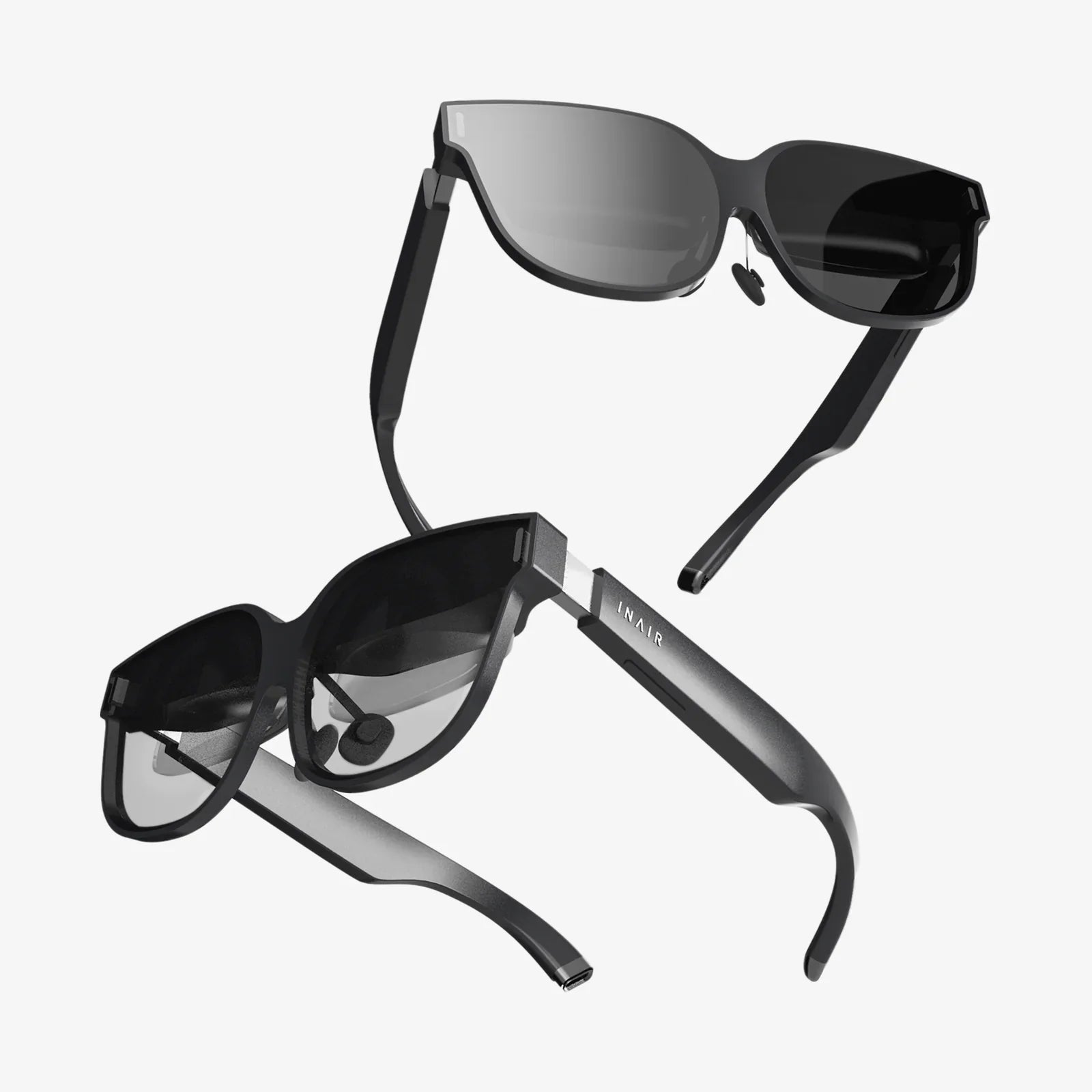
Imagine a world where the boundary between thought and action, between question and answer, between the digital and the physical, becomes so seamless it simply… disappears. This isn't a distant sci-fi fantasy; it's the imminent future being built at the intersection of three powerful forces: the enduring curiosity of people, the transformative potential of transparent glass interfaces, and the profound intelligence of AI. We stand on the precipice of a revolution in how we perceive and interact with reality itself, a shift that promises to redefine human potential while presenting unprecedented challenges to our privacy, autonomy, and understanding of what it means to be human.
The Historical Lens: From Obsidian to Optic Fiber
Our relationship with glass is ancient and deeply symbolic. For millennia, people have used glass not just as a material, but as a medium to alter perception. The earliest obsidian mirrors allowed humans to see their own reflection, fostering self-awareness. The invention of the glass lens revolutionized science and exploration, from Galileo's telescope peering into the cosmos to Leeuwenhoek's microscope revealing a hidden microscopic world. Stained glass windows in cathedrals told stories and filtered light to inspire awe, while the simple window pane connected the indoors with the outdoors, blurring the lines between spaces.
Each advancement in glass technology was, in essence, an advancement in cognitive technology. It extended human senses and augmented human understanding. Today, we are crafting the next chapter in this story. The modern glass interface—thin, durable, and increasingly intelligent—is poised to become the primary canvas upon which our digital lives are painted. It is the substrate that will make artificial intelligence not just something we interact with on a screen, but something we look through and live alongside.
The Pane Becomes The Portal: The New Interface of Reality
The concept of a ubiquitous, transparent display is the key that unlocks AI's integration into our daily lives. Unlike the opaque black rectangles of smartphones and computers, glass offers a paradigm of augmented transparency. It doesn't demand our full attention; instead, it supplements our existing reality. This interface can be your car windshield highlighting navigation cues on the road itself, your kitchen window suggesting recipes based on the ingredients it sees, or your bathroom mirror analyzing your health vitals during your morning routine.
The true magic occurs when this transparent canvas is imbued with artificial intelligence. The AI becomes the invisible engine, the cognitive layer that interprets the world for you.
It processes the vast data streams flowing through the glass—visual, auditory, contextual—and returns only the most crucial, personalized information. It’s not about cluttering your vision with data; it’s about enhancing your perception with insight. For people, this means moving from actively searching for information to passively receiving it in context, a shift from a pull-to-a-push model of knowledge that promises incredible efficiency but also raises questions about agency and algorithmic influence.
The Symbiotic Relationship: People and AI, mediated by Glass
This technology fosters a new kind of symbiosis. The glass serves as a shared sensory organ, the AI as a collective external cortex, and people as the conscious, moral, and experiential heart of the system. Each element compensates for the others' limitations.
- AI compensates for human limitation: It has perfect, instant recall, can process enormous datasets, and identify patterns invisible to the human eye.
- People compensate for AI's limitation: We provide context, nuance, ethical judgment, creativity, and emotional intelligence. An AI might see a person crying, but a human understands the complex emotional reason behind the tears.
- Glass mediates the exchange: It provides the intuitive, non-intrusive medium through which this constant, silent conversation can happen.
This partnership could redefine expertise. A novice mechanic, equipped with smart glasses guided by an AI, could perform complex diagnostics and repairs, with instructions overlaid directly onto the engine. A medical student could practice procedures with anatomical guidance projected onto a simulated patient. The AI amplifies human capability, democratizing skills and knowledge on an unprecedented scale.
The Reflection We Don't Want to See: Privacy, Ethics, and the Black Mirror
However, a future of ubiquitous transparent computing, constantly watching and listening, is fraught with peril. The very thing that makes the technology powerful—its pervasive, always-on nature—is also its greatest threat. The term "people glass ai" begins to sound ominously like a panopticon, a system of perpetual surveillance.
Who owns the data collected through these devices? Is it the user, the manufacturer, or the AI developer? How do we prevent the creation of a permanent digital footprint where every hesitation, every glance, every private moment is recorded, analyzed, and potentially used against us? The potential for misuse by authoritarian regimes, corporations, and even malicious individuals is staggering. It could lead to a world of hyper-targeted manipulation, social scoring, and a complete erosion of personal anonymity.
Furthermore, the AI's role as an interpreter of reality introduces the risk of cognitive bias and manipulation. If an AI is filtering your reality, it holds the power to shape what you see and, by extension, what you believe.
It could create perfectly personalized echo chambers, reinforcing biases and presenting a version of the world that aligns not with objective truth, but with the agendas of its programmers or the patterns in its training data. The "glass" could become a filter that distorts more than it reveals, making true, unbiased perception a rare commodity that people must actively fight to retain.
Redefining Human Connection in an Augmented Age
Beyond privacy, the social implications are profound. Will constant access to an AI assistant degrade our ability to think critically, solve problems, and retain knowledge? If you can instantly access any fact or receive a suggested perfect response in a conversation, does it diminish the value of deep learning and authentic human interaction? We risk outsourcing our cognition and our charisma to an algorithm.
Conversely, this technology could also enhance human connection. Imagine glasses that provide real-time translation, not just of language, but of subtle cultural cues, making cross-cultural communication richer and more empathetic. For individuals with disabilities, the potential is life-changing: applications that describe the world for the visually impaired or transcribe speech for the hearing impaired could foster greater independence and inclusion. The technology itself is neutral; its impact depends entirely on the values and intentions of the people who design and deploy it.
The Looking Glass Self: A New Frontier of Identity
Perhaps the most profound philosophical question this convergence raises is about the nature of the self. Sociologist Charles Cooley coined the term "the looking-glass self" to describe how our identity is shaped by how we believe others perceive us. In a world where an AI is constantly mediating our perception of others and their perception of us, what becomes of this concept?
Will we begin to curate our lives and reactions for the AI's analysis? Will our sense of self become intertwined with the AI's performance metrics and behavioral predictions? The technology offers the potential for incredible self-knowledge through constant biofeedback and behavior tracking, but it also threatens to externalize our identity, making it a data point to be optimized rather than an internal journey to be explored. The challenge for people will be to use these tools for self-augmentation rather than self-abdication, to remain the authors of our own narrative.
Building a Future Worth Seeing Through
Navigating this future requires proactive and thoughtful action. We cannot allow the technology to develop solely driven by market forces and technological possibility. We need robust ethical frameworks and transparent regulations established now, before these devices become ubiquitous. This includes:
- Strong Data Sovereignty Laws: Giving individuals ultimate ownership and control over their personal data.
- Algorithmic Transparency: Mandating auditable and explainable AI systems, so people can understand why an AI is making a specific recommendation.
- Purposeful Design: Encouraging a design philosophy that prioritizes human well-being, augmentation over replacement, and the ability to easily disconnect.
- Digital Literacy Education: Equipping the next generation with the critical thinking skills necessary to navigate an augmented world and question the outputs of AI.
The goal is not to halt progress, but to steer it towards a future that enhances human dignity, autonomy, and connection. The ideal outcome of the people-glass-AI symbiosis is a world where technology gives us more time to be human, not less; where it deepens our understanding of the world and each other, rather than filtering it; and where it amplifies our unique human talents of creativity, compassion, and curiosity.
The clear pane of glass is no longer just a window to the world outside; it is becoming a mirror reflecting our own technological ambitions and a portal to a future we are only beginning to imagine. The fusion of human intuition, a transparent medium, and artificial intelligence is not just changing what we see—it's challenging who we are. The ultimate success of this symbiosis won't be measured in processing power or pixel density, but in its ability to make us feel more connected, more capable, and more profoundly human than ever before. The choice of what we build, and what we become, is still ours to make.
Share:
Best AR Glasses for Office Work: The Ultimate Guide to a Digital Workspace Revolution
Best AR Glasses for Office Work: The Ultimate Guide to a Digital Workspace Revolution