


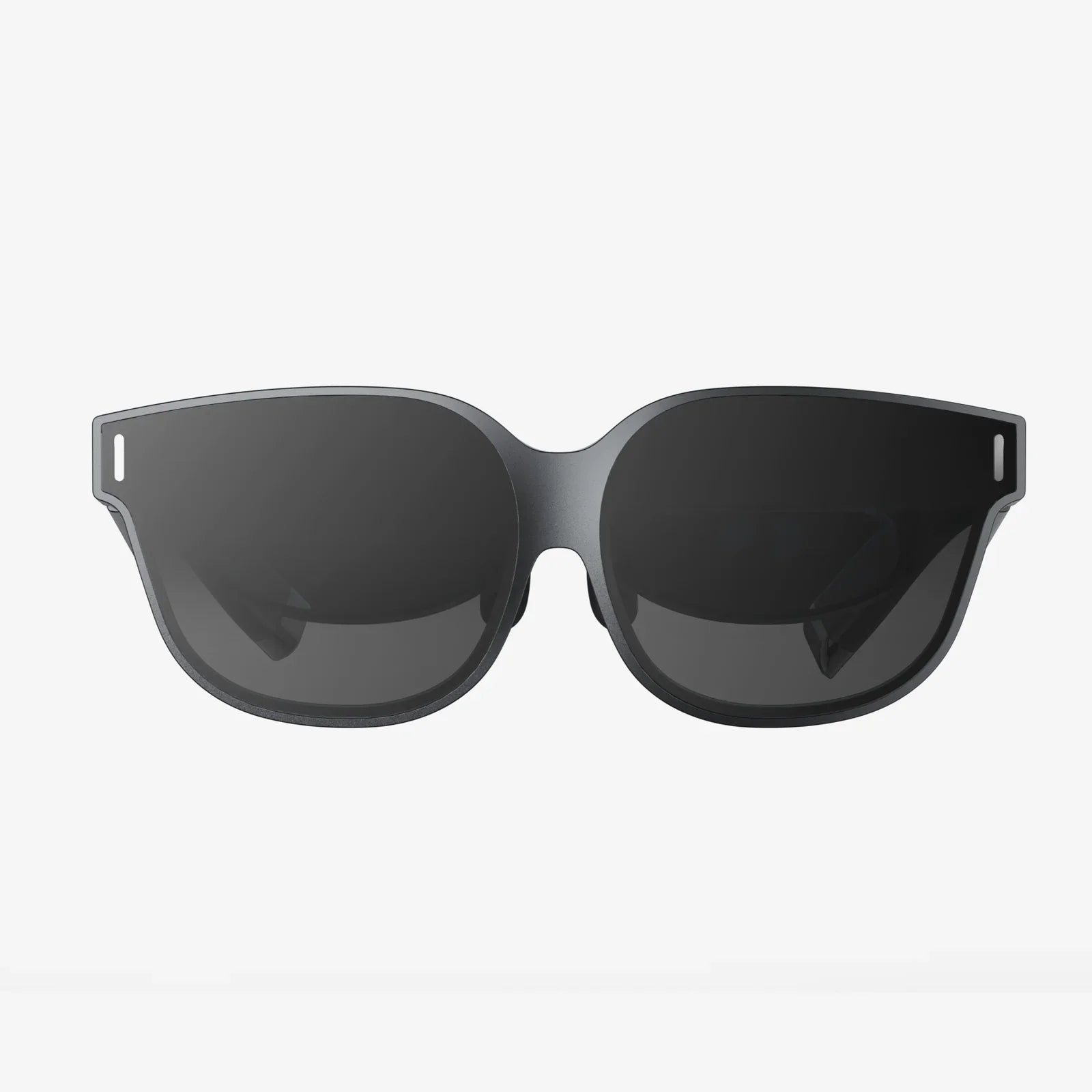
You see them everywhere now—on a commuter train, in a living room, standing in the center of a void—a person wearing a VR headset, seemingly disconnected from the world around them. But what if that headset isn't a tool of isolation, but a portal? A gateway to deeper human connection, profound new experiences, and a fundamental reshaping of how we learn, work, and perceive our own reality? This is the untold story of the people behind the screens, venturing into the great unknown of digital space.
The Silent Observer: A Glimpse into a New Social Paradigm
To the outside observer, a person wearing a VR headset presents a curious, almost alienating sight. Their body is here, but their mind is elsewhere. Their hands gesticulate at nothing; their head tilts to see a view only they can access. It’s easy to dismiss this as the ultimate act of technological solitude, a physical manifestation of being “plugged in” and tuned out. Yet, this superficial reading misses the entire narrative. The person is not alone; they are often profoundly connected, just not to the physical space immediately surrounding them. They are shaking hands with a colleague from Tokyo, high-fiving a friend in London, or looking directly into the eyes of a relative living on another continent. The headset becomes a telepresence device, collapsing geography and creating a shared space that defies physical law.
Beyond the Screen: The Psychology of Immersive Presence
What separates staring at a flat screen from the experience of a person wearing a VR headset? The answer lies in a powerful psychological phenomenon known as “presence.” Presence is the unequivocal sensation of being there. It’s the moment the user’s brain stops registering the headset and the digital artifice and accepts the virtual environment as real. This is not a conscious decision; it's a visceral, subconscious reaction.
This feeling of presence is triggered by a confluence of technological and sensory factors:
- 360-Degree Engagement: Unlike a monitor or television, VR occupies your entire field of view. Wherever you look, the world continues. This eliminates the frame of the screen, the constant reminder that you are an observer.
- Natural Movement and Tracking: When a person wearing a VR headset leans forward to examine a virtual object, their perspective shifts exactly as it would in reality. This 1:1 tracking of movement reinforces the brain’s expectation of how the world should behave.
- Spatial Audio: Sound in high-quality VR doesn’t just come from left and right speakers; it exists in a 3D space. A whisper behind your left ear will sound exactly like that, compelling you to turn your head. This auditory fidelity is a critical pillar of building a believable world.
The implications of presence are staggering. It’s the difference between watching a documentary about climbing Mount Everest and feeling your palms sweat as you look down from a virtual precipice, your body swaying with vertigo. It transforms passive viewing into active experience.
The Empathy Machine: Walking in Another's Shoes
Perhaps the most profound application of this technology is its ability to foster empathy. Narrative nonfiction and journalism have long sought to make us understand the plights of others. VR takes this a monumental step further. It allows you to not just hear about a refugee’s journey, but to sit in their tent in a sprawling camp, listening to the stories of those around you. It can simulate the sensory overload of an individual on the autism spectrum, providing a glimpse into their daily experience.
When a person wearing a VR headset is placed in these carefully constructed scenarios, they aren't just learning facts; they are forming emotional memories. Studies have repeatedly shown that VR experiences lead to significantly higher levels of empathetic response and recall compared to traditional media. The brain, tricked by presence, processes the event less as a story and more as a lived memory. This has powerful potential for education, corporate training, healthcare sensitivity, and breaking down complex social barriers. It becomes a machine not for escape, but for connection and understanding.
The Virtual Workspace: Redefining Collaboration and Productivity
The image of the solitary gamer is being rapidly supplanted by that of the professional using a VR headset for work. The global shift to remote work exposed the limitations of video conferencing—the “Hollywood Squares” grid of faces, the lack of spontaneous interaction, the difficulty in reading body language and social cues. Virtual reality offers a compelling solution.
Imagine a design team spread across four countries. Instead of sharing a screen, they can don headsets and stand around a full-scale, 3D prototype of their new product. They can walk around it, point to specific components, and make adjustments in real-time as if they were all in the same model shop. An architect can walk a client through a building before the foundation is even poured. A medical team can practice a complex procedure on a detailed anatomical model.
These virtual workspaces are more than novelty; they restore the nuanced communication of in-person collaboration. The subtle glance, the pointing finger, the shared space around an object—all are replicated, leading to more intuitive understanding and efficient teamwork. For a person wearing a VR headset, the office is no longer a place, but a space they can enter from anywhere in the world.
The Digital Playground: A New Frontier for Social Connection
On the social front, VR has evolved far beyond simple games. Entire platforms now exist as persistent virtual worlds where people gather. The activities are diverse: attending a live music concert with thousands of other avatars, watching a movie in a virtual theater where you can chat with friends, playing games of pool, or simply sitting around a virtual campfire talking.
This form of connection is qualitatively different from texting or even video calls. The use of expressive avatars, combined with motion-tracked gestures, allows for a rich, embodied form of communication. A friend’s avatar can give you a thumbs-up, slump their shoulders in exasperation, or dance with joy. This physicality, however digital, carries emotional weight. For individuals dealing with social anxiety, physical isolation, or mobility issues, these spaces can be lifelines—places to socialize and build communities on a more level playing field, where the focus is on your chosen identity and personality, not your physical appearance.
The Physiological Impact: The Body in the Virtual Loop
The experience of a person wearing a VR headset is not purely mental; it is intensely physical. The body is an active participant in the virtual contract. This is most evident in the phenomenon of “visually induced motion sickness,” or VR sickness, which occurs when the brain receives conflicting signals from the eyes (which perceive motion) and the vestibular system in the inner ear (which does not feel the corresponding movement).
However, this physical connection also has positive and therapeutic applications. VR is being used extensively in physical therapy and rehabilitation. Patients recovering from strokes or injuries can engage in gamified exercises that make repetitive motions more engaging, accelerating recovery. It’s used for pain management, immersing burn victims in a soothing snowy landscape to distract their brain from agonizing procedures. In psychotherapy, it’s a powerful tool for exposure therapy, allowing individuals to confront phobias like fear of heights or flying in a safe, controlled, and gradual manner.
The body believes the virtual world is real enough to trigger real-world physiological and psychological responses, making it an incredibly powerful tool for healing and improvement.
Navigating the Ethical Landscape: Privacy, Safety, and the Metaverse
As with any transformative technology, the rise of VR brings a host of ethical questions and challenges. The data collected by a VR system is profoundly intimate. It’s not just what you click on; it’s how you move, where you look, how long your gaze lingers on an object, your physiological responses, and even the precise dimensions of your home environment. The potential for misuse of this biometric and behavioral data is a serious concern that demands robust privacy frameworks and ethical guidelines.
Furthermore, the concept of safety expands in virtual spaces. What constitutes harassment when it happens between avatars? How do we prevent virtual “assault” or create safe and inclusive digital environments? As companies race to build interconnected metaverses, these questions of digital citizenship, rights, and governance become critically urgent. The rules for this new frontier are still being written.
The Future Beckons: From Isolation to Integration
The technology itself is on a rapid evolutionary path. Current headsets are becoming smaller, lighter, wireless, and more powerful. Future iterations may resemble sleek sunglasses rather than bulky helmets. The development of haptic gloves and full-body suits will deepen the physical connection, allowing a person wearing a VR headset to feel the texture of a virtual object or the impact of a virtual handshake.
Perhaps the most significant development will be the move towards Augmented Reality (AR) and Mixed Reality (MR), where digital objects are seamlessly overlayed onto the physical world. This won’t be about escaping reality, but about augmenting it—pulling up a virtual screen to work anywhere, leaving digital notes for your family on the kitchen table, or receiving contextual information about the world around you through a pair of stylish glasses. The line between the digital and the physical will blur into a new, hybrid reality.
So the next time you see a person wearing a VR headset, don’t see someone who has checked out. See an explorer. See a surgeon practicing a life-saving technique, a grandparent reading a bedtime story to a grandchild across the ocean, a student walking on the surface of Mars, or a team of engineers building the future. They are not disconnected. They are diving headfirst into the next great medium of human experience, and they are bringing all of us with them, one virtual world at a time.
Share:
Best New VR Headset 2025: A Glimpse Into The Future Of Immersive Technology
How Do I Charge My VR Headset - The Ultimate Power Guide