


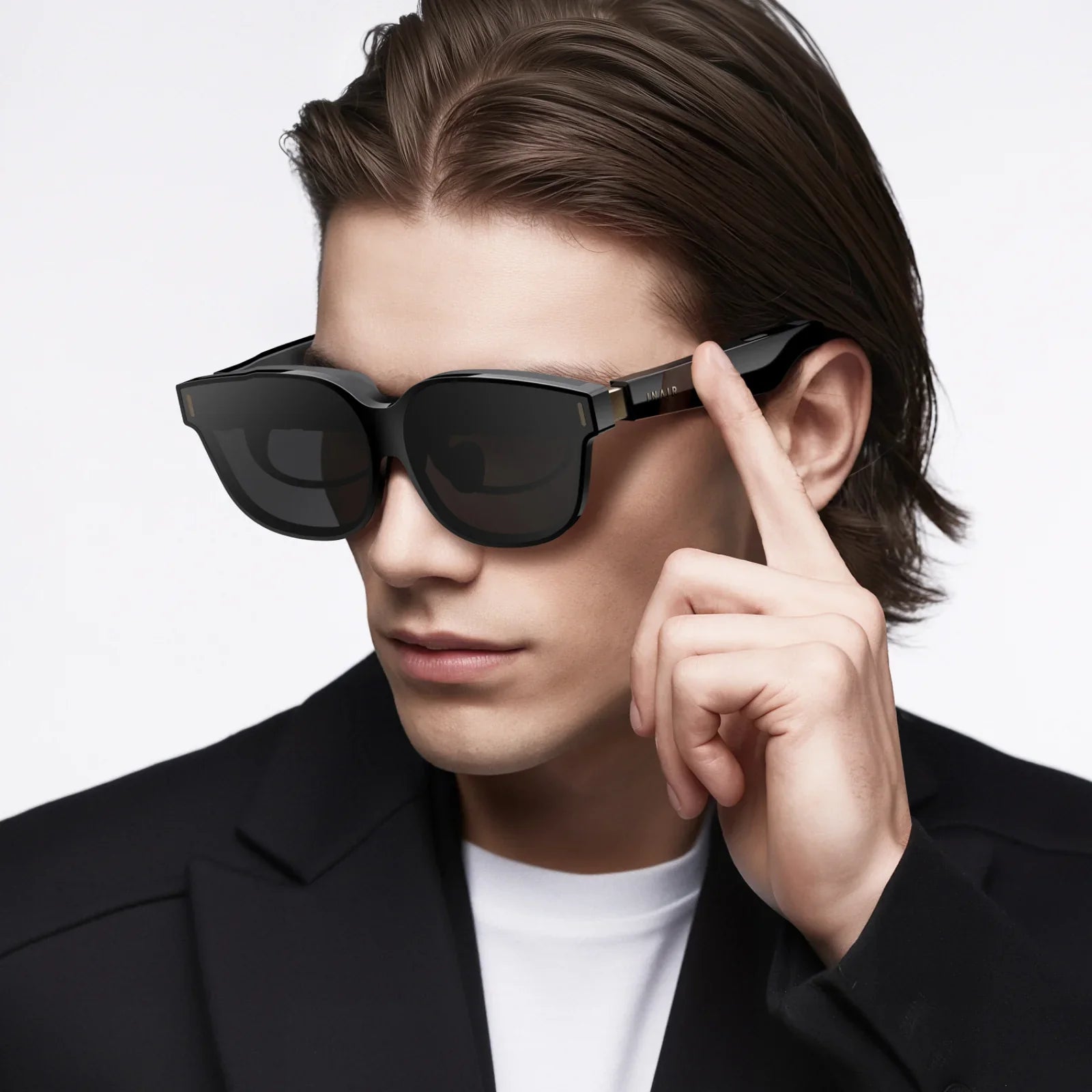
Imagine a world where the line between the digital and the physical doesn't just blur—it vanishes. A world where you can feel the coarse grit of Martian sand between your fingers, smell the petrichor of an alien rainforest after a storm, and share a glance with a historical figure that feels so real it sends a shiver down your spine. This is the tantalizing, almost mythical promise of perfect virtual reality, a concept that has captivated scientists, storytellers, and dreamers for decades. It’s not just about better graphics or more comfortable headsets; it’s the ultimate quest to create an entire existence, a universe of experiences so rich, so convincing, and so profoundly immersive that the real world, for a moment, fades away. The journey to this pinnacle is not a single innovation but a symphony of technological, sensory, and philosophical breakthroughs working in perfect harmony.
The Pillars of Perfection: Beyond the Headset
The common misconception is that perfect VR is solely a visual challenge. While stunning graphics are a crucial component, they are merely the first layer of a deeply complex cake. True perfection rests on several interdependent pillars, each requiring revolutionary advancements.
1. Photorealistic and Beyond Visual Fidelity
The eyes are the primary gateway to immersion. Current systems have made incredible strides, but they still fall short of the brain's uncanny ability to detect artifice. Perfect visual fidelity demands more than just 8K resolution per eye. It requires:
- Dynamic Light Field Rendering: Instead of simulating light on a flat screen, perfect VR would project the light fields that would naturally emanate from a scene, allowing your eyes to focus and refocus naturally on near and far objects, just as they do in reality. This eliminates the vergence-accommodation conflict that can cause eye strain and break immersion.
- Infinite Detail and Scale: Whether examining the microscopic pores on a leaf or gazing at a galaxy swirling overhead, the environment must hold up to infinite scrutiny. This necessitates a move away from traditional polygon-based rendering to more advanced techniques like neural radiance fields (NeRFs) that can capture and display scenes with photorealistic detail from any angle.
- Emotive Avatars and Life-like Characters: The human brain is exquisitely tuned to read facial expressions. Perfect VR requires avatars—both user-controlled and AI-driven—that display the subtle, micro-expressions, eye dilation, and complex muscle movements that convey true emotion and intent. This is the final frontier in defeating the "uncanny valley."
2. The Haptic Horizon: The Illusion of Touch
We experience the world through our skin. To believe we are truly in a virtual space, we must be able to feel it. This goes far beyond the rumble of a controller.
- Full-Body Haptic Suits: Imagine a suit embedded with thousands of micro-actuators that can simulate everything from the gentle pressure of a hand on your shoulder to the sharp impact of a virtual raindrop. It could replicate the texture of rough stone, the resistance of pushing against a heavy object, and the warmth of a virtual sun on your skin.
- Ultra-Precise Neuro-haptic Feedback: The next leap may bypass the skin entirely. By using non-invasive interfaces to stimulate the peripheral nervous system or even the somatosensory cortex, we could trick the brain into feeling sensations that have no physical source, creating the perception of weight, temperature, and texture with unparalleled accuracy.
- Force Feedback and Kinesthetics: Perfect VR must account for the sense of our body in space (proprioception). Advanced exoskeletons or motorized platforms would provide physical resistance, allowing you to lean against a virtual wall and feel it push back, or pick up a heavy virtual object and feel your muscles strain.
3. The Sound of Reality: 3D Audio and Sonic Environments
Sound is arguably as important as sight for immersion. We subconsciously use audio cues to understand our environment. Perfect VR audio must be:
- True 3D and Dynamically Spatial: Beyond surround sound, it must replicate how sound waves interact with the unique shape of your ears (head-related transfer function or HRTF) and the environment. You should be able to hear the difference between a sound in an open field and the same sound in a cramped cathedral, complete with accurate echoes, reverberations, and muffling.
- Contextually Aware: The audio landscape must react to your actions and the environment in real-time. The sound of your footsteps should change from a crunch on gravel to a splash in a puddle without a perceptible delay.
4. The Invisible Interface: Neural Integration and Intuitive Control
Controllers, gloves, and treadmills are intermediaries—constant reminders that you are using a tool. Perfect VR demands an interface that feels like an extension of the self.
- Brain-Computer Interfaces (BCIs): The holy grail. A non-invasive, high-bandwidth BCI would read neural signals to translate intention into action. Want to move your virtual hand? You simply think about moving your hand. This seamless translation would eliminate the learning curve of controllers and make interaction utterly intuitive.
- Biometric Synchronization: The perfect VR system would monitor your vital signs—heart rate, respiration, galvanic skin response—and adapt the experience in real-time. If it detects fear, the environment could become more tense; if it detects curiosity, it might reveal hidden details.
The Philosophical Abyss: What Does "Perfect" Truly Mean?
The technological hurdles, while immense, are ultimately solvable equations. The deeper, more profound challenges of perfect VR are philosophical and ethical in nature.
The Reality Question
If a virtual experience is indistinguishable from a physical one, does it hold the same value? Can a conversation with a perfectly simulated person be as meaningful as one with a real human? This forces us to define what "real" means. Is reality defined by the substrate (atoms vs. bits) or by the qualia—the subjective, internal experience of it? Perfect VR could force a radical shift in our understanding of consciousness and existence.
The Agency Paradox
A perfectly simulated world could be a utopia tailored to our every desire. But without struggle, challenge, or the unexpected, would such an existence be fulfilling? There is a risk that perfect VR becomes a digital opiate, a too-comfortable trap where we escape the messy, unpredictable, and often difficult real world for a curated, flawless illusion. It raises the question: is a perfect illusion a worthy substitute for an imperfect reality?
The Identity Fracture
In a world where you can be anyone or anything, what happens to the core concept of self? If you can live a thousand perfect lives as a hero, a celebrity, or a creature of myth, does your original identity hold meaning? The ability to shed our physical and psychological limitations could lead to incredible personal growth, or it could result in a catastrophic dissociation and a crisis of meaning.
The Ethical Imperative
The power to create perfect realities comes with immense responsibility. Who controls these worlds? How do we prevent them from being used for manipulation, exploitation, or psychological torture? What rights do hyper-realistic AI entities within these worlds possess? Establishing a ethical framework for the creation and use of such technology is not a secondary concern; it is a prerequisite for its development.
The Unseen Engine: AI as the Architect of Dreams
None of this is possible without artificial intelligence acting as the omnipotent dungeon master. AI will be the engine that brings a perfect VR world to life.
- Procedural Generation: AI can generate vast, unique, and explorable worlds on the fly, ensuring that no two experiences are ever exactly the same.
- Responsive Narratives: Instead of following a predetermined script, stories will adapt to your choices, your emotions, and your unique way of interacting with the world, creating a truly personal epic.
- Intelligent Inhabitants: Every character you meet, from the bustling crowd to your closest companion, will be powered by AI so advanced that they possess memory, motivation, and emotional depth, making relationships formed in VR complex and meaningful.
The path to perfect virtual reality is humanity's most audacious engineering project, a moonshot aimed not at a distant rock but at the very core of human perception. It’s a fusion of art and science, requiring us to become masters of light, sound, touch, and ultimately, architects of experience itself. The hurdles are monumental, a tangled web of processing power, material science, and neurological understanding that we are only beginning to unravel. Yet, the destination promises a redefinition of travel, education, art, and social connection on a scale we can scarcely imagine. It promises not just new worlds to explore, but new ways to be. And as the first tremors of this revolution are felt in today's rudimentary headsets, one thing becomes clear: the greatest journey we may ever undertake won't require a rocket. It will require a headset, and the courage to step through the looking glass into a reality of our own making, a reality where every sensation, every emotion, and every moment is meticulously, flawlessly, and perfectly real.
Share:
Difference Between Virtual Reality And Augmented Reality With Examples Explained Clearly
introduction to artificial intelligence ai for curious beginners