


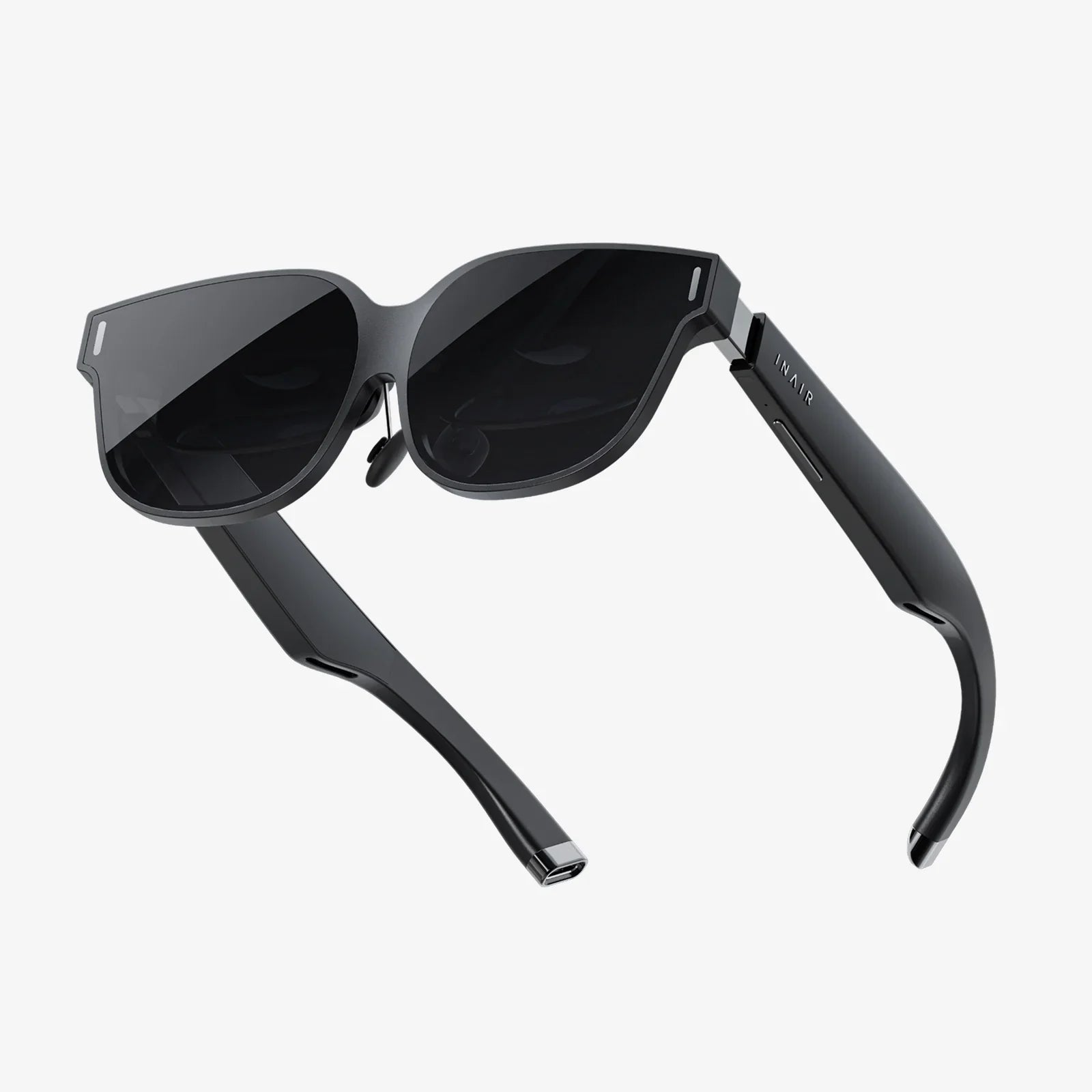
Imagine slipping on a device, no larger than a pair of ski goggles, and instantly being transported. Your living room dissolves, replaced by a front-row seat at a concert thousands of miles away, a meticulous virtual workshop for your latest project, or a breathtaking alien landscape you can explore at your own pace. This is no longer the stuff of science fiction; it is the tangible, awe-inspiring reality offered by the modern personal VR headset. This technology has burst from the confines of research labs and arcades to become a deeply personal gateway to experiences that redefine our very perception of presence, connection, and possibility.
The Architectural Pillars of Immersion
At its core, a personal VR headset is a masterpiece of interdisciplinary engineering, designed to trick the human brain into accepting a digital reality. This illusion, known as immersion, is built upon several critical technological pillars.
Visual Fidelity: The Window to Another World
The primary interface between the user and the virtual world is the visual display. Early headsets were plagued by low resolution and a "screen door effect," where users could discern the gaps between pixels. Today's advancements have all but eliminated this. High-resolution displays, often exceeding 4K equivalent quality, combined with advanced custom lenses, provide a crisp, clear, and expansive field of view. This visual clarity is paramount for maintaining the fragile state of presence—the convincing feeling of actually being in the virtual space.
Precision Tracking: Mapping Your Reality
For the virtual world to feel responsive and real, the headset must understand your position and orientation in physical space with millimetric precision and imperceptible latency. This is achieved through a combination of technologies:
- Inside-Out Tracking: Cameras mounted on the headset itself constantly scan the surrounding environment, tracking its position relative to stationary objects in your room. This eliminates the need for external sensors, making setup effortless and portable.
- Six Degrees of Freedom (6DoF): This is the holy grail of movement tracking. It means the headset tracks not just your head's rotation (looking up, down, left, right) but also its translation in space (leaning side-to-side, moving forward, crouching down). This allows you to physically walk around and inspect virtual objects naturally, a fundamental leap from simpler 3DoF systems.
Auditory Depth: Hearing in 3D
Sound is half the experience. Spatial audio, or 3D audio, technology is what completes the sensory illusion. Instead of stereo sound that simply comes from the left or right, spatial audio algorithms simulate how sound waves interact with the human head and ears. This means a sound behind you will actually seem to come from behind, and a voice from your virtual left will remain consistently from the left even if you turn your head. This auditory cue is incredibly powerful for selling the reality of a virtual space.
The Controllers: Your Virtual Hands
Modern controllers are far more than simple gamepads. They are sophisticated instruments tracked in 3D space, equipped with haptic feedback motors that provide nuanced sensations—from the recoil of a virtual tool to the gentle buzz of a hummingbird's wings in your palm. Finger-tracking technology takes this further, allowing the headset to replicate the precise movements of your individual fingers and thumbs, enabling natural gestures like pointing, waving, or giving a thumbs-up, which makes social interactions profoundly more human and intuitive.
A Universe of Experiences Beyond the Game
While gaming remains a massive driver of adoption, the true potential of a personal VR headset extends into nearly every facet of modern life.
Revolutionizing Social Connection
Video calls are functional, but they lack the warmth and nuance of physical presence. Social VR platforms are creating the next evolution of human connection. Here, you are not a face on a screen; you are a full-bodied avatar in a shared space. You can sit around a virtual campfire with friends from across the globe, making eye contact, using natural gestures, and sharing a sense of place that feels genuine. This has staggering implications for reducing loneliness, maintaining long-distance relationships, and creating communities bound by interest rather than geography.
The Future of Work and Productivity
The concept of the office is being reimagined. Virtual workspaces allow distributed teams to collaborate as if they were in the same room. Architects can walk clients through unbuilt designs at 1:1 scale. Data scientists can stand inside massive, visualized data sets, spotting patterns that would be invisible on a 2D screen. With virtual monitors, anyone can create a perfect, multi-screen workstation anywhere—on a beach, in a hotel room, or in a quiet corner of their home—untethered from physical hardware.
Education and Training Reimagined
Learning becomes experiential and unforgettable in VR. Instead of reading about ancient Rome, history students can walk its streets. Medical students can practice complex surgical procedures on virtual patients without risk. Mechanics can train on the internal systems of a jet engine, taking it apart and reassembling it virtually. This hands-on, immersive learning leads to drastically higher retention rates and a deeper understanding of complex subjects.
Fitness and Wellbeing
The personal VR headset has emerged as a powerful fitness tool. A new genre of "exergames" makes cardio fun by disguising it as rhythm games, boxing, or dungeon crawling. Users often report longer and more enjoyable workout sessions because the focus is on the game, not the exertion. Furthermore, VR is being used for meditation and mental health, guiding users through calming, beautiful environments to practice mindfulness and reduce stress and anxiety.
Navigating the Human Factor: Challenges and Considerations
For all its promise, the path to mainstream adoption of personal VR is not without its hurdles, many of which are deeply human in nature.
Comfort and Accessibility
A headset that is too heavy, too hot, or poorly balanced can break immersion and become uncomfortable over longer sessions. Manufacturers are in a constant battle to use lighter materials, improve weight distribution, and enhance ventilation. Furthermore, a significant portion of the population experiences VR motion sickness, often caused by a disconnect between visual movement and the inner ear's sense of stillness. Advances in software techniques, like vignetting during movement and higher, more stable frame rates, are helping to mitigate this issue.
The Social and Psychological Dimension
As we spend more time in rich virtual worlds, questions arise about our relationship with physical reality. Could we become disconnected from our actual surroundings and relationships? Furthermore, the concept of the "metaverse" brings up critical issues of digital identity, privacy, and data security. The rules and ethics for these new digital frontiers are still being written, requiring careful consideration from developers, policymakers, and users alike.
The Economic Barrier
While prices have fallen dramatically, a high-quality personal VR headset, coupled with the powerful computing hardware often required to run it, still represents a significant investment. This creates an economic barrier to entry. The industry is addressing this through more all-in-one, self-contained devices that require no external computer, making the technology more accessible to a wider audience.
The Next Frontier: Where Do We Go From Here?
The current state of VR is impressive, but it is merely the foundation for a future that borders on the magical. Several key technologies are poised to shatter the remaining barriers between ourselves and the virtual.
Photorealistic Avatars and Eye Tracking
The future of social interaction lies in avatars that are not cartoonish representations but photorealistic mirrors of ourselves. This is being enabled by advanced inward-facing cameras and sensors that map our facial expressions and eye movements in real-time. The ability to make genuine eye contact and see a friend's authentic smile in VR will be a quantum leap for emotional connection, making virtual interactions indistinguishable from real ones in their emotional weight.
Haptics: The Sense of Touch
The next great frontier is incorporating the sense of touch. Research into haptic gloves, vests, and even full-body suits is advancing rapidly. Imagine feeling the texture of a virtual sculpture, the resistance of a virtual bowstring, or the impact of a virtual raindrop. This sensory feedback will complete the illusion, making digital objects feel tangibly real and deepening immersion to levels we can scarcely imagine today.
Brain-Computer Interfaces (BCI)
Looking even further ahead, the ultimate interface may be no interface at all. Early-stage research into BCI aims to allow users to control virtual environments through thought alone. This could lead to experiences where creating a virtual object is as simple as imagining it, or moving through a space requires only the intention to move, creating a seamless and truly magical fusion of mind and digital reality.
The journey of the personal VR headset is a story of technology ceasing to be a tool and becoming an experience. It is evolving from a novelty into a utility, from a gaming peripheral into a fundamental platform for work, learning, and human connection. It challenges our definitions of reality and presence, offering not an escape from our world, but an infinite expansion of it. The headset is no longer just a piece of hardware you own; it is a passport you wear, granting you immediate access to any reality you can dream of. The door is open, and the worlds inside are waiting.
Share:
How to Know If VR Headset Is Charging: The Ultimate Guide to Power Status and Troubleshooting
VR Headset iPhone 12 Mini: The Ultimate Guide to Mobile Virtual Reality