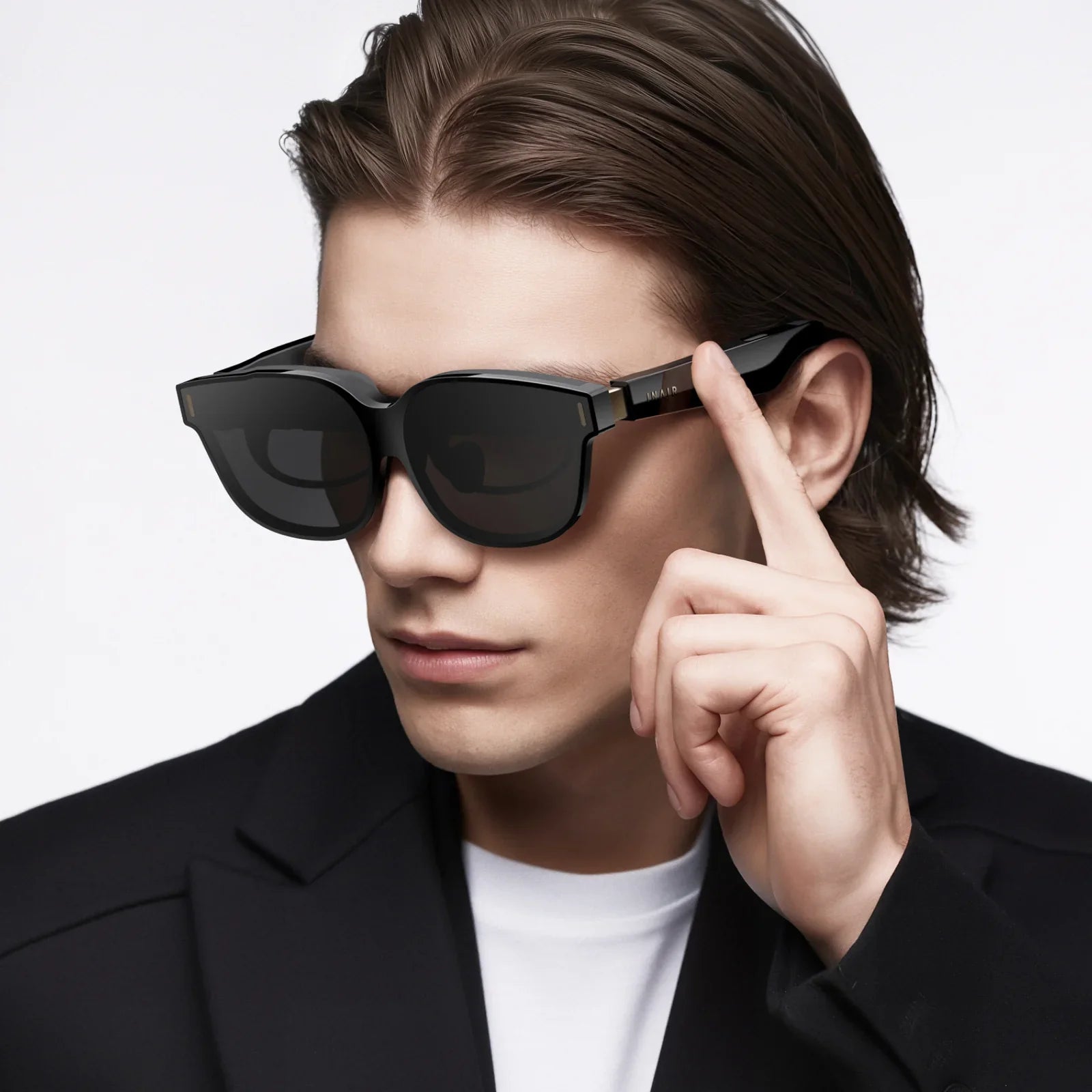
Imagine slipping on a headset that knows you—not just your name or your preferences, but the unique contours of your face, the precise way your eyes focus, and even your biometric responses to digital worlds. This isn't a scene from a sci-fi film; it's the emerging reality of personalized VR goggles, a technological leap poised to shatter the final barriers between human and machine, between the physical and the virtual. The one-size-fits-all approach to virtual reality is becoming a relic of the past, and the era of hyper-individualized digital immersion is dawning. For anyone who has ever experienced the discomfort of a bulky, ill-fitting headset or the eye strain of misaligned lenses, the promise of a device crafted exclusively for you is nothing short of revolutionary. This is the next frontier, and it's arriving faster than we think.
The Limitations of the Standardized Experience
For years, the virtual reality industry has operated on a fundamental compromise. To make the technology accessible and mass-producible, manufacturers created headsets designed for the "average" user. This approach, while successful in bringing VR to a wider audience, came with significant drawbacks that hindered true immersion and comfort.
The most immediate issue is physical discomfort. A headset that is too heavy, exerts pressure on the wrong parts of the face, or doesn't balance correctly can cause pain and fatigue within minutes, pulling the user out of the experience. Standardized facial interfaces and straps cannot account for the vast diversity in head shapes, nose bridge heights, and cranial sizes across the global population.
Beyond mere comfort lies the critical challenge of visual clarity and performance. The optical systems in most headsets have fixed lenses with a single, pre-determined "sweet spot" for focus. Users must manually adjust the interpupillary distance (IPD)—the space between their pupils—to try and align their eyes with this sweet spot. For those whose IPD falls outside the standard range, or who have significant astigmatism or other visual impairments, achieving a perfectly clear and comfortable image is often impossible. This results in eye strain, headaches, and a sub-par visual experience that can never be truly sharp or immersive.
Finally, there is the issue of experiential uniformity. In a standardized headset, everyone sees and hears the same thing in the same way. The digital world is static, unaware of the individual perceiving it. This ignores our fundamental human differences in perception, preference, and even physiological response. The future of VR isn't just about seeing a virtual world; it's about feeling like you truly belong within it.
The Pillars of Personalization: From Hardware to Software
Personalized VR goggles address these limitations through a multi-faceted approach, integrating advancements in hardware, software, and data analytics to create a seamless and unique user experience. This personalization operates on several key levels.
Biometric and Anthropometric Customization
The most tangible form of personalization begins with the physical form of the headset itself. Using advanced scanning technology, often through a companion smartphone app, companies can create a precise 3D map of a user's face and head. This data is then used to manufacture custom components that fit like a glove.
-
Custom Facial Interfaces: Foam or silicone interfaces are tailored to the exact contours of the user's cheekbones, brow, and nose bridge, eliminating light bleed and distributing weight evenly to maximize comfort during extended use.
-
Personalized Head Straps: Straps can be designed to wrap perfectly around the user's unique cranial shape, ensuring a secure yet comfortable fit that doesn't cause pressure points.
-
Bespoke Optics: This is the holy grail of visual personalization. Instead of manually adjusting IPD, a system could use motorized lenses that automatically calibrate to the user's exact IPD measurement. Looking further ahead, wavefront technology could be used to create lenses that correct for the user's specific prescription—myopia, hyperopia, astigmatism—effectively making the headset a pair of perfect digital glasses, freeing users from the need to wear their own eyewear inside VR.
Cognitive and Experiential Adaptation
Hardware is only half the story. The true magic of personalized VR lies in software that adapts to the user's behavior, preferences, and even physiological state.
-
AI-Driven Content Curation: Much like streaming algorithms learn your viewing habits, VR systems can learn what types of experiences you enjoy. Do you prefer intense, narrative-driven games or calm, meditative environments? The system can prioritize content and make recommendations tailored to your psychological profile.
-
Biometric Feedback Integration: Built-in sensors can monitor rudimentary biometric data such as pupil dilation, blink rate, and heart rate. This data can be used in real-time to adapt an experience. If a horror game detects a user's heart rate is skyrocketing and their pupils are dilated, it might subtly reduce the intensity to avoid overwhelming them. Conversely, a fitness app could push harder if it senses the user isn't being challenged enough.
-
Performance Optimization: The system can learn a user's behavioral patterns to reduce latency and pre-load assets, ensuring a perfectly smooth experience tailored to their specific usage, thus minimizing the risk of motion sickness.
Avatar and Identity Representation
Personalization extends into how users represent themselves in the virtual space. Photorealistic avatar creation tools using phone scans allow users to craft a digital double that is instantly recognizable as them. This fosters a deeper sense of presence and embodiment, making social interactions in virtual spaces like meetings or concerts feel more genuine and connected.
The Technology Making It Possible
The shift toward personalized VR is being fueled by a convergence of several cutting-edge technologies.
-
3D Scanning and Photogrammetry: Affordable and accurate 3D scanning via smartphone cameras is the entry point for capturing a user's physical data.
-
Additive Manufacturing (3D Printing): 3D printing is the key to economically producing custom-fit components like facial interfaces and straps without the need for expensive molds or mass production lines. It enables on-demand, made-to-order manufacturing.
-
Artificial Intelligence and Machine Learning: AI algorithms are essential for processing the vast amounts of biometric and behavioral data collected, identifying patterns, and making real-time adjustments to the software experience.
-
Advanced Sensor Integration: The miniaturization of high-quality sensors—from eye-tracking cameras to heart rate monitors—allows them to be embedded discreetly within the headset itself, providing a constant stream of user data.
Implications Across Industries: Beyond Gaming
While gaming will undoubtedly benefit, the impact of personalized VR goggles will ripple across nearly every sector.
-
Healthcare and Therapy: Therapists could use biometric feedback from a headset to monitor a patient's anxiety levels during exposure therapy for phobias. Surgeons could practice complex procedures on virtual patients using a headset calibrated to their exact visual prescription and hand tremor, increasing precision.
-
Enterprise and Remote Work: In virtual meetings, a comfortable, all-day headset that eliminates eye strain becomes a viable productivity tool. Custom avatars can make remote collaboration feel more personal and engaging than a grid of video calls.
-
Education: A student struggling to focus could have their environment subtly adapted to minimize distractions. A headset that corrects for a child's vision impairment could ensure they never miss a detail in an immersive history lesson.
-
Accessibility: This is perhaps the most profound application. Personalized VR can open up digital worlds for people with disabilities. Custom interfaces can be designed for those who cannot wear standard headsets, and adaptive software can tailor experiences for a wide range of physical and cognitive abilities.
Navigating the Challenges: Privacy, Cost, and Ethics
The path to personalized VR is not without its significant hurdles. The very data that enables this deep customization also raises serious questions.
Data Privacy and Security: Personalized VR headsets will collect the most intimate dataset ever assembled by a consumer device: a precise 3D model of your face, detailed biometric readings of your emotional and physical state, and a record of your behavior and attention inside virtual spaces. Who owns this data? How is it stored and secured? Could it be used for targeted advertising or, more worryingly, manipulation? Robust, transparent data governance frameworks will be non-negotiable for this technology to gain public trust.
Cost and Accessibility: Initially, bespoke hardware and advanced sensors will command a premium price. The industry must navigate how to bring these innovations to market without making them exclusive to a wealthy few. A tiered approach, with software-based personalization available on more affordable hardware, may be a necessary stepping stone.
Psychological and Ethical Considerations: As experiences become hyper-personalized and increasingly compelling, the line between reality and virtuality may blur for some users. The potential for addiction or for using these tailored experiences as a means of escapism from real-world problems is a concern that developers and society will need to address thoughtfully.
The journey toward truly personalized virtual reality is a complex one, filled with both incredible potential and formidable challenges. It represents a fundamental shift from creating worlds for us to experience to creating experiences that are uniquely, intimately ours. It moves us from being mere visitors in the digital realm to becoming native inhabitants, with gear that is designed not for a population, but for a person. The headset is evolving from a window into another world into a mirror, reflecting and enhancing our own individuality. The age of one-size-fits-all is over; the future of immersion is you.