


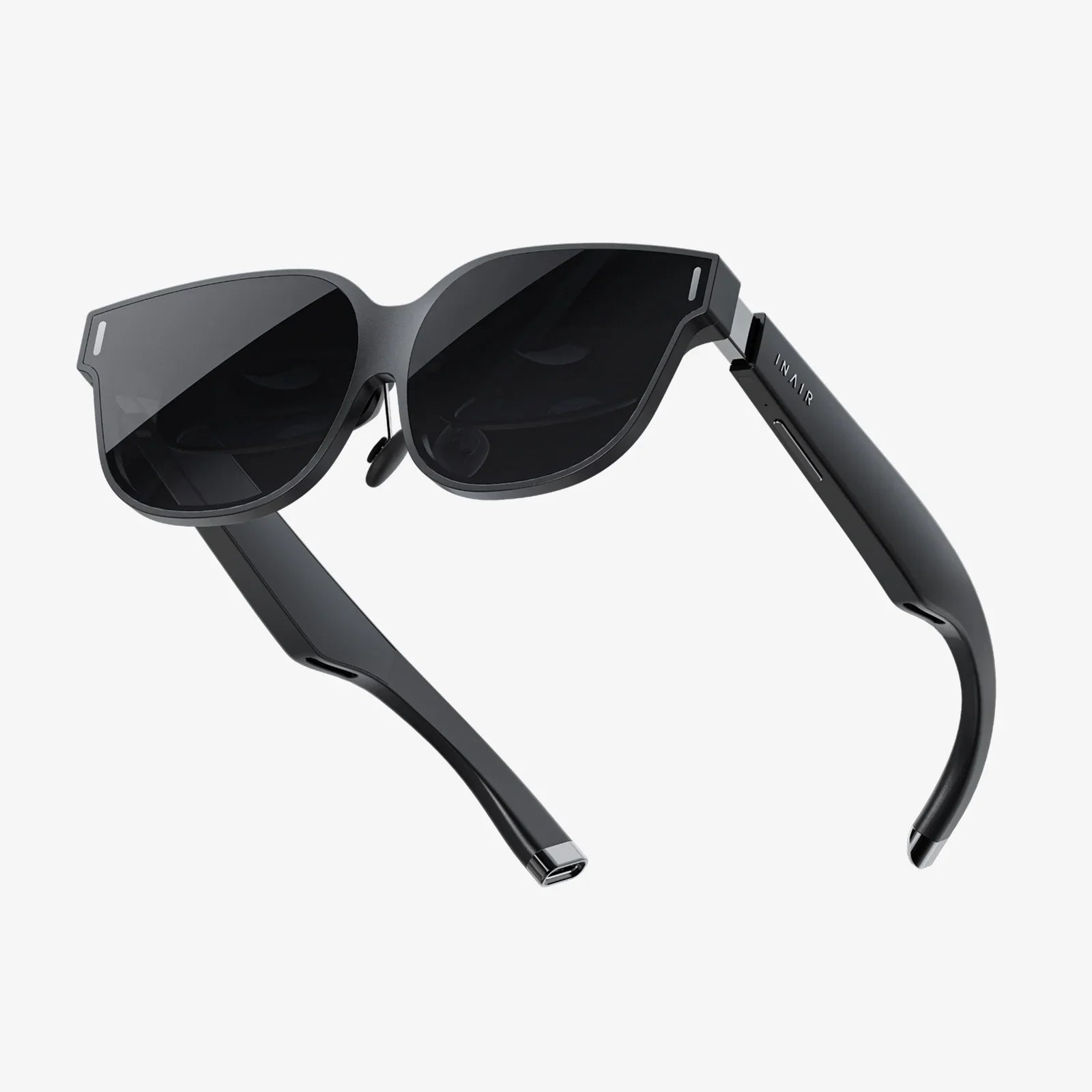
Imagine a world where the digital and physical seamlessly intertwine, where vital information floats effortlessly in your line of sight, and your smartphone’s screen is no longer a confined rectangle but an expansive canvas overlaid onto reality itself. This is the captivating promise of the Phone HUD Display, a technology poised to shatter the screen-bound limitations of our current devices and redefine the very nature of mobile interaction. It’s a vision that feels plucked from science fiction, yet it’s steadily marching toward scientific fact, promising to unlock a new dimension of convenience, productivity, and contextual awareness.
The Core Principle: From Pixels to Projection
At its heart, a Phone HUD Display, or Head-Up Display, is a technology that projects data onto a transparent surface, allowing a user to view that information without looking away from their usual viewpoint. The term originates from aviation, where critical flight data is projected onto the cockpit windshield, enabling pilots to keep their "heads up" and focused on the sky ahead. The adaptation of this concept for mobile phones represents a monumental leap in personal technology.
The fundamental components of such a system involve a miniature projector embedded within the phone and a method of reflecting that image into the user’s eye. This is often achieved through a combination of advanced optics, waveguides, and sometimes, transparent films or specialized glasses that work in concert with the device. Unlike Virtual Reality (VR), which immerses you in a completely digital world, or even Augmented Reality (AR) as we commonly experience it through a phone's screen, a true HUD aims for a more integrated and less obtrusive experience. The goal is supplementation, not substitution—enhancing your perception of the world with a subtle, context-aware digital layer.
Beyond the Gimmick: Transformative Applications
The potential applications for Phone HUD Display technology extend far beyond novelty, promising to revolutionize numerous aspects of our daily lives.
Navigation Reimagined
Instead of glancing down at a map on your phone, directional arrows, street names, and points of interest could be projected directly onto the road ahead as you walk or drive. This creates an intuitive, eyes-forward navigation experience that is significantly safer for pedestrians and drivers alike, transforming a distracting task into a seamless part of your journey.
Contextual Information On-Demand
Imagine walking through a historic district and seeing floating tags above buildings detailing their architectural history and significance. Or attending a large conference where the name and professional affiliation of each person you meet is subtly displayed next to them. A Phone HUD could pull from vast online databases to provide real-time, context-sensitive information about everything you see, turning the entire world into a hyperlinked, interactive encyclopedia.
Enhanced Productivity and Multitasking
For professionals, the implications are staggering. Instructions for a complex repair could be overlaid onto the machinery itself. Architects could visualize blueprints at a construction site. A chef could follow a recipe without ever touching a tablet with flour-covered hands. Notifications, messages, and incoming calls could be managed without ever physically gripping your device, allowing for continuous workflow.
Immersive Gaming and Social Interaction
The gaming world would be utterly transformed. Instead of playing on a screen, game elements could inhabit your living room, your local park, or any other environment. Location-based games would achieve a new level of immersion. Socially, sharing experiences could mean your friend’s digital avatar appears sitting on your actual couch during a video call, creating a powerful sense of presence.
The Technical Hurdles: A Path Fraught with Challenge
For all its promise, the path to a consumer-ready, widely adopted Phone HUD Display is riddled with significant technical and design obstacles that engineers must overcome.
Optical Engineering and Miniaturization
Creating a projector and optical system powerful and precise enough to generate a bright, clear image, yet small enough to fit inside a sleek smartphone chassis, is a formidable challenge. The optics must manage focus, avoid double vision, and ensure the projected image appears stable at different depths of field. Achieving this without drastically increasing the size, weight, or cost of the phone is the primary bottleneck.
Brightness and Battery Life
A projected display must be exceptionally bright to be visible in broad daylight against a variety of backgrounds. High-brightness projection is notoriously power-hungry, directly conflicting with the constant consumer demand for longer battery life. Developing ultra-low-power display drivers and highly efficient projection systems is critical to the viability of this technology.
The Interface Conundrum
How do you interact with a display that has no physical surface? Traditional touch inputs are obsolete. New paradigms for control are needed, likely involving a combination of voice commands, gesture recognition (tracking fine hand movements in 3D space), eye-tracking, and perhaps even neural interfaces in the distant future. Designing an intuitive, frictionless, and socially acceptable control system is a mammoth software and hardware challenge.
Social Acceptance and Safety
Will people feel comfortable wearing glasses or using a device that clearly indicates they are immersed in a digital layer? The specter of Google Glass’s early reception, where users were dubbed "Glassholes," looms large. Furthermore, the safety implications, particularly for use while driving or walking in busy urban environments, must be meticulously addressed to avoid creating new forms of distraction.
The Future is Transparent: What Lies Ahead?
The development of Phone HUD Display technology is not a single eureka moment but a gradual evolution. We can expect to see iterative steps, perhaps starting with simpler, notification-based projections before evolving into full-color, complex interfaces. The ultimate form factor remains an open question: will it be through smart glasses paired with your phone, a dedicated accessory, or a fully integrated feature within the phone itself, using a pop-out reflector or a specially designed case?
Long-term, this technology is a stepping stone toward even more advanced forms of human-computer interaction, such as true augmented reality contact lenses or direct neural links. The Phone HUD Display represents the crucial first step in weaning us off the screen and teaching both technology and society how to gracefully blend the digital and physical realms.
The journey toward a ubiquitous Phone HUD Display is more than a mere hardware upgrade; it is a fundamental reimagining of our relationship with technology. It challenges us to think beyond the glass slab in our pockets and envision a future where information is ambient, contextual, and effortlessly integrated into our perception of the world. While the hurdles are real, the relentless pace of innovation suggests it’s not a matter of if, but when. The day is coming when looking down at your phone will feel as archaic as dialing a rotary phone, and the world itself will become your interactive display.
Share:
Human-Computer Interaction News Today: The Dawn of a Truly Invisible Interface
Wearable Safety Devices Are Revolutionizing Personal Security and Peace of Mind