


Imagine a world where the collective knowledge of humanity, the ability to render breathtaking visual effects, and the power to run complex simulations for global enterprises rests not in a cold, remote data center, but in the palm of your hand. This is not a glimpse into a distant sci-fi future; it is the palpable reality of today, all made possible by the relentless and silent revolution of portable computing power. This invisible force is the new electricity, the fundamental current powering our modern existence, and it is reshaping everything we know about work, creativity, and connection.
The Architectural Leap: From Room-Sized Behemoths to Pocket-Sized Powerhouses
The journey of portable computing power is a breathtaking tale of human ingenuity and miniaturization. It began with the pursuit of mobility itself—the simple desire to take our work and our play with us. Early laptops were cumbersome and offered a fraction of the performance of their desktop counterparts. They were compromises. Today, that paradigm has been utterly inverted. The modern portable device is often the performance leader, a testament to the monumental advancements in semiconductor design.
At the heart of this revolution lies the silicon chip. The evolution of manufacturing processes, measured in nanometers, has allowed for an exponential increase in the number of transistors on a single chip. We have moved from processors with thousands of transistors to those with tens of billions, all while drastically reducing their physical size and power consumption. This is the direct application of Moore's Law, pushing the boundaries of physics to deliver more performance per watt than ever before.
This miniaturization is not limited to the Central Processing Unit (CPU). The integration of specialized components has been equally critical. The Graphics Processing Unit (GPU), once a bulky add-on card for desktop gaming rigs, is now a powerhouse of parallel processing, intricately woven into system-on-a-chip (SoC) designs. These mobile GPUs are not just for rendering games; they are the engines for machine learning, video editing, and scientific modeling on the go. Similarly, advancements in memory technology, like LPDDR5 RAM, provide massive bandwidth and capacity while sipping power, and NVMe solid-state drives offer near-instantaneous data access without moving parts, making them perfect for a life in motion.
Beyond the Hardware: The Software and Connectivity Ecosystem
Raw hardware potential is nothing without the software to harness it. Operating systems have become incredibly efficient at power management, intelligently allocating resources to foreground tasks while putting idle components to sleep. This sophisticated dance between hardware and software ensures that portable computing power is available when you need it and conserves battery life when you don't.
Furthermore, the true potential of any portable device is unlocked by its connection to the world. The proliferation of high-speed Wi-Fi standards, from Wi-Fi 6 to the emerging Wi-Fi 7, provides gigabit-speed wireless connectivity in homes, offices, and cafes. Perhaps even more transformative is the rollout of global 5G networks. With latency measured in milliseconds and speeds rivaling broadband, 5G effectively tethers portable devices to the cloud, blurring the line between local and remote processing power. This enables a new class of applications that can offload intensive computations to cloud servers, effectively augmenting the device's native capabilities.
The Professional Paradigm Shift: Dismantling the Centralized Office
The impact of portable computing power on the professional world is nothing short of revolutionary. It has been the single greatest enabler of the remote and hybrid work models that are now standard across countless industries. The concept of the office is no longer a physical location but a dynamic, virtualized environment that exists wherever there is a connected device.
- The Creative Class Unleashed: Video editors, graphic designers, and 3D animators are no longer chained to massive desktop workstations. They can now edit 4K or even 8K video, render complex 3D models, and design intricate visual assets from a coffee shop, a park, or their living room. Portable workstations provide the necessary CPU and GPU muscle to run professional-grade software suites seamlessly.
- The Data Analyst in the Field: A researcher can collect field data on a ruggedized tablet, run preliminary analysis using powerful statistical software, and visualize the results in real-time, all before leaving the site. This immediacy accelerates the pace of discovery and decision-making.
- The Executive Always in Command: Cloud-based enterprise resource planning (ERP) and customer relationship management (CRM) platforms are fully accessible from a lightweight laptop, allowing executives to monitor global operations, approve workflows, and lead teams from anywhere in the world. High-fidelity video conferencing powered by capable portable hardware makes virtual meetings feel personal and productive.
This shift has democratized opportunity, allowing talent to flourish irrespective of geographic location and forcing organizations to rethink their very structure around outcomes rather than attendance.
Transforming Industries and Democratizing Innovation
The ripple effects of portable computing power extend far beyond the traditional knowledge worker, catalyzing profound changes in fields from healthcare to education.
In healthcare, clinicians use powerful tablets and portable ultrasound devices to bring diagnostic capabilities directly to a patient's bedside. Surgeons utilize augmented reality headsets, powered by portable computing units, to overlay critical patient data and 3D anatomical guides during procedures, enhancing precision and safety. Medical researchers leverage portable computing clusters to run genetic sequencing analysis in remote areas, accelerating the fight against diseases.
In education, the dynamic is shifting from passive learning to active creation. Students are no longer just consumers of information on their devices; they are creators. They can code complex programs, produce professional-looking videos and podcasts, compose music, and design 3D-printable objects. This access to powerful creative tools fosters critical thinking, problem-solving, and digital literacy skills, leveling the playing field for students in under-resourced communities.
For scientific research, portability enables real-time data collection and analysis in the most extreme environments. Geologists can analyze mineral compositions on a mountaintop. Marine biologists can process oceanic sensor data directly on their research vessel. Archaeologists can digitally map excavation sites in 3D as they work. This immediacy turns fieldwork into a live laboratory, drastically reducing the time between observation and insight.
The Ethical Dimension and Future Challenges
With great power comes great responsibility, and the proliferation of portable computing power is not without its significant challenges. The environmental cost of manufacturing billions of devices and the growing problem of electronic waste (e-waste) pose serious sustainability questions. The industry is responding with initiatives for using recycled materials, designing for repairability and longevity, and creating more efficient recycling programs, but this remains a critical area for ongoing innovation and consumer awareness.
Privacy and security are also paramount concerns. These powerful devices are treasure troves of personal and professional data. Ensuring robust encryption, secure biometric authentication, and protection against sophisticated cyber-attacks is a constant arms race. Users must be vigilant, and manufacturers must prioritize security at the silicon level, building trust into the very foundation of their devices.
Finally, the issue of the digital divide persists. While portable computing power is democratizing in many ways, there remains a risk of creating a new kind of inequality—one based on access to the latest technology and high-speed connectivity. Bridging this gap is essential to ensuring that the benefits of this revolution are shared by all of society, not just a privileged few.
The Horizon: What Lies Ahead for Portable Power?
The trajectory of portable computing power shows no signs of slowing. We are on the cusp of several breakthroughs that will further redefine what's possible. The exploration of new semiconductor materials like graphene and gallium nitride promises even greater efficiency and performance gains beyond the limits of traditional silicon. Neuromorphic computing, which aims to mimic the structure and function of the human brain, could lead to devices that are exponentially more powerful for specific AI tasks while using a fraction of the energy.
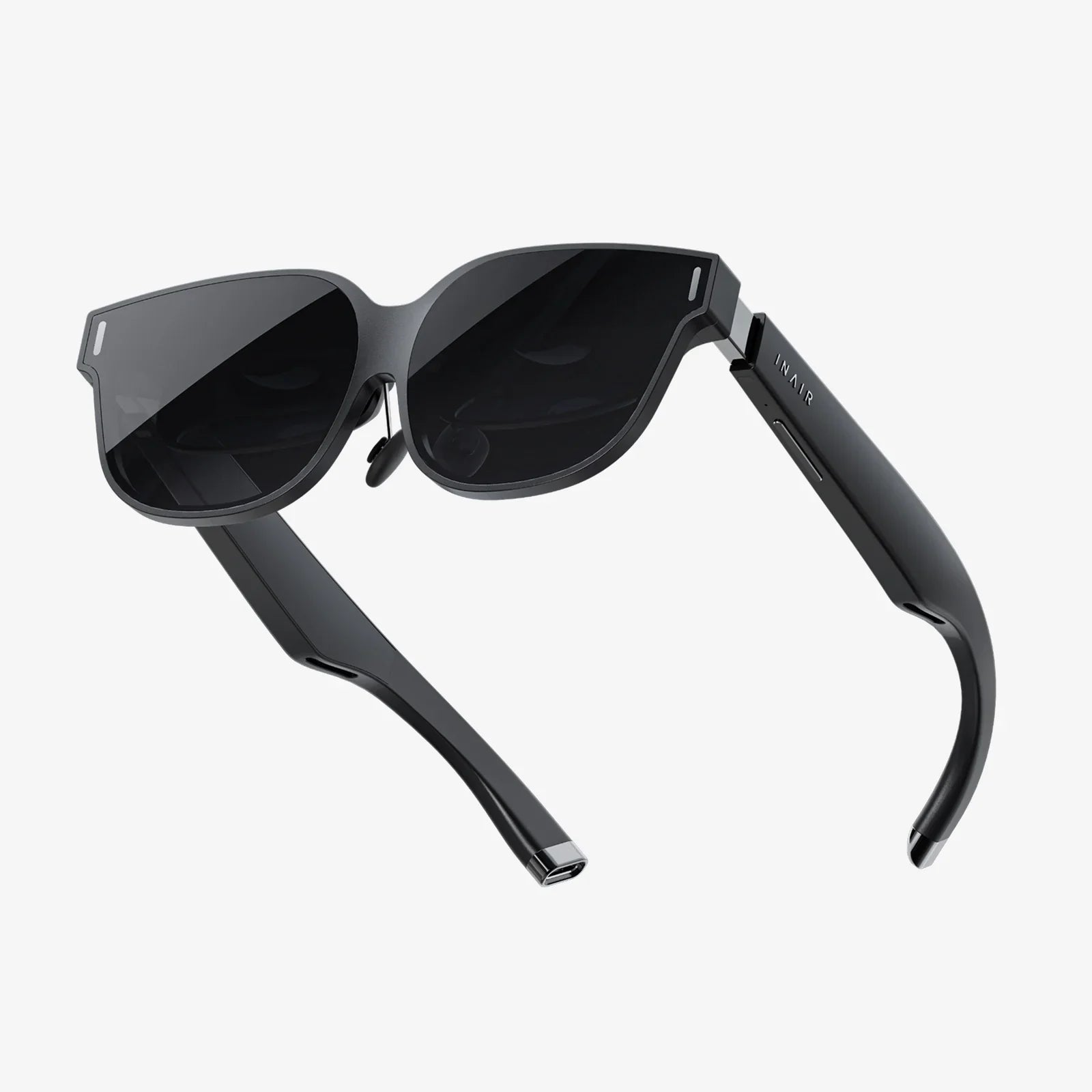
Furthermore, the concept of the device itself is evolving. We are moving towards a more ambient and seamless experience of computing. Augmented Reality (AR) glasses will require immense, yet inconspicuous, portable processing to overlay digital information onto our physical world. These devices will need to understand their environment in real-time, a task that demands a new level of integrated, low-latency portable computing power.
The future is not just about more power; it's about more intelligent, efficient, and contextual power. It's about computing that understands our needs and adapts to our environment, all while fitting seamlessly into our lives.
We are no longer just carrying devices; we are carrying the engines of modern civilization. The quiet hum of a fan or the warmth of an aluminum chassis is the sound and feel of progress, a testament to our ability to condense the infinite potential of the digital universe into a form that travels with us, empowers us, and extends our reach beyond every previous physical and imaginative boundary. The age of portable computing power is here, and it is just getting started.
Share:
AI Tools Pros and Cons: A Comprehensive Guide to the New Digital Frontier
3D VR World: A New Dimension of Human Experience and Connection