


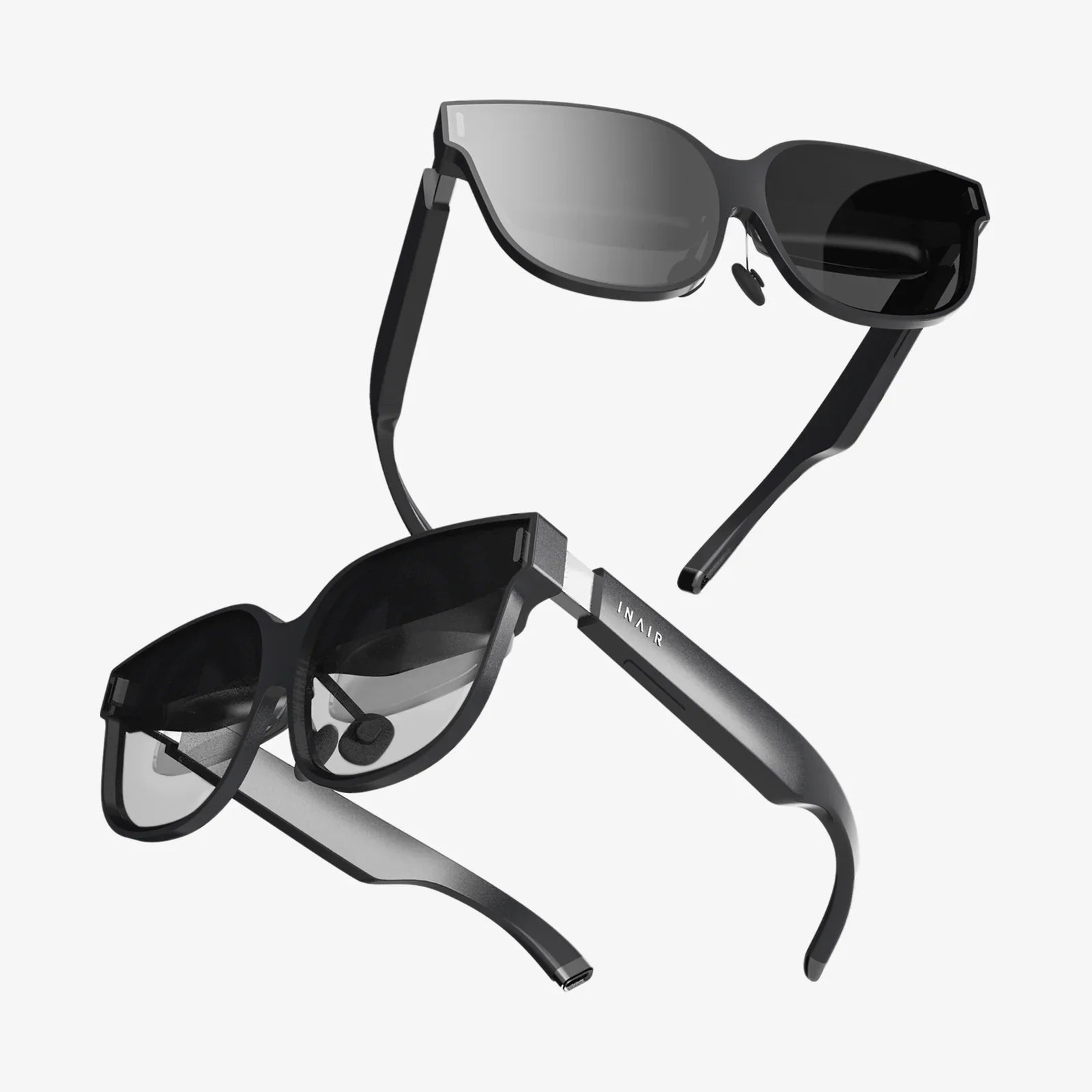
Imagine pulling a cinema screen from your pocket, accessing a full high-definition workstation on a crowded train, or diving into immersive virtual worlds without being tethered to a desk. This isn't a scene from a science fiction film; it’s the reality being unlocked today by the rapid evolution of portable screen glasses. This revolutionary wearable technology is poised to fundamentally change our relationship with digital content, untethering us from static monitors and offering a new dimension of personal, on-the-go visual computing. By projecting a crisp, private display directly into the user's field of vision, these devices promise a future where your screen is always with you, transforming any space into a potential office, theater, or gaming den.
The Technology Behind the Vision: How Portable Display Glasses Work
At first glance, portable screen glasses might look like a slightly bulkier pair of sunglasses, but within their frames lies a sophisticated blend of optics, software, and micro-electronics. The core technology can be broken down into several key components that work in harmony to create a seamless viewing experience.
The most common display technology employed is micro-OLED (Organic Light-Emitting Diode). Unlike the LCD screens on traditional monitors, micro-OLED panels are incredibly small, incredibly dense, and produce their own light, resulting in exceptional contrast ratios, deep blacks, and vibrant colors. These tiny, high-resolution panels are positioned near the temples of the glasses.
However, you can't focus on a screen mere centimeters from your eye. This is where advanced optics come into play. The image from the micro-OLED panels is projected onto a series of specially designed waveguide lenses or other optical elements like free-form prisms. These lenses reflect and channel the light directly into your pupils, effectively painting a virtual image that appears to be floating several feet to several yards in front of you. The result is a large, seemingly distant screen that your eyes can comfortably focus on for extended periods, all contained within the frame of the glasses.
Connectivity is the other half of the equation. Most models connect to a source device—be it a smartphone, laptop, gaming console, or a dedicated computing unit—via a single USB-C cable that handles both video signal and power. The drive towards a universal standard like USB-C DisplayPort Alt Mode has been a significant enabler for this category. For a truly wireless experience, some premium models integrate built-in batteries and connect via low-latency wireless protocols, though this often involves a trade-off in weight, cost, and continuous usage time.
Finally, integrated sensors are becoming increasingly important. Features like adaptive brightness, which automatically adjusts the display intensity based on ambient light, and 6-DoF (Six Degrees of Freedom) tracking in more advanced models, which understands your head movements in physical space, are what elevate these devices from simple displays to interactive portals.
Beyond Novelty: Transformative Applications and Use Cases
The true power of portable screen glasses is revealed not in their specs, but in their application. They solve real-world problems for a diverse range of users, creating new paradigms for work and play.
The Mobile Professional and Digital Nomad
For the modern professional, portability is productivity. Portable screen glasses are the ultimate tool for the mobile workstation. Instead of hunching over a small laptop screen in a coffee shop or airport lounge, a user can don their glasses and instantly have a massive, private virtual monitor. This allows for efficient multitasking, coding, writing, or analyzing spreadsheets with a screen real estate that rivals a desktop setup. All the while, their actual laptop remains closed, conserving battery and maintaining a low profile. For digital nomads and frequent travelers, it means carrying a high-productivity environment without the weight and bulk of a portable monitor.
The Immersive Entertainment Enthusiast
Entertainment is experiencing a paradigm shift towards personalization and immersion. Portable screen glasses act as a personal theater, capable of simulating a screen size exceeding 100 inches. Whether watching a movie on a flight, binge-watching a series in bed without disturbing a partner, or gaming from a console that's tethered to the other side of the room, the experience is intensely immersive and completely private. For media consumption, they offer an unparalleled combination of screen size and portability.
The Tech-Savvy Tinkerer and Developer
The developer community has embraced this technology as a sandbox for the future. From prototyping augmented reality (AR) applications to using the glasses as a viewfinder for drones or robotics, the potential for creation is vast. They serve as an accessible entry point into spatial computing, allowing developers to experiment with fixed virtual displays in a 3D space—a foundational concept for the much-anticipated metaverse and future AR operating systems.
Specialized Industrial and Accessibility Uses
Beyond consumer uses, these glasses have significant potential in specialized fields. Technicians performing complex repairs can have schematics or instruction manuals pinned within their view, keeping their hands free. They can also serve as an accessibility tool, providing a large, magnified display for individuals with low vision, effectively acting as high-tech electronic glasses.
Choosing Your Window to the World: Key Considerations Before You Buy
With a growing market, selecting the right pair of portable screen glasses requires careful consideration of several factors to match your specific needs.
- Display Resolution and Quality: This is paramount. Look for a minimum of 1920x1080 (1080p) per eye. Higher resolutions like 2560x1440 or even 4K will provide a sharper, more text-readable experience, crucial for productivity. Also, consider the claimed screen size (e.g., equivalent to a 120-inch screen) and field of view (FOV), which determines how much of your vision the display occupies.
- Form Factor and Comfort: You'll be wearing these on your face. Weight is a critical factor; lighter glasses (under 100 grams) are far more comfortable for long sessions. Consider the build materials, nose pad design, and whether they can be worn over prescription glasses if needed. Comfort is non-negotiable.
- Connectivity and Compatibility: Ensure the glasses are compatible with your devices. Most use USB-C, but verify that your laptop or phone supports video-out over USB-C. Some models may require specific adapters for devices like iPhones or game consoles. Wireless models offer freedom but check for latency, which can be disruptive for gaming or fast-paced video.
- Battery Life and Power Source: Understand how the device is powered. Many draw power directly from the host device via USB-C, which can drain your laptop or phone battery quickly. Self-contained wireless models have their own battery, so check its life for video playback or productivity tasks—aim for at least 3-4 hours of real-world use.
- Audio: Some models include built-in speakers or bone conduction audio for a private listening experience, while others require separate headphones. This can significantly impact the overall immersion and convenience.
The Road Ahead: The Future of Personal Visual Computing
Portable screen glasses are not the endgame; they are a crucial stepping stone. They represent the maturation of micro-displays and optics, serving as the foundation for the next generation of wearable tech: true augmented reality glasses. The current technology excels at presenting fixed virtual screens, but the future lies in overlaying interactive digital information seamlessly onto the real world.
We can expect to see rapid advancements in several areas. Battery technology will improve, enabling all-day wireless use. Display technology will become even more efficient and higher resolution, approaching retinal clarity. The most significant leap will come from the integration of more advanced spatial sensors—cameras, LiDAR, and depth sensors—that will allow future devices to understand and interact with the environment around them, transitioning from passive displays to active AR companions.
Furthermore, as the underlying computing power in smartphones and dedicated wearable processors grows, these glasses will become less of a peripheral and more of a primary interface, potentially replacing our physical screens altogether for many tasks.
The journey towards ubiquitous computing has always been about making technology more personal, accessible, and integrated into our daily flow. Portable screen glasses are a monumental leap in that direction, dematerializing the bulky monitor and offering a glimpse into a future where our digital lives are not confined to rectangles on a desk but are instead seamlessly woven into our perception of the world around us. They empower us to create, work, and play with a freedom that was previously unimaginable, making the grandest digital canvas available anytime, anywhere, from something that fits neatly in a pocket.
Share:
Can I Wear Headphones with Glasses? The Ultimate Guide to Comfort and Audio Quality
AI Sunglasses for Women: The Ultimate Fusion of Fashion, Tech, and Personal Empowerment