


- by wangfred
Predictions AR VR: The Next Decade of Immersive Reality
- by wangfred
Imagine a world where your surroundings are not just static, but alive with digital information, where you can collaborate with a colleague's lifelike hologram from across the globe as if they were in the room, or escape into hyper-realistic virtual landscapes for education, work, or play. This is the tantalizing future promised by the converging paths of Augmented Reality (AR) and Virtual Reality (VR). For years, these technologies have simmered on the periphery of the mainstream, often seen as expensive novelties or the domain of hardcore gamers. But a seismic shift is underway. Driven by relentless hardware innovation, sophisticated software development, and a fundamental change in how we connect, the next decade will see AR and VR evolve from isolated experiences into the next major computing platform, fundamentally reshaping every facet of our daily lives. The predictions for AR and VR point toward a future less about wearing a headset and more about experiencing a new layer of reality.
Before diving into predictions, it's crucial to understand the distinction and overlap between these two technologies. They exist on a spectrum of immersive experiences, often referred to collectively as Extended Reality (XR).
Virtual Reality (VR) is a fully digital, immersive experience. By wearing a headset, users are transported to a completely computer-generated environment, effectively blocking out the physical world. This is the domain of deep immersion—ideal for gaming, simulation training, and virtual tourism. The primary goal is to convince your senses that you are somewhere else entirely.
Augmented Reality (AR), by contrast, overlays digital information onto the real world. Using devices like smart glasses or even smartphone cameras, AR enhances your physical environment by adding digital layers—a navigational arrow on the street, a piece of furniture visualized in your living room before purchase, or an animated character dancing on your kitchen table. The goal is to supplement reality, not replace it.
Bridging these two is Mixed Reality (MR), where digital objects are not just overlaid but anchored to and interact with the physical world in real-time. A virtual robot might hide behind your real sofa, or a digital instruction manual might be pinned to a physical machine you are learning to repair. This seamless blending is considered by many to be the ultimate expression of these technologies.
The most immediate and critical prediction revolves with the hardware itself. Current generations of VR headsets, while powerful, are often bulky, tethered, or have limited battery life. AR experiences on phones are engaging but lack the hands-free, always-available utility needed for true adoption.
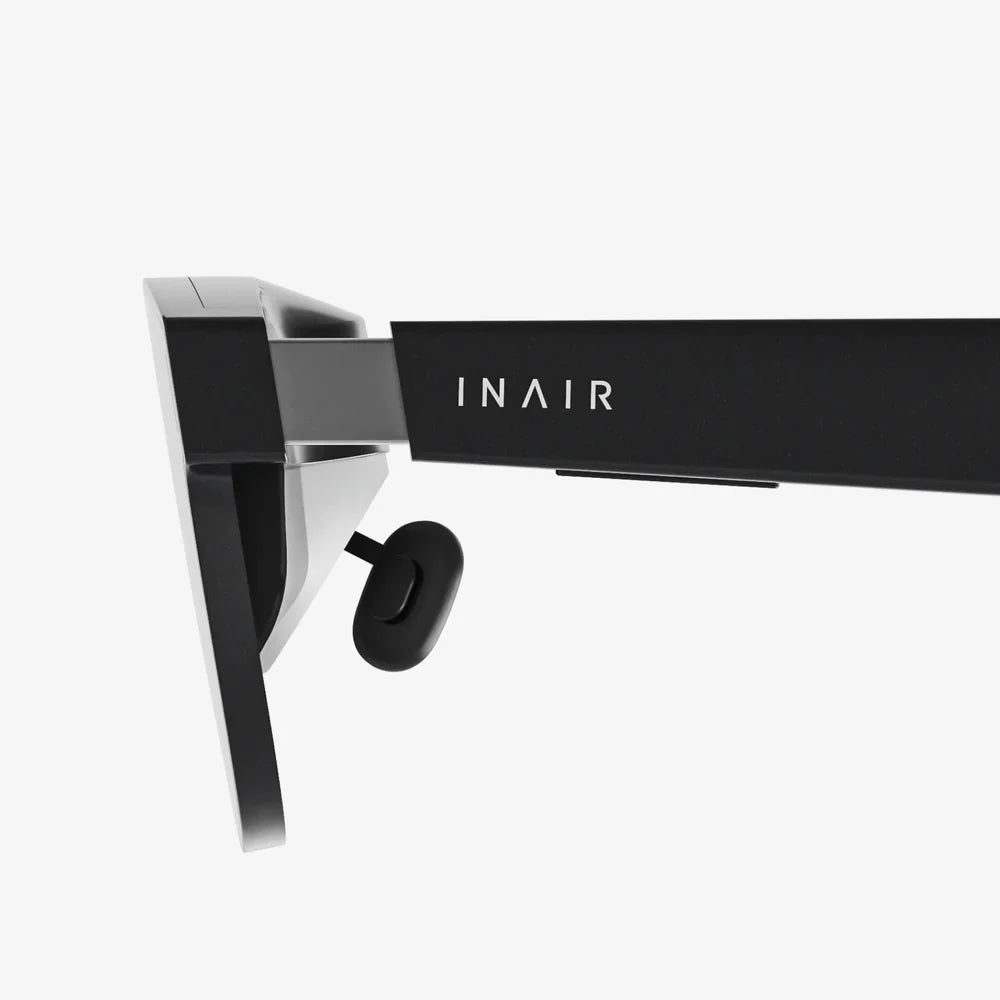
The next ten years will be defined by the miniaturization and normalization of XR wearables. We will move from conspicuous headsets to sleek, socially acceptable form factors—think glasses that look no different from standard prescription eyewear. Advances in micro-optics, like holographic lenses and laser beam scanning, will allow for thin, light glasses that project high-resolution images directly onto the retina. Battery technology and on-device processing will become efficient enough to allow for all-day wear without discomfort.
This shift is monumental. When the technology fades into the background and becomes as ubiquitous and unremarkable as a smartphone, that is when it will truly become woven into the fabric of daily life. You won't 'put on your AR glasses'; you'll just wear your glasses, which happen to grant you superhuman perception.
Today's internet is a vast library of information accessed through flat, 2D screens. The prediction for the future is the evolution into the Spatial Web or WebXR. This will be a 3D internet, where digital information is mapped to specific locations, objects, and contexts in the physical world.
Imagine walking through a historic city; your glasses highlight the architectural details of a building, overlaying its history and showing a digital reconstruction of how it looked centuries ago. In a grocery store, your AR view could highlight products that align with your dietary preferences, show recipe videos hovering above the ingredients, and display a virtual path to your shopping list items. This is contextual computing at its finest—the right information, at the right time, in the right place.
This will require a new framework for the web, built on standards that understand 3D space, geolocation, and persistent digital objects. It will democratize creation, allowing anyone to anchor content to a location, creating a shared, digital layer over our reality.
No discussion of AR/VR predictions is complete without addressing the metaverse. Beyond the marketing buzz, the core concept is a persistent network of shared, real-time 3D virtual spaces. The prediction is not that we will all live in a single, monolithic metaverse, but rather that we will navigate a constellation of interconnected digital worlds and experiences.
VR will provide the portals to these fully immersive worlds for entertainment, concerts, and social gatherings. AR will act as a lens, bringing elements of the metaverse into our physical environment—a virtual art gallery in a public park or a collaborative 3D design model on a real conference table.
The true breakthrough will be in interoperability. Your digital identity, avatar, and possessions (digital clothing, art, tools) will be able to travel with you across different platforms and experiences. This seamless portability will be the key to making the metaverse feel like a coherent digital extension of our lives rather than a series of walled gardens.
While consumer applications capture the imagination, the most profound and immediate impact of AR and VR will be in enterprise and industrial settings. The predictions for workforce transformation are already becoming reality.
AR and VR will not evolve in a vacuum. Their future is inextricably linked with the parallel evolution of Artificial Intelligence. AI will be the invisible engine that powers the immersive future.
Computer vision AI will be essential for understanding the user's environment in real-time, identifying objects, people, and surfaces to allow for accurate digital overlay. Natural language processing will enable intuitive voice-controlled interfaces, freeing users from controllers and keyboards. Most importantly, AI will act as a personalized assistant within these immersive spaces.
An AI agent, manifested as an avatar or simply a voice in your ear, could attend a meeting with you, providing real-time data, translations, or summarizations. It could manage your notifications, filtering the digital world to show you only what is contextually relevant. It will learn your preferences and habits, proactively offering information and assistance before you even ask. This symbiotic relationship will make AR and VR interfaces feel truly intelligent and responsive.
This predicted future is not without significant challenges and risks that must be proactively addressed.
The journey toward this immersive future is already in motion, not as a distant sci-fi fantasy but as the next logical step in our constant dialogue with technology. The predictions for AR and VR sketch a world of boundless potential—a world where distance is erased, knowledge is contextual, and human creativity is unleashed in new dimensions. The path is fraught with complex questions that demand thoughtful answers, but the destination promises a revolution in how we work, connect, learn, and perceive the world around us. The screen-based era is fading; the age of immersion is dawning.
Share:
3D VR Glasses Price - A Comprehensive Guide to Cost, Value, and the Future of Immersion
3D VR Glasses Price - A Comprehensive Guide to Cost, Value, and the Future of Immersion