


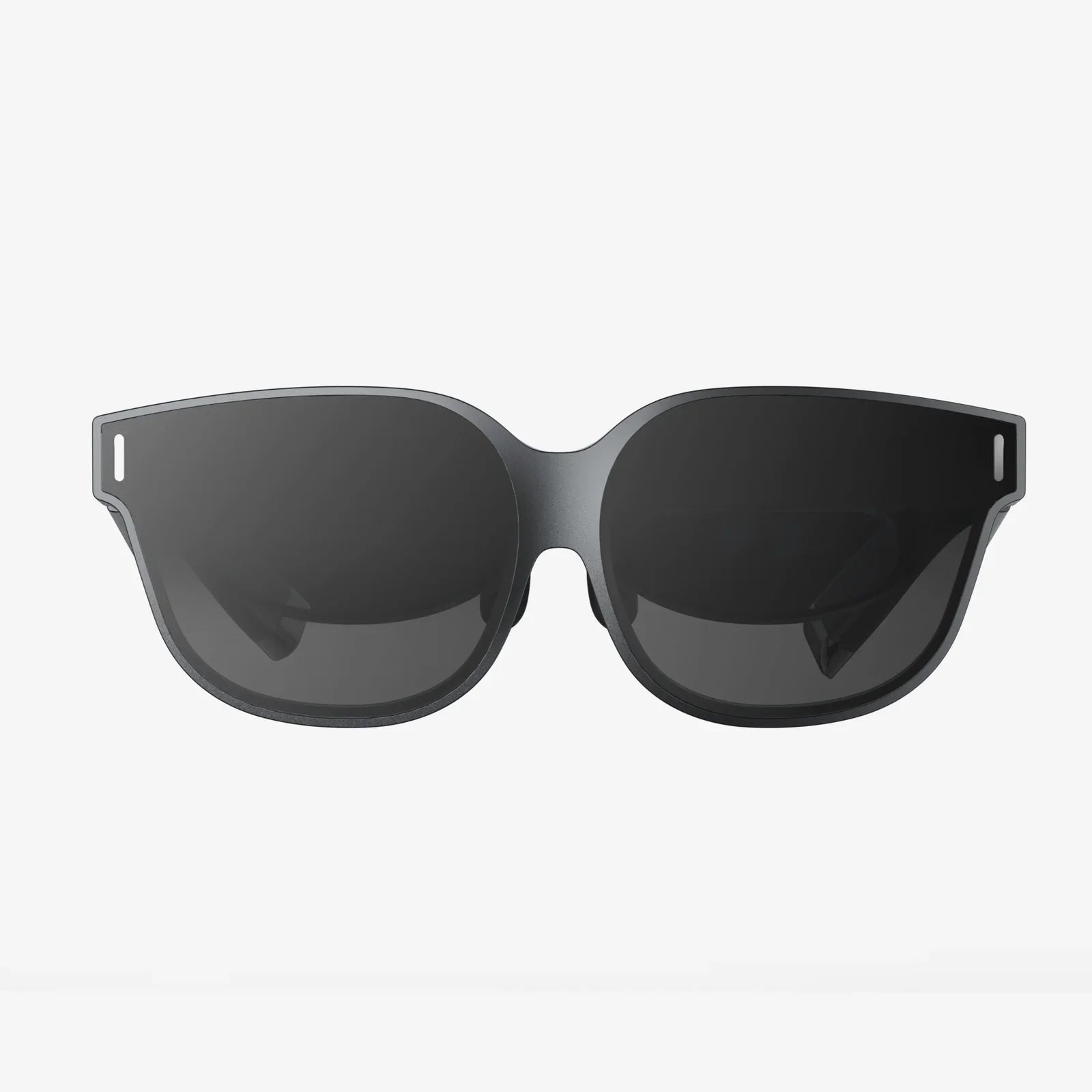
Imagine a world where your vision is not just corrected, but augmented; where the line between your physical reality and the digital universe blurs into a seamless, personalized experience. This is no longer the realm of science fiction. The emergence of prescription AI glasses with integrated displays represents one of the most significant technological leaps in personal computing and vision care, promising to transform everything from how we work and play to how we manage our health and navigate our daily lives.
The Convergence of Two Worlds: Optics and Computation
At its core, this technology is a masterful convergence of two distinct fields: advanced ophthalmology and artificial intelligence. For centuries, eyeglasses have served a single, vital purpose: to bend light in a way that corrects refractive errors, bringing a blurry world into focus. The fundamental design of lenses and frames remained largely unchanged. Now, we are witnessing the evolution of the eyeglass from a passive, corrective tool into an active, intelligent platform.
The magic lies in the seamless integration. These are not a pair of standard prescription lenses clumsily attached to a bulky digital display. Instead, they are engineered from the ground up. Sophisticated wavefront-guided digital lenses are manufactured to precisely match the unique prescription of the individual wearer, ensuring optimal visual acuity. Then, micro-display technology, often employing systems like Light Guide Optics, projects information directly onto these lenses or onto a miniature transparent screen within the field of view. This creates a heads-up display (HUD) effect, overlaying digital content onto the real world without obstructing it.
The Intelligent Core: How AI Powers the Experience
The display is the window, but the artificial intelligence is the brain. This is what differentiates smart glasses from truly intelligent vision systems. An onboard AI processor, often powered by machine learning algorithms, continuously interprets the world through integrated sensors and cameras. This enables a myriad of context-aware functionalities:
- Real-Time Translation: Look at a foreign menu, and the text can be instantly translated and overlaid in your native language, all while you maintain eye contact with the physical object.
- Object and Facial Recognition: The AI can identify products, landmarks, and even people (with appropriate privacy controls), providing relevant information discreetly in your display. For someone with prosopagnosia (face blindness), this could be life-changing.
- Contextual Information Retrieval: By understanding what you are looking at, the AI can pull pertinent data. Glance at a complex piece of machinery, and a schematic or instruction manual might appear. Look at a restaurant, and its reviews and ratings pop up.
- Augmented Navigation: Instead of looking down at a phone, directional arrows and points of interest are painted onto the sidewalk and buildings in front of you, creating an immersive guidance system.
Beyond Convenience: Profound Applications in Healthcare and Accessibility
While the consumer applications are thrilling, the most profound impact of prescription AI glasses may be in the fields of healthcare and accessibility. For individuals with visual impairments that go beyond common refractive errors, this technology can act as a visual prosthesis.
- Low Vision Assistance: For those with conditions like macular degeneration, diabetic retinopathy, or glaucoma, the AI can enhance the visual field in real-time. It can highlight edges, increase contrast, zoom in on specific areas, or even identify and read aloud text detected in the environment.
- Medical and Surgical Guidance: Surgeons could have vital patient statistics, ultrasound data, or 3D anatomical models projected into their field of view during procedures, allowing them to keep their focus entirely on the patient without glancing away at monitors.
- Therapeutic Applications: For individuals with autism spectrum disorder, the AI could provide subtle social cues, such as interpreting facial expressions or prompting appropriate responses in conversation. For those with memory issues, it could offer reminders and identify objects related to daily tasks.
- Auditory Assistance: Advanced microphone systems coupled with AI could transcribe conversations in real-time for the hearing impaired, displaying subtitles of what is being said directly on the lenses.
Design and Aesthetics: From Lab to Lifestyle
A critical barrier for earlier wearable technology has been social acceptance. No one wants to wear cumbersome, obtrusive hardware on their face. The latest generation of prescription AI glasses prioritizes design, aiming for a form factor that is indistinguishable from high-end eyewear. This involves monumental engineering challenges: miniaturizing processors, batteries, and projection systems into the slim arms and frames of a pair of glasses without compromising on comfort or style. Advances in battery technology and low-power processors are making all-day wear a realistic goal, while wireless charging solutions offer convenience.
Navigating the Challenges: Privacy, Security, and Society
With great power comes great responsibility. The always-on, always-sensing nature of this technology raises significant questions that society must address.
- Privacy: Continuous audio and video capture is a privacy minefield. Robust, transparent controls are non-negotiable. Features like physical camera shutters, clear recording indicators, and strict on-device processing for sensitive data are essential to build trust.
- Data Security: The amount of personal and environmental data these devices collect is staggering. Protecting this data from breaches is paramount. Encryption and user-controlled data policies will be critical.
- Social Etiquette: New social norms will need to evolve. Is it rude to wear these during a conversation? How do we indicate when we are recording or accessing information? These are questions that will be answered through use and cultural negotiation.
- Digital Dependency and Distraction: There is a risk of cognitive overload or becoming overly reliant on digital augmentation, potentially at the expense of organic human interaction and observation skills. Designing for intentional use, with features that promote digital wellness, will be important.
The Future Vision: Where Do We Go From Here?
The current state of the art is just the beginning. The trajectory points toward even more immersive and integrated experiences. We can anticipate developments like neural interfaces for control, eliminating the need for voice or gesture commands. Holographic displays could create more three-dimensional and realistic overlays. The resolution and field of view of the displays will continue to improve, making the digital content virtually indistinguishable from reality. Furthermore, as AI models become more sophisticated, the glasses will evolve from reactive tools to proactive assistants, anticipating our needs based on context, habit, and preference.
This technology also promises to democratize access to information and assistance. What was once the domain of specialized, expensive equipment in laboratories or hospitals can now be condensed into a personal, wearable device, empowering individuals with tools that were previously unimaginable.
The journey of the humble eyeglass, from a simple lens to an intelligent gateway, mirrors our own technological evolution. We are moving beyond merely fixing our sight and toward enhancing our entire perception of reality. Prescription AI glasses with a display are not just a new gadget; they are a new sense organ, one that bridges our biological selves with the boundless potential of the digital age, forever changing what it means to see.
The next time you put on your glasses, consider this: the device that simply helps you see today could soon become your navigator, your translator, your personal assistant, and your window into a digitally-augmented world, all while perfectly correcting your vision. The future is not something we will see on a screen; it is something we will see through our lenses, and it's arriving clearer and smarter than ever before.
Share:
Interactive Immersive Experience Digital: The New Frontier of Human Connection
Good Augmented Reality: A Seamless Bridge Between the Digital and Physical Worlds