


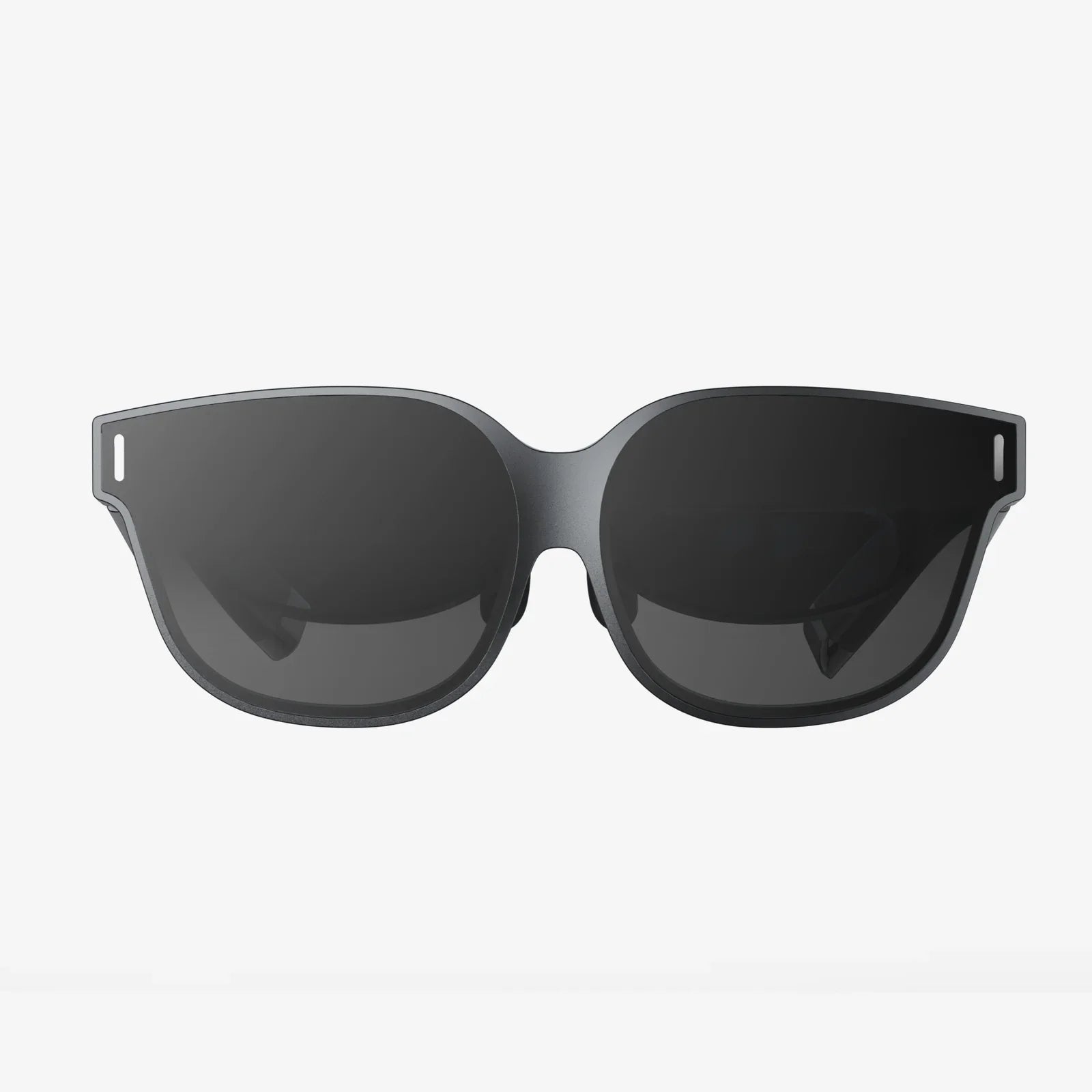
Imagine a world where your most essential tool for seeing is also your gateway to a hidden layer of digital intelligence, seamlessly painted onto the fabric of reality itself. This is not a distant science fiction fantasy; it is the imminent future being forged in laboratories and design studios today. The convergence of advanced optics, micro-display technology, and artificial intelligence is poised to transform the humble prescription lens from a passive corrective device into the most personal and powerful computer you will ever own. This is the dawn of prescription glasses augmented, a revolution that will redefine not just how we see, but how we connect, work, learn, and experience the universe around us.
Beyond Vision Correction: A New Paradigm for Eyewear
For centuries, the primary function of glasses has remained fundamentally unchanged: to bend light in such a way that it corrects a refractive error in the eye, bringing a blurry world into sharp focus. This is a noble and vital purpose, but it represents a mere fraction of human visual potential. Augmented reality (AR) technology seeks to expand that potential by superimposing computer-generated information—images, text, data, and animations—onto the user's view of their physical environment. Until recently, AR was largely confined to clunky headsets or the screen of a smartphone, creating a disconnected and often cumbersome experience.
The true breakthrough lies in the seamless integration of this technology into the form factor of standard prescription eyewear. This integration moves AR from a dedicated activity into a constant, ambient presence. Instead of putting on a headset, you are simply wearing your glasses. The digital layer becomes an innate part of your perception, accessible with a glance or a subtle voice command, and disappearing when not needed, leaving your corrected natural vision unimpeded. This shift from an accessory to an always-available platform is what makes augmented prescription glasses so profoundly disruptive.
Deconstructing the Magic: The Technology Inside the Frames
The magic of these advanced spectacles is a marvel of miniaturization and optical engineering. Several core technologies must work in perfect harmony to create a convincing and comfortable augmented experience.
The Optical Heart: Waveguide Combiners
At the core of the system is the method for projecting digital images into the user's eye. The most promising technology for prescription integration is the waveguide. These are incredibly thin, transparent substrates—often laminated within the prescription lens itself—that act like a highway for light. Micro-projectors, tiny enough to be embedded in the frame's temples, shoot light into the edge of the waveguide. This light bounces through the substrate via a process called total internal reflection until it hits a diffractive or holographic optical element (DOE or HOE) etched onto the surface. This element acts like an off-ramp, bending the light directly into the user's retina, painting the digital image onto their view of the real world. The result is a bright, stable image that appears to float in space several feet away, all while the lens remains largely clear and transparent.
The Brain: Processing and Connectivity
Powering the experience is a sophisticated mini-computer housed within the frame. This system-on-a-chip (SoC) contains the central processing unit (CPU), graphics processing unit (GPU), memory, and wireless connectivity modules like 5G and Wi-Fi. It is responsible for running the operating system, processing data from a suite of sensors, and generating the graphics for the displays. Despite its power, it must be incredibly energy-efficient to ensure all-day battery life, leading to innovations in low-power semiconductor design and task-specific processing cores that handle AR workloads with maximum efficiency.
The Senses: Cameras and Sensors
To understand and interact with the world, augmented glasses are equipped with a sophisticated array of sensors. High-resolution cameras capture the user's field of view, enabling object recognition, text translation, and visual search. Depth-sensing cameras, such as time-of-flight sensors, map the environment in three dimensions, allowing digital objects to occlude behind real-world furniture or appear anchored to a specific point on a wall. Inertial measurement units (IMUs) track head movement and orientation with extreme precision to keep the digital overlay locked in place. Microphones facilitate voice commands and audio input, while bone conduction speakers or tiny directional speakers built into the frames deliver private audio without blocking ambient noise.
A Day in a Life Augmented: Transformative Applications
The potential applications for this technology are as vast as human endeavor itself. They promise to dissolve the barriers between the digital and physical realms, creating a more intuitive, informed, and empowered existence.
Revolutionizing Navigation and Exploration
Imagine walking through an unfamiliar city. Instead of looking down at a phone, glowing directional arrows and pathways are painted directly onto the sidewalk in your field of view. Landmarks are tagged with historical information and user reviews. Public transit schedules and routes hover over bus stops. The world becomes an annotated, interactive map. For professionals, architects could walk through a construction site and see the underlying blueprints and plumbing schematics overlaid on the unfinished walls, while mechanics could see torque specifications and repair guides superimposed on the engine they are fixing.
Redefining Social Interaction and Connectivity
Social media could evolve from a platform on a screen to a layer on life. Instead of posting a photo, you could leave a digital note, drawing, or memory anchored to a specific location for friends to discover when they visit. During a video call, the participant could appear as a life-like hologram sitting on your sofa, creating a sense of presence that flat screens cannot match. Real-time translation could become effortless, with subtitles appearing beneath a speaking person, instantly breaking down language barriers.
The Future of Work and Productivity
The concept of the desktop will be untethered from the monitor. Multiple virtual screens, limited only by the physical space around you, can be summoned and arranged at will. A stock trader could be surrounded by real-time data tickers and news feeds. A researcher could have dozens of journal articles open in the air, linked and annotated spatially. Hands-free access to manuals, instructions, and remote expert guidance will transform fields from surgery to field maintenance, increasing efficiency and reducing errors.
Enhancing Learning and Memory
Education will become immersive and experiential. Students studying astronomy could have the night sky above them labeled with constellations and planetary information. Medical students could practice procedures on detailed, interactive holographic anatomies. The technology also holds immense promise for individuals with memory impairments or cognitive disabilities, offering contextual reminders—"this is your granddaughter, Sarah"—or step-by-step guides for daily tasks, fostering greater independence.
Navigating the Invisible Frontier: Challenges and Considerations
Despite the exciting potential, the path to mainstream adoption of augmented prescription glasses is fraught with significant technical, social, and ethical challenges that must be thoughtfully addressed.
The Form Factor and Comfort Imperative
The ultimate success of this technology hinges on its ability to become invisible. Current AR prototypes, while impressive, are often too heavy, too obvious, and have limited battery life. The final product must be indistinguishable from high-end fashion eyewear in terms of weight, size, and aesthetics. The battery technology—whether through improved energy density, ultra-fast charging, or innovative solutions like solar or kinetic charging—must support a full day of use. Failure to solve these ergonomic challenges will relegate the technology to a niche product.
The Privacy Paradox
A device that sees what you see and hears what you hear is, by its very nature, a powerful surveillance tool. The always-on cameras and microphones raise profound privacy concerns for both the wearer and everyone they encounter. Clear, transparent, and user-centric data policies must be established. Who owns the continuous video feed? How is facial recognition data handled? Can bystanders opt-out of being recorded? Navigating this privacy minefield will require robust legislation and ethical design frameworks that prioritize individual rights and consent from the ground up.
The Digital Divide and Accessibility
There is a real risk that such a transformative technology could exacerbate existing social and economic inequalities. If critical information, navigation, and social connection migrate primarily to an AR layer, those who cannot afford the hardware or lack the digital literacy to use it could be left at a severe disadvantage. Ensuring equitable access and designing for inclusivity will be crucial to prevent a new, augmented form of digital divide.
The Psychological Impact
What does it mean for human cognition and psychology when the line between the real and the digital is permanently blurred? Will we become over-reliant on digital annotations, weakening our innate memory and sense of direction? Could constant information overload lead to new forms of anxiety? The long-term effects of living with a permanent digital overlay are unknown, necessitating ongoing research and a mindful approach to design that enhances rather than overwhelms human experience.
The Clear Path Forward: From Prototype to Prescription
The journey from today's cutting-edge prototypes to a doctor-prescribed medical device is already underway. The next decade will see rapid iteration and refinement. We will see the convergence of technology with the expertise of optometrists and opticians, ensuring that the vital corrective function of the lens is never compromised. Customization will be key; the digital prescription will be as personalized as the optical one, tailored to an individual's lifestyle, profession, and needs.
As the underlying components—waveguides, micro-LED projectors, and powerful, efficient processors—continue to shrink and drop in cost, what starts as a premium product will gradually become accessible to the mass market. The app ecosystem will explode, driven by developers creating experiences we haven't yet imagined, much like the smartphone revolution before it. The defining applications will likely be those that feel less like "apps" and more like natural, magical enhancements of human capability.
We stand at the precipice of a fundamental shift in human-computer interaction. The goal is not to lose ourselves in a virtual world, but to use digital intelligence to enhance our understanding and appreciation of the physical one. It is a tool for amplifying human potential, for making the invisible visible, and for connecting us to our environment and to each other in deeper, more meaningful ways.
The familiar act of putting on your glasses in the morning is about to become the most futuristic thing you do all day. You won't just be putting on a tool to see the world clearly; you'll be putting on a lens to see the world anew, with a hidden dimension of information, connection, and possibility seamlessly integrated into your perception. The future is not on a screen; it's right in front of your eyes, waiting to be unlocked.
Share:
Ways Virtual Meetings Differ from Face-to-Face Meeting: The Complete Guide to Navigating the New Normal
Ways Virtual Meetings Differ from Face-to-Face Meeting: The Complete Guide to Navigating the New Normal