


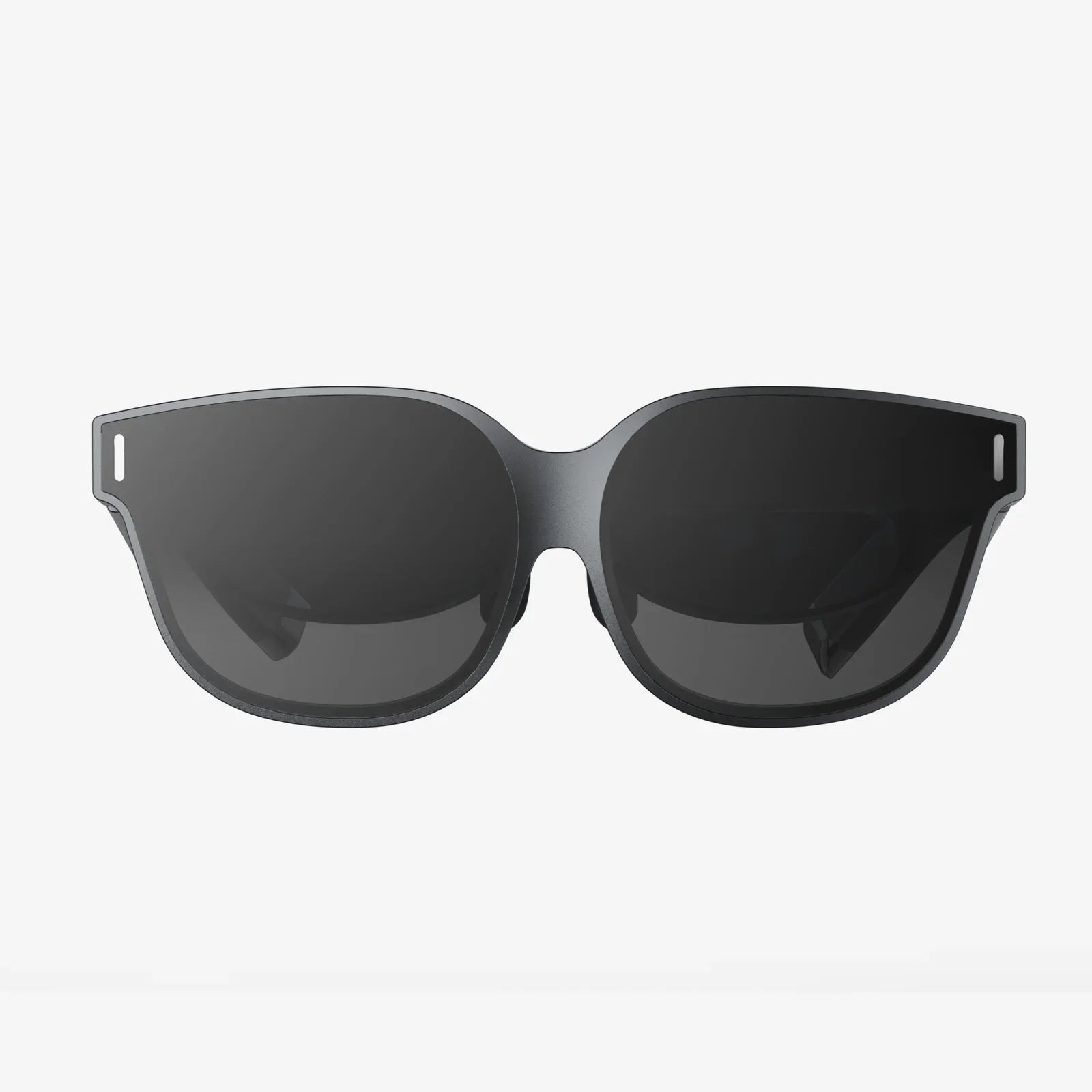
Imagine a world where your most essential tool for navigating reality—your eyeglasses—doesn't just help you see the world clearly but actively enhances it, painting digital information directly onto your field of view. This isn't science fiction; it's the revolutionary promise of prescription smart glasses, a technological marvel that seamlessly fuses the ancient craft of lens-making with the cutting edge of digital augmentation. The journey of how these devices work is a fascinating tale of optical engineering, micro-electronics, and software innovation, all condensed into a form factor you wear on your face.
The Core Conundrum: Merging Two Worlds
At their heart, prescription smart glasses must solve a fundamental challenge: how to project a digital image from a tiny screen in the frame onto the retina of an eye that has a refractive error (like nearsightedness, farsightedness, or astigmatism). Standard smart glasses assume perfect vision or use non-prescription inserts. The true innovation lies in embedding the display technology within the vision correction pathway itself.
The process begins with a comprehensive eye exam and prescription from a qualified eye care professional. This prescription, detailing the precise optical power needed to bend light correctly onto your retina, forms the foundation. Unlike traditional glasses, where the prescription is ground into the front and back of a single lens, smart glasses often employ a more complex, layered approach.
Optical Engine Technologies: The Magic of Light Projection
The key differentiator between various models of smart glasses is their optical engine—the system that generates the augmented image. There are two primary methods used to get the digital light into your eye.
Waveguide Technology
This is the most common and advanced method found in sleek, consumer-focused designs. Waveguides are essentially transparent glass or plastic plates embedded within the lens. Here's the step-by-step process:
- Image Generation: A micro-display, often a Liquid Crystal on Silicon (LCoS) or Micro-OLED panel smaller than a pea, generates the intended digital image. This display is housed in the temple (arm) of the glasses.
- Collimation: The scattered light from this micro-display is first sent through a collimator lens. This lens makes the light rays parallel, as if they were coming from a distant object, which is crucial for the next step.
- In-Coupling: These parallel rays of light are then directed towards the waveguide. They hit a diffraction grating (a microscopic patterned surface) on the edge of the waveguide, which acts as an "in-coupler," bending the light and trapping it inside the glass plate through total internal reflection.
- Propagation: The light, now trapped, bounces back and forth between the surfaces of the waveguide thousands of times, traveling from the temple area out towards the front of the lens.
- Out-Coupling: Finally, the light encounters a second diffraction grating, the "out-coupler," located directly in front of the eye. This grating bends the light again, extracting it from the waveguide and directing it precisely into the pupil.
The result is a bright, sharp digital image that appears to float in space several feet to several yards away, superimposed over the real world. The prescription lens is either laminated onto the waveguide or the waveguide itself is ground to the user's prescription, ensuring the real world is also in perfect focus.
Curved Mirror Combiner Systems
An alternative, often more robust method uses a system of miniature mirrors. In this design:
- A micro-display projects an image upwards onto a tiny, semi-transparent mirror embedded in the upper part of the lens.
- This mirror is curved and reflects the image down towards a second combiner element or directly into the eye.
- The combiner is a partially silvered mirror that allows most real-world light to pass through while reflecting the digital image into the eye.
While this system can be extremely bright and high-contrast, it often results in a bulkier physical profile compared to waveguides, as it requires more space within the lens structure for the light path.
The Prescription Integration: A Custom Optical Layer
How does the prescription become part of this complex system? Manufacturers employ several techniques:
- Laminated Lens: The most common approach. The smart optical component (waveguide or combiner) is a flat plate. A custom prescription lens, crafted to the user's exact specifications, is then permanently bonded (laminated) onto the front of this plate. This creates a single, unified lens that provides both digital augmentation and vision correction.
- Custom Grinding: In some advanced systems, the waveguide substrate itself can be ground to a spherical prescription, embedding the correction directly into the augmented reality component. This is more complex but can lead to a thinner, more integrated final product.
- Insert Model: Some early designs used a separate prescription lens insert that the user would clip in behind the smart lens. This is less common now as it adds bulk and reduces the field of view for the digital display.
The Brain of the Operation: Processing and Connectivity
The optical system is only half the story. The glasses are "smart" because of the sophisticated electronics packed into the frame.
- System-on-a-Chip (SoC): A miniature computer processor, similar to those in smartphones but optimized for low power consumption and heat generation, is embedded in the frame. This SoC runs the operating system, decodes video streams, and manages all the device's functions.
-
Sensors: An array of sensors helps the glasses understand their environment and your actions. These typically include:
- Accelerometers and Gyroscopes: To track head movement and orientation.
- Magnetometer: Acts as a digital compass.
- Ambient Light Sensor: Adjusts display brightness for comfort and battery life.
- Cameras: One or more outward-facing cameras capture the world for computer vision algorithms, enabling features like translation of text, object recognition, and spatial mapping.
- Microphones: For voice commands and calls.
- Connectivity: Bluetooth and Wi-Fi allow the glasses to connect to a smartphone or other devices, offloading heavy processing tasks and providing access to the internet.
- Audio: Instead of traditional speakers, most use bone conduction or miniature directional speakers that beam sound directly into your ear canal, leaving your ears open to hear ambient noises for safety.
- Battery: A small lithium-ion battery is housed in the temple, providing several hours of use. Some designs use a tethered battery pack that can be kept in a pocket for all-day power.
The Software Layer: Where Intent Meets Action
Hardware is useless without software. The operating system on the glasses manages:
- User Interface (UI): A simple, glanceable interface is projected into your view. Navigation is typically done through touch-sensitive areas on the frame (e.g., swiping on a temple) or via voice commands.
- Computer Vision: Algorithms process the camera feed in real-time to identify objects, text, and surfaces, anchoring digital content to the physical world.
- Applications: The true potential is unlocked by apps designed for "augmented" tasks: navigation arrows painted onto the street, a translator overlaying subtitles on a foreign sign, or a repair manual displaying instructions next to a broken engine.
Challenges and Considerations
Creating this technology is not without its hurdles. Engineers constantly battle trade-offs between field of view (how large the digital image is), resolution, battery life, weight, and form factor. A larger, brighter display consumes more power and requires a larger battery, making the glasses heavier. Furthermore, ensuring precise alignment of the digital projection with the user's unique pupillary distance (PD) is critical to avoid eye strain and ensure a comfortable experience.
The future of this technology points towards even more integration. Research is ongoing into dynamic liquid crystal lenses that can electronically change their prescription, potentially allowing one pair of glasses to correct for multiple distances or even replace progressive lenses. Light field technology, which can project images at multiple depths, could solve the vergence-accommodation conflict that sometimes causes discomfort by making digital objects feel more naturally placed in space.
From the precise grinding of a corrective lens to the nanoscale etching of a diffraction grating, prescription smart glasses represent a staggering achievement in interdisciplinary engineering. They are a portal to a digitally-augmented layer of existence, built upon the timeless necessity of seeing the world sharply. They don't just correct impaired vision; they expand the very definition of what it means to see.
As this technology continues to evolve, shrinking in size and growing in capability, the line between assistive device and life-enhancing platform will blur into invisibility, offering a glimpse into a future where our tools don't just respond to our commands but actively enrich our perception of the world around us.
Share:
AR Smart Glasses Market Size 2025: A Deep Dive into the Explosive Growth and Future of Wearable Computing
Set First Consumer-Ready Smart Glasses with a Vision for the Future