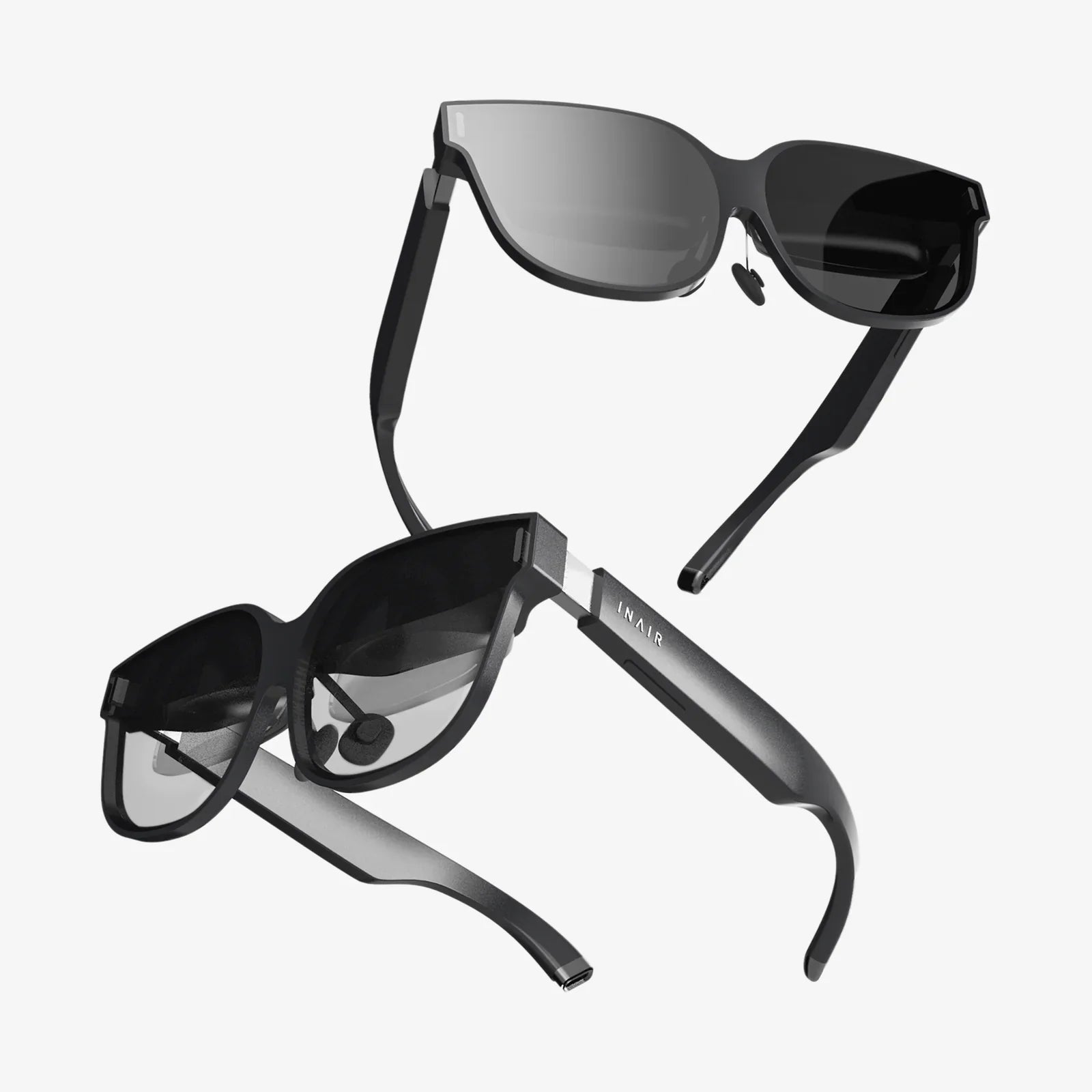
Have you ever put on a headset and, for a fleeting moment, forgotten the real world entirely? That heart-pounding lurch as you peer over a virtual cliff edge, the instinctive duck to avoid a low-hanging digital beam, or the profound connection felt with a character's pixelated gaze—these are the moments that define the revolutionary promise of virtual reality. They are not mere tricks of the eye; they are the profound psychological phenomena of presence and immersion, the holy grail that separates a simple visual simulation from a transformative experience that can alter our perceptions, train our skills, and even touch our souls. This is the journey into making the impossible feel real.
Defining the Intangible: Untangling Presence and Immersion
While often used interchangeably, presence and immersion are distinct concepts, two sides of the same coin that work in concert to create magic.
Immersion is the objective measure of the technology's capability. It is the extent to which the sensory output of a system shuts out the physical world and replaces it with a digital one. Think of it as the foundation. High immersion is achieved through:
-
Visual Fidelity: High resolution, wide field of view, and accurate stereoscopic 3D.
-
Auditory Precision: Realistic, spatialized 3D audio that convinces your brain a sound is coming from a specific point in space.
-
Tracking Accuracy: Low-latency, precise tracking of head and body movements so the virtual world responds instantly and naturally.
-
Haptic Feedback: The use of force feedback and tactile sensations to simulate touch.
In essence, immersion is what the hardware and software deliver. It's the quality of the invitation into another world.
Presence, on the other hand, is the subjective psychological response to that immersion. It is the user's visceral, undeniable sensation of "being there" in the environment provided by the technology. It's the feeling that the virtual world is a place you are inhabiting, not just an image you are observing. Presence is the moment the invitation is accepted, and the real world fades into the background. It's a state of consciousness where the mind suspends its disbelief and accepts the virtual experience as its current reality.
You can have a highly immersive system that, due to poor content design, fails to elicit a strong sense of presence. Conversely, a less technically advanced experience can sometimes evoke powerful presence through brilliant storytelling and intuitive interaction. Immersion sets the table; presence is the feast.
The Science of "Being There": How the Brain is Fooled
The achievement of presence is a sophisticated neurological magic trick. It relies on hijacking the brain's ancient and highly optimized processes for understanding and navigating the physical world. Our perception of reality is not a direct feed from our senses; it's a best-guess simulation constructed by our brain based on sensory input, past experience, and internal models.
Virtual reality systems work by providing sensory cues that are consistent with this internal model. When these cues are accurate and synchronized, the brain seamlessly integrates the virtual world into its reality construct. Key factors include:
-
Sensorimotor Contingency: This is the fundamental expectation that a small movement of your head or body results in a predictable and corresponding change in sensory input. Low-latency tracking is critical here; any delay between your movement and the world's response breaks the illusion, often leading to discomfort.
-
Vestibular Mismatch: A major challenge in VR is the conflict between what your eyes see (e.g., running, flying) and what your inner ear feels (standing or sitting still). This dissonance is a primary cause of simulator sickness. Overcoming it involves clever design techniques that minimize such conflicts.
-
Embodiment: The powerful illusion of owning a virtual body. When you look down and see a body that moves in sync with your own, your brain can quickly adopt it as your own. This is crucial for grounding the user in the virtual space and enhancing emotional connection.
The Pillars of Presence: Building a Believable World
Creating a convincing sense of presence rests on several interconnected pillars. Neglecting any one of them can cause the entire illusion to crumble.
1. The Visual Pillar: A Window to Another World
The human visual system is the primary source of spatial information. To convince it, VR must overcome several hurdles:
-
Resolution and Screen Door Effect: Early VR was plagued by the "screen door effect," where users could see the gaps between pixels. Modern displays have vastly improved resolution, creating a smoother, more continuous image.
-
Field of View (FoV): A narrow FoV feels like looking through binoculars, constantly reminding you of the headset's presence. A wider FoV more closely matches human peripheral vision, enhancing the feeling of being surrounded.
-
Refresh Rate and Low Persistence: A high refresh rate (90Hz and above) ensures smooth motion, while low persistence lighting of pixels eliminates motion blur, making virtual objects feel solid and real.
-
Depth Cues: The brain uses numerous cues to perceive depth: stereopsis (3D vision from two eyes), parallax (closer objects move faster than distant ones), occlusion, and realistic lighting and shadows. A successful VR experience must accurately replicate all of these.
2. The Auditory Pillar: The Unseen Architecture of Space
Sound is arguably as important as sight for creating presence. We use sound subconsciously to understand our environment. 3D spatial audio is the technology that makes this possible. It uses Head-Related Transfer Functions (HRTFs)—acoustic filters that mimic how our head, torso, and ears shape sound waves coming from different directions—to trick the brain into perceiving sounds as originating from specific points in 3D space.
The creak of a floorboard behind you, the echo of your footsteps in a cavern, the muffled sound of a voice through a wall—these auditory cues provide a constant, unconscious reinforcement that the space you are in is real and consistent. It builds the world beyond your immediate line of sight.
3. The Interactive Pillar: Agency and Embodiment
Presence is shattered the moment you try to interact with the world in a way that feels unnatural or unresponsive. Agency—the feeling that your actions have a direct and intended effect on the virtual environment—is paramount.
-
Natural Input: Hand-held controllers that track your gestures, and now computer vision that allows for bare-hand tracking, allow for intuitive interaction. Pushing a virtual button should feel like pushing a button, not executing a complex command.
-
Physics and Object Persistence: Objects should have weight, respond to force appropriately, and not clip through other objects. If you place a cup on a table, it should stay there unless acted upon. This consistency reinforces the world's rules and makes it believable.
-
Virtual Body Ownership: Seeing a virtual avatar that mirrors your movements creates a powerful cognitive anchor. This avatar becomes your vessel in the digital realm, and its design and responsiveness are crucial for grounding your sense of self in that space.
4. The Narrative Pillar: The Reason to Be There
Technology can create a convincing world, but it is story and emotion that give you a reason to want to be in it. Narrative cohesion is vital. The world must have its own internal logic and consistency. Plot holes and illogical events are far more damaging in VR than in film because the user feels physically present within the story.
Emotional stakes, compelling characters, and environmental storytelling (where the world itself tells a story) are all amplified by presence. The fear in a horror experience is visceral. The awe of exploring an alien landscape is profound. The connection with another character—even an AI—can feel genuine when you are standing "face-to-face" with them.
The Challenges and Boundaries of Illusion
Despite rapid advancements, perfect presence remains the north star, always just out of reach. Several significant challenges persist:
-
Simulator Sickness: As mentioned, the conflict between visual motion and vestibular stillness remains a key barrier for many users, limiting the types of experiences that can be comfortably created.
-
The Uncanny Valley: In attempts to create hyper-realistic humans, we often encounter the uncanny valley—the point where a character is almost perfectly human but has slight imperfections that make it seem eerie or unsettling. This is a major immersion-breaker in social VR.
-
Hardware Limitations: Even the best headsets are still tethered (either by a cable or by battery life), have a measurable weight, and cannot yet perfectly replicate all real-world sensations like smell, taste, or complex touch.
-
Content Design: Designing for VR is fundamentally different from designing for flat screens. It requires a new language of storytelling and interaction that prioritizes user agency and spatial consistency.
The Future of Feeling: Where Presence and Immersion Are Headed
The pursuit of deeper presence and immersion is driving innovation across multiple fields. The future points towards experiences that are increasingly seamless and profound.
-
Haptic Evolution: Beyond rumble in controllers, we are seeing the development of full haptic suits, gloves that provide resistance and tactile feedback, and even devices that can simulate temperature and wind.
-
Varifocal Displays: Current VR headsets have a fixed focal plane, causing a conflict between convergence (where your eyes point) and accommodation (where your eyes focus). Varifocal displays will dynamically adjust focus based on what you are looking at, making visual comfort and realism far greater.
-
Brain-Computer Interfaces (BCIs): The ultimate frontier. BCIs could one day read neural signals to control the virtual world with thought alone, or even write sensory information directly to the brain, bypassing physical hardware entirely to create "perfect" immersion.
-
Social Presence: The future of VR is deeply social. Improving the sense of "co-presence"—the feeling of truly being with another person—through better avatar technology, eye-tracking, and facial expression capture will be key to building meaningful virtual communities and workplaces.
Beyond Entertainment: The Real-World Impact of Virtual Presence
The power of presence is not confined to games and entertainment. Its ability to convince the brain it is somewhere else is being harnessed for profound real-world applications.
-
Medicine: VR is used for surgical training, allowing surgeons to practice complex procedures in a risk-free environment with a high degree of presence. It's also revolutionary in pain management and physical therapy, distracting the brain and motivating patients.
-
Education: Imagine studying ancient Rome by walking through its streets, or learning human anatomy by "shrinking down" and exploring a beating heart. Presence makes learning experiential and unforgettable.
-
Mental Health: Exposure therapy in VR is highly effective for treating phobias, PTSD, and anxiety disorders. The controlled, safe, yet deeply present environment allows patients to confront and process their fears in a manageable way.
-
Remote Work and Collaboration: Virtual meetings where participants feel like they are in the same room, able to make eye contact and interact with 3D models, could redefine the concept of remote work, making it more connected and productive.
The line between the digital and the physical is not just blurring; it is being redefined by our pursuit of presence and immersion. This is not about escaping reality, but about expanding it—creating new planes of existence for work, play, healing, and human connection. The headset is merely the key; the worlds it unlocks are limited only by our imagination, and the profound, convincing feeling of being there is what makes the journey worthwhile. The next time you step into a virtual world, take a moment to appreciate the incredible symphony of technology and neuroscience working in harmony, all to grant you a single, magical gift: the feeling of being somewhere else, completely and utterly.