


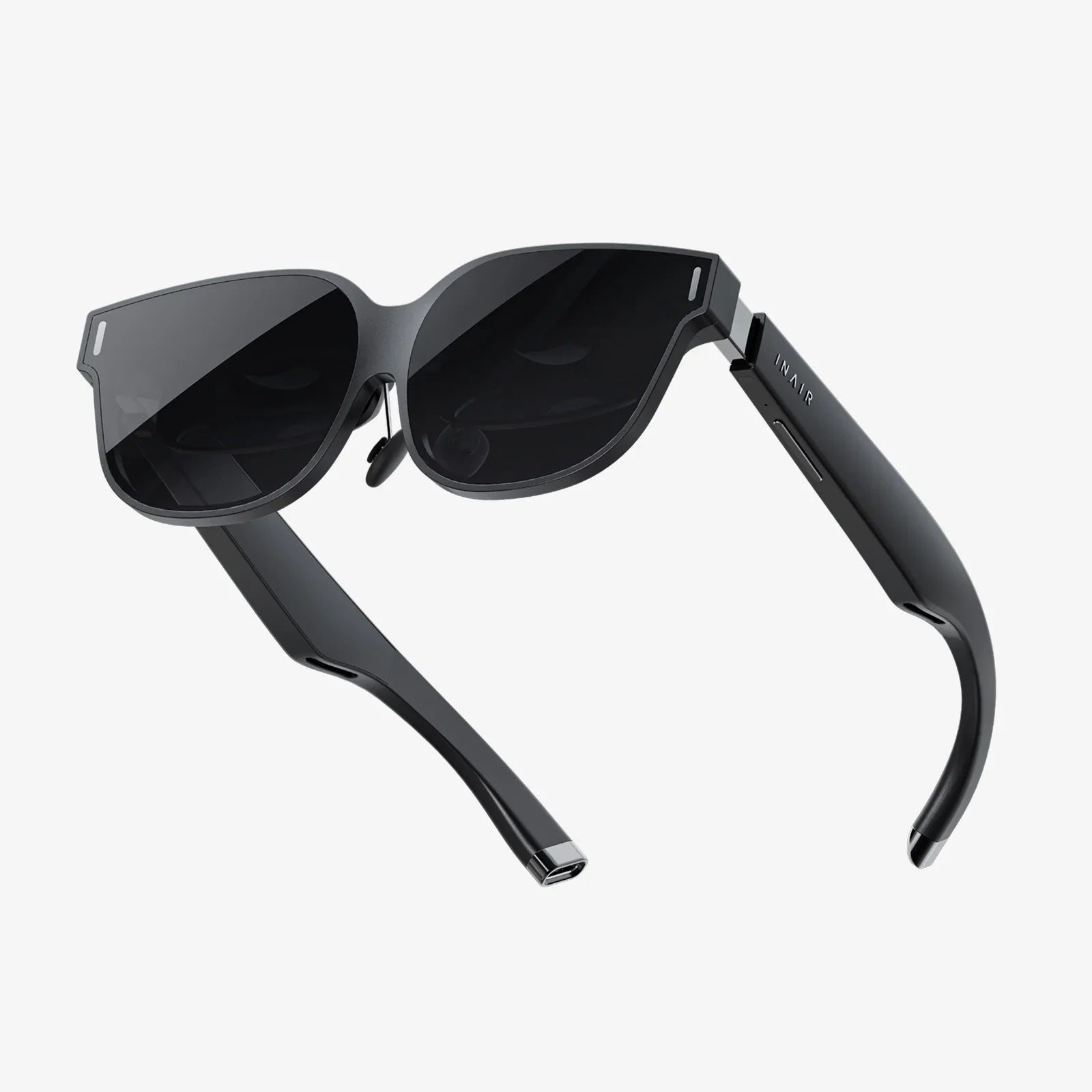
The digital frontier is expanding at a breathtaking pace, and at the very edge of this expansion lies the tantalizing world of immersive technology. For years, Virtual Reality (VR) and Augmented Reality (AR) have been whispered about as the next great technological revolution, promising to transform everything from how we work and learn to how we socialize and play. Yet, for many consumers and businesses, these technologies remain just out of reach, shrouded in a mist of high price tags and complex hardware. The bridge between this promising future and widespread adoption is built on the twin pillars of production and cost. Understanding the intricate dance between advanced manufacturing, cutting-edge research, and market economics is key to unlocking the true potential of VR and AR. The journey from a concept in a lab to a device on a store shelf is a story of immense challenge, brilliant innovation, and relentless pursuit of affordability.
The Core Components: Deconstructing the Hardware
At the heart of every VR and AR device is a symphony of sophisticated components, each representing a significant portion of the production effort and final cost. Unlike a standard mobile phone or monitor, these systems are designed to trick the human brain, requiring a level of performance and precision that pushes the boundaries of current technology.
Visual Systems: Displays and Lenses
The window into any virtual world is its display system. For a convincing experience, VR headsets require high-resolution, fast-refresh-rate screens placed mere centimeters from the user's eyes. These are not ordinary panels; they demand incredibly high pixel density to prevent the "screen-door effect" (where users can see the gaps between pixels), minimal persistence to avoid motion blur, and exceptionally low latency to prevent nausea. Producing these specialized displays involves complex, low-yield manufacturing processes, making them a primary cost driver.
In front of these displays sit complex optical lenses, another critical and expensive component. These custom-fabricated Fresnel or aspheric lenses are precision-molded to create a wide field of view and focus the image correctly for the user. The cost of designing, prototyping, and mass-producing these optics to exacting standards is substantial. AR systems, particularly optical see-through devices like smart glasses, face an even greater challenge. They often employ waveguides, nanoimprinted lithography, or micro-LED arrays to overlay digital information onto the real world. The production of these microscopic optical elements is a feat of advanced physics and engineering, representing one of the most significant barriers to affordable, high-quality AR.
Processing Power: The Engine Room
Rendering two high-resolution images at 90 frames per second or higher is an immensely computationally intensive task. For tethered VR headsets, this processing is offloaded to a powerful external computer, but the headset itself still contains a dedicated processor for sensor fusion and tracking. Standalone VR and AR headsets, however, must contain this immense processing power within a compact, wearable, and thermally constrained form factor.
This requires the design and integration of systems-on-a-chip (SoCs) that rival those in high-end smartphones, incorporating powerful CPUs, GPUs, and dedicated neural processing units (NPUs) for on-device AI tasks. The research and development (R&D) cost for these specialized processors is astronomical, amortized across a market that is still growing. This high R&D burden, combined with the cost of the silicon itself, memory, and storage, forms a large chunk of the total device cost.
Sensors and Tracking: Mapping the World and the Self
Immersion is impossible without accurate tracking. A vast array of sensors is required to understand the user's position in space and the orientation of their head and hands. This typically includes:
- Inertial Measurement Units (IMUs): Combining gyroscopes, accelerometers, and magnetometers to track rotational movement.
- Cameras: Used for inside-out tracking, where the headset itself uses external cameras to map its environment, a technology that has largely replaced external external sensor towers.
- Depth Sensors: In more advanced systems, LiDAR or time-of-flight sensors create a real-time 3D map of the surroundings, crucial for AR applications and safe movement in VR.
- Eye-Tracking Cameras: An emerging premium feature that uses infrared cameras to track pupil movement, enabling foveated rendering (which drastically reduces processing load by rendering only the user's focal point in high detail) and more intuitive interfaces.
Each sensor adds to the bill of materials (BOM), and the software required to fuse all this data into a stable, low-latency tracking solution represents years of software engineering investment.
The Software Ecosystem: The Invisible Investment
While the hardware is tangible, the software that brings it to life is an equally massive, though less visible, part of the production cost. Developing a stable, intuitive, and feature-rich operating system for a spatial computing environment is a monumental task. This includes the core platform software, driver support, development tools (SDKs and APIs), and digital storefronts. Furthermore, creating a "killer app" or funding third-party developers to create compelling content requires significant investment that is ultimately recouped through hardware sales and platform fees. This software R&D is a continuous, ongoing cost that is vital for the ecosystem's health but adds to the overall financial burden of bringing these products to market.
Manufacturing and Assembly: Precision at Scale
Assembling a VR/AR headset is a delicate and precise operation. The alignment of optics and screens must be perfect to avoid user discomfort. The integration of numerous sensors requires careful calibration. The design must account for complex issues like heat dissipation from powerful processors in a device pressed against the user's face and the distribution of weight for comfort. These challenges often necessitate specialized, automated assembly lines and rigorous quality control processes, which require massive capital investment. For many companies, achieving the economies of scale needed to bring per-unit costs down is a catch-22: they need high sales volumes to reduce costs, but they need lower costs to achieve high sales volumes.
The AR Divide: Why Augmented Reality Poses a Greater Challenge
While VR production is complex, AR technology, especially in the form of sleek, socially acceptable glasses, is often considered the holy grail and presents even steeper production and cost challenges. The core differentiator is the need for transparency. AR displays must be able to both project digital light and allow real-world light to pass through clearly. Solutions like diffraction gratings on waveguides or holographic optical elements are incredibly difficult to manufacture at high yield. Slight imperfections render a unit useless. Furthermore, packing the necessary processing, battery life, and connectivity into an even smaller form factor than a VR headset pushes the limits of miniaturization and thermal management. This is why many current-generation AR devices are either tethered to a processing puck, have limited functionality, or carry a professional-grade price tag often measuring in thousands of dollars.
The Trajectory of Cost: From Niche to Mainstream
The history of technology is a story of commoditization. The first mobile phones and HD televisions were prohibitively expensive for the average consumer before economies of scale, manufacturing improvements, and technological breakthroughs brought them into the mainstream. VR and AR are on the same path, and the cost curve is already bending downward.
Economies of Scale and Supply Chain Maturation
As the market grows, component manufacturers can invest in higher-volume production lines for specialized parts like fast-switch LCDs and OLEDoS (OLED on Silicon) micro-displays. Higher volumes lead to lower prices through better amortization of R&D and factory costs. A more mature supply chain also increases competition among suppliers, further driving down costs. The components that were custom-made and exorbitantly expensive five years ago are now becoming more standardized and affordable.
Technological Innovations and Design Simplification
Innovation is relentlessly attacking cost barriers. The shift from external tracking systems to inside-out tracking using cameras eliminated the need for separate hardware, simplifying setup and reducing cost. Advances in pancake lenses allow for thinner, lighter, and potentially cheaper headset designs. Perhaps the most significant innovation is the adoption of techniques like foveated rendering, powered by eye-tracking. By dramatically reducing the rendering load, it allows headsets to either use less expensive processors or achieve much higher visual fidelity with the same hardware, effectively increasing the value proposition.
The Specter of the "Race to the Bottom"
While lower costs are good for adoption, there is a risk of a "race to the bottom" where manufacturers, in a bid to capture market share, cut too many corners. This can result in a flood of low-quality, uncomfortable headsets with poor displays and inadequate tracking that provide a subpar experience and ultimately poison the well for consumers new to the technology. Maintaining a balance between affordability and a high-quality, comfortable, and compelling user experience is the central challenge for the industry.
The True Cost: Beyond the Consumer Headset
It's crucial to recognize that the consumer market is only one part of the story. The production and cost dynamics for enterprise and industrial AR/VR are fundamentally different. In manufacturing, healthcare, and military applications, the cost of the hardware is often insignificant compared to the value it provides. A pair of AR smart glasses that cost $2,500 is an easy purchase if it allows a remote expert to guide an on-site technician, preventing days of downtime on a million-dollar piece of machinery. For these applications, factors like robustness, reliability, battery life, and software integration far outweigh the initial hardware cost, allowing manufacturers to invest in higher-quality components and more rigorous production standards.
The dream of seamless, affordable, and powerful immersive technology is no longer a distant fantasy but a tangible goal being actively engineered into reality. The journey is a complex interplay between groundbreaking physics in optical engineering, relentless advancement in semiconductor design, and the hard-nosed economics of manufacturing at scale. Every year, breakthroughs in display technology, tracking algorithms, and thermal design bring us closer to a future where high-fidelity VR and socially acceptable, powerful AR are as ubiquitous as the smartphone is today. The factories and R&D labs are working overtime, not just to build devices, but to build the very foundation of the next computing platform, one careful, cost-reducing innovation at a time. The virtual and augmented worlds are waiting, and they're becoming more affordable to enter with each passing day.
Share:
Best VR Goggles for PC: Your Ultimate Guide to High-Fidelity Immersion
Wearable Security Device Market Analysis: Trends, Drivers, and Future Outlook